

HCPCS code E0198: Water pressure pad billing guide
HCPCS code E0198 is a water pad for a standard mattress HCPCS code E0198 is the ...

Last Updated: Oct 13, 2026
Billable Code Specific Code
O04.6 is the billable ICD-10-CM code for delayed or excessive hemorrhage following (induced) termination of pregnancy.
The method does not change the code. Hemorrhage after mifepristone and misoprostol codes exactly the same way as hemorrhage after a second-trimester dilation and evacuation. What changes the code is whether the pregnancy loss was induced, spontaneous, or a failed attempt.
Let Pabau's smart automation suggest the right codes, reduce claim denials, and keep your practice compliant—effortlessly.
Automate repetitive tasks and focus on what matters most—your patients.
Reduce coding errors and ensure compliance with the latest regulations.
Clean claims, fewer denials, and faster reimbursements.
Powerful insights and reporting to help your practice thrive.
HIPAA compliant SOC 2 certified GDPR-compliant Trusted by 4,000+ clinics worldwide

ICD-10 code O04.6 is billable and covers delayed or excessive hemorrhage following an induced termination of pregnancy.
It also covers afibrinogenemia, defibrination syndrome, hemolysis, and intravascular coagulation when any of them follows the termination.
The method never changes the code, so medication and surgical terminations both route hemorrhage to O04.6.
Hemorrhage after a miscarriage is O03.6 or O03.1, and hemorrhage after a failed attempt is O07.1.
The ICD-10-CM Z-code guidelines keep Z3A gestational-age codes off every O00-O08 claim, including O04.6.
Practice management software like Pabau captures hemorrhage timing and volume at the point of care, so coders stop guessing.
O04.6 is a billable ICD-10-CM diagnosis code for delayed or excessive hemorrhage following an induced termination of pregnancy, valid since October 1, 2015. It has carried forward unchanged into the FY2026 edition, which took effect on October 1, 2025.
The code sits in Chapter 15 of ICD-10-CM, covering pregnancy, childbirth, and the puerperium. It is complete at four characters, so nothing further is needed to submit it. You can confirm the current descriptor against the CDC ICD-10-CM tabular list.
One billable descriptor carries two clinical presentations. The first is hemorrhage that presents later than expected after the procedure. The second is hemorrhage that exceeds the volume anticipated for the type of termination performed. Both code to O04.6 when they follow an induced termination.
The table below carries every attribute an ICD-10 code lookup returns for O04.6. The last two rows are the ones reference sites bury in nested annotations or leave out entirely.
The official description covers two hemorrhage presentations, delayed and excessive, plus four named hematologic conditions that follow an induced termination. The clinical distinction between the two presentations is what separates a supported code from an assumption a payer will challenge.
Delayed hemorrhage is bleeding that starts at an interval after the procedure rather than in the peri-procedural window. The record has to show that the bleeding arose after the initial encounter closed. A same-day operative note alone rarely supports the qualifier, because it cannot describe a time course that had not happened yet.
Excessive hemorrhage is blood loss beyond what is clinically expected for the type of termination performed, whatever the timing. A note that quantifies estimated blood loss, or compares it against the expected range for that method, gives the strongest foundation.
The four inclusion terms are afibrinogenemia, defibrination syndrome, hemolysis, and intravascular coagulation, each qualified as following induced termination of pregnancy. Coders searching a general ICD-10 code list for one of those conditions will land in the coagulation chapter instead.
The ICD-10-CM tabular list is where the inclusion terms are printed, so check it there before you code a hematologic complication to another chapter.
Maternity care runs on a fixed visit schedule, so patient scheduling software keeps every antenatal appointment in sequence.
O04.6 is a four-character code under category O04, which collects every complication following an induced termination of pregnancy. Knowing where the code sits tells you which instructional notes it inherits, because notes at the category level apply to every code beneath them.
The O04 category is limited to complications arising from a completed induced termination. Spontaneous abortion belongs to O03. A failed termination attempt belongs to O07, where the same hemorrhage codes to O07.1. Pelvic infection after that attempt codes to O07.0, not O04.5. Coding the wrong parent category changes the clinical story on the claim, not just the digits.
Six sibling codes share the O04 category with O04.6, and eight codes outside it are the ones coders confuse it with most. Reference pages scatter these across bullet lists and nested annotations. The table below puts all of them in one place, with the role each one plays.
Four of those neighbors account for most of the misrouting, and each one has its own search habit behind it.
A search for ICD 10 missed abortion resolves to O02.1, which describes a nonviable pregnancy retained in the uterus. No termination has been performed at that point, so an O04 complication code cannot apply to the same encounter.
A search for complete abortion ICD 10 resolves to O03.9, a complete spontaneous loss with no complication. Once delayed or excessive hemorrhage is documented, it becomes O03.6. Both live in the spontaneous-abortion category, so neither belongs on an induced-termination claim.
An ICD-10 unwanted pregnancy query almost always wants Z64.0, problems related to unwanted pregnancy. It records a psychosocial and counseling context rather than a procedure or a complication.
There is no dedicated status post elective abortion ICD 10 code. Z33.2 describes the termination encounter while it is open. Once that encounter closes, a later visit is coded to whatever problem brings the patient in. Where a documented obstetric complication history matters, Z87.59 is the personal-history code.
The AAPC ICD-10-CM code lookup lets you walk the full O04 hierarchy and confirm any of these descriptors.
Eight clinical phrasings route to O04.6 through the alphabetic index, and many coders arrive that way rather than by browsing the tabular list. Knowing the terms prevents a mismatch between the provider’s language and the code you submit.
When a note uses one of these phrases, or a close clinical equivalent, O04.6 is the destination. The record still has to confirm the termination was induced. Verify the full list against the WHO ICD-10 browser for the international version, or the CDC NCHS tabular list for the US clinical modification.
Check the alphabetic index under ‘Hemorrhage, following, termination of pregnancy’ before you settle for unspecified O04.80. If the index resolves to O04.6 and the note supports delayed or excessive onset, use O04.6. Habitual use of unspecified codes when a specific one exists is a standard audit trigger.
Six rules decide whether an O04.6 claim survives review. They come from the ICD-10-CM Official Guidelines for Coding and Reporting, plus the notes printed at the O04 category level.
Verify all six against the current fiscal-year guidelines published by CMS before the October 1 changeover each year.
A billable O04.6 claim rests on four documented elements: the termination type, the hemorrhage timing, the hemorrhage volume, and a provider-stated causal link. Miss any one and a payer has grounds to downcode to unspecified O04.80.
One element the record does not need is gestational age, at least not for coding purposes. It stays clinically useful, but it never becomes a Z3A code on an O04.6 claim.
The other four elements get captured at the point of care or not at all. Nobody reconstructs the detail three weeks later from memory.
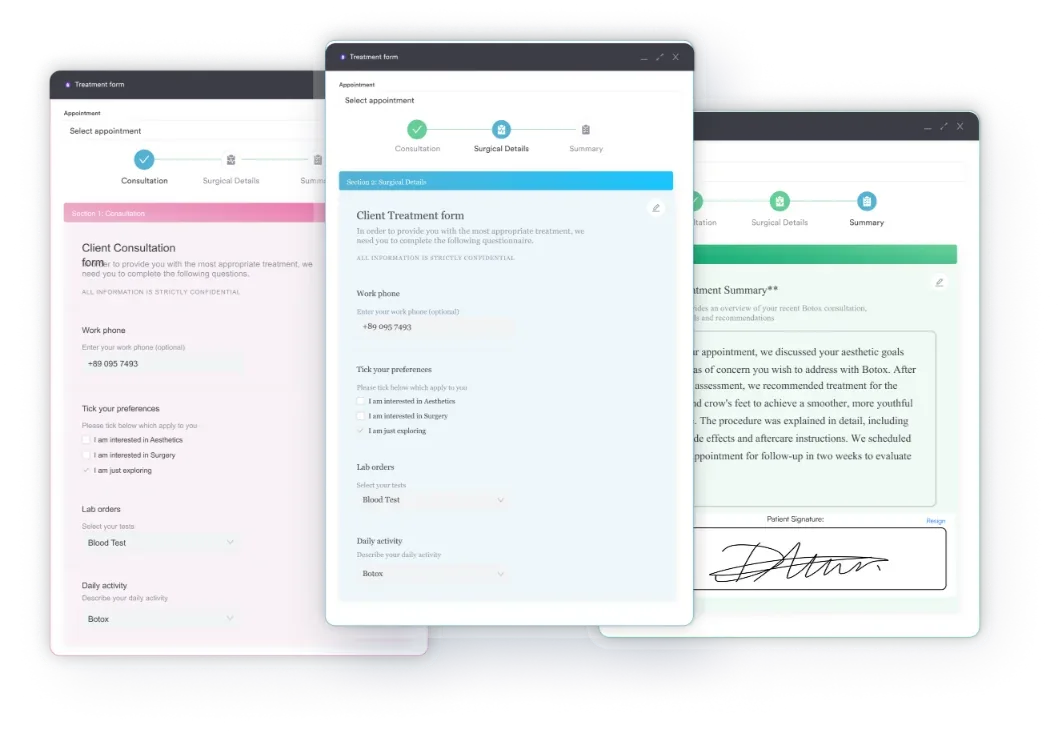
The causal link is the element that most often goes missing, because it lives across two encounters rather than inside one note. Structured patient records and OB-GYN EMR software keep the termination note and every follow-up on a single timeline. That is what makes the attribution provable.
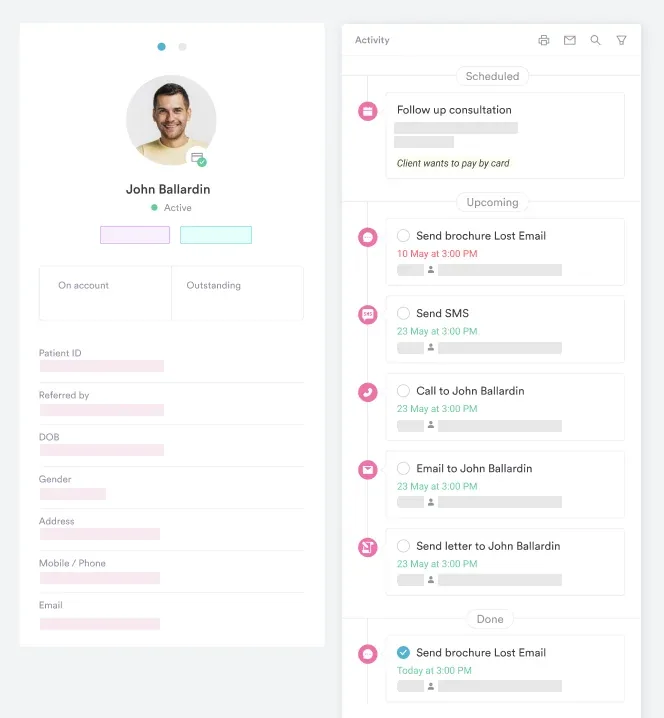
The most common O04.6 error is reaching for unspecified O04.80 when the note already supports delayed or excessive hemorrhage. Four more show up regularly in O04 claim patterns, and every one is preventable at the documentation stage.
The second cluster of errors sits on the procedure side of the claim. Choosing a termination of pregnancy CPT code is a separate decision from choosing the diagnosis code, and conflating the two is what produces method-related denials. O04.6 never changes with method. The procedure code always does.
Surgical cases in the first trimester usually carry 59840, induced abortion by dilation and curettage.
Two clarifications on the procedure column. Payers disagree on which CPT code abortion claims should carry when the termination is medication-based, so read the fee schedule before you submit. And the D&E CPT code, 59841, already bundles the small amount of sharp curettage needed to finish the evacuation.
Teams coding obstetric complications week in and week out get more from a periodic audit than from another reference sheet. Our guide to CPT code 59812 covers the incomplete-abortion side of this table.
O04.6 stands on its own as a billable diagnosis, but it rarely travels alone on a claim. What it pairs with depends on how the hemorrhage was managed. That pairing is where the medical billing result is won or lost.
At volume, manual review is where the time goes. Reproductive and sexual health practices submit these claims constantly, alongside OB-GYN departments.
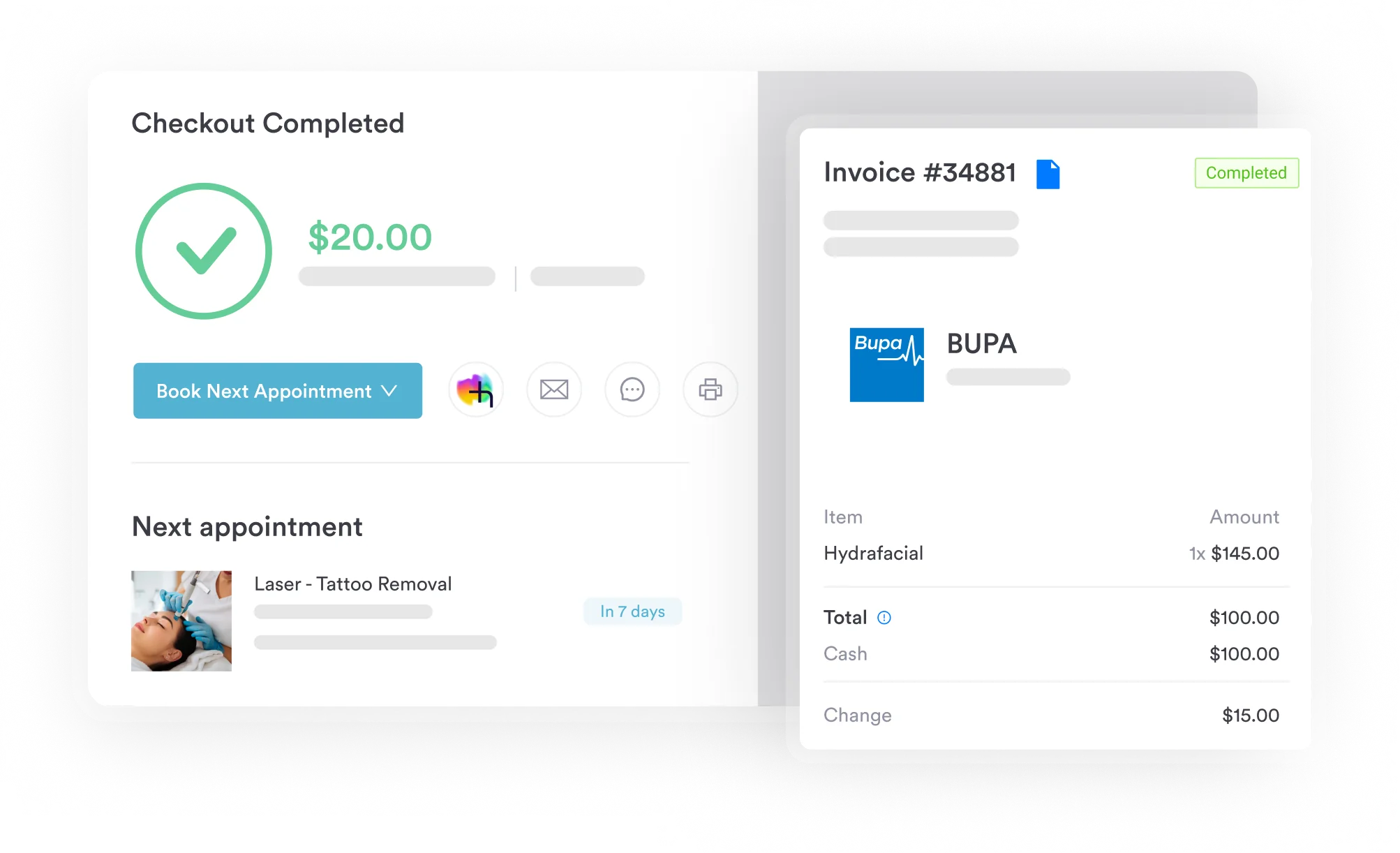
Practice management software supports O04.6 coding at three points, all of them upstream of the coder. The first is the template the clinician charts into. The second is the structured fields that put onset and volume onto the record. The third is the handoff from that record to the claim.
Consider what a coder receives today. A dictated line reading “patient had some bleeding after the procedure” gives them no timing, no volume, and no attribution. They either query the provider and lose days, or downcode to O04.80 and lose money.
Practice management software like Pabau, an all-in-one system for medical practices, keeps the clinical record and the billing workflow in one place. A post-procedure template with required fields for onset and estimated blood loss changes what the coder receives. The note reaches the billing queue already carrying the language O04.6 needs. Billing compliance asks a narrower question than coding accuracy: can the practice defend this claim on review.
Pabau Scribe, our AI scribe, drafts that note straight from the consultation. The clinician reviews and signs it, rather than typing from memory at the end of a list. The detail that supports the delayed and excessive qualifiers gets captured while it is still fresh.
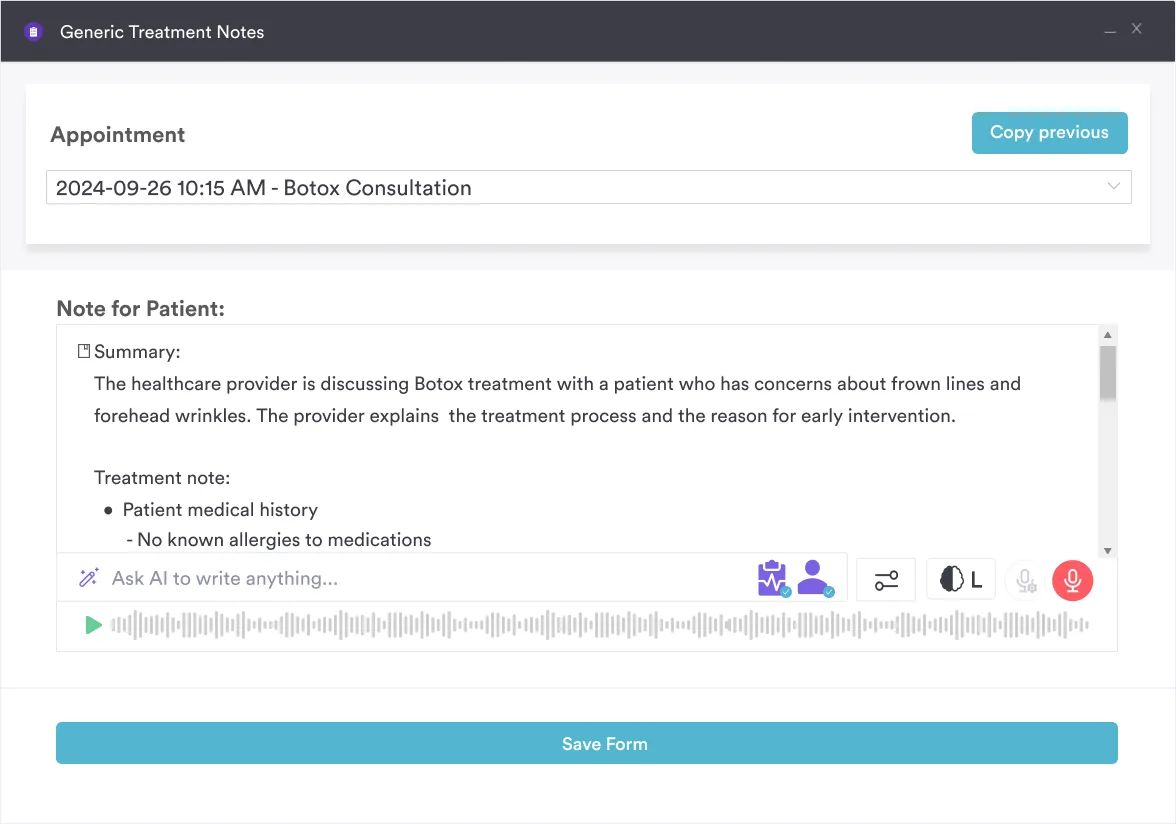
The handoff matters just as much. When the note, the follow-up visits, and the claim share one patient timeline, the coder can confirm the causal link without chasing anyone. That shortens the claim cycle and cuts the denials that come from thin documentation.
Every Pabau subscription includes the clinical records, forms, and billing tools this workflow depends on, so nothing here sits behind a higher tier.

Pabau’s structured clinical forms and claims tools help OB-GYN teams record hemorrhage timing and volume at the point of care. That means fewer provider queries and fewer denials for your billing team.

Selecting O04.6 is the easy part. Supporting it takes the work. Both qualifiers in its descriptor rest on facts only the clinician can record. Those facts are when the bleeding started and how much there was.
So the decision worth making is whether your post-procedure template asks for onset and estimated blood loss as required fields. Change that one thing and the O04.80 downcode largely disappears from your denial report.
The trade-off is honest enough. Structured fields take a few seconds longer at the point of care than free text does. Those seconds buy you a claim that does not come back. Book a demo to see how Pabau captures the clinical detail that supports obstetric complication coding.

Coding another obstetric complication? O33.2 walks through maternal care for pelvic inlet contraction and the Excludes1 note that keeps it off O65 claims.
Handling the anesthesia line on a gynecologic case? CPT code 00846 covers anesthesia for lower abdominal intraperitoneal procedures, including radical hysterectomy.
Coding trauma rather than hemorrhage? O71.9 explains when an obstetric trauma record supports the unspecified code and when it does not.
Coding a sequela from an SUV collision? V43.31XS SUV collision code covers a car occupant hurt in a nontraffic collision with an SUV, coded at the sequela stage.
Coding a car passenger sequela visit? V47.6XXS car passenger code covers a car passenger hurt in a traffic collision with a stationary object, returning weeks later for the sequela.
ICD-10 Code O04.6 is a billable ICD-10-CM diagnosis code for delayed or excessive hemorrhage following induced termination of pregnancy. It also covers afibrinogenemia, defibrination syndrome, hemolysis, and intravascular coagulation when any of them follows the termination.
Yes, O04.6 is a fully billable ICD-10-CM diagnosis code, valid since October 1, 2015 and carried unchanged into the FY2026 edition. It is complete at four characters, so it can go on a claim without a more specific subcategory code.
O04.6 covers delayed or excessive hemorrhage specifically. Its siblings cover other complications: O04.5 is genital tract infection, O04.7 is embolism, O04.81 is shock, and O04.87 is sepsis. O04.80 is the unspecified fallback, used only when no specific code applies.
Yes. The ICD-10 code for miscarriage comes from the O03 series, while a completed induced termination uses the O04 series. Hemorrhage after a miscarriage is O03.6 for a complete or unspecified loss, or O03.1 for an incomplete one. The same complication after an induced termination is O04.6.
Z33.2 is the diagnosis code for an encounter for elective termination of pregnancy, so it describes the visit rather than a complication. O04.6 describes hemorrhage that follows the termination. Category O04 carries an Excludes2 note for Z33.2, which means both codes can appear when the record documents both. The relationship table above shows where each one sits.
Start an ICD-10 code lookup in the alphabetic index rather than the tabular list. Search the condition, here hemorrhage, then follow the subterms down to following termination of pregnancy. Confirm the result in the tabular list, because that is where the inclusion terms and the Excludes notes are printed.
Both. The O04.6 descriptor names no method, so hemorrhage after mifepristone and misoprostol codes the same way as hemorrhage after a dilation and evacuation. Only the procedure code changes with the method. The coding-errors table above maps each method to the procedure code its claim usually carries.
Three errors dominate. Coders default to O04.80 when O04.6 is clearly supported. They apply O04.6 to a spontaneous loss that belongs in O03. Or they code immediate peri-procedural bleeding as delayed with no documented time interval.
O04.6 falls under the O00-O08 block (Pregnancy with abortive outcome) within Chapter 15 (Pregnancy, childbirth and the puerperium) of ICD-10-CM. Its parent category is O04 (Complications following induced termination of pregnancy).
Four elements are required. The record must confirm the termination was induced and completed. It must note when the hemorrhage began relative to the procedure. It must describe or quantify the blood loss as delayed or excessive. Finally, it must state a causal link between the hemorrhage and the termination.



