

ICD-10 Code S42.444P: Medial epicondyle fracture, right humerus
ICD-10 Code S42.444P: full descriptor and code validity ICD-10 Code S42.444P car...

Last Updated: Oct 13, 2026
Billable Code Specific Code
O33.2 is the billable ICD-10-CM code for maternal care for disproportion due to inlet contraction of pelvis.
The one border to get right is with the obstructed labor codes in category O65. The tabular treats those two families as mutually exclusive, so only one of them can appear on a claim.
Let Pabau's smart automation suggest the right codes, reduce claim denials, and keep your practice compliant—effortlessly.
Automate repetitive tasks and focus on what matters most—your patients.
Reduce coding errors and ensure compliance with the latest regulations.
Clean claims, fewer denials, and faster reimbursements.
Powerful insights and reporting to help your practice thrive.
HIPAA compliant SOC 2 certified GDPR-compliant Trusted by 4,000+ clinics worldwide

ICD-10 Code O33.2 is a billable ICD-10-CM code for maternal care for disproportion due to inlet contraction of pelvis.
Use it when the record names the pelvic inlet as the site of the disproportion, rather than the midpelvis or the outlet.
Category O33 carries an Excludes1 note for obstructed labor, so O33.2 and an O65 code never belong on the same claim.
Once labor is underway and obstructed by the inlet, the diagnosis becomes O65.2 and O33.2 comes off the claim.
O33.2 is unchanged in the FY2026 edition, effective October 1, 2025, and has not been revised since FY2016.
O33.2 is a billable, specific ICD-10-CM code that stands on its own with no seventh character. Its official description reads: Maternal care for disproportion due to inlet contraction of pelvis. The tabular restricts it to female patients and to maternity ages 12 to 55.
It can be reported as a principal or an additional diagnosis, depending on why the patient was seen. The CDC/NCHS ICD-10-CM web tool confirms it is valid for submission in the current edition.
The pelvic inlet is the upper opening of the bony pelvis, and the fetal head has to clear it before labor can progress. Inlet contraction means that opening is narrowed enough to create a mismatch with the presenting part. When the clinician documents that narrowing as the reason for obstetric care, O33.2 is the code. Denial management works backwards from the remittance to the step that caused it. Revenue cycle management reporting separates claims that were denied from claims nobody submitted.
Cephalopelvic disproportion is a looser phrase. It can come from fetal size, fetal position, or pelvic architecture at any level. O33.2 is narrower, because the disproportion has to start at the inlet. Where a note says only “cephalopelvic disproportion” with no site named, the index sends you to O33.9 instead.
The category-level Includes note also settles when the code applies. It treats disproportion as a reason for obstetric care in its own right. So O33.2 stands up on an antepartum visit where nothing is delivered at all.
Knowing where O33.2 sits in the tree stops coders from submitting the parent category by mistake. Category O33 on its own is non-billable. The full path to the billable code runs like this:
Half of the O33 family needs a seventh character before it can be billed. That character is the fetus specifier. Use 0 for a single gestation or an unspecified fetus. Use 1 through 9 to name the fetus in a multiple gestation. Five subcodes carry it:
O33.0, O33.1, O33.2, O33.8 and O33.9 take no seventh character. That split catches people out on twin pregnancies, where a mixed-origin or large-fetus code needs the specifier and a maternal pelvic code does not.
In software built for fertility clinics, treatment cycles and early pregnancy monitoring stay in one record.
Three instructional notes govern O33.2, and the Excludes1 note is the one that drives denials. Read them in this order before you assign the code.
The note lists three reasons for using an O33 code:
That wording does two jobs. You can assign O33.2 on an encounter with no delivery. And the code stands as a valid indication for a cesarean scheduled ahead of labor.
O33.2 and an obstructed labor code can never appear on the same claim. Category O33 carries a type 1 Excludes note for disproportion with obstructed labor (O65-O66). A type 1 exclusion means the two conditions are never coded together. The obstructed labor codes that overlap with pelvic anatomy are:
Read the pairing as a swap rather than a sequence. Inlet contraction that has not obstructed labor is O33.2. Inlet contraction that has obstructed labor is O65.2, and O33.2 comes off the claim entirely. An Excludes1 on M95.5 does the same job, keeping acquired deformity of pelvis off an O33 claim once maternity care applies.
Chapter 15 instructs you to add a code from category Z3A for weeks of gestation, where the week is known. On a delivery admission you also need an outcome of delivery code from Z37 on the maternal record. Neither is optional filler, and both are routine reasons for payer queries when they are missing.
Take one patient at 39 weeks with a contracted pelvic inlet confirmed on assessment. The same clinical picture produces two different claims, depending on whether labor started. Build both and the difference comes down to one line.
Now run the same patient again, but she labors and the inlet obstructs. Only one line changes, and it is the line that matters most:
Coders who treat the pairing as a sequence submit both codes and lose the claim on an edit. The safer habit is to read the labor status first, then pick one family.
Document the anatomical level of the contraction in the clinical note: inlet, midpelvis, or outlet. Payers reviewing cesarean claims look for that specificity to validate O33.2. A note that says only ‘pelvic disproportion’ invites a down-code to O33.9, which pays as an unspecified diagnosis and flags the chart for review.
Pick the O33 subcode that names the anatomical site the clinician documented. Move to O65 the moment the record says labor is obstructed.
The table maps the whole O33 family against the two things that decide the code. One is billability at four characters. The other is the wording the note has to contain.
None of the O33 codes is the ICD-10 code for cesarean delivery. They record why the delivery was needed, and the operation itself is reported separately on a procedure code. Mixing those two jobs into one line is a recurring reason these claims come back.
One more caution on the phrase “cephalopelvic disproportion.” It does not map to a single code on its own. Check whether the note points at maternal anatomy, fetal size, or both, and only then choose between O33.2, the fetal-origin subcodes, and O33.9.
O33.2 is a recognized indication for a cesarean performed before labor begins, and the category Includes note says so directly.
The inlet is the first level the fetal head has to clear. A confirmed contraction there often leads to a planned cesarean rather than a trial of labor.
ICD-10-CM does have a code that names the operation: O82, encounter for cesarean delivery without indication. It only applies when no indication is documented at all. Once inlet contraction is in the record, O33.2 is the diagnosis and O82 is wrong.
For payer review, the chart has to support O33.2 with pelvimetry findings or a documented clinical assessment of the inlet. A bare clinical opinion with no supporting measurement weakens the justification for the cesarean and raises audit risk.
Practices using claims management software can build SOAP note templates that prompt for those findings. The clinician records them while the patient is still in the room.
A complete cesarean claim built on inlet contraction usually carries four elements. Keep them together and the coder has nothing left to chase:
The record should also state plainly whether labor was attempted. That single sentence decides between the two diagnosis codes. Sending that record to a payer is a disclosure.
Clinical notes rarely use the tabular wording, so coders need the phrases that lead back to O33.2. The tabular’s own “applicable to” entry reads: maternal care for disproportion due to inlet contraction (pelvis) causing disproportion.
The ICD-9-CM pairing still matters for retrospective work. Audits and appeals on older episodes are often built from legacy data, and the general equivalence mappings are approximate rather than exact. Read the original note before you accept the mapped code.
No. O33.2 is unchanged in the FY2026 ICD-10-CM edition, which took effect on October 1, 2025. The description, the inclusion terms, the Excludes1 note and the billable status all carry over untouched.
The code has in fact never been revised. It entered the classification in FY2016 and has come through every annual cycle since with no change recorded.
Stability at the code level is not the same as stability across the category, though. Chapter 15 guidance is revised periodically. Check the CMS ICD-10 codes page each October for new Excludes notes on neighboring O33 subcodes.
Getting O33.2 right is a documentation job before it is a billing job. The coder needs to know the anatomical level and the labor status, and both of those are decided in the exam room. If they only exist inside a free-text narrative, someone has to reconstruct them days later.
Practice management software like Pabau keeps the clinical note, the diagnosis code and the claim in one patient record. The evidence behind O33.2 then travels with the encounter. Pabau’s OB/GYN EMR software lets you build the prompts into the note itself. Here is what a reliable O33.2 workflow captures:
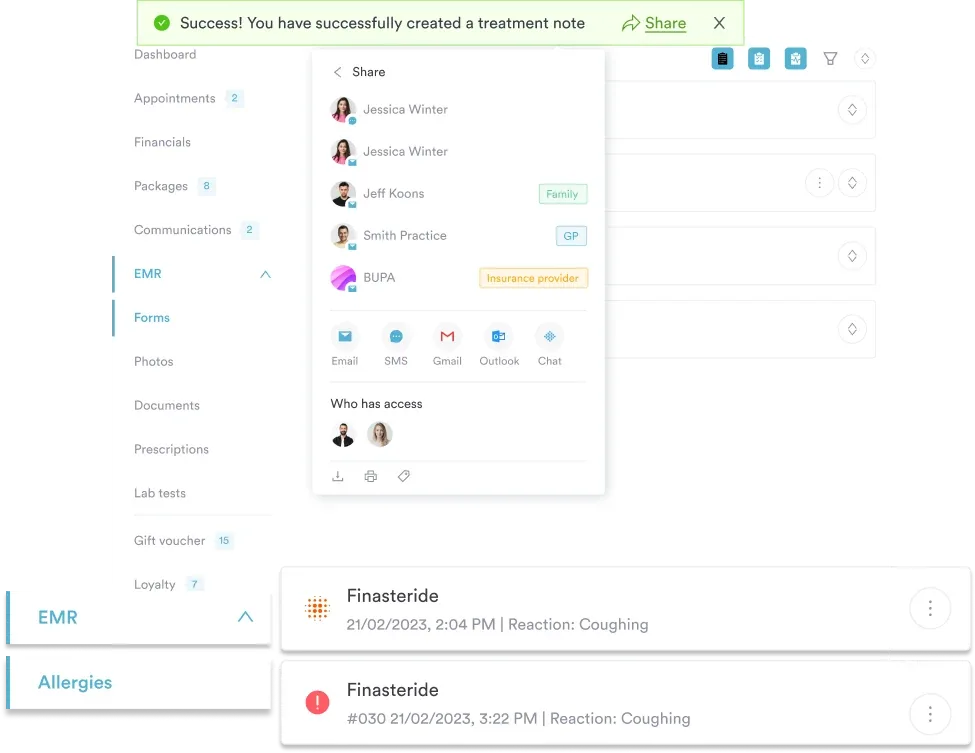
Teams that standardize obstetric documentation forms spend less time on coder queries and get paid sooner on disproportion encounters. The aim is a note that makes the O33.2 assignment obvious to a reviewer who was never in the room.
Audit your O33.x claims once a quarter. Pull every encounter coded O33.1, O33.2 or O33.9 and compare how specific the notes are. Regular O33.9 usage means clinicians are not recording the anatomical level, and a single structured prompt usually fixes it faster than retraining does.
Still choosing an obstetric practice management platform? Prompting for ICD-10 detail at the point of care is the change with the shortest payback. Pair it with a documentation compliance checklist so the same records also stand up to a HIPAA audit.

Pabau captures obstetric findings in structured fields, links them to the ICD-10 code on the encounter, and carries them through to the claim. Coders stop chasing missing detail and disproportion claims get paid sooner.

If you take one habit away from this page, make it the labor-status check. Read whether labor started and became obstructed before you reach for a code, because that single fact decides between O33.2 and O65.2. Coders who sequence the two together are reporting a combination the classification forbids.
The trade-off worth remembering is specificity against speed. O33.9 is faster to assign and always available, but it costs you the anatomical detail that justifies a cesarean on review. A query to the clinician takes minutes. An appeal on a down-coded claim takes weeks.
Fix it upstream and the coding stops being a reconstruction exercise. Pabau’s pelvic health software keeps clinical findings, diagnosis codes and claims in one record. Book a demo to see how it handles obstetric disproportion encounters end to end.

Need the code for the obstructed version of this diagnosis? O65.2 covers obstructed labor due to pelvic inlet contraction, the code that replaces O33.2 once labor stalls.
Billing the cesarean itself? 59510 explains what global obstetric care includes and when to split the delivery out onto its own code.
Coding an obstructed labor with a deformed pelvis? O65.0 sets out how pelvic deformity is documented once labor is already underway.
Coding an exam for institutional admission? residential institution admission code covers the billable code for an exam done to satisfy a nursing home or care facility’s admission requirement.
Coding another administrative exam encounter? other administrative exam codes covers the range of administrative encounters that often get coded with the wrong primary diagnosis.
ICD-10 Code O33.2 is a billable diagnosis code for maternal care for disproportion due to inlet contraction of pelvis. It applies when narrowing at the pelvic inlet creates a mismatch with the fetal presenting part. The narrowing must be documented as the reason for obstetric care or for a cesarean planned before labor.
Yes. O33.2 is a specific, billable ICD-10-CM code that is complete at four characters and needs no fetus specifier. It can be submitted as a principal or an additional diagnosis. It is valid in the FY2026 edition, effective October 1, 2025.
No. Category O33 carries an Excludes1 note for disproportion with obstructed labor, so O33.2 and any O65 code are mutually exclusive. Use O33.2 while labor has not started or has not obstructed. Once the record documents obstructed labor from inlet contraction, O65.2 replaces it as the principal diagnosis.
O33.2 is specific to the pelvic inlet, while cephalopelvic disproportion is a broader clinical phrase. CPD can come from fetal size, fetal position or pelvic shape at any level. Where the note names fetal size instead, O33.5 applies. Where it says only cephalopelvic disproportion with no site, the index leads to O33.9.
No. O33.2 is unchanged in the FY2026 ICD-10-CM edition, which took effect on October 1, 2025. The description, billable status and instructional notes are identical to prior editions. The code has carried no revision since it entered the classification in FY2016.
O33.2 is the diagnosis, and the operation is billed separately on a procedure code. Coders hunting for the ICD-10 code for cesarean delivery often expect one code to cover both the reason and the surgery. Add a Z3A code for weeks of gestation and Z37.0 for a single live birth.
The note needs the pelvimetry finding that identifies inlet contraction, the gestational age, the delivery method, and whether labor was attempted. Labor status is the entry that decides between O33.2 and O65.2. A note that says only ‘disproportion’, with no anatomical level, invites a down-code to O33.9 on review.




