ICD-10 Code S42.444P: Medial epicondyle fracture, right humerus
ICD-10 Code S42.444P: full descriptor and code validity ICD-10 Code S42.444P car...

Last Updated: Oct 13, 2026
Billable Code Specific Code
O21.2 is the billable ICD-10-CM code for late vomiting of pregnancy.
Let Pabau's smart automation suggest the right codes, reduce claim denials, and keep your practice compliant—effortlessly.
Automate repetitive tasks and focus on what matters most—your patients.
Reduce coding errors and ensure compliance with the latest regulations.
Clean claims, fewer denials, and faster reimbursements.
Powerful insights and reporting to help your practice thrive.
HIPAA compliant SOC 2 certified GDPR-compliant Trusted by 4,000+ clinics worldwide

ICD-10 Code O21.2 is a billable ICD-10-CM code for late vomiting of pregnancy, defined as vomiting occurring after 20 completed weeks of gestation
O21.2 is distinct from hyperemesis gravidarum codes O21.0 and O21.1, which apply earlier in pregnancy and require different clinical criteria
Accurate gestational age documentation is required to support O21.2, coding it before 20 weeks is the most common error in this code family
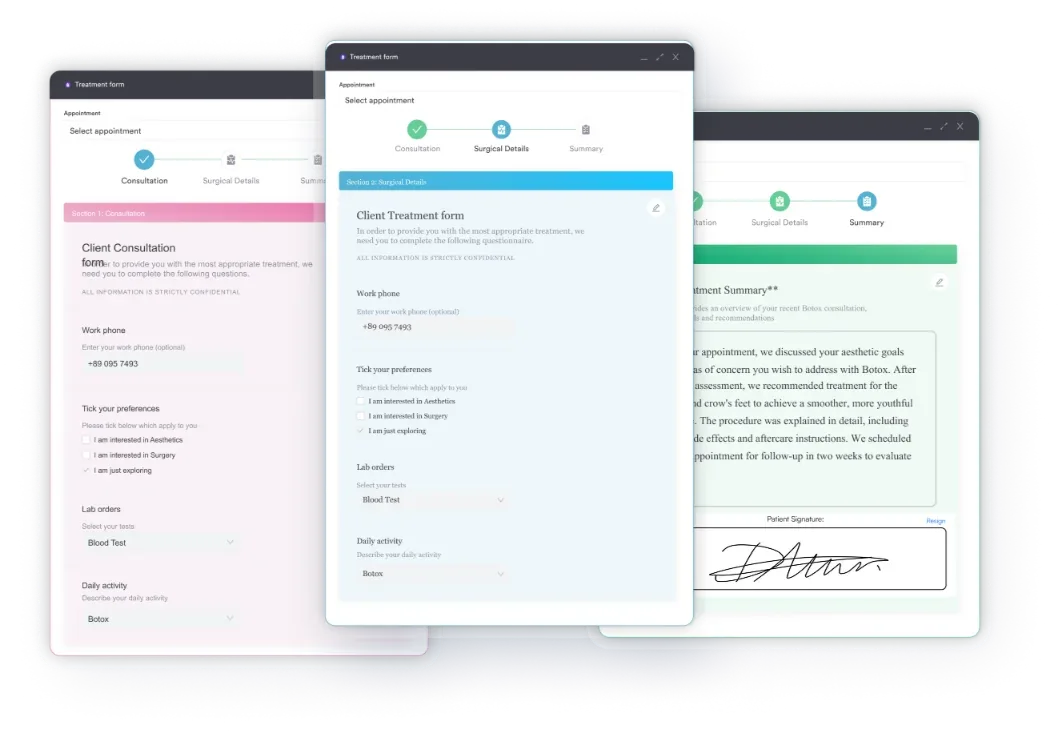
Pabau’s digital forms and claims management software help OB/GYN practices capture gestational age at the point of care, reducing O21.2 claim denials
The 2026 edition of ICD-10 Code O21.2 became effective on October 1, 2025. It is a billable. The table below captures the key administrative details coders and billers need at a glance.
Late vomiting of pregnancy refers to pathological vomiting occurring after 20 completed weeks of gestation. It is explicitly distinct from normal morning sickness, which typically resolves by the end of the first trimester, and from hyperemesis gravidarum, which carries specific clinical criteria around severity and metabolic impact.
Three criteria determine whether O21.2 is the correct code assignment. The clinician’s documentation must support all three for the code to hold up under audit according to the CMS ICD-10-CM guidelines:
The gestational age threshold is not approximate. According to the ICD-10-CM Tabular List, 20 completed weeks is the defined cutoff. A patient presenting at 19 weeks with persistent vomiting would be coded differently, typically under O21.0 or O21.9, depending on severity.
ICD-10 Code O21.2 sits within the O21 category, which covers all forms of excessive vomiting in pregnancy. Understanding the full code family prevents the most common selection errors. The table below shows the ICD-10-CM code structure for this category, per the CDC/NCHS ICD-10-CM Tabular List.
O21.8 covers vomiting complicating pregnancy due to causes other than hyperemesis gravidarum, such as gastrointestinal illness. O21.9 is a last-resort code for cases where documentation does not support a more specific selection.
The same principle applies across obstetric complication codes generally. A specific code like O08.3 is the correct choice once clinical detail is available in the record, and an unspecified code should never be a shortcut around missing documentation.
Maternity care runs on a fixed visit schedule, so patient scheduling software keeps every antenatal appointment in sequence.
The distinction between ICD-10 Code O21.2 and the hyperemesis gravidarum codes is where most coding errors originate. All three codes involve pathological vomiting in pregnancy, but they are mutually exclusive and represent clinically separate conditions.
The AAPC ICD-10-CM coding reference and the CMS Tabular List are consistent on the differentiating criteria:
A patient admitted at 22 weeks with vomiting and no prior HG diagnosis is coded O21.2, not O21.1. A patient with a documented HG diagnosis from earlier in the pregnancy presenting with ongoing symptoms after 20 weeks requires careful clinical review. The attending clinician’s documentation of current gestational status and whether active HG features remain is decisive. Accounts receivable aging shows which codes are slow to pay long before anyone calls it a denial problem.
The ICD-10-CM index and tabular list recognize several terms that map to ICD-10 Code O21.2. Coders searching by clinical description rather than code number will encounter these phrases in the alphabetic index, and all resolve to the same billable code.
None of these synonyms change the documentation requirements. Regardless of how the condition is described in the clinical note, gestational age confirmation must appear in the record to support O21.2 assignment. The same specificity requirement applies across the wider obstetric code set.
Neither ICD-10 Code O21.2 nor the rest of the O21 category carries an Excludes1 or Excludes2 note of its own in the ICD-10-CM Tabular List. The exclusion relationship runs the other way: the R11 nausea and vomiting codes carry an Excludes1 note against excessive vomiting in pregnancy (O21.-).
In practice: if a pregnant patient at 24 weeks presents with vomiting, code O21.2, not R11.10. A separately documented condition unrelated to the pregnancy-related vomiting can still be coded alongside O21.2 when it is genuinely present and clinically distinct.
Maintaining accurate medical form documentation at the point of care makes this distinction easier to apply consistently.
Inadequate documentation is the primary driver of O21.2 denials. The CMS ICD-10-CM Official Guidelines require that the record supports the code at the specificity level assigned. For ICD-10 Code O21.2, the medical record must contain all of the following before a coder assigns this diagnosis.
Practices using digital clinical documentation tools that prompt for gestational age at intake capture this data reliably, without relying on retrospective chart completion.
Four errors account for the majority of incorrect O21.2 assignments or denials.
This pattern holds across obstetric billing broadly. Documentation specificity drives accurate code assignment whether it is a diagnosis code like O21.2 or a procedure code like CPT 01961. Gestational age remains the hinge fact that determines which O21 subcategory applies. Coding teams that juggle ICD-10 and CPT together often keep a medical coding cheat sheet close at hand.

Pabau’s clinical documentation tools help OB/GYN practices capture gestational age, symptom onset, and diagnosis details at every encounter, giving coders the specificity they need to assign O21.2 accurately and reduce claim denials.

Understanding where ICD-10 Code O21.2 sits in the ICD-10-CM hierarchy helps coders navigate the tabular list and verify they have reached the most specific billable code. According to the CDC/NCHS ICD-10-CM web tool, the parent hierarchy is as follows:
A coder entering the tabular list at Chapter 15 and drilling into the O20-O29 block will arrive at O21 and its subcategories. O21.2 has no further subdivision, confirming it is a terminal, billable code. No additional characters are required or valid.
Coding O21.2 accurately depends on having the right clinical information in the right place at the right time. That specificity is usually lost at the documentation stage, before a coder ever sees the chart. Practice management software like Pabau.
Three workflow features are most relevant to practices coding the O21 family:
Practices managing multiple OB patients per day benefit from patient record management tools that surface gestational age across all encounter views. When that data is always visible, clinicians document it consistently and coders can assign O21.2 with confidence.
ICD-10 Code O21.2 is a straightforward code with one critical variable: the 20-week gestational threshold. Get that documented correctly and the rest of the O21 family falls into place. Miss it, and the most common denial in this category follows.
Pabau’s configurable clinical templates and integrated claims management help OB/GYN practices capture gestational age and symptom detail at the point of care, not after the fact. If your team is spending time reconstructing documentation to support O21.2, that is a workflow problem with a structural fix. Book a demo to see how Pabau handles this in practice.

Coding a spontaneous abortion complication? O03.2 carries the same documentation specificity requirements as the O21 family.
Coding an unusual animal injury sequela? struck by pig sequela code covers the billable late-effect code for an injury caused by contact with a pig.
ICD-10 Code O21.2 is a billable ICD-10-CM diagnosis code used to document late vomiting of pregnancy, specifically pathological vomiting occurring after 20 completed weeks of gestation that does not meet the clinical criteria for hyperemesis gravidarum. It is valid for use in all HIPAA-covered transactions as of the 2026 ICD-10-CM edition effective October 1, 2025.
O21.0 is mild hyperemesis gravidarum occurring before 20 weeks gestation. O21.1 is hyperemesis gravidarum with documented metabolic disturbance, also before 20 weeks. O21.2 applies after 20 completed weeks to vomiting that does not meet hyperemesis gravidarum criteria. The gestational age threshold and the presence or absence of a hyperemesis gravidarum diagnosis are the defining distinctions between these codes.
O21.2 applies to vomiting occurring after 20 completed weeks of gestation. The 20-week threshold is defined in the ICD-10-CM Tabular List and is not approximate. Vomiting presenting before 20 completed weeks falls under different O21 subcategory codes depending on whether hyperemesis gravidarum criteria are met.
The medical record must document: confirmed gestational age above 20 completed weeks, vomiting as a presenting symptom (not nausea alone), the absence of a current hyperemesis gravidarum diagnosis, and a clinical characterization distinguishing the vomiting from normal morning sickness. Without documented gestational age, a coder cannot justify O21.2 over a less specific code such as O21.9.
Yes. O21.2 can be reported with other obstetric diagnosis codes when additional conditions are documented and clinically relevant. The one exception runs from the R11 codes rather than from O21.2 itself: R11.0 (Nausea) and R11.10 (Vomiting, unspecified) carry an Excludes1 note against excessive vomiting in pregnancy (O21.-), so those codes should not be reported together with O21.2 for the same encounter.