ICD-10 code S61.201A: Open wound of left index finger without nail damage
ICD-10 code S61.201A covers a left index finger wound of unstated type ICD-10 co...

Last Updated: Oct 16, 2026
Billable Code Specific Code
L13.9 is the billable ICD-10-CM code for bullous disorder, unspecified.
L13.9 sits within the L10-L14 bullous disorders block of Chapter 12 (Diseases of the skin and subcutaneous tissue). It is the catch-all code for blistering skin conditions where the exact disorder type has not been or cannot be established.
ICD-10-CM requires coding to the highest level of specificity the clinical documentation supports, so L13.9 is correct only when a more specific bullous disorder code cannot be assigned.
Let Pabau's smart automation suggest the right codes, reduce claim denials, and keep your practice compliant—effortlessly.
Automate repetitive tasks and focus on what matters most—your patients.
Reduce coding errors and ensure compliance with the latest regulations.
Clean claims, fewer denials, and faster reimbursements.
Powerful insights and reporting to help your practice thrive.
HIPAA compliant SOC 2 certified GDPR-compliant Trusted by 4,000+ clinics worldwide

ICD-10 Code L13.9 (Bullous disorder, unspecified) is a billable ICD-10-CM diagnosis code valid for HIPAA-covered transactions from October 1, 2025 through September 30, 2026.
Use L13.9 only when clinical documentation cannot support a more specific bullous disorder code such as L13.0 (Dermatitis herpetiformis) or L12.0 (Bullous pemphigoid).
L13.9 carries no code-specific excludes notes; the block-level Excludes1 note for L10-L14 covers benign familial pemphigus [Hailey-Hailey] (Q82.8), staphylococcal scalded skin syndrome (L00), and toxic epidermal necrolysis [Lyell] (L51.2).
Pabau’s claims management software helps dermatology and skin practices reduce coding errors, maintain audit-ready documentation, and streamline ICD-10 code lookup workflows.
ICD-10 Code L13.9 is a valid, billable ICD-10-CM diagnosis code for Bullous disorder, unspecified. It is classified under the 2026 ICD-10-CM edition and became effective on October 1, 2025. The code is valid for use in all HIPAA-covered transactions through September 30, 2026.
The National Center for Health Statistics (NCHS) and CMS jointly maintain ICD-10-CM and publish annual updates effective October 1 of each year. Coders should confirm code validity at the start of each new fiscal year, as codes can be added, revised, or retired.
A bullous disorder is any skin condition characterized by the formation of bullae, which are fluid-filled blisters larger than 5 mm in diameter. When blisters are smaller than 5 mm they are called vesicles. Both terms fall within the clinical scope of L13.9 when the specific disorder type is unestablished.
Bullous disorders arise through several pathophysiological mechanisms:
The unspecified code L13.9 applies when the clinician’s documentation does not identify which mechanism or specific disorder is responsible.
For practices managing dermatology patients, accurate documentation of lesion type, distribution, chronicity, and any workup performed is what separates a defensible L13.9 from a coding error. Practices using dermatology EMR software can embed these documentation prompts directly into encounter templates, reducing the risk of unspecified coding when specific information is available.
ICD-10-CM includes official approximate synonyms that are acceptable when coded to L13.9. These are the terms that appear in the Index to Diseases and map to this code.
Coders should note that these synonyms apply only when the documentation does not point to a more specific condition. If the patient record mentions pemphigoid, pemphigus, or dermatitis herpetiformis, a specific code from the L10-L14 block is required. As with unspecified codes throughout ICD-10-CM, L13.9 is appropriate only when the specific bullous disorder is genuinely unavailable in the record. Australian MBS billing changes descriptors and fees periodically, so last year printout is not a safe reference. Practices that bill a narrow set of services keep a coding guide covering that set rather than the whole schedule.
Many skin conditions are treated in aesthetic settings, where aesthetic EMR software pairs diagnoses with photos and treatment records.
Understanding where ICD-10 Code L13.9 sits in the L10-L14 hierarchy helps coders quickly confirm whether a more specific code exists. The block covers all primary bullous (blistering) disorders of the skin.
The hierarchy makes clear that L13.9 is a last-resort code within an already-narrow category. L13 covers only “other” bullous disorders (those not classified under pemphigus or pemphigoid). Within L13 itself, L13.0 and L13.1 represent specific diagnoses. The coder should exhaust the sibling codes in L10-L13.8 before defaulting to L13.9.
ICD-10 Code L13.9 is appropriate only when the clinical documentation cannot support a more specific bullous disorder code. The official ICD-10-CM guidelines direct coders to code to the highest degree of specificity the record will support.
Payer auditors flag unspecified codes when medical records contain clinical or pathology findings that clearly support a specific diagnosis. Overuse of L13.9 after a diagnosis-confirming biopsy is a known audit trigger in dermatology billing.
Review open encounters coded with L13.9 after 30 days. If a biopsy or specialist report has been received, update the diagnosis code to the specific bullous disorder identified. Leaving L13.9 on a closed claim when specificity is now available creates unnecessary audit exposure.
ICD-10 Code L13.9 does not carry a code-specific Excludes1 or Excludes2 note. The tabular list does apply a block-level Excludes1 note across the entire L10-L14 range, and that note governs L13.9 along with every other code in the block.
None of these three conditions should ever be coded within the L10-L14 block, including as L13.9. Coders sometimes assume H13.1 belongs on this list, but that code covers conjunctivitis in infectious and parasitic diseases classified elsewhere — an unrelated eye condition with no excludes relationship to L13.9.
Choosing between L13.9 and a related code is the most common coding decision point for this diagnosis. The table below covers the most frequently referenced codes in the L10-L14 block and the distinguishing clinical criteria for each.
The AAPC Codify ICD-10-CM lookup is a useful tool for verifying code descriptions and related codes during the coding review process. When coding skin conditions for patients with concurrent autoimmune disorders, confirm that the documentation specifically names the bullous condition.
When a patient presents with blistering skin lesions, the coding decision depends on which features the provider can document. Use this decision framework to select the correct code.
This decision tree mirrors the logic used across other unspecified-versus-specific coding decisions in ICD-10-CM.
Documentation is what makes or breaks an L13.9 claim. Because payers know unspecified codes are a denials risk, they look closely at records when these codes appear. The provider’s note should clearly establish why specificity was not achievable at the time of coding.
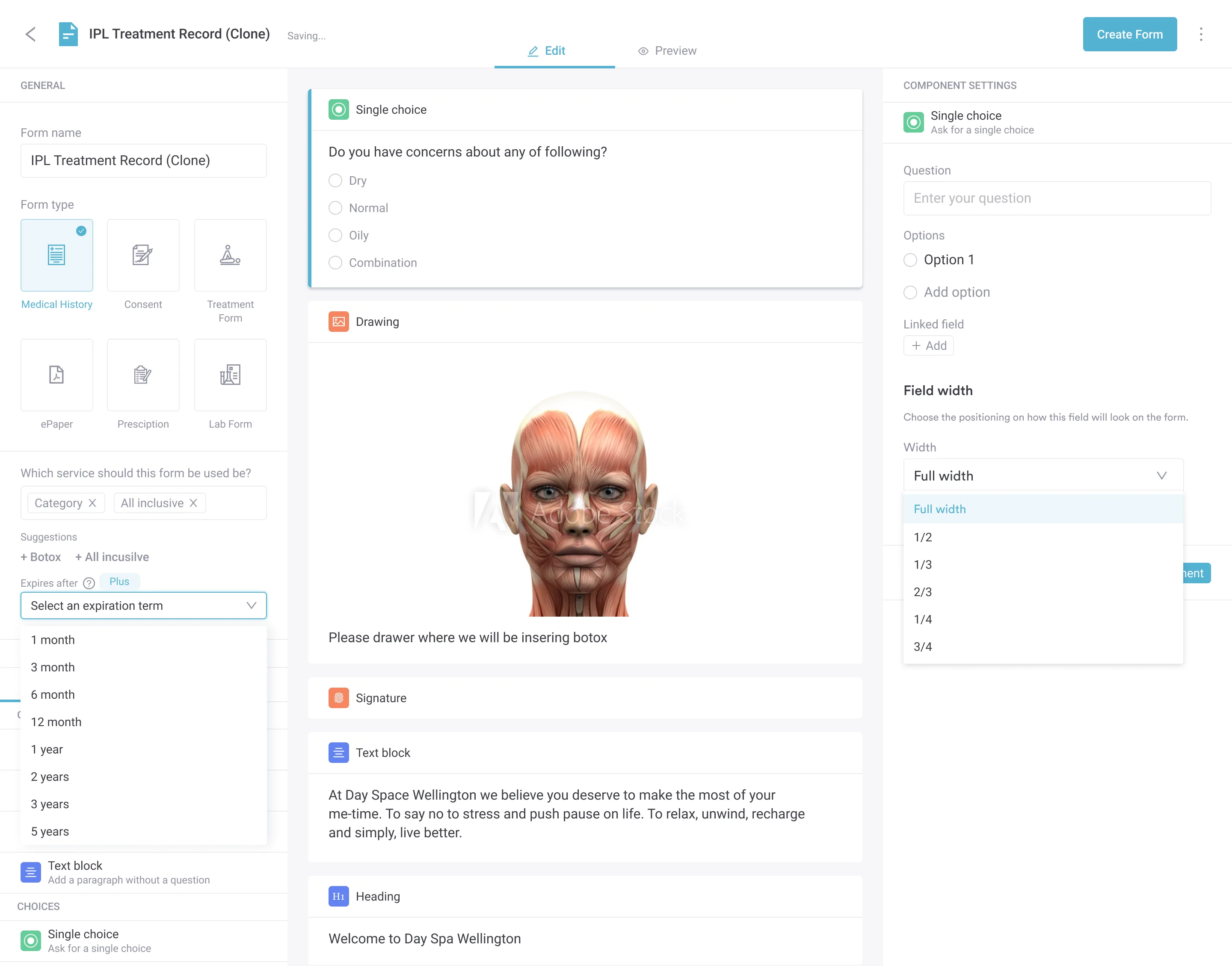
Using digital intake forms that prompt for lesion morphology, distribution, and chronicity reduces the likelihood of missing key documentation elements at point of care. Practices can also configure structured client records with encounter-specific fields for biopsy status and provisional diagnosis, creating a natural prompt for coders reviewing the chart.
Using medical forms in healthcare is directly tied to coding accuracy when unspecified codes are involved. Practices sometimes adapt a general procedure consent template.
L13.9 is billable for all HIPAA-covered transactions. That said, reimbursement is not guaranteed by billable status alone. Payer coverage policies vary, and some commercial payers apply medical necessity criteria that require documentation of symptom severity or prior treatment attempts.
For dermatology and skin practices managing insurance claims.
Maintaining HIPAA compliance software ensures that the underlying patient data supporting each code is handled according to federal requirements. Practices can also use compliance management tools to build audit-ready workflows around diagnostic coding documentation.
Diagnosis and procedure codes each carry their own documentation burden. A procedure code like 10081 needs its own supporting notes just as much as an unspecified diagnosis code such as L13.9 does, so a claim pairing the two should never lean on one code’s documentation to justify the other.
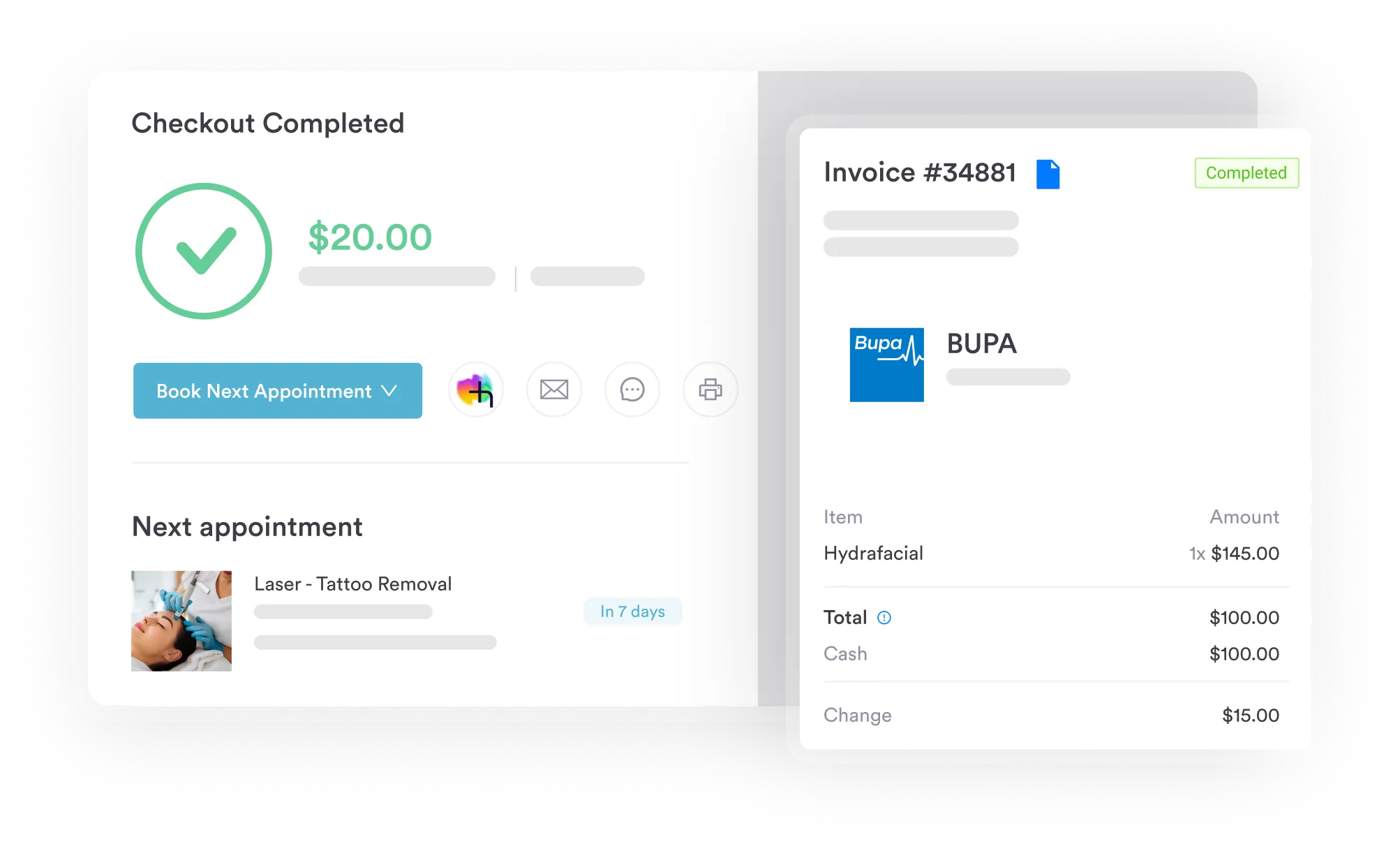
Because L13.9 is an unspecified code, the accuracy of every downstream claim depends on how well diagnosis, documentation, and billing stay connected. Practice management software that links these steps reduces the manual re-entry where coding errors and audit flags usually creep in.

Pabau helps dermatology and skin practices document diagnoses accurately, manage ICD-10 coding workflows, and submit cleaner claims. See how integrated practice management reduces coding errors and audit risk.

Coding errors for unspecified diagnoses like L13.9 rarely start at the billing desk. They start in the encounter note. When providers lack structured prompts for documenting lesion type, differential diagnosis reasoning, and pending workup status, coders are left working from incomplete records and default to unspecified codes even when specificity was achievable.
Purpose-built skin clinic software can embed dermatology-specific documentation fields directly into encounter templates:
Each of these data points supports downstream coding precision.
The best EMR software for dermatology connects clinical documentation to the billing workflow, so coders can see in one view whether a biopsy result has returned, whether the provisional diagnosis has been updated, and whether the encounter note supports the code on the claim.
This is what separates L13.9 as an appropriate interim code from L13.9 as an avoidable unspecified code.
Build a monthly coding audit into your dermatology billing cycle. Filter claims with L13.9 and cross-reference against encounter notes to confirm no biopsy result or specialist letter has arrived that would support a more specific code. This single step substantially reduces unspecified-code audit exposure.
Unspecified coding is a documentation problem before it is a billing problem.
ICD-10 Code L13.9 serves a legitimate purpose: it covers the period between initial presentation of a blistering skin condition and the point at which clinical workup confirms a specific diagnosis. Used correctly, it is defensible. Used as a default because the chart lacks detail, it is an audit target.
Pabau’s claims management tools and encounter documentation features give dermatology and skin practices the structure they need to capture diagnostic specificity at the point of care, not after the claim has gone out. To see how Pabau supports cleaner coding and documentation across dermatology workflows, book a demo with the team.

Working through another unspecified-versus-specific coding decision? M83.1 walks through the same specificity logic applied to osteomalacia diagnoses.
Coding a large-vessel vasculitis case? Takayasu arteritis diagnosis code covers confirmed large-vessel granulomatous vasculitis affecting the aorta and its main branches.
Coding giant cell arteritis with PMR? Giant cell arteritis with polymyalgia rheumatica code is valid for claim submission and reimbursement across US payer systems in the 2026 edition.
ICD-10 Code L13.9 is a billable diagnosis code used to classify Bullous disorder, unspecified, when the clinician cannot identify a specific type of bullous (blistering) skin condition from available clinical documentation. It applies during initial presentations when workup is incomplete, or when the clinical picture does not fit a named disorder within the L10-L14 Bullous disorders block.
Yes, L13.9 is a valid, billable ICD-10-CM diagnosis code for use in all HIPAA-covered transactions. It is effective from October 1, 2025 through September 30, 2026 under the 2026 ICD-10-CM edition. Billable status does not guarantee reimbursement; payer coverage policies and medical necessity documentation still apply.
L13.0 (Dermatitis herpetiformis, also called Duhring disease) is a specific bullous disorder characterized by IgA deposits, association with celiac disease, and pruritic vesicles on extensor surfaces. L13.9 is the unspecified sibling code, used only when the clinical record does not support coding a named disorder. If dermatitis herpetiformis is documented, L13.0 must be used instead of L13.9.
Bullous pemphigoid is coded L12.0, not L13.9. L12.0 is a specific, named autoimmune bullous disorder: tense subepidermal blisters in older patients, with positive anti-BP180 or anti-BP230 antibodies and positive direct immunofluorescence. L13.9 is used only when no specific bullous disorder can be confirmed from the documentation. Once bullous pemphigoid is established on the record, code L12.0 in place of L13.9.
L13.9 has no code-specific Excludes1 or Excludes2 notes. The Excludes1 note that applies at the L10-L14 block level covers benign familial pemphigus [Hailey-Hailey] (Q82.8), staphylococcal scalded skin syndrome (L00), and toxic epidermal necrolysis [Lyell] (L51.2) — conditions that should never be coded within the bullous disorders block. This block-level note applies to every code in L10-L14, including L13.9.
Yes, L13.9 is valid under the 2026 ICD-10-CM edition. The code became effective on October 1, 2025 and is valid for HIPAA-covered transactions through September 30, 2026. Coders should verify code validity at the start of each new fiscal year using the CDC/NCHS ICD-10-CM web tool.
Documentation must describe the lesion morphology (size, distribution, tense vs. flaccid), note that a specific disorder could not be confirmed at the time of coding, and record any diagnostic workup ordered (biopsy, immunofluorescence, serology). A note that results are pending supports L13.9 as an interim code. Once results are available and confirm a specific disorder, the code must be updated accordingly.