



HCPCS code E0198: Water pressure pad billing guide
HCPCS code E0198 is a water pad for a standard mattress HCPCS code E0198 is the ...

Last Updated: Oct 13, 2026

CPT code 92004 covers a comprehensive ophthalmological service for new patients only — established patients use CPT 92014 instead.
The exam requires documentation of at least eight specific components, including a dilated fundus examination and tonometry, to support the claim.
Medicare reimburses approximately $130-$160 nationally for CPT 92004, though exact payment varies by locality and year — always verify against the current CMS fee schedule.
Pabau’s claims management software helps ophthalmology practices track required documentation components and reduce 92004 claim denials.
CPT code 92004 is the billing code for a comprehensive ophthalmological service for a new patient: medical examination and evaluation with the initiation of a diagnostic and treatment program. It carries one of the most specific documentation checklists in outpatient billing. Miss even one required exam component in the medical record, and the claim gets downcoded or denied outright.
This reference guide covers the official code description, required exam components, documentation requirements, reimbursement benchmarks, modifiers, commonly paired ICD-10 codes, and the billing mistakes that trigger the most denials for CPT code 92004.
CPT code 92004 describes an ophthalmological service covering medical examination and evaluation with initiation of a diagnostic and treatment program, comprehensive level, for a new patient. This code applies to one or more visits that together constitute the initiation of a comprehensive ophthalmological service.
The American Medical Association (AMA) maintains the CPT code set. CPT code 92004 belongs to the ophthalmological services section and is distinct from evaluation and management (E/M) codes — ophthalmology practices may bill these codes as an alternative to office visit E/M codes for eye-specific encounters, depending on the payer’s policies.
Billing CPT 92004 requires documentation of a specific set of exam components. Practices that document fewer than the required elements cannot bill at the comprehensive level — the claim either downcodes to an intermediate service or gets denied entirely.
The following eight components must all be documented in the medical record to support a CPT code 92004 claim. Every component needs its own entry — a single sentence covering “full eye exam performed” does not satisfy the requirement.
The basic sensorimotor component is a screening check, included in the comprehensive service and not billed on its own. A fuller study, with multiple measurements of ocular deviation and a written interpretation and report, falls under CPT code 92060.
The dilated fundus examination is the component most frequently missing from denied claims. Documenting that a fundus exam was “attempted but not dilated” does not satisfy the requirement unless a clinical reason for the deferral is noted. Practices using digital intake forms can pre-populate structured exam templates that prompt providers to document each component before submitting the encounter for billing.

Documentation failures are the primary driver of 92004 claim denials in Medicare audits. The medical record must support not just the exam performed, but also the clinical reasoning behind initiating a new diagnostic and treatment program.
Some payers apply local coverage determination (LCD) requirements on top of the AMA’s component checklist. Before submitting claims, verify whether the patient’s payer has issued an ophthalmology-specific LCD through the CMS Physician Fee Schedule lookup. Practices using structured patient records that enforce documentation templates at the point of care catch these gaps before submission rather than after denial.

Run a pre-billing documentation audit on all CPT 92004 encounters before month-end close. Check for three things: (1) all eight exam components are individually documented, (2) dilation status is noted with either findings or a deferral reason, and (3) a diagnostic and treatment plan entry exists. Catching deficiencies here avoids the much higher cost of a post-denial appeal.
Well-chosen primary care practice tools keep these everyday services documented consistently across the whole team.
The most common CPT 92004 billing error is applying it to an established patient. CPT code 92014 is the correct comprehensive ophthalmological service code for patients who have received professional services from the physician or the physician’s group within the previous three years.
One nuance worth noting: if a patient hasn’t been seen in over three years, they revert to new patient status, and CPT code 92004 applies again for the next comprehensive exam.
Some payers apply group practice rules instead. If the patient saw any physician within the same specialty group in the past three years, established patient status still applies, even if the rendering provider is different. Verify with the specific payer before coding.
Related billing reference: the distinction between new and established patient status uses the same logic applied in coaching CPT codes and other outpatient specialty services.
Medicare reimburses CPT code 92004 under the Medicare Physician Fee Schedule (MPFS). The national average falls in the range of approximately $130-$160, though exact payment depends on the geographic practice cost index (GPCI) for the practice’s locality. Always verify current figures using the CMS Physician Fee Schedule lookup tool before using these figures for financial planning.
The values above reflect the CY2026 Medicare Physician Fee Schedule final rule and update annually, so verify current figures before locking in reimbursement projections. Use the FastRVU RVU lookup tool to check locality-specific adjustments to the base values.
Commercial payers typically reimburse at a percentage of the Medicare fee schedule or negotiate rates separately. Most fall between 110% and 150% of the Medicare rate, though this varies by contract.
Practices managing complex billing workflows across multiple payer contracts benefit from claims management software that tracks payer-specific fee schedules alongside claim status in a single view.
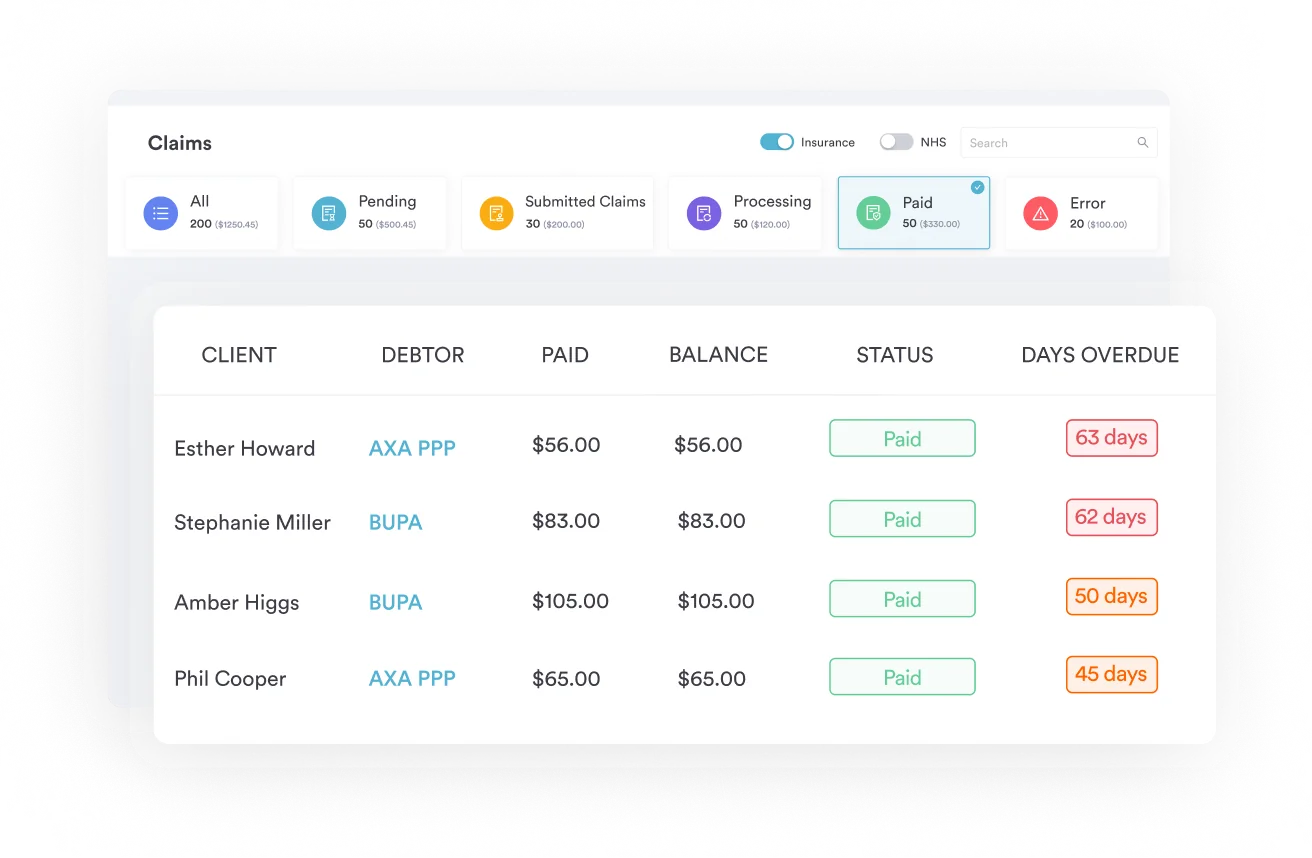

Pabau helps eye care practices track documentation completeness, manage billing workflows, and reduce CPT 92004 claim denials — all in one system.

Modifiers signal to payers that a service was distinct, altered, or performed under specific circumstances. Incorrectly applying modifiers to CPT code 92004 claims triggers edits just as often as missing them entirely. Modifier applicability varies by payer — confirm with each carrier before routinely appending any modifier.
Modifier -25 is the one that generates the most post-payment audits. The separate E/M service must address a different diagnosis, or a distinctly different problem, from the eye examination itself. Both encounters must be documented separately in the record.
Billing guidance for modifier usage in other specialty contexts follows the same principles outlined for ADHD screening CPT code and other evaluation-based services.
Medical necessity for CPT code 92004 is established through the ICD-10-CM diagnosis code on the claim. The diagnosis must support the need for a comprehensive ophthalmological service — a code indicating active ocular disease, a systemic condition with known ocular manifestations, or a symptom-based complaint will generally satisfy medical necessity requirements better than a routine-exam code alone.
Payers do not guarantee coverage based on any specific ICD-10-CM pairing. Medical necessity is determined on a claim-by-claim basis. Avoid using Z00.01 (encounter for general adult medical examination with abnormal findings) as the primary diagnosis for CPT 92004, since Medicare generally covers medically necessary eye disease exams rather than routine vision examinations.
The same specificity principle applies to other ocular diagnoses. A code such as H04.9 still needs to reflect the clinical finding that justified the exam, rather than standing in as a placeholder.
CPT code 92004 sits within the ophthalmological services code family alongside several frequently billed companion codes. Understanding the full family prevents both undercoding and inappropriate bundling.
CPT 92015 (refraction) is separately billable on the same day as CPT code 92004, because it is not bundled into the comprehensive exam. However, Medicare does not cover routine refraction under Part B, so it is a non-covered service for Medicare patients.
When billing 92015 for a Medicare patient, append modifier -GY to 92015 (not to 92004) to indicate the service is a statutory non-covered benefit, and collect the fee from the patient as a self-pay charge. For the broader CPT code family in specialty outpatient care.
Corneal topography, 92025, is also separately billable on the same day as 92004. Medicare’s NCCI edits do not bundle the imaging study into the exam, though each service needs its own documented indication.
Most CPT 92004 denials trace back to a small set of avoidable errors. Understanding where claims break down is more useful than a general reminder to “document thoroughly.”
Practices handling high volumes of ophthalmology encounters can reduce these errors by implementing structured billing validation before claim submission. Pabau’s claims management workflows allow billing teams to flag incomplete documentation before a claim is submitted, rather than managing denials retroactively. The AAPC Codify CPT lookup is a useful reference for cross-checking code-specific billing notes and edits. First-pass rate measures how often a claim is paid without anyone touching it again.
Set up a payer-specific modifier checklist for your top five payers and review it quarterly. Medicare, Medicaid, and commercial payers apply modifier rules differently for CPT 92004 — what passes through one payer’s edits will trigger a denial at another. A one-page reference by payer name for your billing team prevents the most common modifier-related rejections.
Ophthalmology practices billing CPT code 92004 at volume face a consistent pressure point: what happens in the exam room does not always make it into the documentation record. That disconnect costs money in downcoded claims and administrative time in post-denial appeals.
Pabau’s practice management platform closes that disconnect through structured clinical documentation and integrated billing workflows. Practices can build exam templates that prompt providers to document each of the eight required CPT 92004 components before the encounter is closed. Those completed records connect directly to the billing workflow, cutting out the manual reconciliation step that introduces errors.
The same structured-documentation approach applies across specialties:
For practices managing HIPAA-compliant documentation requirements alongside billing efficiency, Pabau’s system maintains audit-ready records that can be retrieved quickly during payer reviews. The result is fewer post-payment audits, faster reimbursement cycles, and less administrative overhead per encounter.
CPT code 92004 claims fail most often for the same reasons: incomplete component documentation, incorrect patient status assignment, and missing treatment plan entries. The code has a high component burden, but each requirement is predictable and documentable with the right workflow in place.
Pabau’s structured documentation and claims management workflows help ophthalmology practices build that process, ensuring required components are captured at the point of care and claims are submitted with the documentation they need to pay. To see how it works for your practice, book a demo.

Billing other anesthesia procedures? CPT code 00561 breaks down base units and modifier selection for open-heart procedures with pump oxygenator in patients under age 1.
Need a diagnostic imaging code reference? CPT code 76801 covers the documentation requirements for first-trimester obstetric ultrasound.
Managing home health certification billing? HCPCS code G0180 outlines the physician certification documentation Medicare requires for home health services.
CPT code 92004 is used to bill a comprehensive ophthalmological service for a new patient, covering medical examination and evaluation with the initiation of a diagnostic and treatment program. It applies to patients who have not received professional services from the physician or their group within the past three years, and requires documentation of eight specific exam components including a dilated fundus examination and tonometry.
CPT 92004 is for new patients; CPT 92014 is for established patients who have been seen by the physician or the physician’s group within the past three years. Both codes represent a comprehensive ophthalmological service requiring the same eight exam components and similar documentation, but the patient-type distinction determines which code applies.
CPT code 92004 requires individual documentation of eight exam components: general medical observation, ophthalmological history, external ocular and adnexal examination, gross visual fields by confrontation, basic sensorimotor examination, biomicroscopy, examination of the ocular fundus (dilated), and tonometry. The medical record must also include a chief complaint, confirmation of new patient status, and documentation of a diagnostic and treatment plan.
Medicare reimburses approximately $130 to $160 nationally for CPT code 92004, though the exact amount varies by geographic locality and changes annually with CMS fee schedule updates. Verify current reimbursement figures using the CMS Physician Fee Schedule lookup tool before using these estimates for financial planning.
Yes, CPT 92015 (determination of refractive state) is separately billable on the same day as CPT 92004 because refraction is not bundled into the comprehensive exam. However, Medicare does not cover routine refraction under Part B — append modifier -GY to 92015 (not to 92004) when billing a Medicare patient for refraction, and collect the refraction fee as a self-pay charge.
Modifier -25 applies when a separate, significant E/M service is performed on the same day as the comprehensive exam, appended to the E/M code with separate documentation. Modifier -59 may apply when a procedure performed the same day is distinct from the exam. Modifier -GY is used on the companion CPT 92015 code (not 92004 itself) for Medicare patients receiving a non-covered refraction. Modifier applicability varies by payer and should be verified against each carrier’s billing policies.



