ICD-10 code Y83.0: Surgical operation with whole organ transplant
ICD-10 code Y83.0 names the transplant as the cause, not the problem ICD-10 code...

Last Updated: Nov 19, 2026
Billable Code Specific Code
B35.1 is the billable ICD-10-CM code for tinea unguium. It sits in the B35 dermatophytosis category and covers fingernails and toenails when a dermatophyte such as Trichophyton rubrum causes the infection.
Common denials tied to this code come from a note that does not describe each debrided nail with mycotic clinical signs. Others follow from using B35.1 for a Candida infection, which takes B37.2. Billing nail debridement without documented medical necessity is the third.
Let Pabau's smart automation suggest the right codes, reduce claim denials, and keep your practice compliant—effortlessly.
Automate repetitive tasks and focus on what matters most—your patients.
Reduce coding errors and ensure compliance with the latest regulations.
Clean claims, fewer denials, and faster reimbursements.
Powerful insights and reporting to help your practice thrive.
HIPAA compliant SOC 2 certified GDPR-compliant Trusted by 4,000+ clinics worldwide

B35.1 covers only nail infections caused by a dermatophyte, and Candida nail disease is coded B37.2 instead.
One B35.1 code covers fingernails and toenails alike, because ICD-10-CM has no laterality or site-specific subcode for it.
Medicare nail debridement needs a note that describes each debrided nail with mycotic clinical descriptors. LCD L33636 also asks for class findings or a qualifying systemic illness.
A KOH preparation shows fungal elements only, so a culture or histology with identification is what separates B35.1 from B37.2.
ICD-10 Code B35.1 is a valid, billable ICD-10-CM diagnosis code with the official descriptor Tinea unguium. It is listed as a valid code in CMS’s ICD-10-CM code files, effective since FY2016 and still valid in the current code set. The code also sits within Chapter 1 (Certain Infectious and Parasitic Diseases), block B35-B49 (Mycoses), category B35 (Dermatophytosis).
However, the CDC/NCHS ICD-10-CM web tool remains the trusted source for checking B35.1’s current status, tabular inclusions, and any active Excludes notes each fiscal year.
B35.1 covers dermatophyte-caused fungal infection of the nails, known as tinea unguium or onychomycosis when the causative organism is a dermatophyte. The code applies to fingernails, toenails, or both, and it does not change with the number of nails involved.
Organisms that fall within B35.1 include Trichophyton species (most commonly T. rubrum), Epidermophyton, and Microsporum. In fact, these dermatophytes cause most onychomycosis cases worldwide. The clinical subtypes included are:
A single B35.1 code covers all affected nails. Also, no site-specific subcodes exist in ICD-10-CM for fingernail versus toenail involvement, and no laterality modifier applies.
B35.1 is restricted to dermatophyte organisms, so two kinds of nail conditions fall outside it and take their own codes.
The L60 codes are classified under Chapter 12 (Diseases of the Skin and Subcutaneous Tissue), not under infectious and parasitic diseases. Therefore, using L60.x for a confirmed fungal nail infection is a coding error. It signals a structural nail disorder rather than an active infection, so payers may deny the antifungal treatment as not medically indicated.
The correct code depends on the causative organism and whether the condition is infectious. Because the three look alike, mixing them up is a frequent source of errors on nail-condition claims.
When lab results are pending at the visit and the presentation is consistent with tinea unguium, ICD-10-CM guidelines permit coding from the physician’s notes. For example, a note stating “tinea unguium” or “dermatophytic onychomycosis” supports B35.1, because the coder assigns the documented diagnosis rather than the pending lab result.
In short, the choice comes down to two questions: is the nail infected, and which organism does the lab identify?
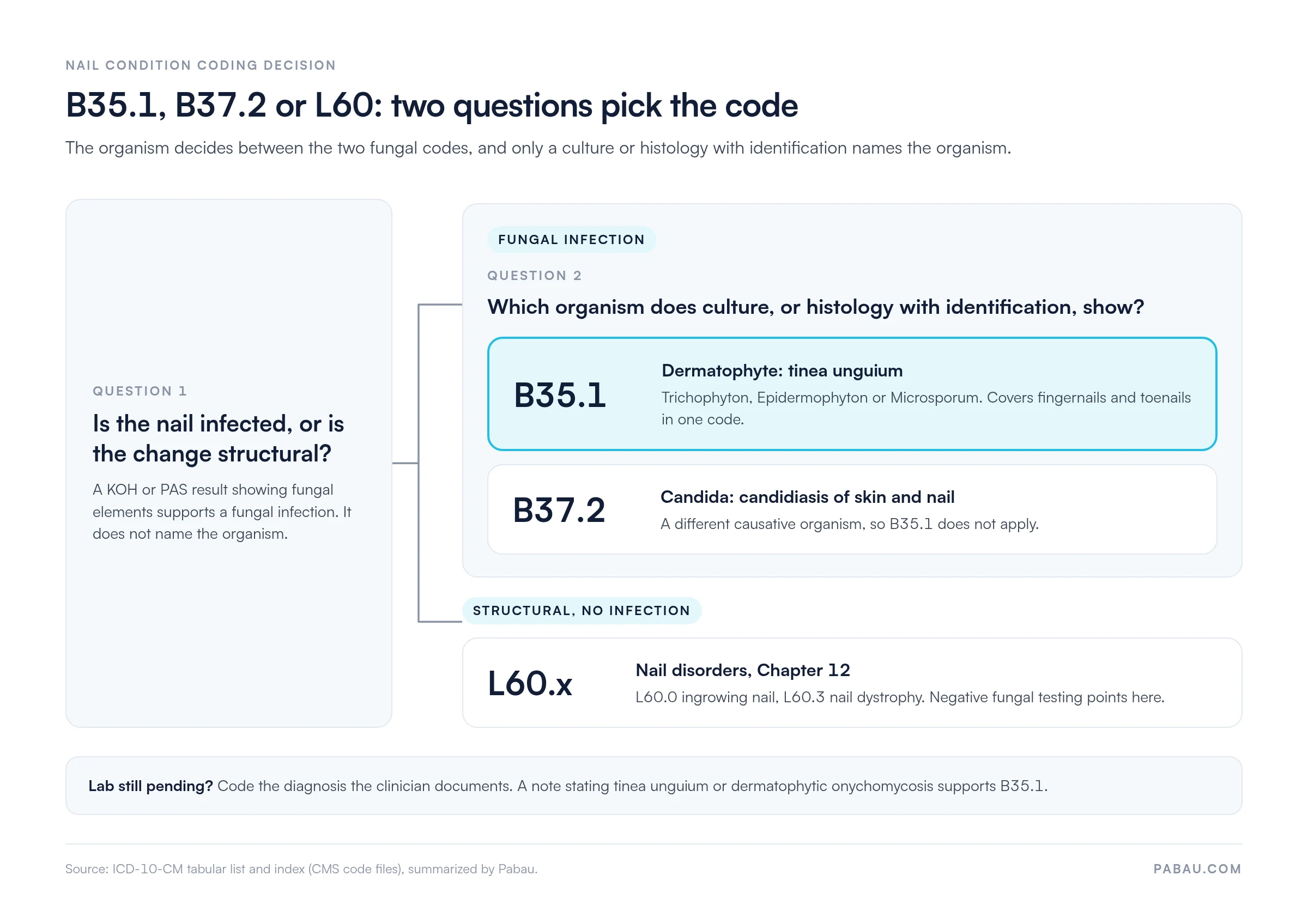
Describe each nail you assess in the note, including thickening, discoloration, subungual debris, and onycholysis. A KOH preparation confirms fungal elements but cannot tell a dermatophyte from Candida. When the organism decides the code, send a fungal culture and record the result.
B35.1 is one of nine codes within the B35 (Dermatophytosis) category. Picking the wrong sibling is a common error, especially B35.3 (tinea pedis) in a patient with foot and nail involvement at once. When both sites are documented and treated, both codes belong on the claim.
The clinical record must support B35.1 at three levels. Specifically, it needs the provider’s diagnosis, a description of each affected nail, and a treatment plan tied to the diagnosis. As a result, coders cannot assign B35.1 from a vague entry like “nail fungus” or “discolored nail” alone.
What the record must show, based on CMS ICD-10-CM coding guidelines and Medicare’s nail debridement LCDs:
Building each note to clean claim requirements from the first visit heads off the most avoidable B35.1 denials. But the usual culprit is a debridement line with no nail description behind it.
B35.1 is usually paired with procedure codes for nail debridement, lab testing, or the initial evaluation visit. Each pairing carries specific documentation requirements that, if unmet, trigger a denial.
When you debride six or more nails at one visit, the claim moves to 11721, and the note has to count them. For instance, a note that says “all toenails” without a number leaves the coder guessing between the two debridement codes.
Coverage criteria for B35.1-linked services vary by payer type. Specifically, Medicare, Medicaid, and commercial plans each apply different standards.
Medicare covers nail debridement (11720, 11721) for B35.1 only as an exception to the routine foot care exclusion. Under LCD L33636, the record must describe each debrided nail with clinical descriptors consistent with mycosis. Coverage also needs class findings or a qualifying systemic illness causing peripheral neuropathy.
Medicare does not routinely cover KOH or culture on nail clippings, and a culture is not required for debridement. MAC policies differ, so check your MAC’s current LCD before you bill. Medical billing compliance for these services also requires the treating clinician to examine the nails and record the findings in the debridement note.
For oral antifungal therapy (terbinafine, itraconazole), most commercial payers apply step therapy. They want documented failure of a topical antifungal, usually after 12 weeks of treatment, before they approve a systemic agent. Prior authorization requests must include the drug name, treatment duration, clinical response, and the B35.1 diagnosis with supporting lab results. Formularies and step-therapy thresholds vary by plan, so consult the payer’s policy before submitting.
Most B35.1 denials trace back to the note or the code choice. Overall, the five patterns below follow from LCD requirements and standard denial management in healthcare workflows. When a denial does arrive, the medical billing denial codes on the remittance show which pattern caused it.
Three situations come up often in dermatology and podiatry billing. Also, each one below follows the ICD-10-CM Official Guidelines for Coding and Reporting.
When a patient presents with both nail involvement (B35.1) and active athlete’s foot (B35.3), both codes may be assigned. These are distinct site-specific infections within the B35 category, and coding only one when both are documented and treated under-reports the clinical burden. So, document each site separately in the note.
Proximal subungual onychomycosis in an immunocompromised patient may warrant an additional code for the underlying condition (HIV disease, diabetes, organ transplant immunosuppression). PSO presentation without a known trauma history should prompt documentation of immune status. However, B35.1 remains the right code, and the comorbidity code is added as a secondary diagnosis per sequencing guidelines.
A recurrent tinea unguium episode within 12 months of a successfully treated prior infection is coded B35.1 again, since ICD-10-CM has no “recurrent” subcode for B35.1. Document the prior treatment and the new clinical presentation clearly, because payers review prescribing patterns when they approve antifungal prescriptions.
ICD-11 maps tinea unguium to code 1F28.1 (Dermatophytosis of nail). The WHO ICD-11 browser also includes post-coordination options for site, extent, and causative organism that ICD-10-CM lacks. As of the current fiscal year, the Centers for Medicare and Medicaid Services has not mandated ICD-11 for US clinical billing. Instead, all US insurance claims continue to use ICD-10-CM codes, including B35.1.
A B35.1 claim stands or falls on what the note says about each nail and which organism the lab names. Pabau, a practice management platform with built-in insurance billing, keeps the note, the lab result, and the claim on one patient record. Practices can switch on Quest and Labcorp ordering, so a fungal culture result lands on that record automatically.
Pabau’s claims management software submits electronic claims and tracks their status and remittances, so your billers see a denial as soon as it comes back. For an oral antifungal, the prior authorization code, dates, and sessions sit on the patient’s case, with a warning when one is missing.
In the US, claims run through the Claim.MD clearinghouse. It sends electronic CMS-1500 claims to thousands of US payers and runs real-time eligibility checks (270/271) before the visit. It also tracks claim status and returns electronic remittance advice, so the denial reason codes reach your billing workflow.
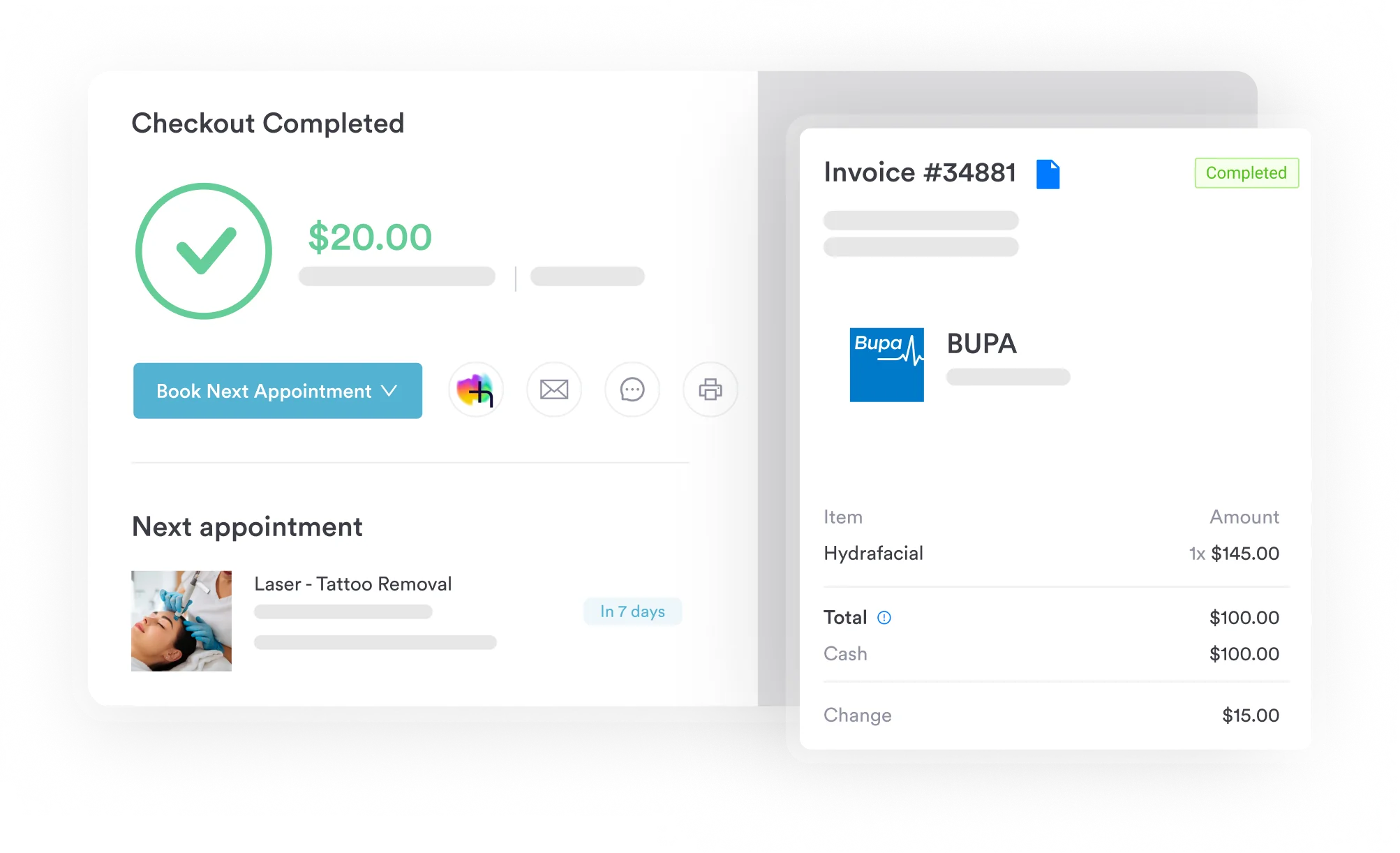

Pabau’s claims management submits electronic claims through Claim.MD, checks eligibility in real time, and tracks status and remittances. See how it works for dermatology and podiatry practices.

B35.1 is the easy part of a nail claim. The code is billable, it covers every nail, and it never needs a site subcode. Instead, payment turns on the record behind it.
Make two habits standard. Send a culture when the organism decides between B35.1 and B37.2, because a KOH result cannot settle it. Before any Medicare debridement, describe each nail and record the class findings, then check your MAC’s LCD for its exact criteria.
The trade-off is a few extra lines per note against a denial you cannot fix after the fact. Book a demo to see how Pabau keeps the note, the lab result, and the claim together for dermatology and podiatry practices.

Submitting nail claims in the US? Pabau’s Claim.MD clearinghouse guide explains how eligibility checks and electronic claim submission work.
Seeing recurring denial codes on your remittance? Denial codes in medical billing breaks down CARC reason codes and what each one requires to resolve.
Debriding six or more nails? CPT code 11721 covers the documentation that larger debridement claims need.
Looking up another diagnosis code? The ICD-10-CM code library collects Pabau’s guides to individual diagnosis codes.
ICD-10 Code B35.1 is the billable diagnosis code for tinea unguium, the dermatophyte-caused fungal nail infection also called onychomycosis. It covers fingernails and toenails when the causative organism is a dermatophyte such as Trichophyton rubrum. It sits within the B35 (Dermatophytosis) category of ICD-10-CM Chapter 1.
Yes. B35.1 is a valid, billable ICD-10-CM code, effective from FY2016 and valid in the current code set. It can be reported directly on insurance claims without a more specific subcode.
B35.1 applies when the causative organism is a dermatophyte (Trichophyton, Epidermophyton, or Microsporum). B37.2 applies when the organism is Candida. A KOH preparation only shows fungal elements, so it supports a fungal infection without naming the organism. A fungal culture, or histology with identification, distinguishes the two. Using B35.1 when the culture shows Candida is a coding error.
Yes. B35.1 is a single code that covers dermatophyte-caused nail infection of any nail, including fingernails, toenails, or both. ICD-10-CM includes no site-specific subcodes or laterality modifiers under B35.1.
The most common pairings are the nail debridement codes 11720 (1 to 5 nails) and 11721 (6 or more nails). Lab work adds 87220 (KOH tissue examination) and 87101 (fungal culture). Office visit codes 99213-99215 are used for the diagnosis visit. For Medicare debridement, the note must describe each debrided nail with mycotic clinical descriptors.