GLP-1 diet plan
A GLP-1 diet plan is a structured eating framework for patients taking semagluti...

2
Last Updated: Oct 13, 2026

Communication disorders affect roughly 1 in 12 US children aged 3 to 17, and prevalence peaks between ages 3 and 6.
Refer any child with no single words by 16 months, or no two-word combinations by 24 months.
The modality follows the diagnosis, so articulation delay, language delay and childhood apraxia each need a different approach.
Childhood apraxia of speech needs motor-based therapy such as PROMPT, often three or more sessions a week.
Tagging the treatment approach at the patient level keeps progress reports defensible when a child’s profile changes mid-course.
Speech delay therapy works best when it starts early and matches the diagnosis. Roughly 1 in 12 US children aged 3 to 17 has a disorder of voice, speech, language or swallowing, according to NIDCD data. Prevalence runs highest in the 3 to 6 age band, and boys are affected more often than girls.
One finding holds across every presentation. Early access to therapy produces measurably better outcomes than a delayed referral does.
This guide is written for speech-language pathologists, practice owners and practice managers. It covers identification, referral thresholds, the evidence-based modalities, and the documentation a private practice needs to keep a caseload moving.
Speech delay is a problem with producing sounds. It covers articulation, fluency, and the motor coordination that intelligible speech requires. Language delay sits elsewhere. It affects comprehension or use of vocabulary, grammar and meaning.
A child can present with one, the other, or both at once. That is why differential assessment matters from the first contact rather than the third session.
Four entities a speech-language pathologist (SLP) has to separate:
Each has a different etiology and a different evidence base for treatment. Conflating them leads to mismatched intervention and frustrated families.
Childhood apraxia of speech is the clearest example. ASHA’s CAS practice portal calls for motor-based intervention rather than phonological awareness work. PROMPT therapy is the best known of those approaches, and the name stands for Prompts for Restructuring Oral Muscular Phonetic Targets. Apply phonological contrast therapy to a child with CAS and progress stalls, because the modality never matched the diagnosis.
Stuttering and fluency disorders form a further category. The Lidcombe Program, developed for early childhood stuttering, has an evidence base separate from the literature on phonological or expressive language delay. Treating fluency with articulation targets misses the mechanism entirely.
Refer at 16 months if there are no single words, and at 24 months if there are no two-word combinations. Those two thresholds carry the strongest evidence, and neither one is a conservative estimate.
Referral is where pediatric speech delay therapy most often stalls. Primary care physicians and developmental pediatricians still take a wait-and-see position with children under two. Sometimes that is the right call. Often it costs the child a year of intervention.
The AAP and ASHA set those benchmarks. Waiting past them carries a direct cost. Early intervention under the IDEA Part C framework covers US children from birth to age 3. Therapy started inside that window outperforms therapy started later.
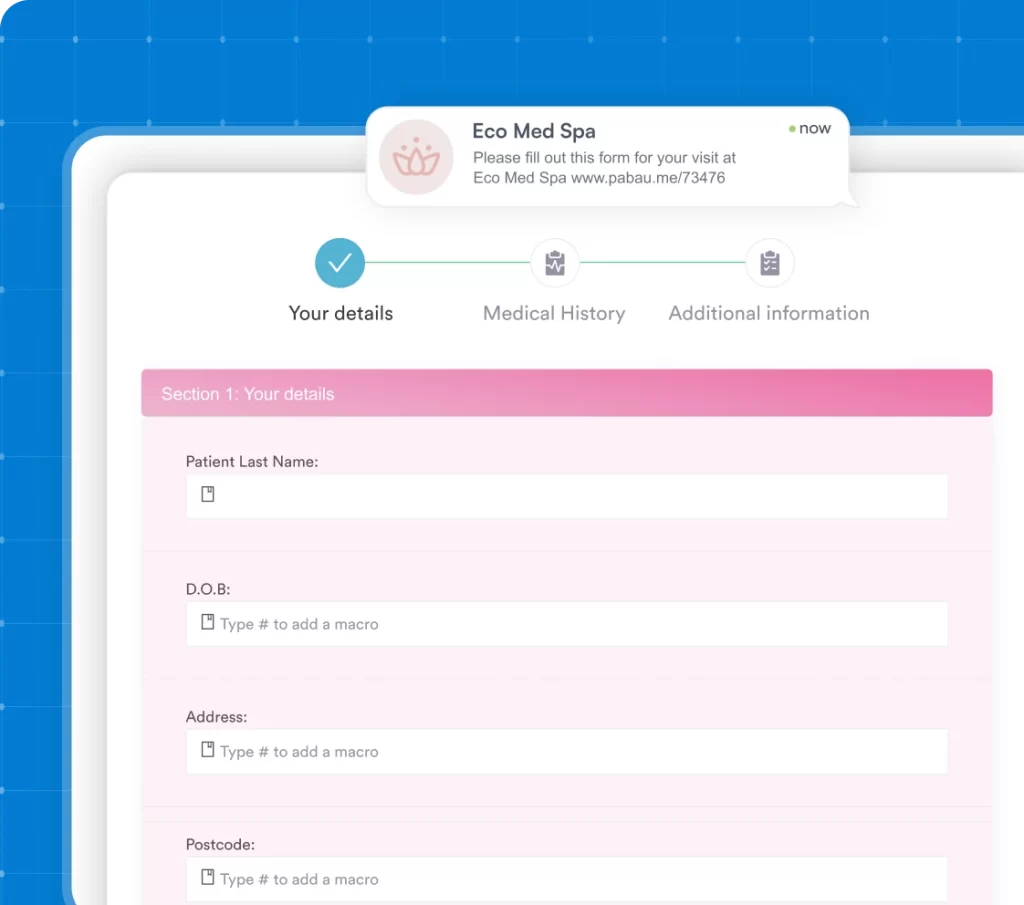
Practices seeing pediatric referrals should build these milestones into intake screening. A structured intake form should capture developmental history, when the parent first became concerned, and any prior professional contacts. That lets the SLP set caseload priority before the first appointment. Families who arrive unsure whether their child needs therapy also get a clear, milestone-referenced answer on day one.
| Age | Red flag | Action |
|---|---|---|
| 12 months | No babbling, no pointing or waving | Monitor closely and raise it with a developmental pediatrician |
| 16 months | No single words | Refer for SLP evaluation immediately |
| 24 months | No two-word combinations | Refer for SLP evaluation immediately |
| 36 months | Strangers understand less than half of the child’s speech | Refer for SLP and audiology evaluation |
| Any age | Loss of language skills the child already had | Urgent developmental pediatrician referral |
Hearing loss is a frequent driver of apparent speech and language delay. Confirm audiology screening before any diagnosis is made. An audiologist referral is standard practice whenever speech delay appears without a clear developmental history, and especially where the delay is mainly receptive.
No single approach works across every presentation. Children differ by etiology, severity, co-occurring conditions and family context. The modalities below are the ones private practices deliver most often, and each one belongs to a specific diagnosis. The map that follows pairs the four commonest presentations with the approach the evidence supports.
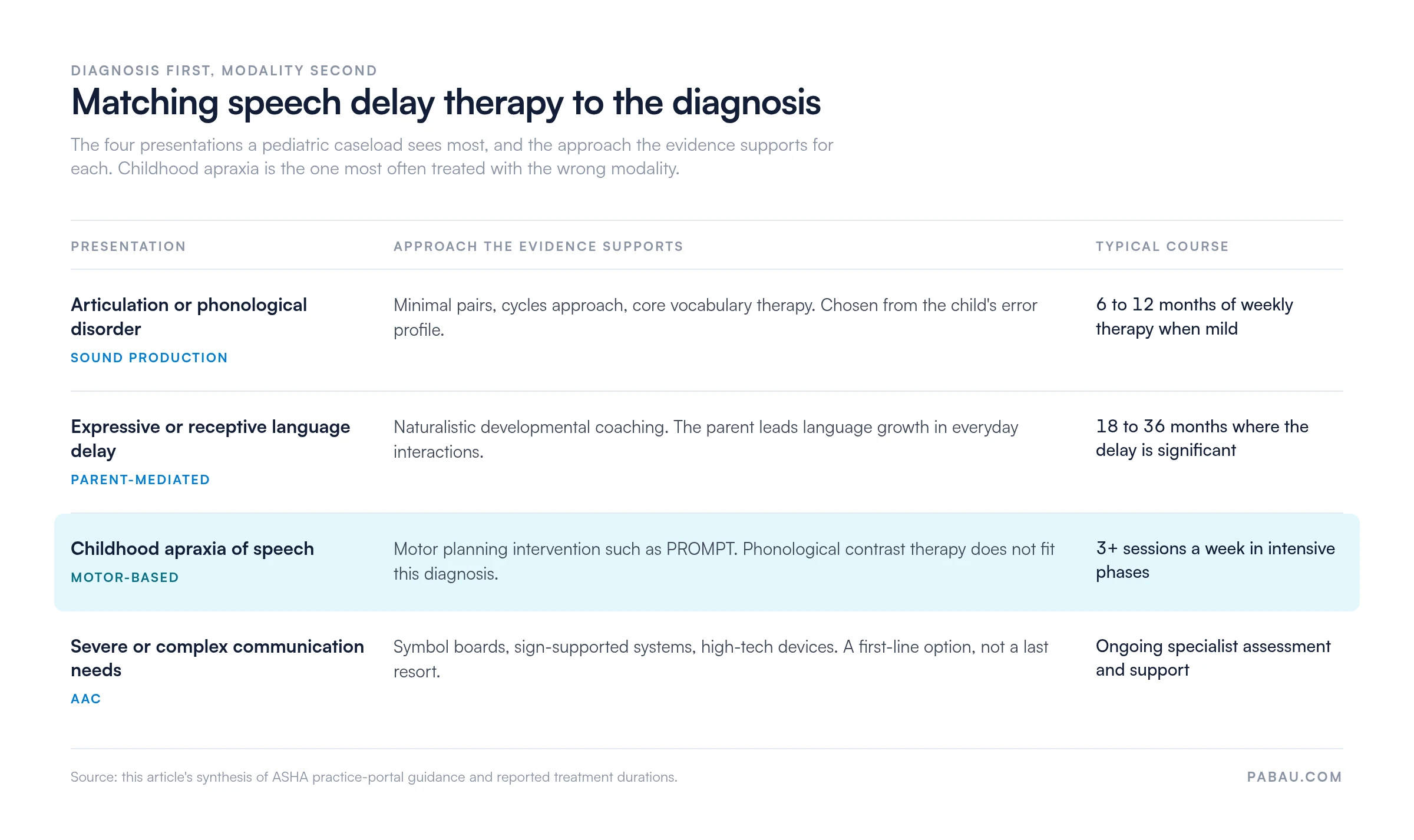
For functional articulation delay or phonological disorder, treatment targets sound production and phonological awareness. Minimal pairs therapy, the cycles approach and core vocabulary therapy each address a different error pattern. Selection depends on the child’s error profile, age and intelligibility level.
ASHA’s practice guidelines for speech sound disorders review the evidence behind each one. A standardized articulation test at intake gives you that error profile, plus a baseline you can re-score against six months later.
For expressive and receptive language delay, naturalistic developmental approaches have a strong evidence base with young children. The Hanen It Takes Two to Talk program trains parents to lead language growth inside everyday interactions. DIR/Floortime offers a complementary frame where social communication is affected alongside language.
These parent-mediated models move the SLP out of direct therapy and into coaching. Sessions need a clear structure, with time set aside for parent coaching, joint play observation and home program review. Your documentation then has to track the parent’s progress as well as the child’s, which most note templates are not built to do.
For children with severe speech delay or complex communication needs, augmentative and alternative communication (AAC) may be the primary pathway. That includes children with autism spectrum disorder, cerebral palsy or intellectual disability. AAC is a first-line option rather than a last resort. ASHA’s AAC guidance notes that it does not inhibit speech development, and that it may support speech by reducing communication frustration.
Symbol boards and sign-supported systems sit at the low-tech end. High-tech devices and apps need specialist assessment plus ongoing SLP support to work. Practices offering AAC need records that track device recommendations, trial outcomes and funding applications across a provision process that can run for a year.
Children with childhood apraxia of speech need high-frequency, motor-focused intervention. PROMPT is a tactile-kinesthetic approach that uses manual cues to shape oral movement, and it has an established evidence base for CAS. ASHA’s CAS portal puts motor-based approaches ahead of phonological ones for this population.
Frequency is the part that hits the schedule. Children with CAS typically need three or more sessions a week during intensive phases. A practice carrying two or three of these cases at once has to protect those slots months ahead. Protecting those slots depends on appointment management that keeps the calendar organized and avoids double bookings.
Document the therapy modality at the patient level, not just the appointment level. When a child moves from an articulation approach to a language-facilitation model, the record should show that shift and the date it happened. A SOAP note template with a treatment-approach field protects your clinical reasoning and speeds up progress reports for parents and referrers.
Diagnosis shapes the plan in every direction. Where autism and speech delay overlap, both the goals and the session structure change.
Running a private practice adds operational demands on top of the clinical work. Families arrive anxious, caseloads are intensive, and documentation runs from initial assessment reports through SOAP notes to outcome measures. Practices that handle that badly lose clinician hours that should go to patient care.
Referral management is the first pressure point. Private SLP practices take referrals from primary care physicians, developmental pediatricians, school teams and self-referring families. Each route arrives with different paperwork and a different level of urgency. Purpose-built therapy practice management software captures the source, the presenting concern and an urgency flag at intake, before the SLP ever meets the family.
SOAP notes are the default format for speech therapy sessions. A strong one records the subjective report, the objective findings, the clinical assessment and the plan. Objective findings here mean targets achieved, standardized score changes and behavioral observations.
Generic text fields produce inconsistent records that are hard to audit or share with a referrer. Structured templates with speech-therapy-specific fields give you defensible documentation and faster report generation.
Outcome tracking is harder than it looks. Progress in speech delay therapy is rarely linear, so quantifying it needs standardized assessments alongside clinical observation. Measures such as the Preschool Language Scales and the Clinical Evaluation of Language Fundamentals give scores you can compare across time points. Assessment tools like a free aphasia worksheet cover similar receptive and expressive language tasks that pair well with those standardized measures.
Recording those scores inside the patient record, next to the session-level observations, is what makes an outcome report possible later. Without it you end up reconstructing 18 months of progress from memory, usually on the day an insurer asks.
Telehealth delivery expanded sharply after 2020. Emerging evidence suggests it works for many pediatric populations, though the research base is still developing. Treat equivalence with in-person delivery as unproven rather than settled, and check state licensure and payer rules before you offer it.
Parent and caregiver communication sits at the center of therapy for young children. Most language learning happens outside the therapy room, so the home program directly affects outcomes. Structured take-home materials such as therapy worksheets for kids keep that practice consistent between sessions.
Automated post-session messages help too. Home program summaries, activity reminders and progress updates lift parent engagement and carryover. That matters most in parent-mediated models like Hanen, where implementation fidelity is the primary treatment variable.
Multi-clinician teams need consistent documentation standards even more. In an intensive program, a child may be seen by three different SLPs in one week. The notes then have to carry enough detail for any of them to continue the plan without a briefing. Speech therapy software that puts records in front of the whole team instantly is what makes that workable.
Most private speech therapy practices run this on three or four disconnected systems. Intake forms sit in one tool, session notes in another, standardized scores in a spreadsheet, and parent follow-up in somebody’s inbox. Every report to a referrer becomes a reassembly job.
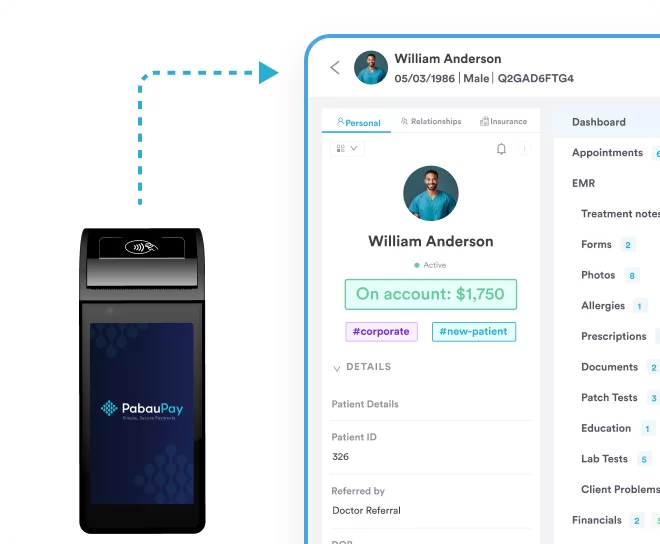
Practice management software like Pabau puts those pieces in one place. Developmental-history intake forms feed the client record before the first appointment. SOAP note templates carry a treatment-approach field. A shift from articulation work to language facilitation then shows up in the record, not in a clinician’s memory.
Repeat assessment scores attach to that same record, so a re-scored PLS-5 or CELF compares cleanly against the baseline. Pabau Scribe, our AI scribe, drafts the session note from the appointment itself, which cuts the writing left over after a day of back-to-back sessions. Automated post-session messages send the home program to the parent without anyone chasing it.
The outcome is a caseload you can report on. Progress stays documented, comparable across time points, and ready to share with a referrer or an insurer without rebuilding records by hand.

Pabau gives speech therapy practices developmental-history intake forms, SOAP templates with a treatment-approach field, and automated home-program follow-up. Progress stays documented and easy to report.

The clinical decision in speech delay therapy is usually clear once the assessment is done. Articulation delay, language delay and childhood apraxia each point at a different approach, and the evidence for each one is well documented.
Holding that decision together over 18 months is the harder part. Modalities change, scores get re-run, clinicians rotate, and parents need the home program every week. A practice that loses track of which approach a child is on cannot write a defensible progress report.
So the trade-off is worth remembering. Time spent structuring intake, notes and outcome fields comes back the first time a referrer or an insurer asks what changed. Book a demo to see how Pabau tracks a speech therapy caseload from first referral through to outcome reporting.

Need clinical guidance on autism-related communication delays? Autism and speech delay covers how a co-occurring diagnosis changes assessment, goal setting and session structure.
Picking an assessment to establish a baseline? Articulation test walks through administration, scoring and how to read the results consistently across a caseload.
Struggling with home program carryover between sessions? Engaging families in speech therapy sets out practical ways to keep parents working with the child at home.
Want a note format built for SLP sessions? SOAP notes for speech therapy template gives you a structured note you can use from the next appointment onward.
Comparing platforms for an SLP practice? Best speech therapy practice management software weighs the options on scheduling, documentation and outcome tracking.
Limited babbling by 12 months, no single words by 16 months, and no two-word phrases by 24 months. By age 3, speech that strangers largely cannot understand is another red flag. Losing words or sounds the child previously used needs urgent referral. Hearing difficulties present in a similar way, so audiological screening should accompany any speech delay evaluation.
As soon as a delay is identified. ASHA and AAP guidance supports referral when a child has no single words by 16 months, or no two-word combinations by 24 months. Early intervention under IDEA Part C runs from birth to age 3 in the US. Waiting buys nothing, and earlier access to therapy consistently produces better outcomes.
Speech delay is about producing sounds clearly and fluently, which is the mechanics of talking. Language delay is about understanding or using vocabulary, grammar and meaning. A child with speech delay may have clear ideas but struggle to articulate them. A child with language delay may produce sounds well but have a limited vocabulary. Both need therapy, through different approaches.
There is no single best approach, because the right one follows the diagnosis. Articulation delays respond well to phonological approaches. Childhood apraxia of speech needs motor-based intervention such as PROMPT. Expressive language delays often do better with parent-mediated models like the Hanen Program. A full SLP assessment is the starting point for choosing between them.
It varies with the presentation. Mild articulation delays often resolve within 6 to 12 months of weekly therapy. Children with childhood apraxia of speech or significant language delay usually need 18 to 36 months of intensive input. Progress depends on severity, age at referral, family engagement with the home program, and how consistent attendance is.
Causes vary and often interact. Common contributors include hearing loss, autism spectrum disorder, developmental language disorder and childhood apraxia of speech. Structural differences such as cleft palate can be involved, as can limited language exposure at home. A co-occurring intellectual disability may also affect language development. Because causes overlap, a comprehensive SLP assessment is essential before treatment begins.