Nitrates medication list
A nitrates medication list is a point-of-care reference that sets out the main c...

2
Last Updated: Oct 6, 2026

The sacral thrust test applies an anteroposterior force to the sacrum with the patient prone, provoking sacroiliac joint pain to identify SIJ dysfunction.
A positive result requires reproduction of the patient’s familiar posterior pelvic or SIJ pain, not just any pain response.
No single SIJ provocation test confirms the diagnosis. Laslett 2005 puts the threshold at 3 or more positive tests from the cluster.
Prone positioning rules the test out from the second trimester of pregnancy and in suspected sacral fracture.
Practice management software like Pabau lets physical therapists, chiropractors, and osteopaths record SIJ cluster findings in a structured, searchable form.
The sacral thrust test is a sacroiliac joint provocation test performed with the patient lying prone. The clinician applies a firm anteroposterior force through the midline sacrum. It counts as positive only when that force reproduces the patient’s familiar posterior pelvic or SIJ pain.
On its own the test settles very little. Reported sensitivity sits near 0.63 and specificity near 0.75, so one positive finding shifts the odds only modestly. Three or more positive tests from the SIJ provocation cluster is the threshold worth acting on.
The sacroiliac joint shares its referral patterns with lumbar disc pathology, hip osteoarthritis, and piriformis syndrome. That overlap is why provocation testing exists at all.
This guide covers the technique and the interpretation rules, then the published accuracy figures. It also sets out the contraindications and how the sacral thrust compares with the thigh thrust.
The sacral thrust test identifies sacroiliac joint (SIJ) dysfunction by loading the joint in a direction nothing else reaches.
With the patient lying prone, the clinician applies a downward anteroposterior force through the sacrum. That creates an anterior shear stress across the SIJ, and a positive result is reproduction of the patient’s familiar posterior pelvic or SIJ pain.
The test targets the SIJ specifically because the joint’s anatomy resists palpation and movement-based assessment. The sacrum sits wedged between the two ilia, stabilized by some of the densest ligamentous structures in the body.
Compression or shear forces applied in the right direction stress the joint capsule and its surrounding ligaments far more reliably than any passive range-of-motion assessment.
Clinicians in sports medicine and musculoskeletal settings run the sacral thrust test inside a structured cluster assessment, never as an isolated diagnostic tool.
The SIJ is a synovial joint with a fibrocartilaginous surface and wide variation in shape between individuals. Movement ranges run to only 1 to 4 degrees in most adults.
Its innervation is multi-level, drawing from the L4 to S3 dorsal rami. That produces broad, overlapping referral zones. History alone rarely separates SIJ pain from a lumbar or hip source.
Orthopedic tests designed for the lumbar spine or the hip do not stress the SIJ in isolation. Provocation testing applies forces built to load the SIJ capsule and its supporting ligaments.
It remains the most practical way to differentiate SIJ pain in the office. Diagnostic nerve block is still the reference standard, but it is invasive and rarely first-line.
The anterior shear mechanism of the sacral thrust test loads the ventral sacroiliac ligaments and the anterior joint capsule. Those structures are not easily reached by compression or distraction forces. That mechanical specificity is what earns the test its place in the cluster.
Technique decides the result. Variations in hand position, force direction, or patient positioning produce false negatives and non-specific pain responses that send clinical reasoning the wrong way.
The patient lies prone on the treatment table. Adjust table height so you can apply a vertical downward force with straight elbows and body weight behind it, rather than muscular effort alone.
A pillow or bolster under the abdomen is fine for comfort, provided it does not alter sacral position. Ask the patient to relax their gluteal muscles, then identify the midline sacrum by palpating the sacral crests bilaterally.
Force magnitude should stress the SIJ ligaments without causing discomfort in an asymptomatic patient. Published methodology describes it qualitatively, as a firm anteroposterior pressure rather than a high-velocity impulse.
Avoid prescribing exact Newton values. The clinical literature uses qualitative descriptors, and force is modulated to patient size and tissue response.
A positive sacral thrust test is reproduction of the patient’s familiar posterior pelvic or SIJ pain. The criterion is narrow on purpose. Any pain, or pain in a non-SIJ distribution, does not count as a positive result.
A positive finding suggests the SIJ structures are sensitized to anterior shear loading. That supports the SIJ as a pain contributor without confirming it as the sole source. The anteroposterior force also loads adjacent lumbar structures to some degree, so lumbar dysfunction can occasionally produce a positive response.
Where the pain lands matters as much as whether it appears. Local reproduction over the posterior PSIS region is stronger evidence of SIJ involvement. Diffuse or central lumbar pain warrants caution in interpretation.
A negative sacral thrust test does not exclude SIJ dysfunction. Sensitivity is moderate at best, so a negative finding reduces suspicion without eliminating it, particularly when the history points at the joint.
The key diagnostic accuracy data for the sacral thrust test comes from Laslett et al. (2005), published in Manual Therapy.
That study established the SIJ provocation cluster, and Van der Wurff et al. provided earlier supporting data. Both used fluoroscopically guided intra-articular injection as the reference standard.
Those numbers put a ceiling on what one test can do. The sacral thrust test alone is insufficient for diagnosis, and its value emerges within a cluster. Combined with 2 or more other positive SIJ provocation tests, composite accuracy improves substantially.
Read the cluster, almost always. No single SIJ provocation test reaches acceptable diagnostic accuracy on its own. According to Laslett et al. (2005), a cluster of 3 or more positive tests substantially increases diagnostic confidence. Pooled sensitivity and specificity land well beyond any individual test.
The practical rule is straightforward. When 3 or more cluster tests are positive, and a distraction or compression test is among them, SIJ pain is likely enough to guide management.
When fewer than 3 are positive, SIJ involvement stays possible but unconfirmed, and lumbar and hip sources deserve a systematic look.
Document which specific tests were positive and negative, not just a binary ‘SIJ cluster positive’ note. Detailed cluster documentation supports your reasoning at referral, at handover, and under medico-legal review.
The sacral thrust test is one of five SIJ provocation tests in common use. Each applies a different mechanical stress to the joint, and together they cover directions no single test can.
For anyone running osteopathy practice software or a musculoskeletal practice, knowing the full cluster is what makes the reasoning defensible.
The five tests are easiest to hold in your head side by side, sorted by patient position and the direction of force.
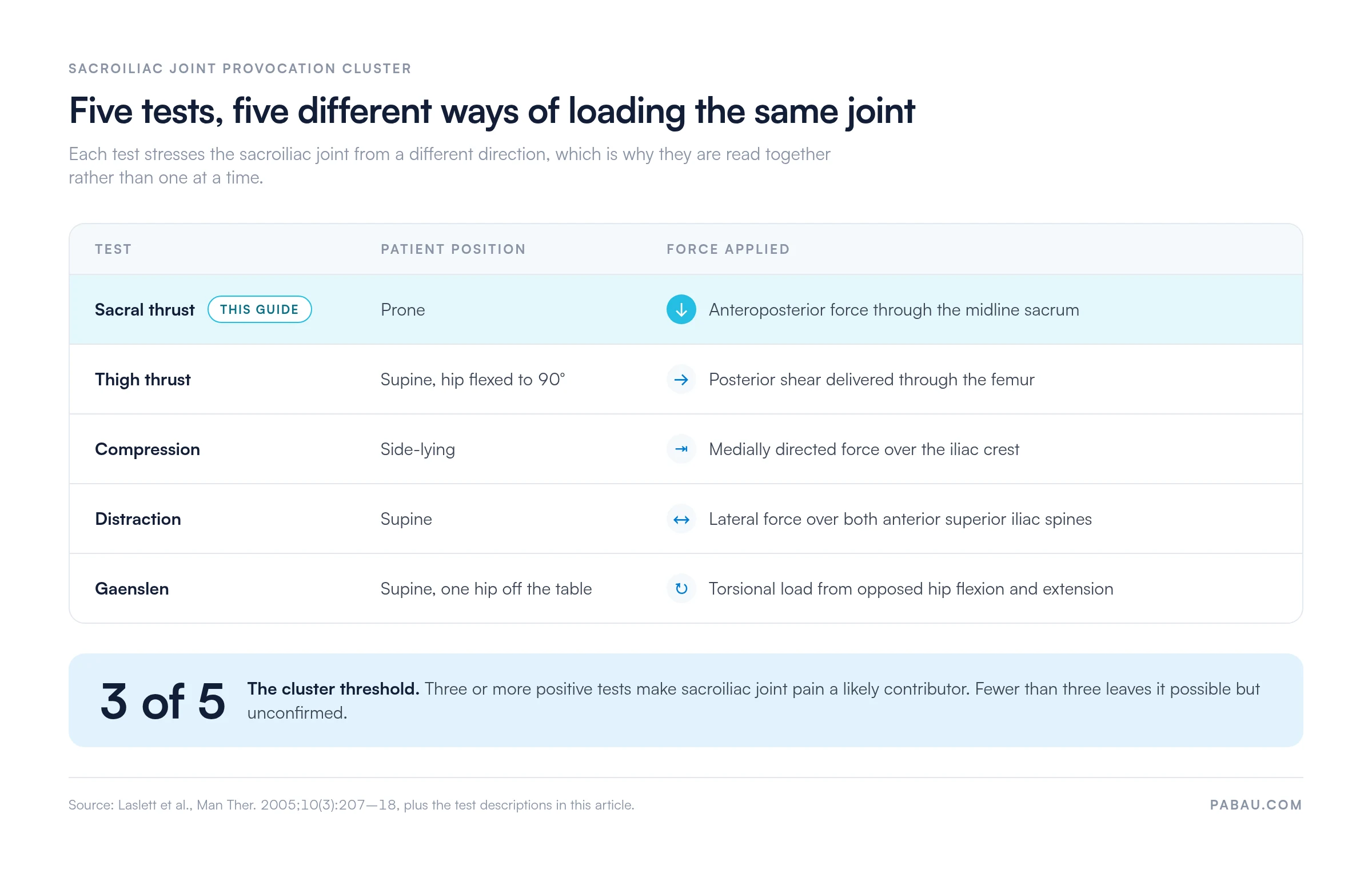
The patient lies supine with the hip flexed to 90 degrees on the test side. The clinician applies a posterior force through the femur, creating a posterior shear at the SIJ. The thigh thrust is generally the most sensitive single test in the cluster and should always be included. A positive test reproduces familiar posterior pelvic pain.
The patient lies supine with one leg hanging off the table edge in hip extension, while the other hip is held in maximal flexion. Pressure applied to both legs at once creates a torsional force at the SIJ.
That rotational vector differs from both the sacral thrust and the thigh thrust, which is why the Gaenslen test earns its own place. A positive result reproduces familiar SIJ pain on the tested side.
The compression test applies a medially directed force over the iliac crest with the patient side-lying, compressing the SIJ. The distraction test, also called the gapping test, applies a lateral force over both ASIS with the patient supine.
Both belong in a complete cluster assessment. A 2021 systematic review with meta-analysis in the Journal of Orthopaedic and Sports Physical Therapy supports reading these tests as a cluster rather than singly.
Both tests provoke SIJ pain, but their mechanical vectors, patient positions, and diagnostic profiles differ enough to change what a result tells you.
A complete cluster assessment needs both. Because their vectors are complementary, a patient with anterior SIJ irritation can test positive on sacral thrust and negative on thigh thrust, or the reverse. Running both captures more of the clinical picture.
The sacral thrust test drives a direct compressive force into the sacrum, and several presentations call for modification or avoidance. Screen for these before the patient is prone.
Where a contraindication applies, record why the test was modified or omitted. That note protects the patient and the practitioner, and it explains a short cluster to whoever reads the file next. Build a contraindication screen into the assessment template so the step cannot be skipped.
Documentation of SIJ provocation findings is often inconsistent. Many practitioners record a binary “positive SIJ cluster” without naming which tests were run, which were positive, or what pain distribution the patient reported. That costs continuity of care, complicates medico-legal review, and weakens treatment planning.
Effective documentation for each SIJ assessment captures the following:
Free-texting findings into a generic notes field loses most of that structure by the next visit. A physical therapy EMR with structured assessment templates prompts the clinician through each cluster test. Responses get recorded the same way every time, and the result links to the treatment plan.
Practices handling high volumes of post-partum pelvic pain, sports-related SIJ injuries, or chronic low back pain gain the most from standardized notes. Tracking which cluster tests were positive across visits also supports outcome monitoring, which matters for insurance reporting in chiropractic and physical therapy settings.
Choosing a system for this is its own exercise. Our comparison of physiotherapy clinic management software walks through what to look for in clinical templates, records, and reporting before you commit.
In most practices the SIJ assessment lives in a free-text box. The clinician types a line or two after the session, and the wording changes from visit to visit. Nobody can filter later for the patients whose cluster came back positive.
Practice management software like Pabau replaces that box with a form you design. Build an SIJ cluster template with a field per test, a positive or negative response, a pain-distribution note, and a contraindication screen at the top. The template runs the same way for every clinician in the practice.
Findings write straight into medical records management, so the baseline assessment is one click away at the next appointment. Because the fields are structured rather than free text, you can report on them. Count how many patients met the 3-of-5 threshold, and track what happened to them afterward.
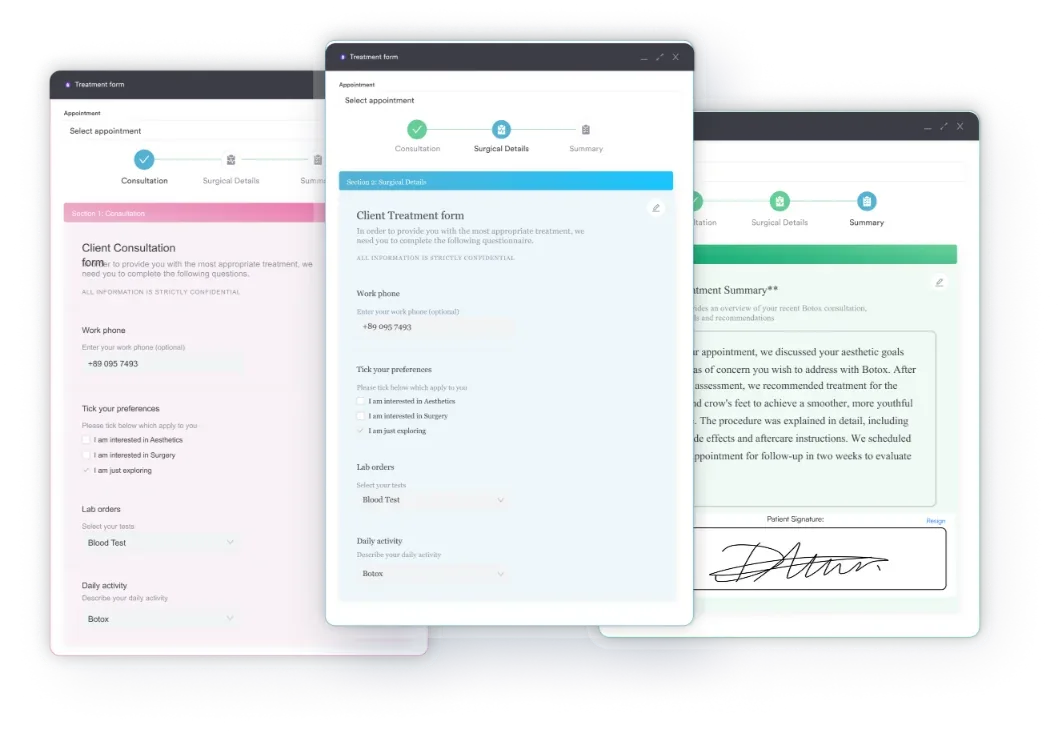
SIJ management runs across a course of treatment rather than a single visit, so the assessment record has to travel with the booking. Scheduling and clinical notes sit in the same system, which is what lets you compare a re-test against the baseline without hunting for it.
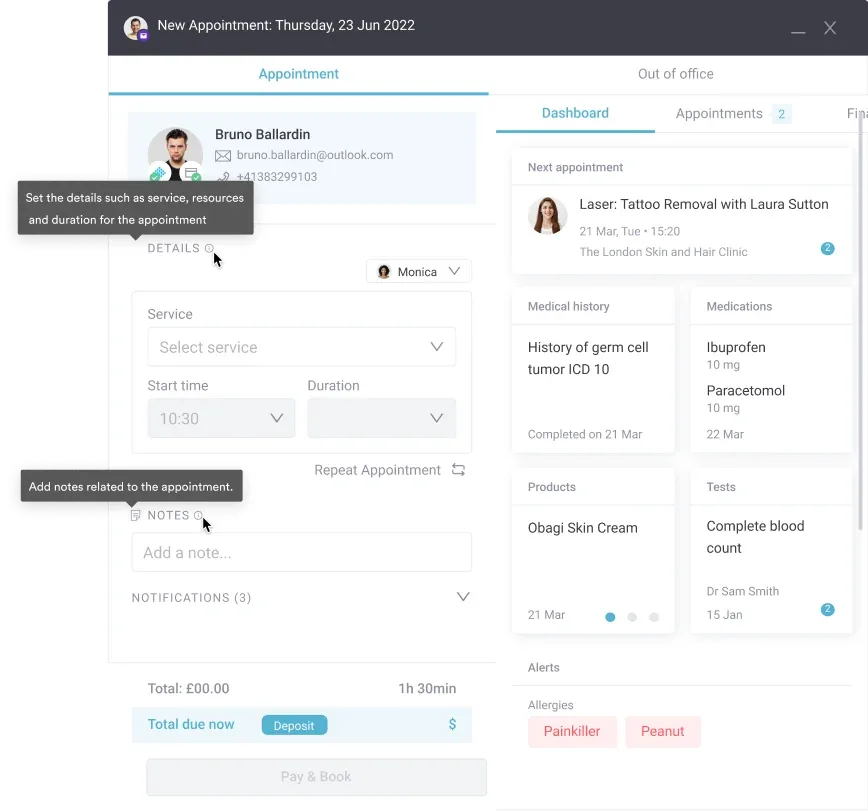

Pabau gives physical therapists, chiropractors, and osteopaths structured clinical templates for SIJ provocation testing. Findings link to the patient record and the treatment plan, so progress across visits is easy to compare.

Treat the sacral thrust test as one reading on a dial, not a verdict. Its moderate sensitivity means a negative result changes little, and a lone positive changes only slightly more. What it contributes is a force vector no other test in the cluster supplies.
The trade-off worth remembering is time against certainty. Running all five tests costs a few extra minutes of a first appointment. Those minutes separate a defensible SIJ diagnosis from an educated guess. Screen for contraindications first, then let the 3-of-5 threshold decide what you do next.
Then write it down properly, because a cluster result you cannot reconstruct in six months was not worth performing. Book a demo to see how Pabau turns SIJ cluster testing into a structured record your whole practice reads the same way.

Ruling out a lumbar source first? Crossed straight leg raise test covers the neural tension test that helps separate radicular pain from pelvic pain.
Assessing pelvic alignment alongside the SIJ? Anterior pelvic tilt explains how to measure it and what it changes about your treatment plan.
Need a faster way to capture pain location? Back pain location charts gives you a printable body chart patients can mark before the assessment.
Worried about defensible clinical records? Mandatory compliance for physiotherapy clinics sets out the documentation standards an inspector expects to find.
Building staged assessment protocols? Return to running protocol shows the same structured approach applied to multi-stage return-to-sport decisions.
The sacral thrust test is an SIJ provocation test used to help identify sacroiliac joint dysfunction. It applies an anteroposterior force to the sacrum in prone, stressing the anterior SIJ capsule and ventral sacroiliac ligaments. A positive result reproduces the patient’s familiar posterior pelvic pain, which points to the SIJ as a pain source. It is always read as part of a multi-test cluster rather than in isolation.
Place the patient prone and locate the midline sacrum at approximately S2. Stack both hands over the sacrum, with the thenar eminence of the lower hand on the bone. Extend your elbows and apply a firm, sustained anteroposterior force using body weight. Hold for 3 to 5 seconds and ask whether the force reproduces familiar posterior pelvic pain. Release slowly and record the response.
A positive sacral thrust test means the anteroposterior force reproduced the patient’s familiar SIJ or posterior pelvic pain. It suggests the sacroiliac joint structures are sensitized to anterior shear loading. By itself it does not confirm SIJ dysfunction as the diagnosis. At least 3 positive tests from the SIJ provocation cluster are needed before you draw a confident conclusion.
According to Laslett et al. (2005), the sacral thrust test has a sensitivity of about 0.63 when used alone. Specificity is about 0.75. The positive likelihood ratio is around 2.5, which is only a modest shift in post-test probability. Those figures are why the test belongs inside a cluster rather than standing on its own.
Three or more positive tests from the SIJ provocation battery is the clinically recommended threshold, based on Laslett et al. (2005). The five commonly used tests are sacral thrust, thigh thrust, compression, distraction, and Gaenslen. Meeting the 3-of-5 threshold improves diagnostic accuracy well beyond any single positive test.
The sacral thrust test is performed prone and applies an anteroposterior force directly over the sacrum, stressing the ventral SIJ ligaments. The thigh thrust test is performed supine with the hip at 90 degrees of flexion. It applies a posterior shear through the femur, stressing the posterior SIJ capsule. The thigh thrust carries higher sensitivity, around 0.88, and is usually run first.
No. The prone position the test requires is contraindicated from the second trimester onward. For pregnant patients with suspected SIJ dysfunction, substitute supine or side-lying provocation tests. The thigh thrust, distraction, and FABER tests all work without prone positioning.