GLP-1 diet plan
A GLP-1 diet plan is a structured eating framework for patients taking semagluti...

2
Last Updated: Oct 13, 2026

Patient discharge instructions cover medications, follow-up care, warning signs, and activity limits for the patient to manage at home.
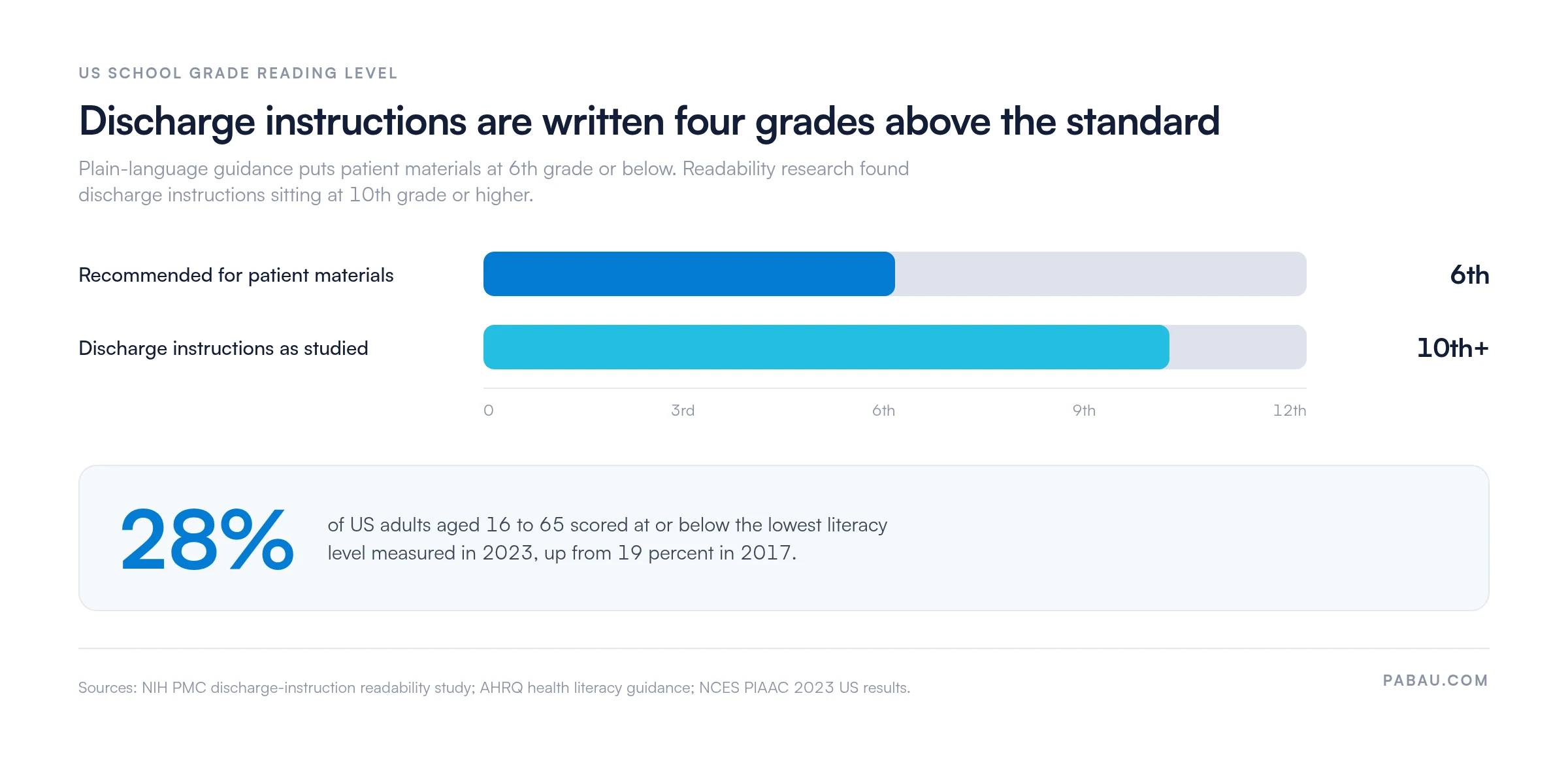
Plain-language guidance puts patient materials at a 6th-grade reading level, but studied discharge instructions often run at 10th grade or higher.
The teach-back method verifies that a patient understood their instructions before they leave your practice.
Document that instructions were given, what they covered, and the teach-back result, because an undocumented conversation carries little weight later.
Pabau’s pre- and post-care messaging automates instruction delivery, tracks patient acknowledgment, and lifts the documentation load off your team.
Patient discharge instructions are the written and verbal guidance a patient takes home at the end of a visit.
They cover medications, follow-up appointments, warning signs, activity limits, wound care, and diet. When they are unclear or rushed, the patient misses a follow-up or takes the wrong dose. Some come back with a complication that was printed on the sheet they could not read.
Discharge is also the point where a practice’s documentation gets tested. This guide covers what a complete set of instructions must contain and how to write it. It also covers how to confirm the patient understood before they leave.
Patient discharge instructions are written or verbal guidance given to the patient at the close of a clinical encounter. They cover every action the patient needs to take between leaving your practice and their next contact with healthcare.
They are not the same as a discharge summary, which is a clinical document written for other providers. Instructions are written for the patient, in the patient’s language.
The stakes are measurable. The CMS Hospital Readmissions Reduction Program (HRRP) cuts Medicare payments to hospitals with excess readmissions in conditions such as heart failure, pneumonia, and COPD. Poor discharge communication is one of the most consistently identified contributors to those readmissions.
Outpatient practices and medical spas face a different version of the same problem. Patients who do not understand their aftercare file complaints, leave negative reviews, or develop complications that carry medico-legal risk.
Six categories appear in every effective discharge instruction set, across the clinical literature and accreditation standards. Leave one out and the patient guesses. A structured patient discharge form keeps the set complete when the afternoon runs late.
Medication errors at discharge are among the most common causes of preventable adverse events. Every instruction set must specify which medications to take, the dose and schedule, and whether each prescription is new or existing. It should also name common side effects to watch for and any drugs to avoid during treatment.
Reconciliation is faster when the medication list arrives before the visit, which is what patient intake software collects at booking.
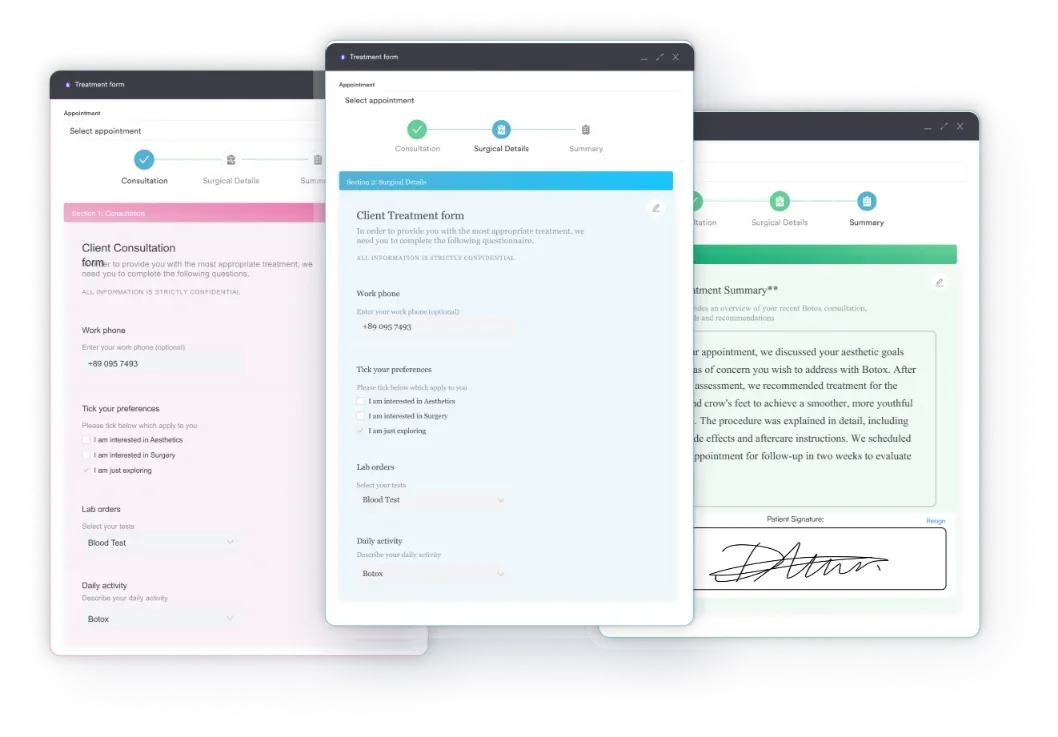
Patients need to know when to come back, who to see, and what to do if an appointment is not available quickly. Include the name, contact number, and date of the next scheduled appointment.
Where a referral is involved, give the specialist’s details and the expected timeline. If the patient should call your practice before that date for any reason, say so explicitly.
This is the section most likely to prevent an emergency. Return precautions tell the patient which symptoms should prompt a call to the practice, a trip to urgent care, or a call to 911.
Be specific. “If you feel unwell” is not a return precaution. “If you get a fever above 101°F, redness spreading beyond the wound edge, or shortness of breath” is.
Procedure-specific guidance covers the day-to-day constraints a patient manages during recovery. Activity restrictions need a duration, not only a type. “Avoid strenuous exercise for 48 hours” tells the patient more than “take it easy”.
Wound care instructions should run step by step, in the order the patient will do them. Dietary restrictions should name the specific foods or drinks to avoid, and for how long.
Writing clear discharge instructions is a clinical skill, and most providers were never formally taught it. The Agency for Healthcare Research and Quality (AHRQ) publishes a health literacy toolkit for exactly this problem. It names plain language and low reading complexity as the two factors that most affect follow-through.
The NIH PMC readability study found discharge instructions written at a 10th-grade reading level or higher. Guidance for patient-facing health materials puts the standard at 6th grade or below.
National literacy data shows why that difference matters. In the 2023 PIAAC assessment, 28 percent of US adults aged 16 to 65 scored at or below the lowest literacy level. That share was 19 percent in 2017. The chart below puts both reading levels on the same scale.
The practical difference shows up in the wording itself. Each row below carries the same instruction twice.
A patient who does not read English fluently has effectively received no instructions. AHRQ guidance recommends written instructions in the patient’s preferred language wherever possible. Where a practice has no translation resources, diagrams and illustrated wound care steps reduce the language dependency.
For elderly patients and those with cognitive impairment, bring a caregiver into the discharge conversation. Give them a simplified summary page alongside the full instructions.
Handing over a written sheet does not confirm that the patient understood it. The Society for Academic Emergency Medicine (SAEM) identifies teach-back as the standard method for checking comprehension before a patient leaves. It takes under three minutes and catches misunderstandings before they turn into readmissions.
For high-risk patients, add a follow-up phone call within 24 to 48 hours to reinforce the key points. That group includes post-surgical patients, complex medication regimens, and elderly patients living alone.
Build teach-back into the discharge workflow as a timed step. A four-item check on the clinician’s screen keeps it honest: medications reviewed, warning signs reviewed, teach-back done, instructions signed.
Giving instructions verbally and never documenting the exchange creates clinical and legal exposure. If a patient returns with a complication and says they were never warned, you have no record to show. An undocumented conversation carries little weight in a complaint or a legal proceeding.
At minimum, record that discharge instructions were provided and what they covered. Note the patient’s level of comprehension and the teach-back result. Where your jurisdiction or accreditor requires it, obtain a patient signature or digital acknowledgment. Store it in the permanent clinical record, alongside the encounter notes.
Under HIPAA, discharge instruction records form part of the patient’s protected health information and must be stored, accessed, and retained accordingly. The Joint Commission (TJC) covers patient education and discharge documentation in its accreditation standards. Following those principles is a sound, defensible position even in a non-accredited outpatient setting.
Run this before the patient leaves. It covers the components most consistently named across AHRQ guidance, SAEM teaching material, and major health systems. The same nine rows make a workable discharge planning checklist for the team to keep at the front desk.
Manual discharge workflows depend on individual clinicians remembering every element, every time, under time pressure. A busy afternoon is not the setting for consistent documentation. Practice management software like Pabau moves the work off the clinician and into the appointment itself.
Pabau lets a practice build treatment-specific instruction templates that fire automatically at the end of the relevant appointment. The patient gets the instructions by email or SMS within moments of leaving. The system logs delivery and, where configured, tracks whether the patient opened and acknowledged the message.
Pabau’s pre- and post-care messaging handles that sequence, so the task leaves the clinician’s mental checklist. It can also send a reminder 24 hours after a procedure, listing the warning signs to watch for. A check-in at the 72-hour mark suits higher-risk treatments.
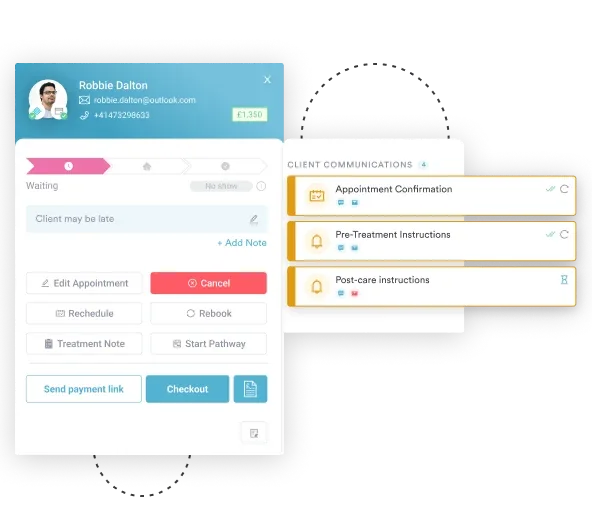
The outcome is a shorter administrative tail after each patient. Delivery, acknowledgment, and storage all happen against the correct encounter, without a second system or a manual data entry step.
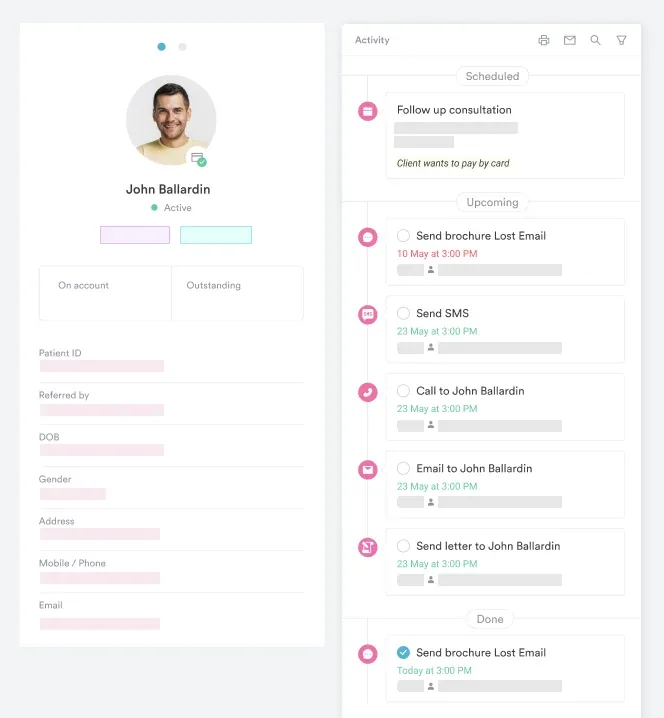
When you compare platforms, four capabilities decide whether discharge stops being manual.

Pabau sends treatment-specific post-care instructions automatically, tracks patient acknowledgment, and keeps every discharge record with the encounter. See how it fits your practice type.

Discharge is the last point where a practice can influence what happens next, and it usually gets the least time. Writing at a 6th-grade level and running teach-back costs a few minutes per patient. Both are cheaper than one avoidable readmission or one complaint you cannot answer with a record.
The trade-off worth remembering is consistency over craft. A well-written sheet handed over by one clinician on a good day helps one patient. A workflow that sends, logs, and stores the same sheet after every appointment helps all of them.
Book a demo to see how Pabau handles discharge delivery and documentation for your practice type.

Need a form your team can hand over today? Patient discharge form gives you a structured layout for medications, follow-up, and warning signs.
Planning a discharge for a higher-risk patient? Discharge planning checklist walks through the steps to complete before the patient leaves.
Writing aftercare for a specific procedure? Aftercare guidelines shows how to structure post-procedure guidance that patients can act on.
Teaching a patient a new self-care routine? Nursing teaching plan sets out how to plan and document a patient education session.
Patient discharge instructions are written or verbal guidance given to a patient at the end of a clinical encounter. They cover what the patient must do at home: medications, follow-up appointments, warning signs, activity restrictions, wound care, and diet. They differ from a discharge summary, which is a clinical document addressed to other healthcare providers.
Every set should cover six core areas. Those are medications and prescription reconciliation, follow-up appointment details, return precautions, activity restrictions, wound care, and dietary guidance. Record in the clinical note that instructions were provided and understood.
The teach-back method is a communication technique where the clinician asks the patient to explain, in their own words, what they will do at home. It replaces the question “do you understand?”, which almost always gets a yes. Teach-back surfaces the specific points the patient did not absorb, before they leave. AHRQ identifies it as the standard method for discharge education.
The recommended standard for patient-facing health materials is a 6th-grade reading level or below. NIH readability research found discharge instructions written at 10th grade or higher. National literacy data supports the lower target. In 2023, 28 percent of US adults aged 16 to 65 scored at or below the lowest PIAAC literacy level.
At minimum, the record should note that instructions were provided and what topics they covered. Add the patient’s level of comprehension and the outcome of the teach-back exchange. Where your jurisdiction requires it, add the patient’s signature or digital acknowledgment. Under HIPAA, these records form part of the patient’s protected health information and must be retained accordingly.
Practice management platforms can trigger treatment-specific instruction templates at the end of a relevant appointment. The patient receives them by email or SMS, and the platform logs acknowledgment. The record then sits against the clinical encounter, so the discharge process stays consistent across the team.