GLP-1 usage by state: Who’s taking, searching and paying in 2026
GLP-1 usage by state peaks in West Virginia, America’s GLP-1 capital, with...

Last Updated: Oct 16, 2026
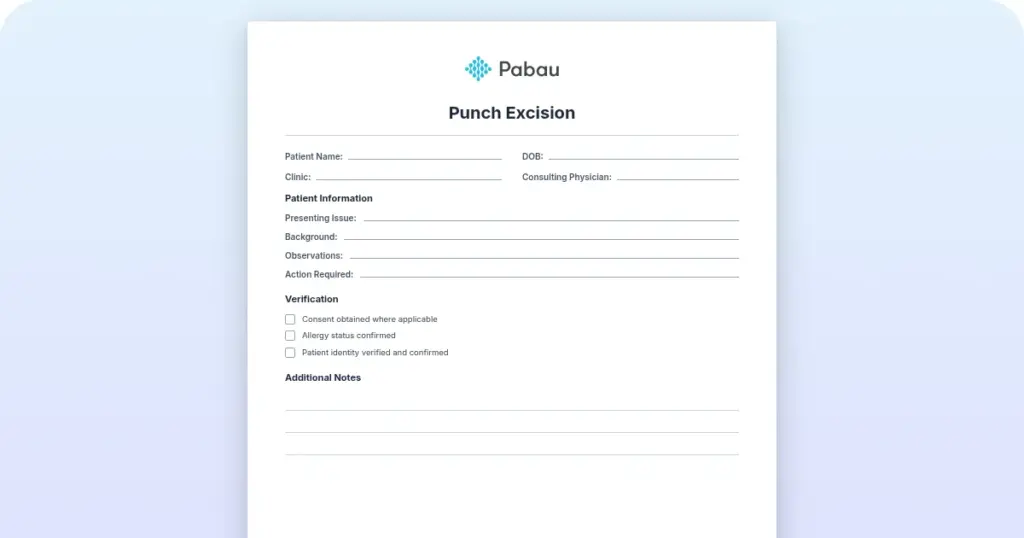
A galvanic facial is a skincare treatment that uses a mild direct current to cleanse pores and push water-soluble serums deeper into the skin. The free download is a printable consent and health-screening form, and the guide below sets out the full protocol, from contraindications to the treatment record.
The treatment runs in two phases. First, desincrustation uses the negative pole to soften sebum in oily or congested skin. Then iontophoresis drives a serum in, with the pole matched to the product’s charge. Below you’ll find the settings for each phase, the screening questions to ask first, and the aftercare to give the patient.
A printable consent form covering the treatment overview, benefits, risks and contraindications, with a patient declaration and clinical photo consent. It also closes with 11 yes/no health-screening questions and five free-text prompts on medical history, goals and past treatments.
Download template
Galvanic facials run in two phases: desincrustation cleanses with the negative pole, and iontophoresis infuses water-soluble products with a polarity-matched pole.
Screen every patient for pacemakers, metal implants, broken skin, active infection and uncontrolled epilepsy, and defer optional treatment during pregnancy.
Oily or congested skin does well with weekly or bi-weekly sessions, while dehydrated and aging skin usually needs monthly maintenance.
Practice management software like Pabau stores intake and consent forms digitally, and Pabau Scribe, our AI scribe, drafts the treatment note into the patient record.
A galvanic facial applies a mild direct current to the skin to move water-soluble active ingredients through its outer layer, the stratum corneum. Specifically, it pairs two phases, desincrustation and iontophoresis, and each one uses the opposite polarity for a different result.
Estheticians run it with a galvanic machine and two electrodes, a positive pole (anode) and a negative pole (cathode). So, by choosing the pole and a matching serum or gel, you can tailor the session to oily, acne-prone, dehydrated or aging skin.
In fact, every session needs a signed consent, a contraindication screen and a treatment note. So that paperwork load is what medical spa software is built to carry. Many practices also use a standard first assessment, with downloadable intake consultation templates.
Galvanic current relies on a simple rule: charged particles (ions) repel particles with the same charge and attract the opposite charge. In this process, that movement therefore carries water-soluble actives further into the skin than applying them by hand.
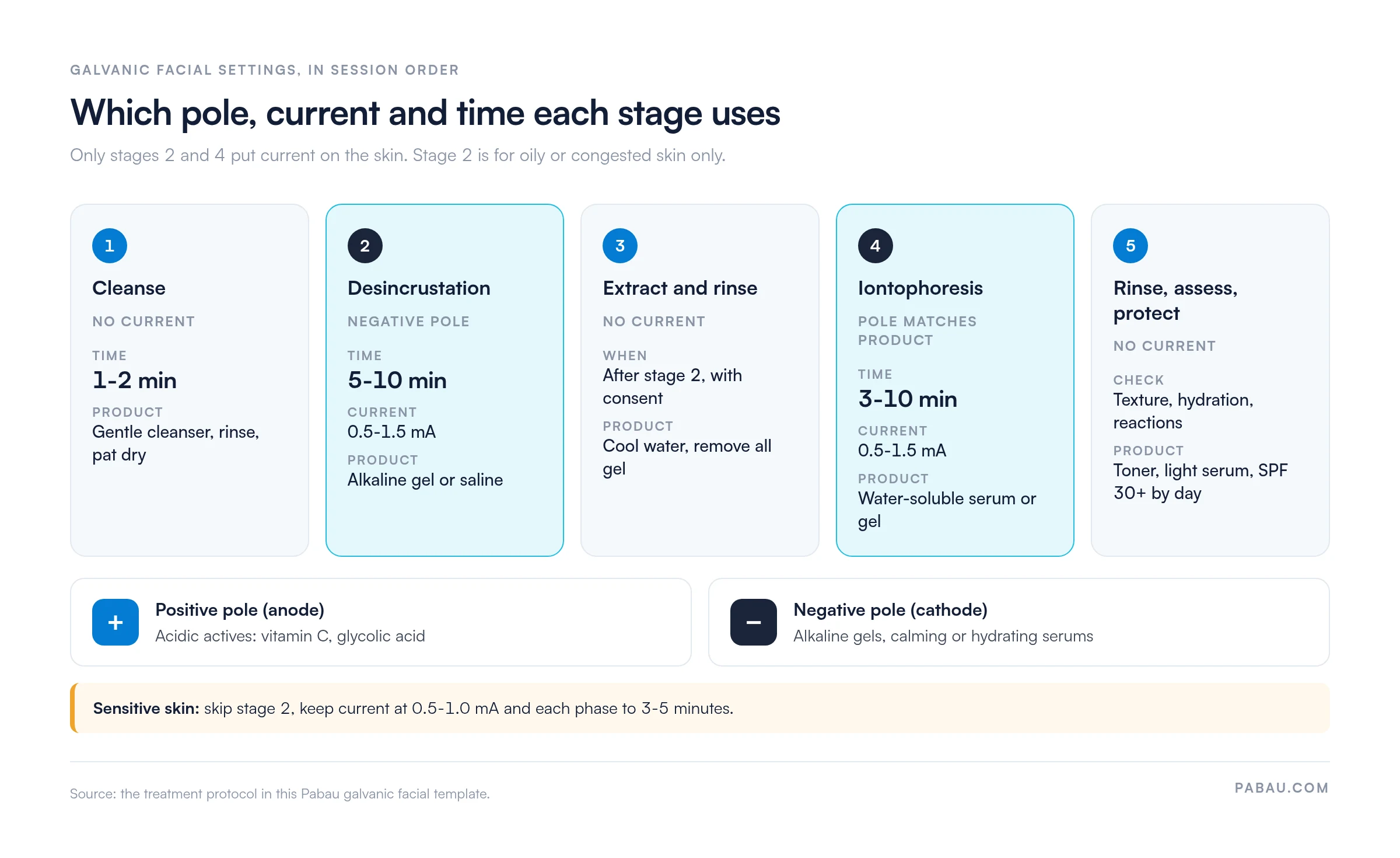
The positive pole (anode): Produces an acidifying, astringent effect on the skin. In the iontophoresis phase, it drives positively charged (acidic) serums, such as vitamin C, glycolic acid or hydrating essences, into congested, oily or inflamed skin. Duration: usually 3-10 minutes depending on current intensity.
The negative pole (cathode): Produces an alkalizing, soothing effect. In the iontophoresis phase, it infuses negatively charged (alkaline) products, such as calming botanical serums or hydrating gels, into dehydrated or sensitive skin. It also runs the desincrustation phase, softening and emulsifying sebum so it’s easier to remove during extraction.
Current is measured in milliamps (mA). For example, most clinic machines let you set it between 0.5 and 2.0 mA to match patient comfort and skin sensitivity. Higher current pushes product deeper, but it also raises the risk of irritation on sensitive or damaged skin.
Every galvanic facial follows the same two-phase structure, and each phase has its own clinical job.
Many practitioners run desincrustation only on oily or congested patients, weekly or bi-weekly. Other skin types, by contrast, go straight to iontophoresis. Combining both phases in one session takes about 20-25 minutes.
Overall, the benefits span several skin concerns, which makes the treatment a useful addition to a med spa or skin care menu.
Follow these 12 steps in order so every galvanic facial runs the same way and leaves a complete treatment record. Only two of the steps put current on the skin, and the settings card below shows the pole, current and time for each.
Use this screening framework during the intake consultation to catch contraindications, assess skin type and tailor the treatment plan.
Galvanic facials are generally safe with proper screening and technique. So the absolute and relative contraindications below are what prevent adverse events.
Record the screening in formal, informed consent paperwork to protect the patient and the practitioner. Then use a standard intake form, like the downloadable template above, and file it with the patient’s permanent treatment record.
Professional galvanic machines differ in current output, electrode types and safety features, so check these specifications before you buy.
Machine selection criteria: Look for FDA-cleared devices (Class II medical device status in the US) or CE marking in the EU. The machine should allow adjustable current (usually 0.5-2.0 mA), label electrode polarity clearly and shut off on its own after a set time. Some machines, for example, run desincrustation and iontophoresis in sequence with built-in timers, which reduces staff error.
Product compatibility: Use only water-soluble products formulated for galvanic treatments. They’re usually labeled as ionizable or conductive. However, oil-based products and thick creams won’t conduct current well and can block ion penetration. Then match each product to the patient’s skin type and the phase’s polarity. Common types include:
Electrode quality: Most machines usually use stainless steel, brass or carbon electrodes. Product residue and corrosion impair conductivity, so clean and sterilize electrodes between patients according to the manufacturer’s guidelines.
Offering the treatment also means tracking machine maintenance, product stock and each patient’s treatment history. As a result, logging the products used in each session lets you reorder matching homecare items and make custom suggestions.
Most skin types can benefit when the phase, product and current are adjusted to the patient.
Oily and congested skin: These patients are prime candidates. For example, desincrustation with an alkaline solution deep-cleans pores, clears sebum buildup and reduces acne-causing bacteria. Repeat weekly or bi-weekly, then follow with a clarifying or antibacterial serum by iontophoresis to maintain results.
Dehydrated and aging skin: This skin responds well to targeted hydration. As a result, iontophoresis of hyaluronic acid, peptides or botanical hydrating gels leaves skin plumper, more elastic and visibly firmer. Book sessions monthly or every two weeks.
Sensitive or reactive skin: Proceed with caution. So use lower current (0.5-1.0 mA), shorter phases (3-5 minutes each) and gentle, fragrance-free products. Instead, skip desincrustation and use soothing iontophoresis only. These patients usually do better on monthly maintenance than on weekly sessions.
Combination skin: Tailor the protocol by zone. An oily T-zone may benefit from desincrustation, while dehydrated cheeks and the sensitive eye area get gentle hydrating iontophoresis. Also use separate electrodes or shorter contact time on sensitive areas.
Post-procedure or damaged skin: Wait 7-14 days after chemical peels, laser or microdermabrasion. Once the skin has healed, the treatment can support barrier repair and boost post-procedure serums, which makes them useful in aftercare protocols.
Four intake questions sort most candidates:
Recording the answers in skin clinic software keeps everyone on your team working from the same patient profile.
The download is a two-part form: a consent section the patient reads and signs, and a health-screening form they complete before the first session.
What’s in the form: A treatment overview, potential benefits, possible side effects and a contraindication list, followed by the consent declaration and clinical photo consent. It asks 11 yes/no questions, covering pregnancy, skin conditions, allergies, active infection and prescription medication. Five free-text prompts then capture medical history, treatment goals and past reactions.
What it leaves to your notes: The form has no treatment-settings section. So record the phases, products, current and duration from the protocol above in your treatment notes for each session.
Custom branding: The PDF prints as-is. Instead, to add your practice’s logo or your own cancellation and consent wording, rebuild it as a digital form in your practice software.
Ongoing tracking: Keep the signed form with the treatment notes from every session. Together they track product allergies, the preferred polarity and results over time, so you can show the patient their progress at recall appointments.
In fact, many practices run a form like this on paper today. Usually, the patient fills it in at reception, someone scans it, and the practitioner types up the treatment note after the session.
Instead, practice management software like Pabau moves each of those steps into the patient record. Patients complete the health-screening form and digital consent forms on their phone before the appointment. As a result, their contraindication answers are waiting in the record when the session starts.
After the session, Pabau Scribe, our AI scribe, turns your spoken summary of phases, products, current and skin response into a treatment note. Before-and-after photos attach to the same record, so the next practitioner can see what was used last time.

Pabau’s digital forms, patient records and Pabau Scribe capture intake, consent and treatment notes for every galvanic facial. Your team stops retyping notes after each session.

A galvanic facial is only as safe as the screening before it. Get the contraindication questions answered and signed before any current touches the skin, and match the pole to the product every time.
Using one form and one protocol pays off at the second visit. With the last session’s products, current and skin response on file, you adjust the next treatment instead of working from memory.
Paper works as long as someone files every form, every time. Book a demo to see how Pabau keeps galvanic facial intake, consent and treatment notes in one patient record.

Need a fuller facial assessment before the first session? Free facial consultation form template covers skin history, concerns and goals in one intake.
Want a structured way to record skin type? Skin analysis form template for estheticians gives you a consistent baseline to compare galvanic results against.
Looking for a session-by-session record format? HydraFacial treatment record template shows how to log settings, products and skin response for a device facial.
Want to track results across a treatment series? Med spa before and after photos explains how to capture and store visual outcomes consistently.
A galvanic facial is a skincare treatment that uses a mild direct current to drive water-soluble products deeper into the skin. It has two phases. First, desincrustation deep-cleans with the negative pole, and then iontophoresis infuses products with a polarity-matched electrode. It suits oily, dry, congested, aging and combination skin.
It depends on skin type and goals. Oily or congested skin typically benefits from weekly or bi-weekly sessions over a 6-8 week series. By contrast, dehydrated, sensitive or aging skin does best with monthly maintenance appointments. After a corrective series, most patients move to a monthly schedule.
Absolute contraindications are pacemakers, unhealed or broken skin, active skin infections, metal implants in the treatment area and uncontrolled epilepsy. By contrast, relative contraindications include pregnancy, active acne pustules and very sensitive skin. Also wait 7-14 days after a chemical peel or laser treatment. Sensitive skin may need lower current or an iontophoresis-only protocol.
Avoid sun exposure, hot water and actives (retinoids, vitamin C, acids) for 24 hours. Then apply a hydrating toner and sunscreen (SPF 30+). Use the same active ingredients at home to extend results. Book follow-ups weekly or bi-weekly for a corrective series, or monthly for maintenance, and log results in the treatment record.