CRM for chiropractors: how to manage patients, bookings and marketing
A CRM for chiropractors is a patient relationship management system built around...

Last Updated: Oct 13, 2026

A hearing aid evaluation is a separate appointment from the diagnostic hearing test – it determines which hearing aid style, technology level, and features match your degree of hearing loss and daily life.
Audiologists review your audiogram, assess your listening environments, and walk through device options including behind-the-ear (BTE), receiver-in-canal (RIC), and in-the-ear styles.
Medicare generally does not cover hearing aids, though some Medicare Advantage plans do – evaluation fees and device costs vary widely; always verify with your insurer.
Audiology practices that automate intake, recalls, and follow-up workflows reduce no-shows and keep patients engaged through every stage of the hearing care journey.
Most patients arrive at their first hearing aid evaluation expecting a repeat of the hearing test they just had.
That confusion costs practices time and leaves patients underprepared. The hearing aid evaluation is a distinct clinical appointment with a different goal. Instead of diagnosing hearing loss, it translates those results into the right device for that person’s life.
According to Cleveland Clinic, the hearing aid evaluation is a separate appointment that follows the diagnostic hearing test. Specifically, an audiologist helps select the device that best matches the patient’s hearing loss, lifestyle, and budget.
This guide covers what the hearing aid evaluation involves. It also explains how audiologists use audiogram results and lifestyle factors to recommend devices. In addition, it covers what it costs and how audiology practices can streamline the entire workflow from booking through follow-up.
In practice, a hearing aid evaluation is a consultation with a licensed audiologist that follows a completed diagnostic hearing evaluation.
The diagnostic test (using pure tone audiometry and speech audiometry) establishes the type and degree of hearing loss.
Bilateral conductive hearing loss, for example, is documented under H90.0 for billing and insurance purposes. Next, the hearing aid evaluation takes the diagnostic results and applies them to a practical decision. Specifically, it determines which device, at which technology level, will help this patient most.
The two appointments are often confused. The diagnostic hearing evaluation answers “do you have hearing loss, and how severe is it?” The hearing aid evaluation answers “what should you do about it?” As a result, mixing them up leads to rushed appointments and poorly matched devices.
Not everyone who has a diagnostic hearing evaluation will proceed to a hearing aid evaluation. Audiologists typically recommend one when a patient’s hearing loss reaches a degree where amplification would meaningfully improve daily communication. Specifically, they use ASHA (American Speech-Language-Hearing Association) clinical guidelines as the threshold framework.
Specifically, those criteria are based on a combination of audiogram severity, speech recognition scores, and self-reported communication difficulty.
Patients don’t always recognize their own hearing decline. Audiologists often see people who have been compensating for years before seeking evaluation. In practice, these patterns consistently appear in clinical and patient-reported data as early indicators:
Audiologists working with older adult populations often see delayed presentation. For example, the National Council on Aging (NCOA) reports that adults wait an average of 10 years from first noticing hearing problems before seeking help.
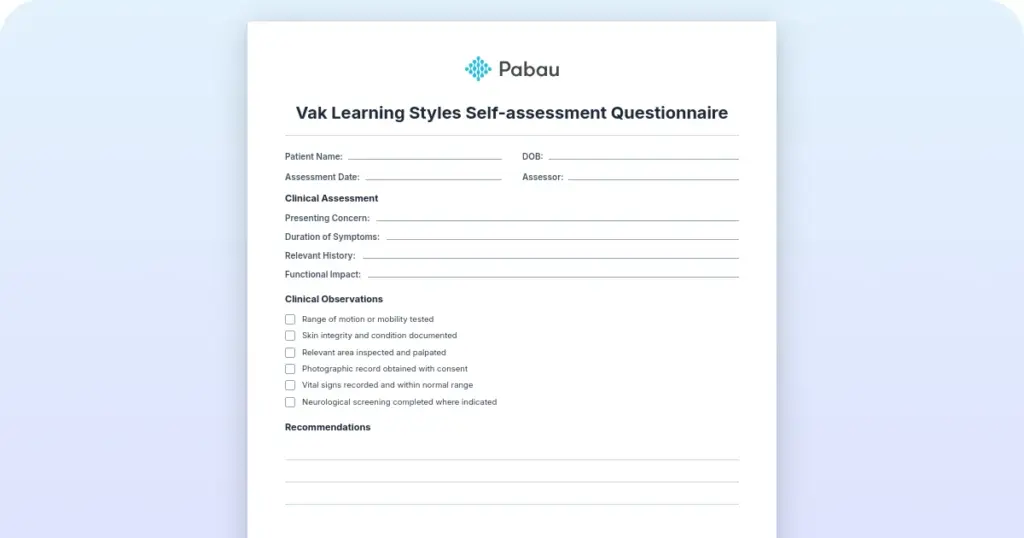
For audiology practices, this means new patient intake forms should ask about communication history, not just presenting symptoms. Specifically, structured digital medical forms can capture that background before the first appointment.
Most hearing aid evaluations run between 60 and 90 minutes. The appointment has a consistent structure, though the order and depth of each component varies by practice and patient complexity.
The audiologist starts by explaining the audiogram in plain terms. This means interpreting the plotted thresholds across frequencies (measured in decibels and hertz). Next, it means identifying which speech sounds the patient is missing. Finally, it means explaining what “mild,” “moderate,” “severe,” or “profound” loss means in everyday life.
Speech audiometry scores, particularly the word recognition score, are factored in here. That’s because they influence not just whether to recommend aids, but which technology tier will be most beneficial.
Patients who arrive with audiograms from previous tests can have those reviewed at this stage. Practices that store structured patient records electronically can pull prior test results instantly. As a result, they avoid duplicate testing and give the audiologist a longitudinal view of any progression in hearing loss.
This is the part of the hearing aid evaluation process that most distinguishes it from a clinical test. Two patients with identical audiograms may need completely different devices depending on how they live. An audiologist will ask about:
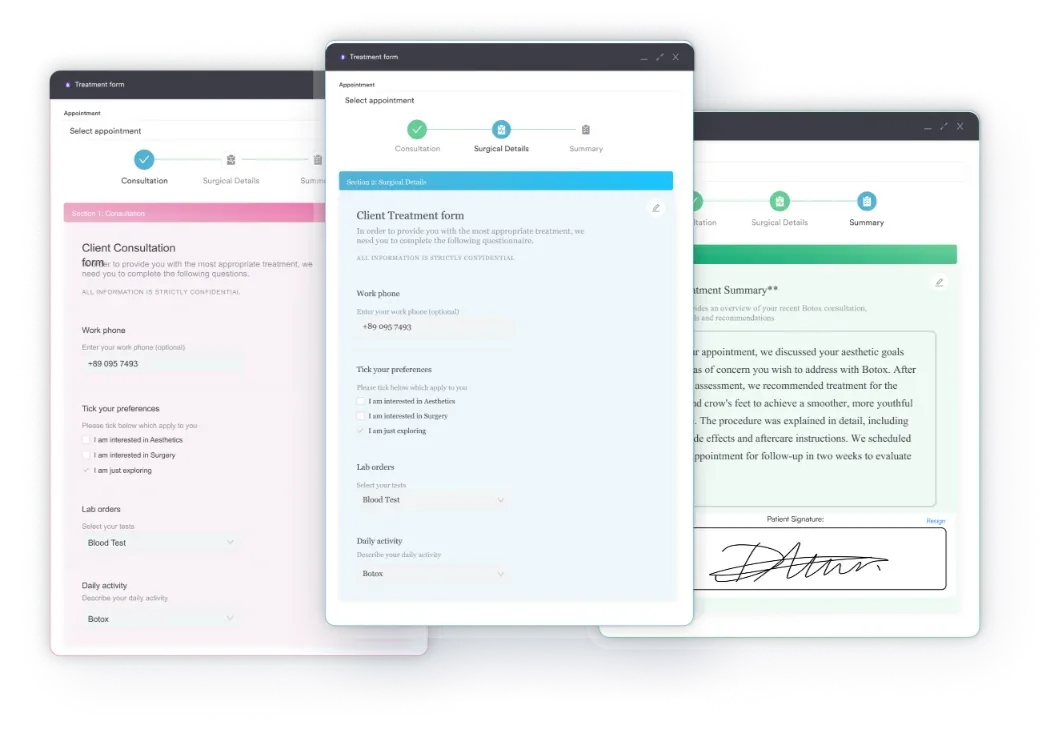
If lifestyle assessment responses stay in a clinician’s notebook rather than a structured intake form, the information can’t inform follow-up care. It also can’t inform recall decisions. Capturing lifestyle data through a structured pre-appointment questionnaire, sent via digital intake forms, changes that. As a result, the audiologist walks in prepared and the patient’s preferences are already on file.
Once the audiologist has the audiogram and lifestyle picture, they present device options. For example, this typically involves showing physical samples and discussing the trade-offs of each style.
Technology tiers (basic, mid, premium) reflect the sophistication of noise management, Bluetooth connectivity, directional microphone processing, and AI-driven sound environments.
A patient in a quiet home with limited technology use rarely needs a premium tier. By contrast, a professional who takes calls in open-plan offices almost always does. The audiologist uses the lifestyle assessment to match tier to life, not to budget alone.
Since the FDA’s 2022 OTC Hearing Aid Rule, adults with perceived mild to moderate hearing loss can purchase hearing aids directly. They don’t need a prescription or professional evaluation to do so. As a result, audiologists increasingly address this proactively during evaluations.
OTC aids are self-fitted and carry no ongoing audiologist relationship. By contrast, prescription aids are programmed to the patient’s specific audiogram using real-ear measurement and come with professional follow-up.
OTC aids are generally not appropriate for patients whose audiogram shows moderate-to-severe loss. The same is true for those who have asymmetric hearing loss, tinnitus, or prior ear surgery. The FDA does not require a medical exam for prescription aids for adults. However, most audiologists strongly recommend professional evaluation regardless.
Ask patients to bring a trusted family member or close friend to the hearing aid evaluation. A familiar voice helps calibrate speech recognition testing and the family member can reinforce aftercare instructions and follow-up scheduling, reducing the chance that follow-up care gets missed after device delivery.
Costs vary significantly by practice, location, and what the evaluation fee includes. Some practices offer free hearing aid evaluations as a patient acquisition tool, rolling the cost into device purchase. By contrast, others charge separately.
Typical ranges for the evaluation consultation alone run from $0 to $250 in the US. Device costs, by contrast, sit between $1,000 and $7,000 per pair depending on technology tier and brand.
Insurance coverage is inconsistent and a frequent source of patient frustration. Key points to communicate during the evaluation:
Practices that verify insurance before the appointment and present clear cost breakdowns at the evaluation convert more patients. They also reduce billing disputes. In practice, building insurance verification into patient scheduling software workflows ensures this step isn’t missed, particularly in high-volume practices managing multiple audiologists.

Practice management software like Pabau handles appointment scheduling, patient intake forms, pre-care instructions, and follow-up reminders automatically, so your audiologists can focus on the evaluation, not the paperwork.

The hearing aid evaluation is not the end of the clinical relationship. Most practices offer a trial period (typically 30 to 60 days). During this window, the patient can return the devices for adjustment or exchange. This is standard industry practice. However, specifics vary by provider.
The follow-up arc after a hearing aid evaluation typically runs:
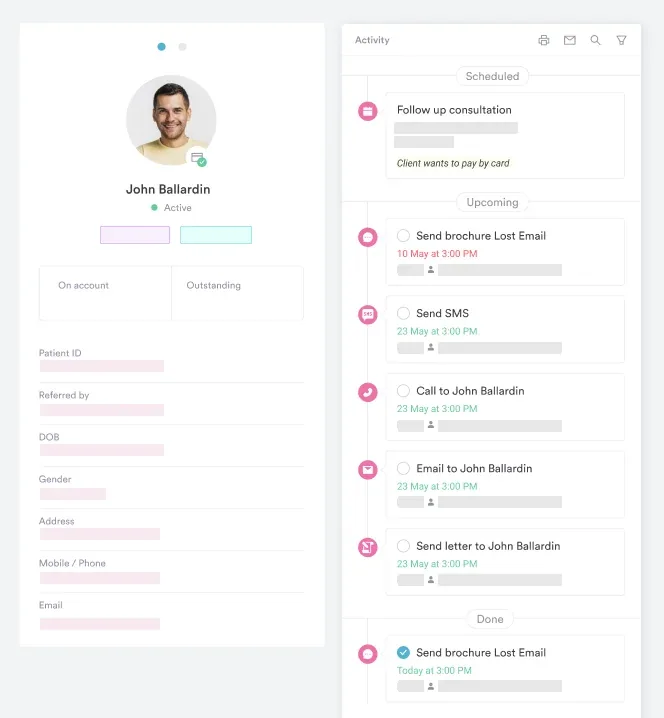
Automated pre- and post-care emails sent at each follow-up milestone keep patients on track through this stretch. As a result, staff don’t need to do manual outreach. For example, when a patient misses their 30-day review, a triggered recall message activates. It can recover that appointment before the trial window closes.
Most hearing aid evaluation guides online are written for patients considering the appointment.
By contrast, this section is for the practitioners managing those appointments at scale. Running an audiology practice means coordinating diagnostic evaluations, hearing aid evaluations, fitting sessions, trial-period check-ins, and annual reviews. This care sequence spans a patient panel that is largely older and more likely to need scheduling reminders and accessible intake processes. Specifically, it shares the same operational profile as speech therapy and physical therapy practices running multi-visit care plans. A practice management system that holds the calendar and the record removes the daily reconciliation between them.
The operational pinch points show up in the same places across most audiology practices:
Practices focused on improving patient engagement through the hearing care journey see higher device adoption rates. Patients who receive consistent, well-timed communication between appointments are more likely to complete the follow-up arc. They’re also more likely to return for annual re-evaluations. Instead of relying on manual follow-up, automating that outreach keeps more patients on track through every stage.
Practices managing multiple audiologists or more than one location face an added hurdle. Specifically, scheduling patients effectively across practitioners is an operational challenge on its own.
A platform that surfaces open appointment slots, flags overdue recalls, and handles provider-specific booking rules removes that burden from front-desk staff. As a result, audiologists can focus on patient care. Pabau’s calendar and automated workflows handle this without requiring manual configuration for each patient.
Practices also benefit from standardized appointment reminder messages that include pre-visit instructions and what to bring. These messages also link directly to the practice’s intake forms. For older adult patients (the primary demographic for hearing aid evaluations), this approach reduces no-shows. It also cuts down on the “I forgot what I was supposed to bring” calls that slow down front-desk operations.
The hearing aid evaluation is where hearing loss becomes a hearing solution. Audiologists who run a structured evaluation process combine audiogram interpretation with lifestyle assessment and clear cost communication. As a result, patients get the information they need to commit to a device. They can then follow the care plan through fitting and beyond.
For audiology practices, the ongoing work is largely operational. Specifically, it means keeping every patient on the right sequence of appointments from initial evaluation through to annual review. Pabau’s automated workflows, digital intake forms, and appointment management tools are built for exactly that workflow. Book a demo to see how audiology practices use Pabau to reduce admin and improve patient follow-through.

Looking for an EMR sized for a small practice? Best EMR for small practice compares eight EMR systems built for small practices instead of scaled-down hospital software.
Wondering how to reduce no-shows across a multi-appointment care pathway? Appointment reminder software breaks down the touchpoint sequence that keeps patients on track between visits.
Wondering if an EHR helps patient care? EHR benefits for private clinics cites peer-reviewed data on remote chart access, medication alerts, and improved patient care.
A hearing aid evaluation is a separate consultation with a licensed audiologist that takes place after the diagnostic hearing test. It uses your audiogram results, lifestyle needs, and communication goals to determine which hearing aid style and technology level will work best for you. It is not the same as the hearing test itself.
Most hearing aid evaluations last between 60 and 90 minutes. The time includes audiogram review, a lifestyle discussion covering your daily listening environments, a walkthrough of device styles and technology tiers, and a cost and insurance conversation.
Coverage varies significantly by plan. Original Medicare (Parts A and B) generally does not cover hearing aid evaluations or the devices themselves, though some Medicare Advantage plans include a hearing benefit. Private insurance coverage ranges from none to partial allowances; always verify with your insurer before the appointment.
A hearing evaluation (also called a diagnostic hearing evaluation) uses pure tone audiometry and speech audiometry to determine whether you have hearing loss and how severe it is. A hearing aid evaluation is a follow-on appointment that uses those results to select the right device. They are distinct appointments with distinct goals.
Since the FDA’s 2022 OTC rule, adults with perceived mild to moderate hearing loss can buy over-the-counter hearing aids without a professional evaluation. Prescription hearing aids are programmed by an audiologist to your specific audiogram using real-ear measurement and include professional follow-up care. For moderate-to-severe or asymmetric hearing loss, prescription aids are generally the more appropriate option.
Bring any previous audiogram or hearing test results, a list of your daily communication challenges and listening environments, your insurance card, and, if possible, a trusted family member or friend. A familiar voice is useful for real-world speech recognition checks during the appointment.