

Mental health self-care checklist
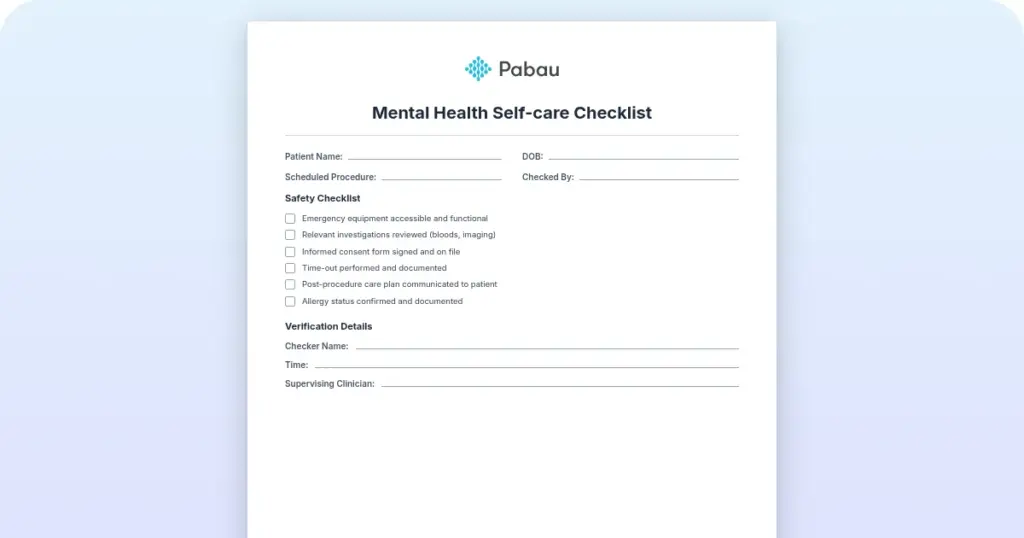
A mental health self-care checklist is a structured daily tool for tracking the habits that support emotional well-being. Those habits range from sleep and movement to connection and journaling. Clinicians often recommend it because it turns general advice into specific, repeatable actions. Download your free mental health self-care checklist A ready-to-use checklist covering daily physical, […]
Crisis safety plan template
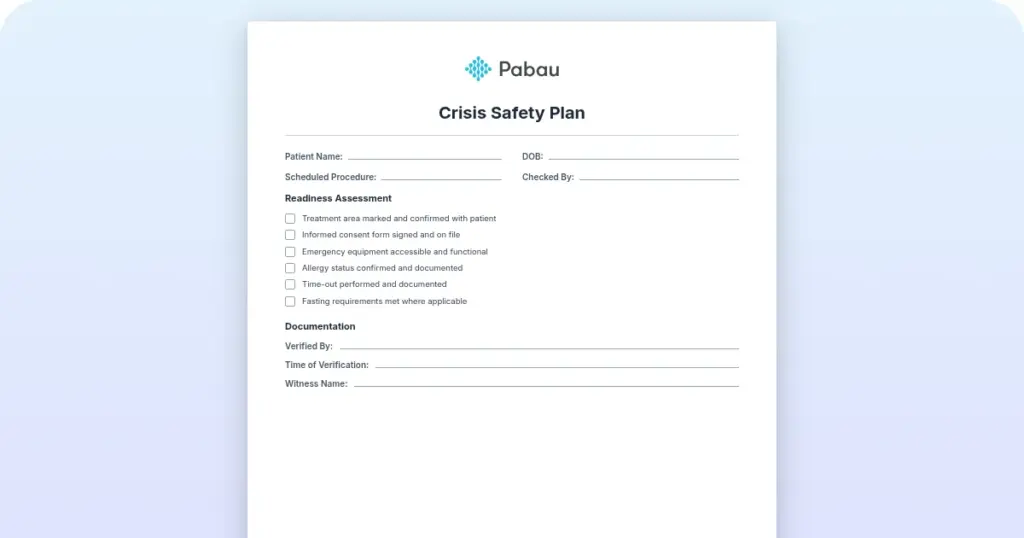
A crisis safety plan is a short, personalized written plan that a patient and clinician build together to guide action during a suicidal crisis. It follows the six steps of the Stanley-Brown Safety Planning Intervention, from spotting warning signs to making the home environment safer. Our free crisis safety plan template walks the patient through […]
Trauma response test: Free template for clinicians
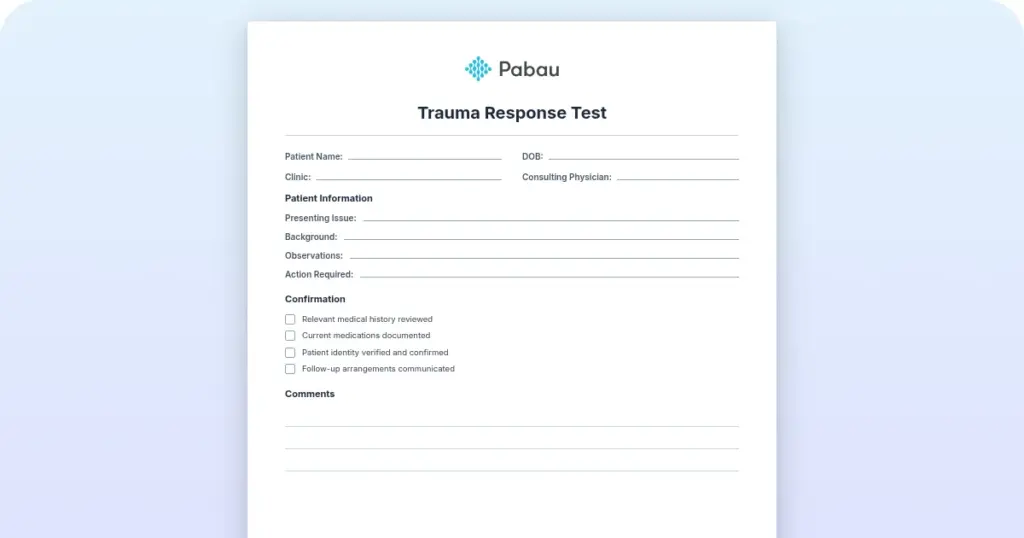
A trauma response test is a structured screening questionnaire that helps clinicians identify how a patient responds to traumatic experiences. It flags who may need a fuller assessment, but it cannot diagnose PTSD, so results need clinical interpretation before any conclusion is drawn. The free template below lists 20 stress-related problems, each rated from 0 […]
Co-parenting agreement
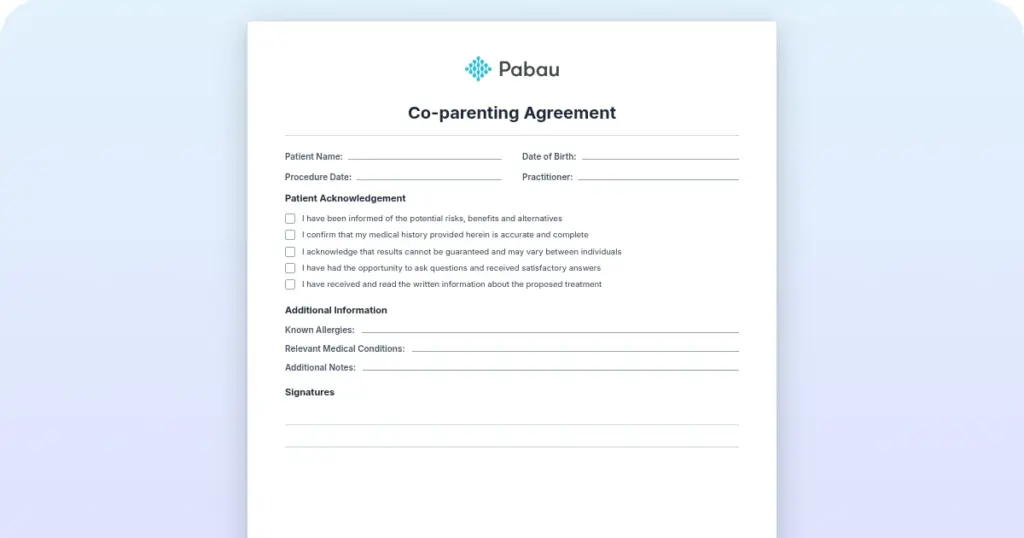
A co-parenting agreement is a written plan that separated or divorced parents use to set out how they will raise their children together. It covers parenting time, decision-making, money, communication, and how disagreements get resolved. The agreement isn’t legally binding on its own, but a judge can approve it and make it enforceable. Many families […]
Pabau vs ICANotes: Psychiatry billing software compared
Psychiatry billing software decides whether your practice gets paid accurately, on time, and without constant denial rework. ICANotes is the faster route for a solo or small behavioral health practice, because psychiatric CPT codes, payer rules and note templates arrive pre-configured. Pabau, the practice management platform we build, is the stronger fit once a practice […]
Free habit journal template to download
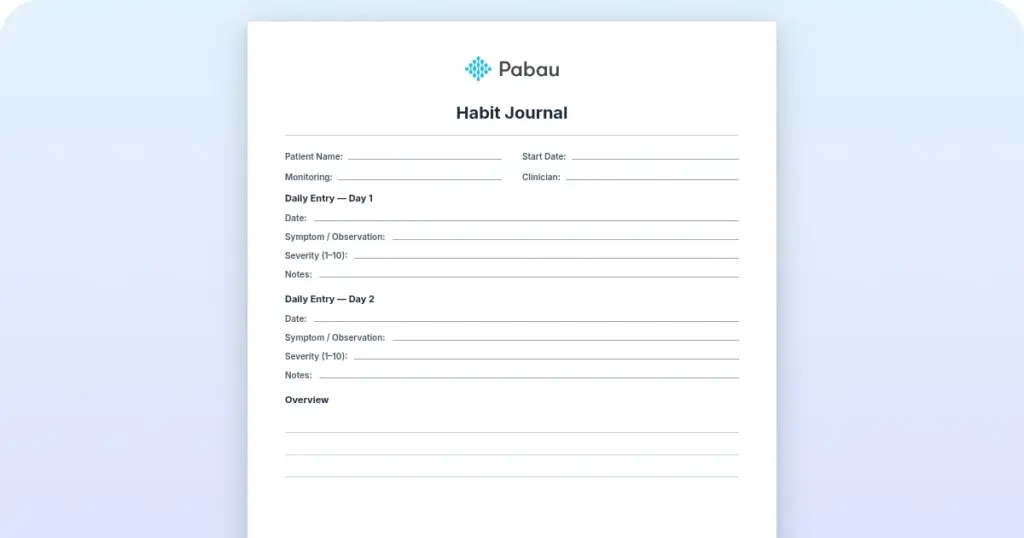
A habit journal is a structured daily record that helps patients track behaviors, spot patterns, and measure progress toward their goals. Patients complete it on paper or through digital forms between sessions. You then see what happened each day, rather than only what they remember in the room. The free template below suits practitioners in […]
Antipsychotic medication list
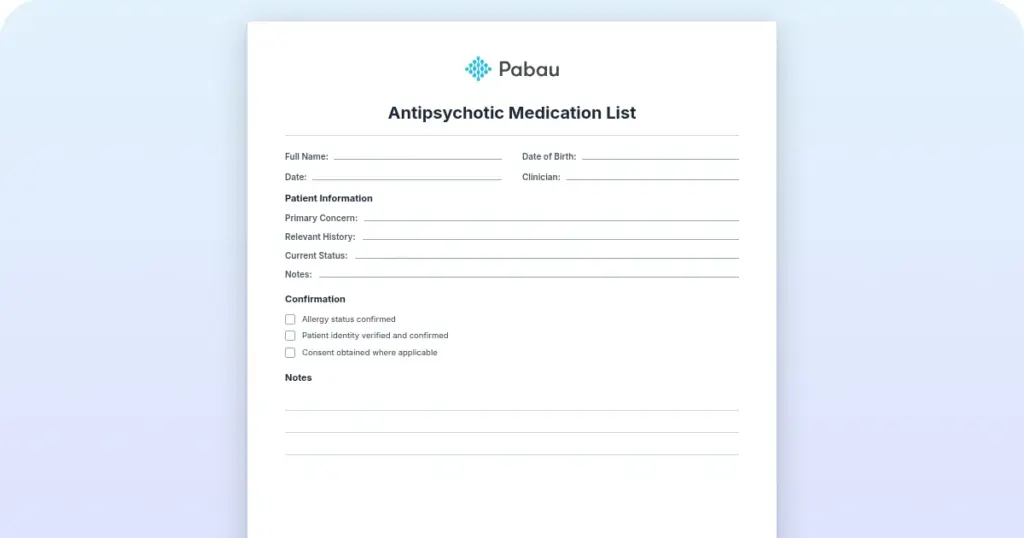
An antipsychotic medication list is a structured reference that organizes psychiatric drugs by generation, mechanism, FDA-approved indication, and monitoring requirement. Antipsychotics work by modulating dopamine and serotonin pathways in the brain, which reduces hallucinations, delusions, and disorganized thinking. The list below covers both generations, their usual daily doses, and the checks each one needs. The […]
ADHD Cleaning Checklist
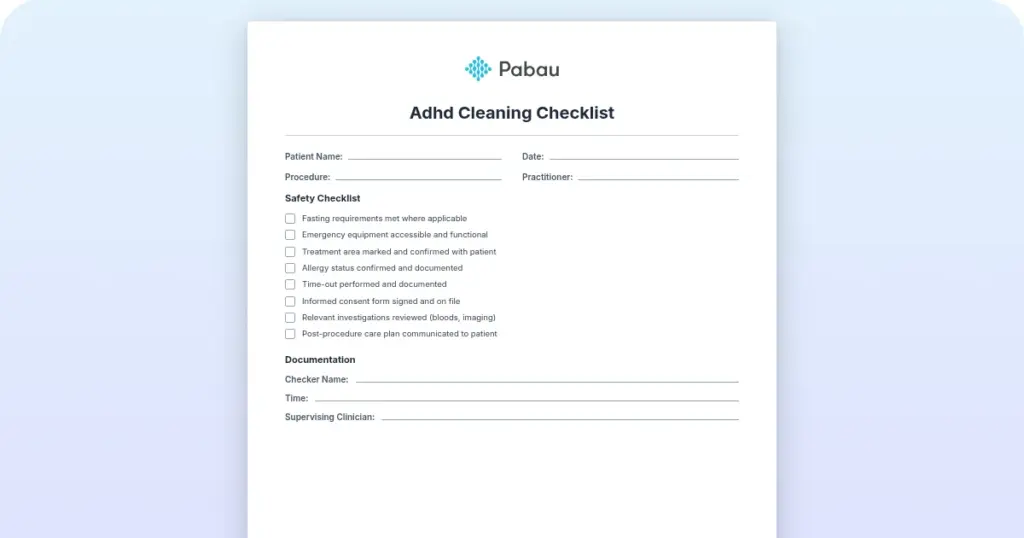
An ADHD cleaning checklist is a cleaning list built for adults with ADHD. In other words, every line is one small action you can finish in a few minutes. Instead of “clean the bedroom,” it reads “make the bed,” “pick up floor items,” and “open curtains.” As a result, that format cuts the planning and […]
Depression nursing care plan
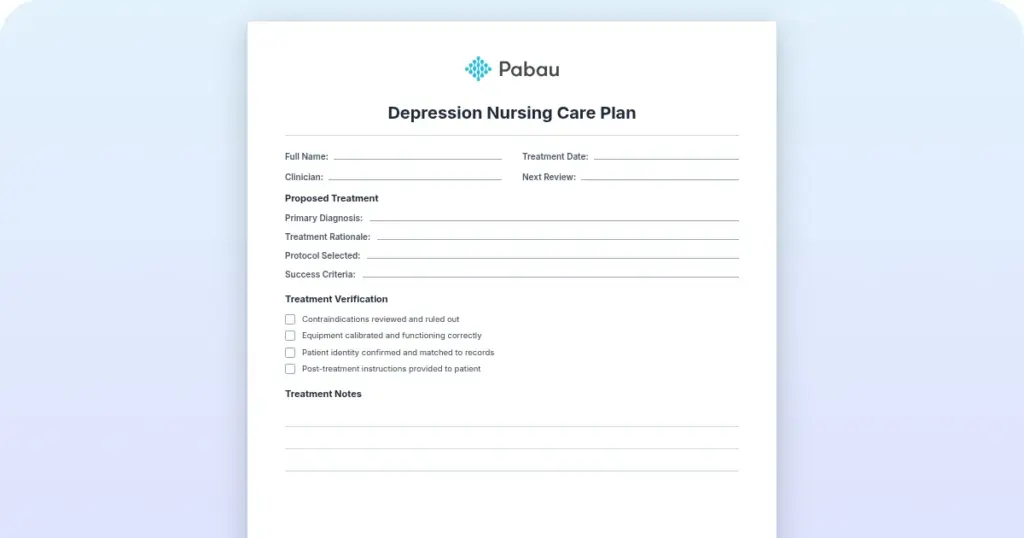
A depression nursing care plan is a written guide that applies the five-step nursing process to a patient with depression. It pairs a PHQ-9 severity score with NANDA-I nursing diagnoses, measurable goals, interventions with rationales, and a date to re-evaluate. The diagnoses that come up most often are Risk for suicidal behavior, Impaired resilience, Chronic […]
Psychosis spectrum test: What it screens for and how it works
A psychosis spectrum test is a short clinical screening tool that checks for hallucinations, delusions, disorganized thinking, negative symptoms, and functional decline. It tells a clinician whether someone needs a full psychiatric assessment, not which diagnosis they have. Schizophrenia alone affects about 1 in 300 people worldwide, according to the World Health Organization. Many of […]