Despina Petrushevska

Hypomania test (HCL-32): Free printable screening PDF
What is a hypomania test used for in clinical practice? A hypomania test is a cl...

Last Updated: Oct 29, 2026
Free PDF 6 pages, print-ready Clinician-reviewed
The clutter image rating scale is a visual tool that scores clutter in the kitchen, living room and bedroom from 1 (tidy) to 9 (severe). Practitioners match each room to a set of nine photographs, then average the three ratings into a composite score. A composite of 4 or higher generally indicates clinically significant clutter. The scale does not diagnose hoarding disorder, so it works alongside clinical judgment and a full assessment.
A six-page scoring sheet with patient and examiner details, 1 to 9 ratings for the living room, bedroom and kitchen, and the composite score calculation. It also covers score interpretation, additional notes and signatures.
Start from scratch, or upload this PDF or any form you already use, and Pabau's AI Form rebuilds it with tick boxes, text fields and a signature. Attach it to the treatment once, and every patient gets it on time.
AI Form rebuilds the consent, history and aftercare forms you already use. You review each one, then publish.
Patients complete forms on their phone before they arrive, so the front desk stops retyping paper.
Every signed form is versioned and attached to the treatment record, ready when you need it.
Set how long a consent stays valid. Returning patients skip forms they have already signed.
Supports HIPAA and GDPR compliance AES-256 encryption 4.8 on G2 4.7 on Capterra Trusted by 4,000+ practices worldwide

The clutter image rating scale rates the kitchen, living room and bedroom from 1 (tidy) to 9 (severely cluttered and hazardous).
Each room is matched to its own set of nine photographs, and the composite score is the three ratings summed and divided by 3.
A composite of 4 or higher generally indicates clinically significant clutter, but no score diagnoses hoarding disorder on its own.
The free PDF is a scoring sheet, so use it alongside the authors’ published photographs.
Pabau, the practice software we build, stores each assessment in the patient record so scores can be compared across visits.
The clutter image rating scale is a standardized visual tool for rating how much clutter a room contains. It uses a set of nine photographs for each of three rooms: the kitchen, the living room and the bedroom.
Frost, Steketee, Tolin and Renaud published the scale’s validation study in 2008. It has since been used across mental health, adult protective services and safeguarding work.
Clinicians use the scale to support a hoarding assessment, not to replace one. Each photograph shows a room at a known level of clutter, so the practitioner can match what they see to a shared reference point.
The scale runs from 1, a perfectly tidy room, to 9, a room that is severely cluttered and presents a hazard. Practitioners compare the room with its photographs and select the closest match.
The scale rates three standard rooms: the kitchen, the living room and the bedroom. Rating each room separately gives a fuller picture, because a home can look manageable in one room and be hazardous in another.
Social workers, housing officers, occupational therapists and mental health practitioners all use the scale. Adult protective services and safeguarding teams also use it when assessing self-neglect concerns.
Practitioners record the scores in a social work case note, which helps teams track change across visits and share a common language with colleagues.
Administration starts with consent. The practitioner explains the purpose of the assessment and confirms the person agrees to a room-by-room visit. The rating itself typically takes about five minutes.
Write the scores and observations in the case record at the time of the visit, so the notes stay accurate.
The composite score is the sum of the three room ratings divided by 3. It uses the same bands as a single room: 1 to 3 is low, 4 to 6 moderate and 7 to 9 severe clutter.
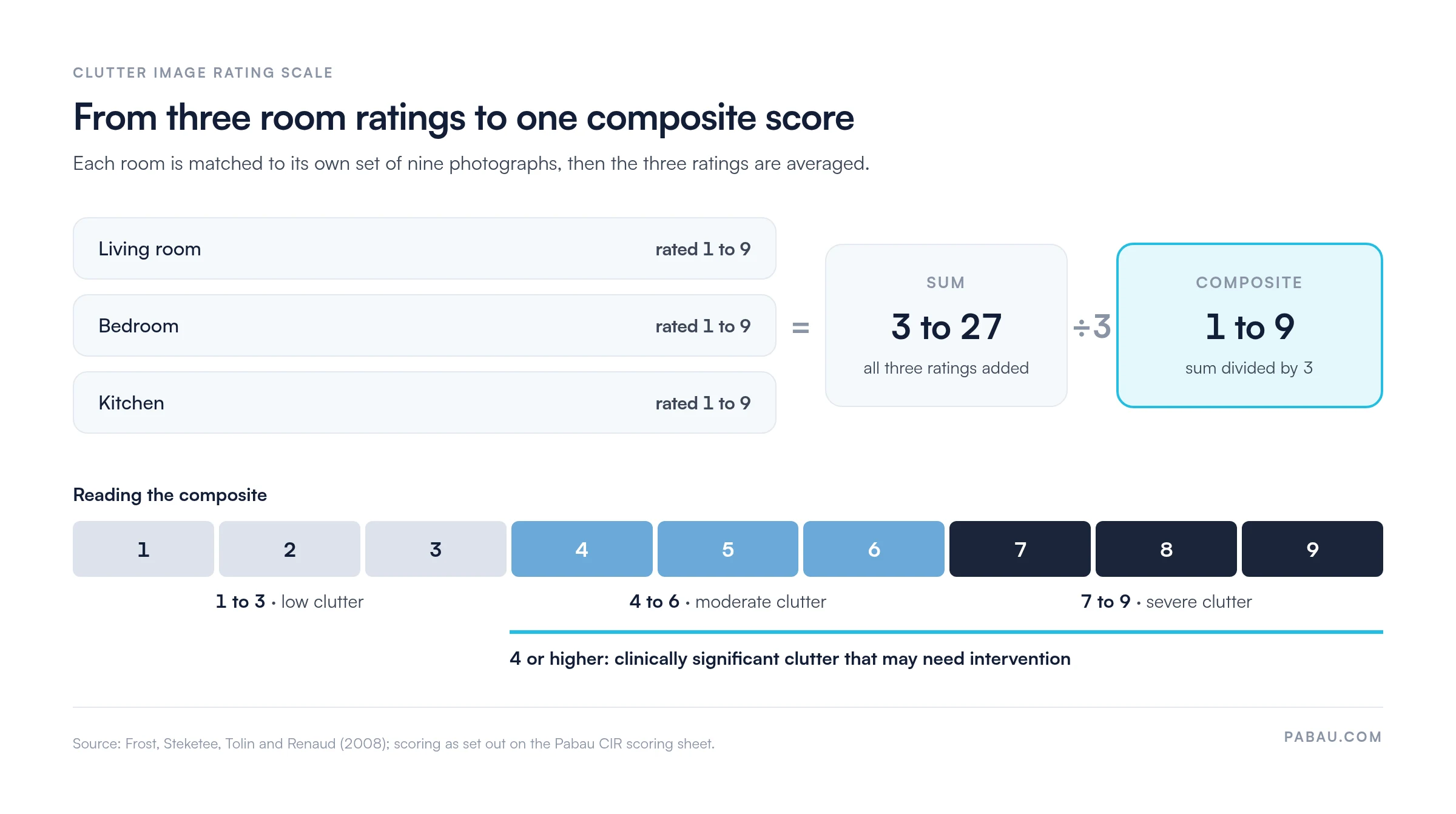
The composite indicates the overall level of clutter, but it does not establish a diagnosis. A practitioner weighs the scores against the person’s history, functioning and safety risks.
A composite score of 4 or higher generally indicates clinically significant clutter. Referral thresholds are still set locally, so confirm the ones your agency uses before deciding on action.
The scale depends on visual matching, so two practitioners can score the same room differently. Room standards also reflect particular cultural expectations, which may not suit every household.
The scale does not measure acquisition, distress or the person’s wish to change. Pair it with a fuller tool, such as the hoarding rating scale, and a clinical interview.
Sanitation is not scored directly either. Rotting food, pests or waste often appear alongside high clutter, but they need their own entry in the record.
The free PDF is a six-page scoring sheet. It records patient and examiner details, a 1 to 9 rating for each room and the composite calculation, with space for notes and signatures.
The sheet does not include the photographs themselves. Use the authors’ published photo set alongside it, and check their attribution requirements before reproducing the images in your own materials.
Many teams still score the scale on paper during a home visit, then retype the ratings into a case system back at the office. Comparing this visit with the last one means hunting down two separate sheets.
Pabau, the practice management platform we build, lets you rebuild the scoring sheet as one of its digital forms. Each room rating and the composite score then save to the patient record with the date of the visit.
Because every assessment sits in the same record, the team can see whether scores are rising or falling across visits. For mental health teams, Pabau’s therapy practice management tools keep these assessments next to appointments, notes and follow-up reminders.
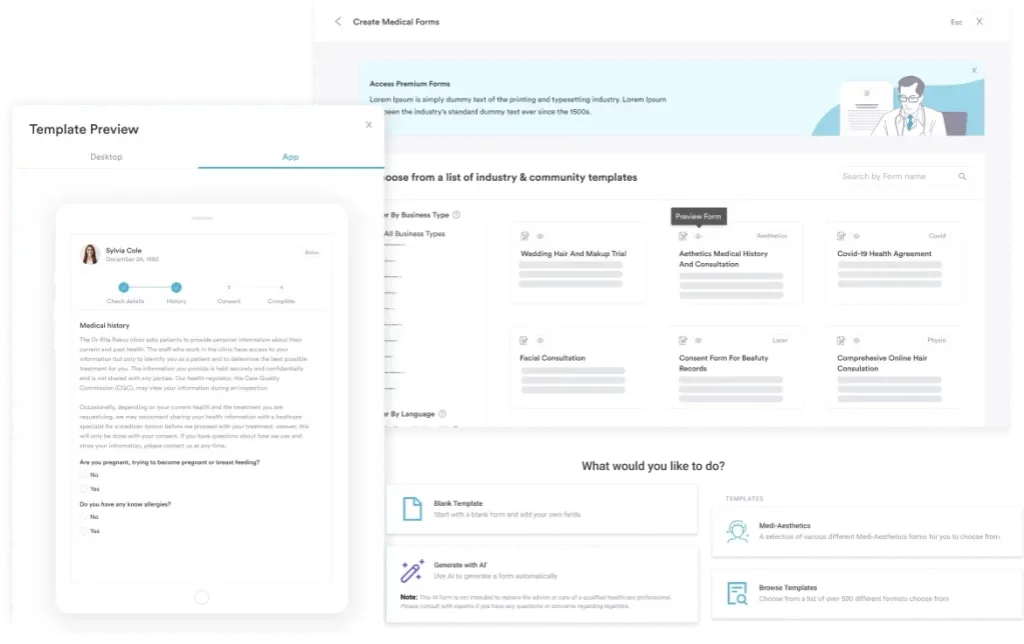

Pabau’s digital forms store each clutter rating and composite score in the patient record. Your team can compare visits and plan follow-up from one place.

The clutter image rating scale earns its place when it is scored the same way every time and read alongside the rest of the assessment. Rate each room against its own photo set, work out the composite, and treat 4 or higher as a prompt for closer clinical review.
The trade-off is that the photographs measure clutter alone. Distress, acquisition and sanitation still need their own questions, and the referral decision stays with your local procedure. Book a demo to see how Pabau keeps every clutter rating and follow-up visit in one patient record.

Need a measure of hoarding symptoms? Hoarding rating scale scores clutter, discarding, acquiring, distress and impairment in five questions.
Writing up a home visit? Social work case note gives you a structure for recording what you observed and agreed.
Need a structured mental health form? Psychiatric evaluation template offers a structured format for comprehensive assessments.
Want a clear documentation method? SOAP notes for social work explains how to record assessments clearly.
Need the wider clinical picture? Comprehensive biopsychosocial assessment covers history, functioning and social context alongside clutter scores.
The clutter image rating scale is a visual tool that rates clutter from 1 (tidy) to 9 (severely cluttered). It uses a set of nine photographs for each room (kitchen, living room and bedroom) to support hoarding assessments.
A composite score of 4 or higher generally indicates clinically significant clutter. No score confirms hoarding disorder, which rests on clinical judgment.
Yes, the PDF scoring sheet on this page is free to download. It does not include the photographs, so check the original authors’ attribution requirements before reproducing them.
Trained practitioners such as social workers, housing officers and mental health clinicians use it. It is not designed as a self-assessment tool for lay users.