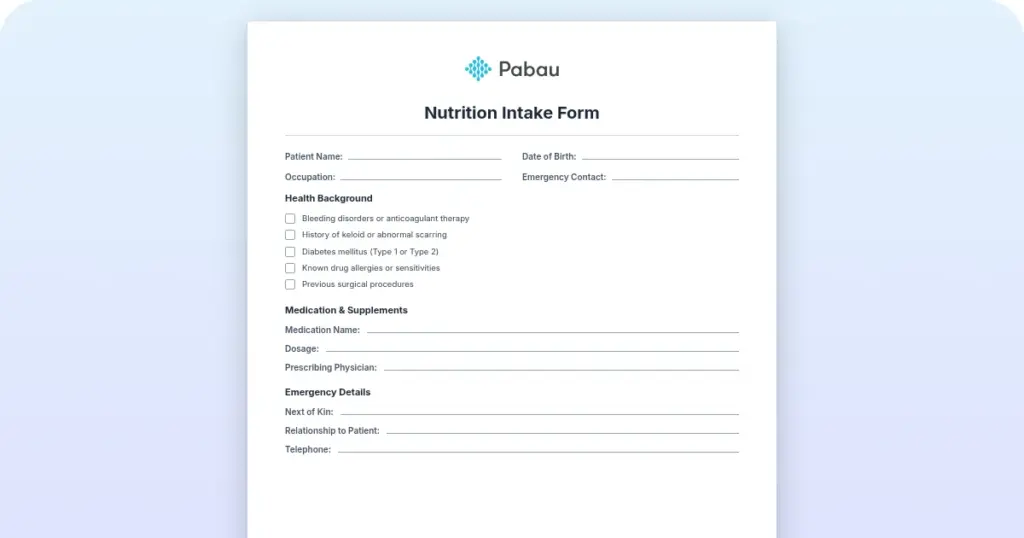
Intake note template
An intake note is the clinical record a therapist or counselor writes at the sta...

2
Last Updated: Oct 22, 2026

A whole food diet emphasizes minimally processed foods: Fruits, vegetables, whole grains, legumes, lean proteins, nuts, and seeds while eliminating ultra-processed foods, refined sugars, and artificial additives.
Health benefits include weight loss through reduced caloric density, improved gut health via dietary fiber, reduced inflammation from polyphenols and antioxidants, and better cardiovascular health.
A whole food diet differs from Whole30 (no strict elimination rules) and clean eating (broader philosophy) — it allows animal products in minimally processed form and suits most dietary preferences.
Practice management software like Pabau offers digital forms and a client portal that help nutrition and wellness practitioners deliver personalized whole food diet plans, track client progress, and manage dietary consultations.
A ready-to-use meal planning template covering daily nutrition guidance, food categories, portion guidelines, and a structured approach to helping clients transition to minimally processed eating patterns.
Download templateNutrition and wellness practitioners recommend a whole food diet to clients working toward weight loss, better digestion, or lower inflammation. This guide covers what counts as a whole food, which foods to limit, the evidence behind the health claims, and how the approach compares to Whole30, clean eating, and plant-based diets. The downloadable template below includes a 7-day meal plan and shopping list you can hand directly to clients. Software for weight loss practices links the review schedule to the measurement history.
A whole food diet plan focuses on eating foods in their most natural state. Fruits, vegetables, whole grains, legumes, nuts, seeds, and lean proteins form the foundation. The plan minimizes ultra-processed foods, refined sugars, and artificial additives that offer little nutritional value.
The philosophy is straightforward: If a food was available 100 years ago, it likely fits the diet. This isn’t about perfection or rigid rules. Rather, it’s a flexible eating pattern that emphasizes nutritional density and whole ingredients over convenience and industrial processing.
Unlike Whole30 (a strict 30-day elimination protocol), a whole food diet plan has no time limit or forbidden lists. Unlike clean eating (a broader marketing term), the whole food diet plan is grounded in the objective principle of processing levels, not subjective “cleanliness.”
The allowed foods on a whole food diet plan are grouped by category. Each group supplies specific nutrients and forms the building blocks of balanced meals.
These foods conflict with whole food principles and should be limited or eliminated entirely.
Wellness practices track plans like this inside wellness clinic software, alongside bookings and client notes.
Research and practitioner experience show that a whole food diet plan delivers multiple health benefits. These outcomes reflect the cumulative effect of nutrient-dense eating and elimination of inflammatory processed foods.
Whole foods contain more fiber and water than processed alternatives, increasing satiety per calorie consumed. Lean proteins also boost metabolic rate during digestion. Eliminating calorie-dense processed foods naturally reduces overall intake without hunger-driven restriction.
Dietary fiber from vegetables, fruits, whole grains, and legumes feeds beneficial gut bacteria, supporting a healthy microbiome. A diverse microbiome underpins immunity, mood regulation, and nutrient absorption — all downstream benefits of a whole food diet plan focused on plant diversity.
Patients with small intestinal bacterial overgrowth are the exception here, since fermentable fiber feeds the bacteria causing their symptoms. A low-FODMAP food list cuts legumes, onions, wheat, and other fermentable plant foods for two to six weeks alongside antimicrobial treatment.
Polyphenols and antioxidants in colorful vegetables and whole grains counteract oxidative stress. Omega-3 fatty acids from fish and seeds reduce systemic inflammation. Over time, this anti-inflammatory effect may lower risk for chronic disease.
A whole food diet plan also eliminates processed oils and refined sugars — both known inflammatory triggers — reducing the overall inflammatory load of the diet.
This sample week shows how a whole food diet plan unfolds in practice. Each day balances macronutrients and showcases the variety available within the framework.
This pattern repeats with different proteins, grains, and vegetables across days 3-7. The downloadable template provides a complete 7-day breakdown with recipes and portion guides.
A structured shopping list organized by category ensures you buy ingredients aligned with whole food principles and minimizes impulse purchases of processed items.
The downloadable whole food diet plan template includes a complete weekly shopping list with quantities sized for 1-2 people, making meal prep straightforward.
Meal prep turns a whole food diet plan from aspirational to sustainable. Batch cooking on Sunday eliminates daily decision fatigue and reduces the temptation to reach for processed convenience foods mid-week.
Practitioners can share meal prep guidance via the client portal, sending recipes, shopping lists, and prep videos directly to clients following the whole food diet plan.
Label reading is where a whole food diet plan meets real-world grocery shopping. Many seemingly healthy packaged foods contain hidden sugars, refined grains, or artificial additives masquerading as nutritious.
Teaching clients label-reading skills makes a whole food diet plan independently sustainable rather than dependent on your guidance.
Understanding how a whole food diet plan compares to related approaches helps clients choose what aligns with their goals and lifestyle.
For practitioners recommending a whole food diet plan, the flexibility appeals to clients who resist rigid protocols. The focus on processing (not restriction) makes it accessible and sustainable long-term. Where the preference runs animal-forward, an animal-based diet template applies the same processing-level logic.
Understanding pitfalls helps new practitioners and clients avoid backsliding into old habits.
While a whole food diet plan delivers broad health benefits, tailoring it to individual goals increases engagement and outcomes.
For weight loss: A whole food diet plan naturally supports weight loss through increased fiber and protein satiety. Practitioners can further emphasize appropriate portion sizes for healthy fats and ensure protein at every meal to stabilize blood sugar.
For gut health: Emphasize fermented foods (unsweetened yogurt, sauerkraut), diverse plant fiber (30+ different plant sources per week), and eliminate processed foods that feed dysbiotic bacteria. This approach fits naturally into functional medicine practices that already build in pre-biotic and probiotic foods.
For cardiovascular health: Prioritize omega-3 sources (fatty fish twice weekly), soluble fiber (oats, beans), and minimize sodium. The anti-inflammatory foundation of a whole food diet plan supports cardiovascular health.
For hormonal balance (menopause, PCOS): A whole food diet plan rich in phytoestrogens (flaxseed, soy), adequate protein (for muscle preservation), and stable blood sugar through complex carbs addresses hormonal shifts without restriction.
Practitioners delivering nutrition guidance can streamline whole food diet plan consultations and follow-up using automated client workflows and structured templates.
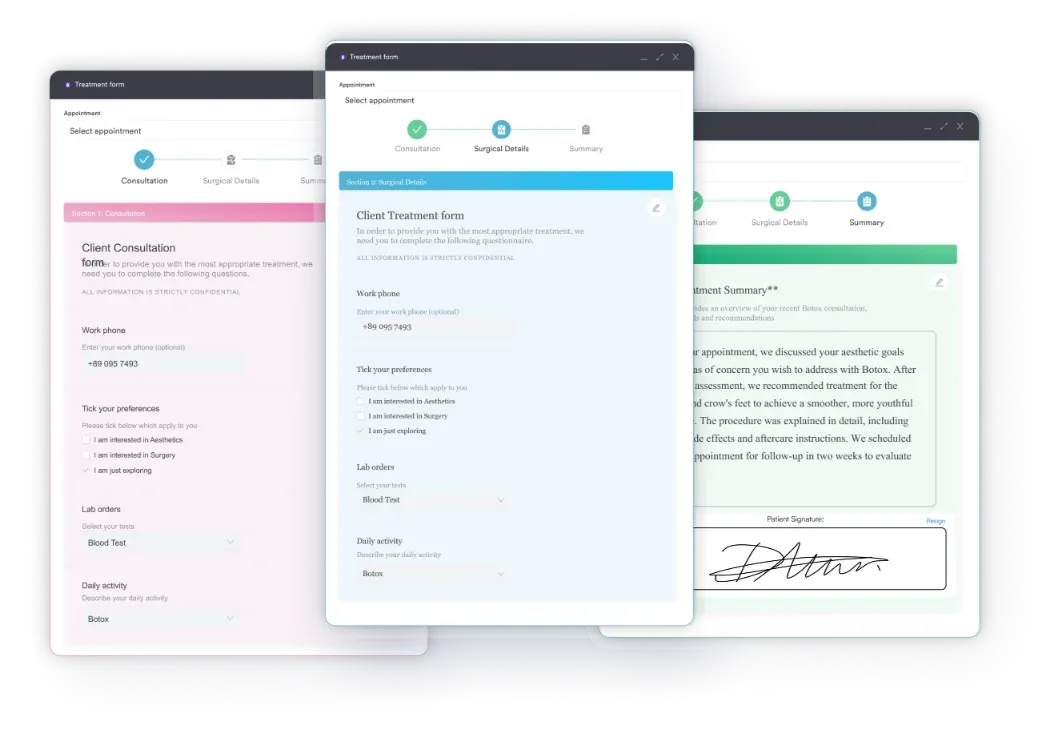
Digital intake forms collect dietary baselines and food preferences before consultations, saving time. The client portal shares the downloadable template directly with clients, ensuring consistent messaging. Progress tracking via clinical notes documents adherence and outcomes across your client base.
For clinics running weight loss programs, a whole food diet plan serves as the foundational framework. Pabau’s ability to track body composition changes, blood work markers, and subjective wellbeing measures validates the plan’s efficacy to clients — building confidence and adherence.

Streamline diet plan delivery, automate client education, and track outcomes with integrated practice management for nutrition and wellness practitioners.

A whole food diet plan is a flexible, evidence-backed framework grounded in minimally processed ingredients and elimination of industrial additives. Whether your clients seek weight loss, improved digestion, reduced inflammation, or long-term wellness, this approach adapts to their goals without rigid rules or time limits.
The downloadable template provides the 7-day meal plan and shopping list your clients need to start immediately. To see how digital forms, client portals, and outcome tracking fit into daily practice, schedule a Pabau demo.

Comparing diet frameworks for a client? Macro diet plan template breaks down protein, carb, and fat ratios for clients who want more structured tracking alongside whole food principles.
Looking for a plan focused on fat loss? lean diet plan pairs a calorie deficit with a higher protein target and includes a free 7-day template.
Guiding a client toward a low carb approach? low carb food list groups proteins, vegetables, dairy, fats, nuts, fruit, and drinks by net carbs per serving.
A whole food diet plan prioritizes minimally processed foods (fruits, vegetables, whole grains, legumes, lean proteins) and eliminates ultra-processed foods and artificial additives. Unlike Whole30 (a 30-day elimination challenge), it is a flexible, ongoing lifestyle. Unlike clean eating (a vaguer marketing term), whole food diet plan is defined by objective processing levels, not subjective rules.
Yes. A whole food diet plan supports weight loss by increasing satiety (from fiber and protein) and reducing caloric density compared to processed foods. However, weight loss depends on overall calorie balance, not diet type alone. Practitioners should counsel clients that a whole food diet plan creates conditions for weight loss but requires consistent adherence.
Yes. A whole food diet plan includes minimally processed animal products: Eggs, poultry, fish, and lean meat. The focus is on processing level and ingredient simplicity, not animal vs. plant origin. Plant-based whole food diet plans are also viable by replacing meat with legumes, tofu, and nuts.
Whole foods (fresh produce, grains, legumes) cost slightly more per item than ultra-processed convenience foods. However, whole foods provide greater satiety and nutrient density, resulting in smaller portions and less total spending over time. Meal prep and seasonal buying further reduce costs for adherents of a whole food diet plan.
Absolutely. A whole food diet plan is highly adaptable. If you have a gluten sensitivity, substitute whole grains with rice, quinoa, or corn. If you have dairy intolerance, whole food proteins (meat, eggs, legumes) provide complete nutrition. The framework remains intact even with common allergen exclusions.
A whole food diet plan and anti-inflammatory eating overlap significantly. Both eliminate refined sugars, processed oils, and additives that trigger inflammation. A whole food diet plan naturally delivers anti-inflammatory compounds (polyphenols, omega-3s, antioxidants) through plant and fish sources. For clients with inflammatory conditions, a whole food diet plan is an evidence-backed foundation.