Physician credentialing checklist
A physician credentialing checklist lists every license, certificate, verificati...

Last Updated: Oct 23, 2026
A welcome letter to a new staff member is a short, personal document sent before or on the first day. It confirms the role, the start date, and who the new person reports to.
Practice managers use it to make a good first impression and reduce first-day uncertainty. It also hands the new hire the practical details they would otherwise have to chase, from arrival time to parking.
Most managers write these from scratch each time, which is how key details go missing. The free template below covers every element a new hire needs, from role and responsible manager through to review dates and sign-off.
A ready-to-use PDF with fields for the role, the start date and arrival time, the responsible manager, the first-week plan, review dates and sign-off. Adapt the wording to your own practice before you send it.
Download template
A welcome letter confirms role, start date, manager and first-day logistics before the employee arrives.
Send it after the offer is signed and before the first day, ideally a week ahead.
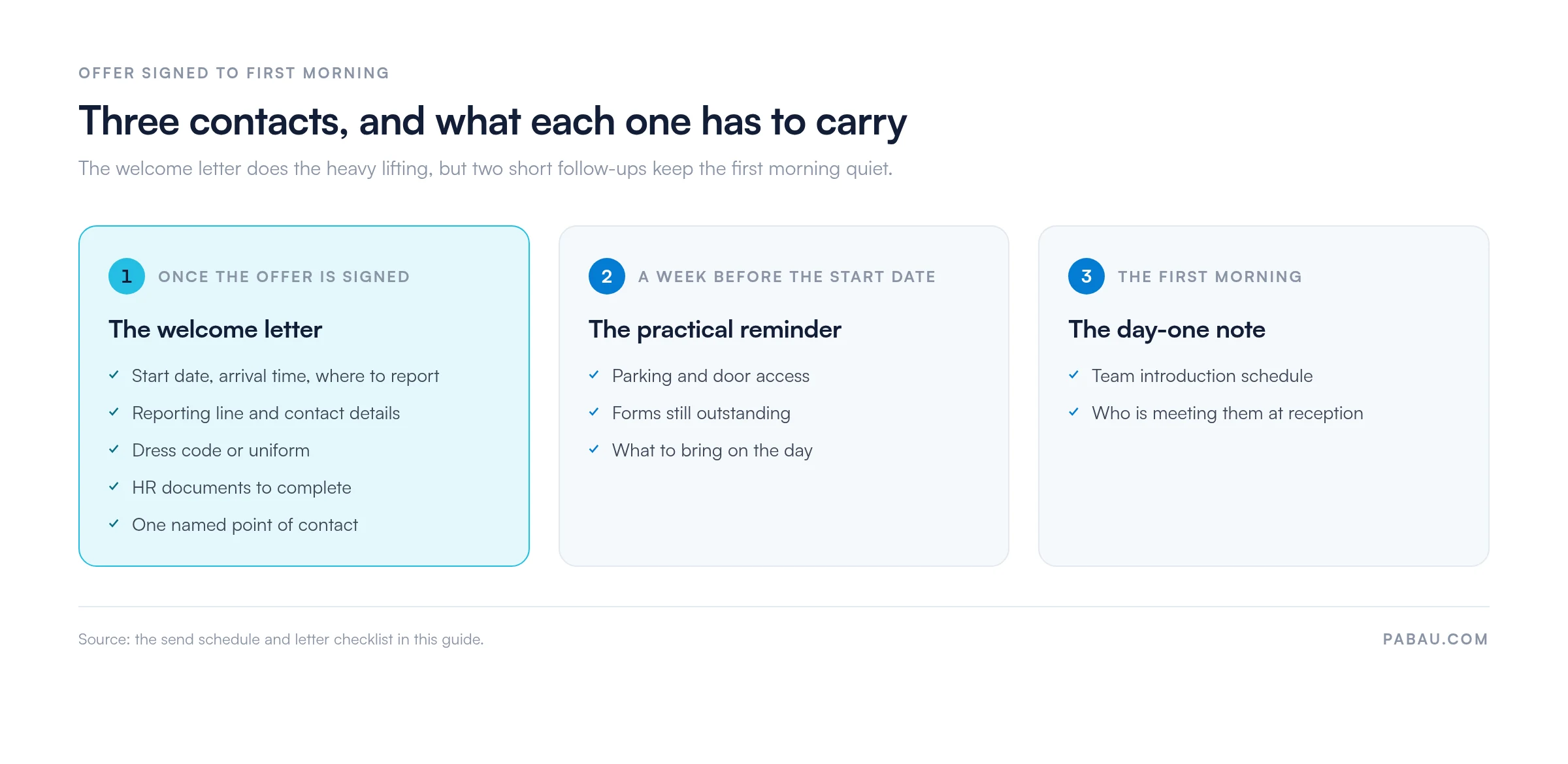
Include start time, point of contact, dress code or uniform, and the HR documents to complete.
Keep the tone warm and professional, and store the signed copy with the staff file.
A welcome letter to a new staff member is a formal written message from the practice. It goes to someone who has accepted a role but has not yet started. It sits within the new employee onboarding process, after the offer letter and before the first day.
The offer letter or employment contract sets pay and terms, and the welcome letter changes neither. Its job is the first few days: what happens, when, and who to ask. It sits alongside the other standard letters a practice keeps on file. Those run from the offer letter to the reference letter you write when someone moves on.
In healthcare settings it also serves a documentation purpose. A dated record of what was communicated, and when, helps evidence a structured onboarding process at review or inspection.
A new hire’s first week is when uncertainty is highest. A clear letter answers the questions they would otherwise ask on arrival. It covers where to park, who to find at reception, and what to bring.
If you are hiring against a staffing plan rather than filling a sudden vacancy, healthcare workforce planning covers the step before this one.
Most welcome letters cover the same core elements. Keep each one to a line or two so the letter stays short enough to read in one sitting.
Hold the benefits summary to two lines and point to the employee handbook for the detail. A letter that tries to carry policy stops being a welcome.
Audit your letter against the start-date checklist before sending. Missing parking or door-access details commonly prompt first-morning questions, so add a line for both.
Writing one takes about twenty minutes once you have a structure. Work through these steps in order.
Copy-paste examples help when you need a quick draft. Adjust the names, dates and details before sending.
Formal letter opening: Dear [Name], on behalf of [Practice Name], we are delighted to welcome you to the team as [Role]. Your first day is [Date] at [Time].
Send the letter once the offer is signed and at least a week before the start date. That gives the new hire time to read it and ask questions.
Those three contacts do different jobs, and only the first one is the letter itself.
A letter suits senior or clinical hires where a formal record matters. An email is faster and works well for front-desk or short-notice starts. Many practices send an email first and attach the signed letter.
A welcome letter is one step in a wider onboarding process. The details in it only hold if your systems agree with them. Pabau, the practice management platform we build, keeps staff records, roles and permissions in one place.
Set the new hire’s role and permissions before the first day, and their access matches what the letter promised. Pabau’s team management software also handles shift patterns and time-off approvals, so the schedule shows who is genuinely available.
Hours sit in the same place through staff time tracking, which saves a separate spreadsheet in week one. On the first morning a new practitioner can open Pabau GO, our iOS app for practitioners, and see their own appointments.
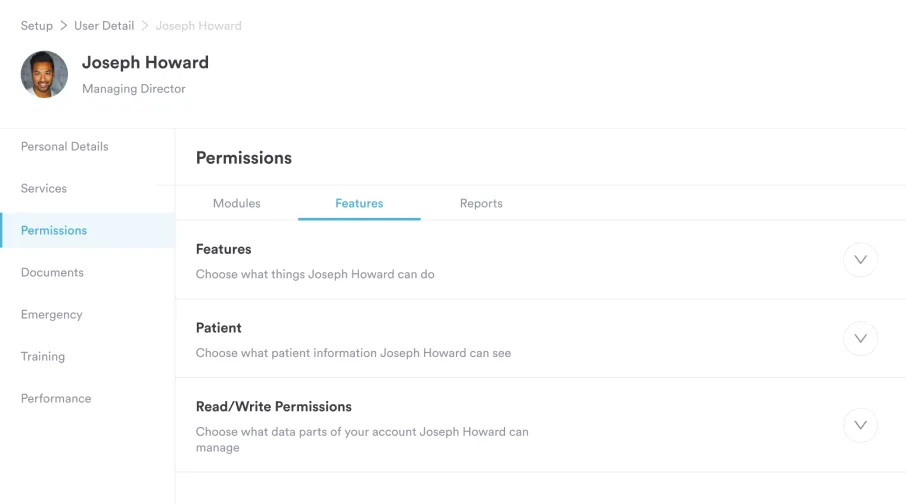

Pabau sets each new hire’s role, permissions and schedule before the first day, so their access matches the welcome letter. Nobody spends week one chasing logins.

A welcome letter earns its twenty minutes because it removes the questions a new hire would otherwise bring to the front desk. Write it once, keep the structure, and change the names and dates for each starter.
The trade-off worth remembering is formality. A letter creates the record a senior or clinical hire deserves. An email gets a short-notice starter what they need faster. Choose by the role, not by habit.
Keep the signed copy with the staff file, and check the system reflects it before the first morning. Book a demo to see how Pabau keeps staff records, permissions and schedules aligned from day one.

Hiring to a plan rather than a vacancy? Healthcare workforce planning sets out a six-step method for sizing a practice team.
Need the policy detail the letter only summarizes? Employee handbook template gives you a full handbook structure for a healthcare practice.
Asked for a reference when someone moves on? Sample reference letter to recommend an employee covers the wording and the sign-off.
Still chasing the team on WhatsApp? Staff messaging platform for practice management compares the options for internal messages.
A welcome letter to a new staff member is a formal message sent once the offer is accepted. It confirms the start date, the reporting line and the first-week details.
Include the start date and time, the reporting line, and the dress code or uniform. Add the team introduction, the HR documents to complete, and one point of contact.
Send it once the offer is signed, at least a week before the start date. That leaves the new hire time to read it and ask questions.
Yes. Healthcare versions usually add the uniform or scrub policy, system login arrangements, and any role-specific registration or induction steps.