Psychosis spectrum test: What it screens for and how it works
A psychosis spectrum test is a short clinical screening tool that checks for hal...

Last Updated: Oct 5, 2026
A patient safety plan is a written, prioritized list of warning signs, coping strategies and contacts a patient uses during a suicidal crisis. You build it with the patient, not for them. The free template below follows the six-step Stanley-Brown Safety Planning Intervention, the model SAMHSA and the Joint Commission recommend.
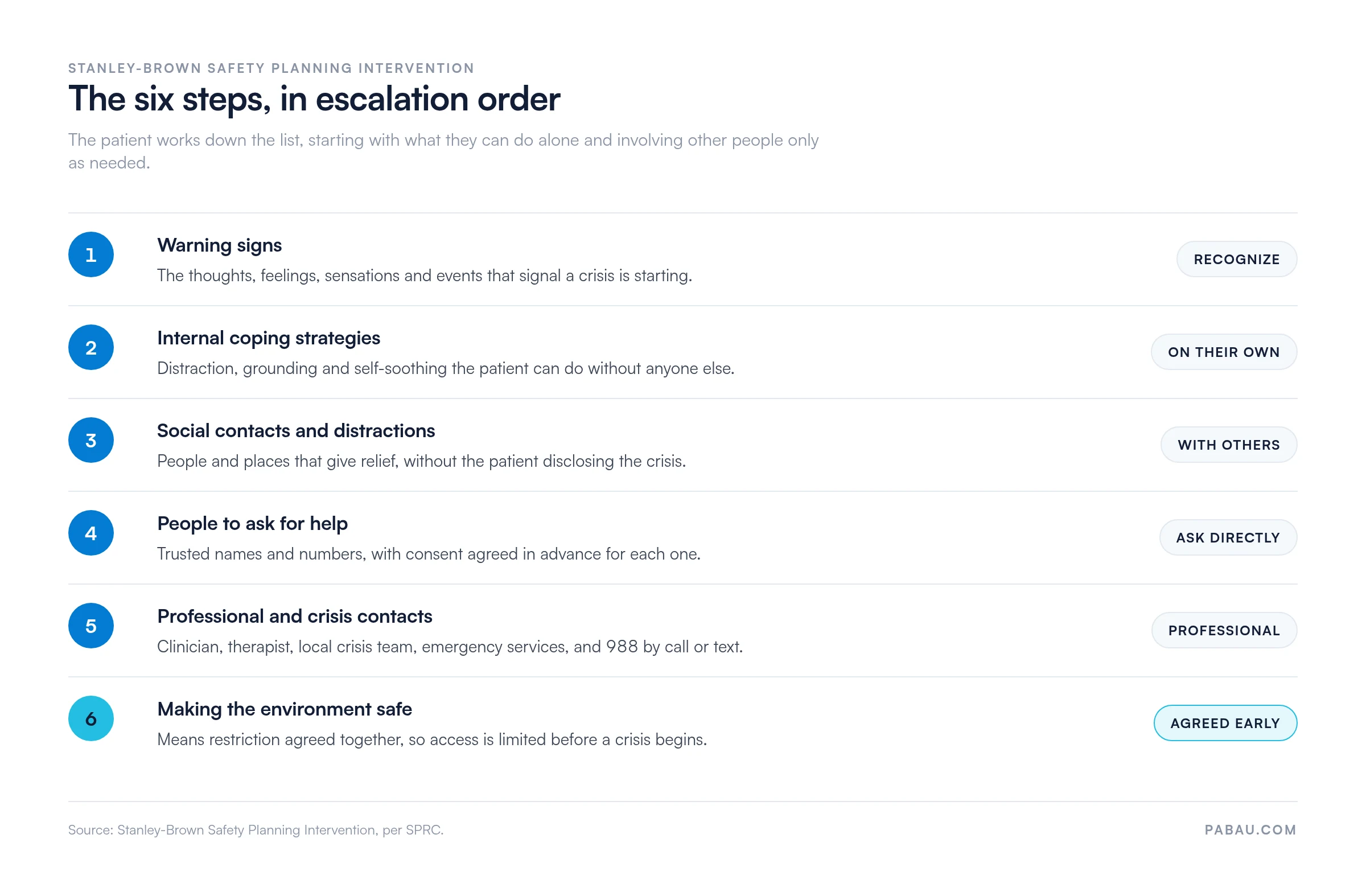
Each step is a section on the form, and the order matters. The patient starts with what they can do alone, then reaches for other people, then for professional help.
Below the download, this page explains how to complete each step in session. It also covers what to record afterward and how often to review the plan.

A patient safety plan is a collaborative tool that helps a patient at risk of suicide manage a crisis with their own strategies.
The Stanley-Brown model runs six steps: warning signs, coping strategies, social supports, trusted people, professional contacts, and means restriction.
Safety planning is endorsed by SAMHSA, the Joint Commission, and the Zero Suicide Institute as best practice for suicide prevention.
Practice management software like Pabau stores the completed plan in the patient record and schedules the follow-up review automatically.
The form carries all six Stanley-Brown sections in the order the patient works through them. Each one leaves space for their own wording on warning signs, coping strategies, support contacts, crisis numbers, and means restriction.
Download templateA patient safety plan is a prioritized, written set of coping strategies and support contacts that a patient reaches for as a crisis builds. SAMHSA recommends safety planning for every provider working with at-risk populations.
A no-harm contract asks the patient to promise not to act on suicidal thoughts. A safety plan hands them a sequence of moves to make instead, written in their own words and kept where they can find it.
The most widely used model is the Stanley-Brown Safety Planning Intervention, developed by Dr. Barbara Stanley and Dr. Gregory Brown. It has been validated in inpatient psychiatric units, primary care, emergency departments, and community mental health programs. SPRC, the Joint Commission, and the Zero Suicide Institute all treat it as a cornerstone of suicide prevention.
The six steps build on each other to form a de-escalation pathway. The diagram below shows them in that order, along with who gets involved at each stage.
Work with the patient to list the early signs that a crisis is developing. Four kinds are worth prompting for:
All crisis intervention strategies start from the same premise. The patient is the expert on their own triggers, so press for concrete wording. “I can’t sleep and ruminate about my diagnosis” is far more useful on the form than “I feel bad”.
Identify what the patient can do alone to reduce the urge, without involving anyone else. These are the first line of defense, used as soon as the warning signs in step 1 appear.
Distraction suits some people, whether that is exercise, music, or a creative task. Others do better with grounding, such as the 5-4-3-2-1 sensory exercise, or with self-soothing like a warm bath. Whatever goes on the form should be something they have already found helpful.
List specific people and places that provide distraction or relief, each with a way to reach them. A friend’s house, a support group, or a quiet public space all qualify.
The point is pre-commitment. Choosing these while calm means the patient does not have to decide mid-crisis. They also do not have to disclose the crisis at this step, which makes it a much easier one to use.
Record the trusted individuals the patient can contact when coping and distraction are not enough. Include full names, phone numbers, and what each person can realistically help with.
Then discuss consent. Does each person know the patient may reach out, and how much support are they willing to give?
Record the clinician’s office and after-hours numbers, the patient’s therapist or psychiatrist, the local crisis team, and emergency services. Add the 988 Suicide and Crisis Lifeline, which patients in the US reach by calling or texting 988. This is the escalation path for when professional intervention is needed straight away.
Discuss means restriction, which covers removing, locking, or securing lethal means in the patient’s home. Treat it as a conversation, never a directive.
A patient might agree to store medications with a relative, keep them in a locked box, or hand over access to one specific item. Impulsive crises are brief, so limiting access during that window reduces the risk of a fatal attempt.
Fill the plan in with the patient, in a session set aside for crisis planning. Handing over a blank form to complete at home defeats the purpose. Walk through each section together and write the patient’s own words down verbatim. Allow 20 to 30 minutes.
Print two copies when you finish, one for the patient to take home and one for the clinical record. Review the plan at every follow-up, updating warning signs and contacts as circumstances change. A plan revisited regularly works better than one signed once and filed.
Store the completed plan in the patient’s clinical record straight after the session. A plan nobody can find during a crisis has no value. Most practice management systems let you attach the form to the file, flag it as the current plan, and set a review reminder.
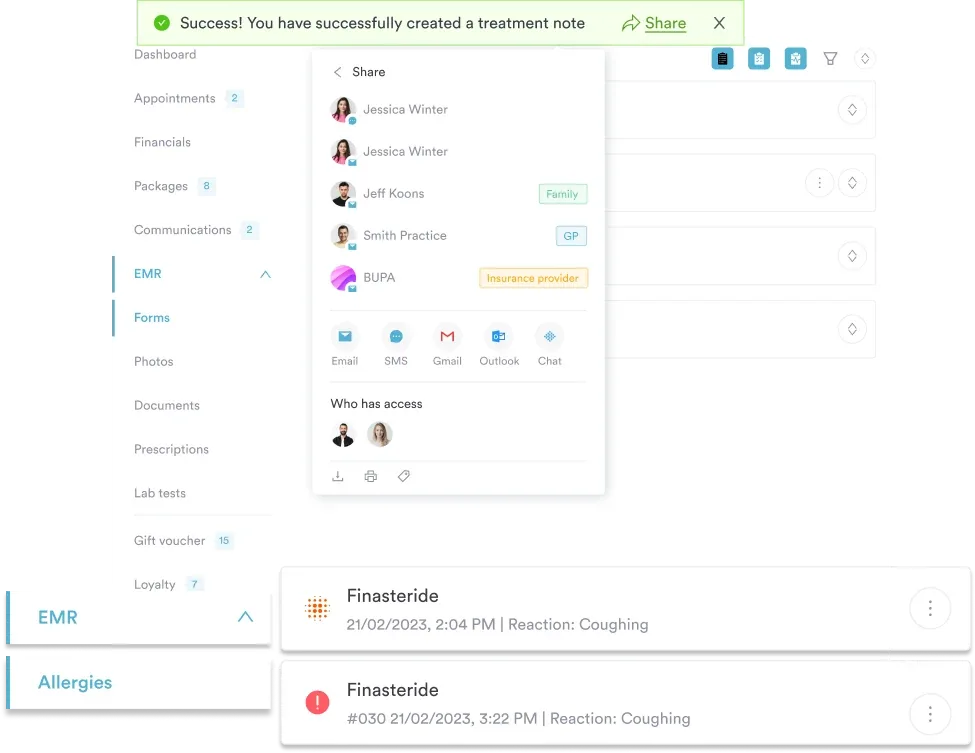
Then write four things in the clinical note:
That record protects you and keeps care continuous if another clinician takes over. The Joint Commission National Patient Safety Goals require documented suicide risk assessment and safety planning for at-risk patients.
Safety planning suits any patient at raised risk of self-harm or suicide, across most mental health settings. Therapists, counselors, psychiatrists, psychiatric nurses, and primary care providers all use it. It applies to depression, bipolar disorder, post-traumatic stress disorder (PTSD), personality disorders with chronic suicidality, and psychosis with command hallucinations.
Inpatient units build it into discharge planning. Emergency departments document it during assessment. Community programs put it in standard intake. A structured risk assessment usually comes first, which is where a psychiatric evaluation template earns its place.
The form works across ages and cultural contexts, provided you adapt the language and the resources to the patient. For adolescents that means simpler wording and a parent or guardian in the room.
Safety planning cuts the number of decisions a patient has to make when their judgment is worst. The form gives them a route to follow instead.
The same principle drives group therapy informed consent. A patient who helped design the plan sticks to it far more often than one handed a set of restrictions.
The plan also stands as evidence of appropriate care. If the worst happens despite sound clinical judgment, a documented collaborative plan shows what you did and why.
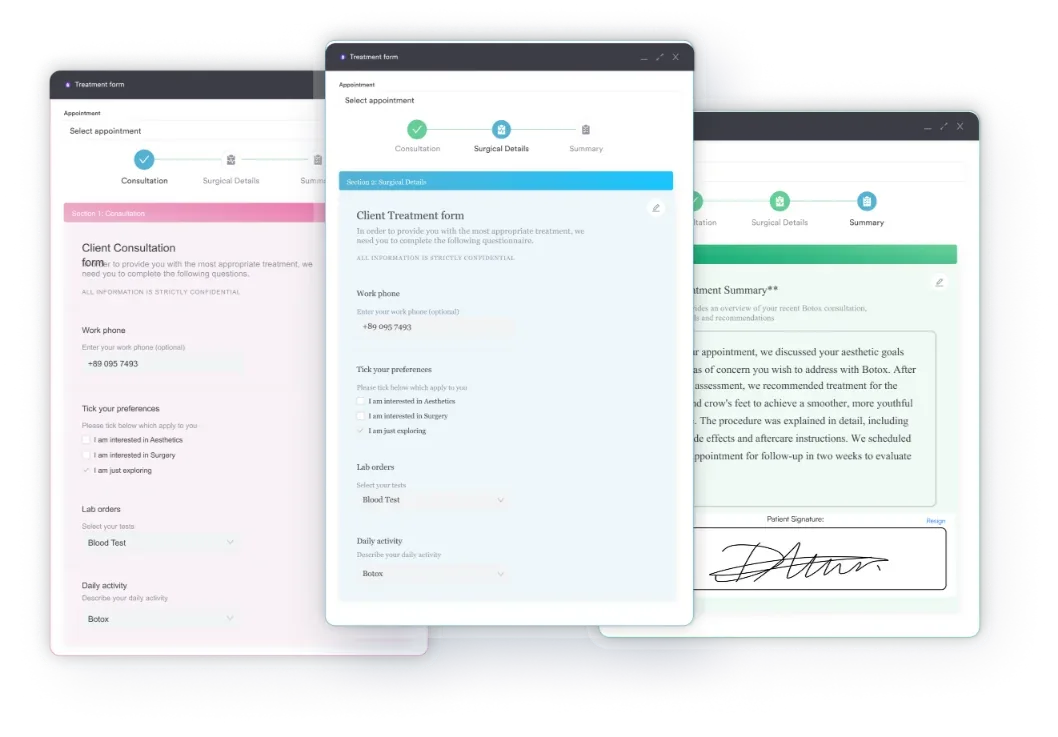
Most practices still print the plan, hand over one copy, and drop the other in a folder. Practice management software like Pabau turns it into a digital form on the patient’s file instead.
Build a patient safety plan form in the form builder and set it to pull in the patient’s and clinician’s details. Add it to your crisis-planning workflow so it is ready when a session calls for it. The completed form saves straight onto the patient’s file, so no paper goes missing.
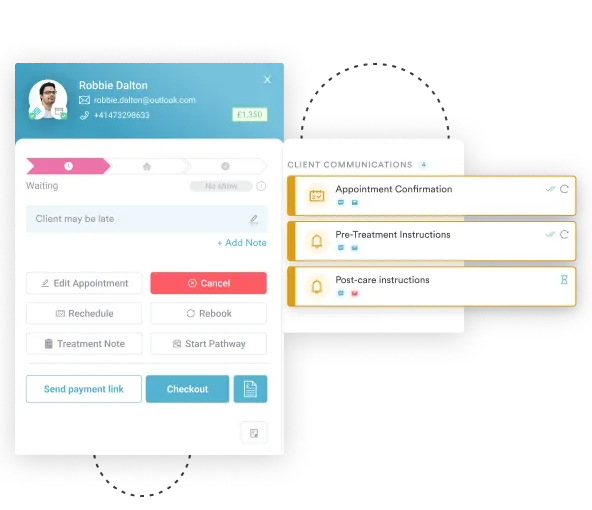
Automated reminders handle the review cycle. Set one for every 6 to 12 weeks, or trigger one after a crisis event or a hospital admission. A therapy practice management platform puts the review on the schedule, rather than leaving it for a clinician to remember.
The plan, the notes, and the risk history sit on one file, which matters most when a colleague covers your caseload. A mental health EMR gives whoever is on duty all three without a phone call.

Store completed safety plans in patient records, automate follow-up reminders, and keep crisis protocols documented and accessible to whoever is on duty.

The form is the easy part. What makes a safety plan work is the half hour you spend building it in the patient’s own words. The rest is the discipline to open it again at the next appointment.
So download the template, then treat it as a script for a conversation rather than a form to file. A plan the patient wrote and can find beats a tidier one they have never read.
Book a demo to see how Pabau stores completed safety plans in the patient record and schedules every review for you.

Need a structured risk assessment first? Psychiatric evaluation template gives you the assessment structure that safety planning follows on from.
Writing the session up afterward? Progress notes for psychotherapy covers how to record a safety plan review so the note holds up.
Facing an active crisis in session? Crisis intervention strategies for clinicians walks through what to do before any plan is written.
A no-harm contract is a unilateral promise the patient signs stating they will not harm themselves. Safety planning is a collaborative tool that gives the patient active strategies to stay safe. The Zero Suicide framework rejects no-harm contracts as ineffective and potentially harmful. Safety plans have evidence supporting their use.
Yes. The Stanley-Brown Safety Planning Intervention has been validated in multiple peer-reviewed studies across inpatient, emergency, and community mental health settings. It is endorsed by SAMHSA, the Joint Commission, and international suicide prevention organizations.
Yes, with developmentally appropriate language and adult collaboration. Adolescents complete safety plans with parental or guardian involvement, adjusting language for maturity level and including age-appropriate coping strategies and contacts.
Review the plan at least every 6 to 12 weeks during ongoing therapy, and immediately after any crisis event, hospitalization, or significant life change. Update warning signs, contacts, and coping strategies as the patient’s circumstances evolve.
Explore the refusal. Some patients fear the plan makes their suicidality official, or signals they are not trusted. Frame safety planning as a collaboration that helps them use their own strengths. Document the conversation and your clinical judgment if a patient declines planning.
Yes, the safety plan is part of the patient’s confidential clinical record under HIPAA and other privacy regulations. If the patient is in imminent danger, duty-to-warn and duty-to-protect laws may apply, so consult your jurisdiction and legal guidance.