Montgomery-Åsberg Depression Rating Scale (MADRS)
The Montgomery-Åsberg Depression Rating Scale (MADRS) is a clinician-administer...

1
Last Updated: Oct 6, 2026
A nipple piercing pain chart puts the piercing at 5-7 out of 10, above an earlobe and below a septum. The needle pass itself lasts 1-3 seconds. Soreness and throbbing then linger for hours to days.
Full healing takes 6-12 months, and the first 2-4 weeks are the tender ones. This guide covers the 1-10 scale, what moves a client’s score, the healing stages, and the aftercare that prevents infection.
The downloadable chart below gives wellness practitioners and piercing studios one sheet for the whole process. Log the client’s expected pain, the score they give during the procedure, and each healing checkpoint afterward.
A pain assessment and aftercare tracking chart for piercing studios and wellness practices. It covers the 1-10 rating scale, healing stage milestones, risk screening questions, contraindications, and post-piercing care instructions.
Download template
Nipple piercings score 5-7 out of 10 for most clients, which puts them above an earlobe and below a septum.
The needle pass lasts 1-3 seconds, but soreness and throbbing can run on for hours to days.
Full healing takes 6-12 months, and the first 2-4 weeks carry the most tenderness and the most aftercare work.
Nerve density, jewelry gauge, piercer technique and a client’s anxiety level all move the score.
Practice management software like Pabau stores pain scores, healing stages and aftercare reminders in one client record.
A nipple piercing pain chart is a documentation tool that structures how you record pain during the piercing and through recovery. It gives you and the client a shared language for discomfort. The chart carries a 1-10 scale, a description of what each level feels like, space for anatomy notes, and a healing milestone tracker.
Standardizing the assessment pays off three ways. Every client gets the same pre-piercing education about what to expect. You build a clinical record that protects both sides if a complication turns up. And the milestones feed automated email and SMS reminders, which keep clients engaged across the 6-12 month healing window.
The workflow breaks into five steps that follow the client from consultation to full healing.
Nipple piercings land in the 5-7 range, which makes them moderately painful next to other piercings. Nipples hold a high concentration of nerve endings under thin skin, and that amplifies the sensation as the needle passes.
The bands overlap because nipple piercings straddle the moderate and high ranges. That is why the chart records a number for each client rather than a category.
The needle pass lasts 1-3 seconds. Clients often report lingering soreness and throbbing for hours or days afterward, which is normal and not a sign of infection.
Four factors shape what a client feels during and after the piercing. Knowing them helps you set expectations and personalize the aftercare plan.
Healing follows a predictable arc. Tracking it in stages lets you anticipate when a client is likely to develop a complication or lose interest in aftercare.
Full stable healing takes 6-12 months. Forcing a jewelry change, cleaning aggressively, or swimming before month 3-4 all raise the risk of infection and migration.
The chart turns those stages into five checkpoints, each with a note to record and a red flag to watch for.
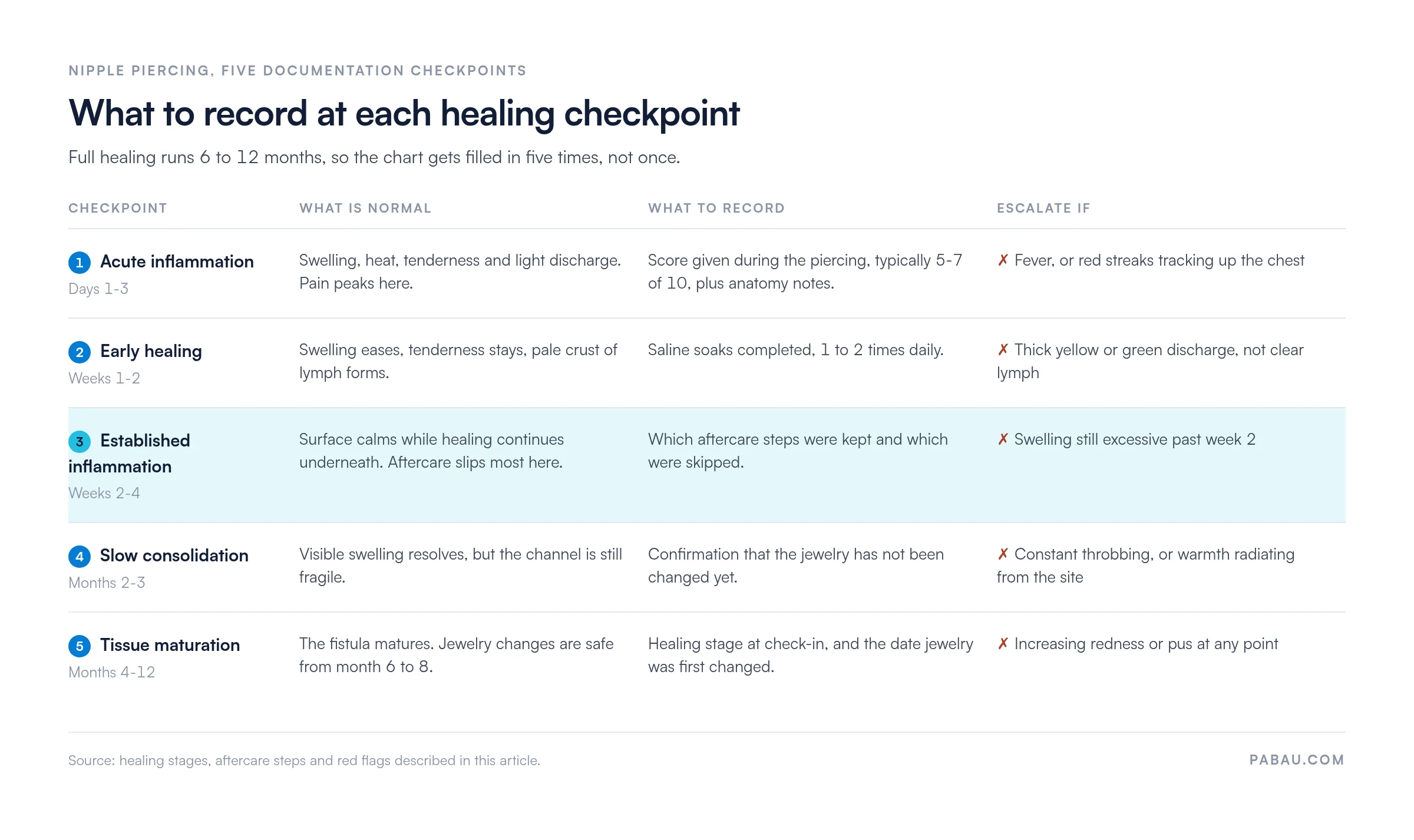
Aftercare adherence is the strongest single predictor of a complication-free heal. Your client records should show which steps the client completed each week.
Send the client home with the aftercare in writing as well. Our body piercing aftercare instructions template covers the same steps in a sheet the client can keep on the bathroom mirror.
Early treatment keeps an infection from spreading. Red flags include heavy swelling past week 2, thick yellow or green discharge, and constant throbbing. Warmth radiating from the site, fever, or red streaks tracking up the chest belong on the same list.
If any of those show up, send the client to a healthcare provider the same day. CDC hygiene guidance advises against self-treating with over-the-counter products, so a medical assessment comes first.
The piercing itself is brief, but the hours and days afterward can be uncomfortable. A structured plan improves client satisfaction and aftercare compliance.
Set expectations during the consultation. Most clients feel substantially better by day 7, though full comfort can take 2-4 weeks. Naming that timeline up front cuts both anxiety and complaints.
Print the chart for the consultation and walk through the scale together, so the client knows what 5 out of 10 will feel like. Ask for their expected score before you start. Afterward, fill in the score they gave and any anatomy notes, such as a flat nipple that took three seconds to pierce.
Studios running on spa software can skip the printing and fill the chart in on screen at each check-in. Either way, store the completed chart in the client record beside the signed consent form and the aftercare sheet.
That paper trail protects you if a client reports delayed healing or an infection, because you have the baseline to work back from. It also sharpens your own pain predictions over time.
Most studios run this on paper. The consent form sits in a folder, the pain score lives on a printed chart, and the aftercare reminder depends on someone remembering to text. When a client calls at week 3 about a sore piercing, finding their history means opening a filing cabinet.
Practice management software like Pabau keeps the same information in one client record. Digital forms capture pain tolerance, medical history and consent before the appointment, so the client arrives with the screening already done. The score you record during the piercing lands in the same record, not a separate sheet.
Automated email and SMS handle the follow-up. Saline-soak prompts go out in week 1, the week 2-4 check-in fires on its own, and the month 6 jewelry-change reminder does too. Your team stops chasing clients by hand, and you still hold the compliance log if a complication turns up.

Pabau’s digital forms and automated SMS send the same aftercare instructions to every client, and log each healing milestone against their record. Your team stops chasing follow-ups by hand.

The number on the chart matters less than the fact that you wrote it down. A client who rated the piercing a 6 and is still at a 6 in week 3 has a problem. Without the first score, you have no way to tell.
So the trade-off is small. Two extra minutes at the consultation and thirty seconds at each check-in buy you a usable record. It settles any dispute about what the client was told and what they did.
Download the chart, run it through your next three consultations, and see whether the scores you predict start matching the scores clients give. If you would rather not keep it on paper, book a demo. We will show you how the forms, scores and aftercare reminders sit in one client record.

Need the aftercare in writing for the client? Body piercing aftercare instructions is a printable sheet covering cleaning, friction and the warning signs to watch.
Want the medical history captured before the appointment? Spa intake form template collects allergies, medications and consent, so the screening is done before the client sits down.
Comparing systems to run the studio on? Best software for spas walks through what to look for in booking, records and client communication.
Most clients rate nipple piercings 5-7 out of 10. The needle pass lasts 1-3 seconds but feels sharp and intense, because nipples carry a high nerve concentration. Lingering soreness can last hours to days.
Nipple piercings rank above ear and navel piercings, which sit around 1-4, and below genital or septum piercings at 7-9. Only the needle pass is sharp. Cartilage piercings like the septum and helix bring a prolonged ache that nipple piercings do not.
Piercer experience, nipple anatomy, jewelry gauge, personal pain tolerance and anxiety level all shape the experience. Flat or inverted nipples push the score up. A skilled piercer working quickly with sharp jewelry brings it down.
Sharp pain resolves within minutes. Tenderness and throbbing can persist 24-72 hours. Most clients feel substantially better by day 7. Full comfort during exercise or sleep may take 2-4 weeks.
Signs of infection include heavy swelling past week 2, thick yellow or green discharge, constant throbbing, fever, or red streaks. Contact a healthcare provider immediately. Do not treat it with over-the-counter products, and do not remove the jewelry without medical guidance.
Nipple piercings take 6-12 months to fully heal. The surface looks healed around month 3, but the fistula keeps maturing underneath. Wait at least 6 to 8 months before changing the jewelry, to avoid infection or closure.