GLP-1 usage by state: Who’s taking, searching and paying in 2026
GLP-1 usage by state peaks in West Virginia, America’s GLP-1 capital, with...

Last Updated: Oct 16, 2026

Impostor syndrome is persistent self-doubt disguised as perfectionism, the fear that you’re not competent despite evidence of success.
The Clance Impostor Phenomenon Scale (CIPS) is a validated 20-item test scored from 20 to 100; scores of 61 and above indicate frequent-to-intense impostor experiences worth addressing.
Healthcare professionals face heightened impostor risk due to ongoing credential requirements, high-stakes decision-making, and continuous learning pressures.
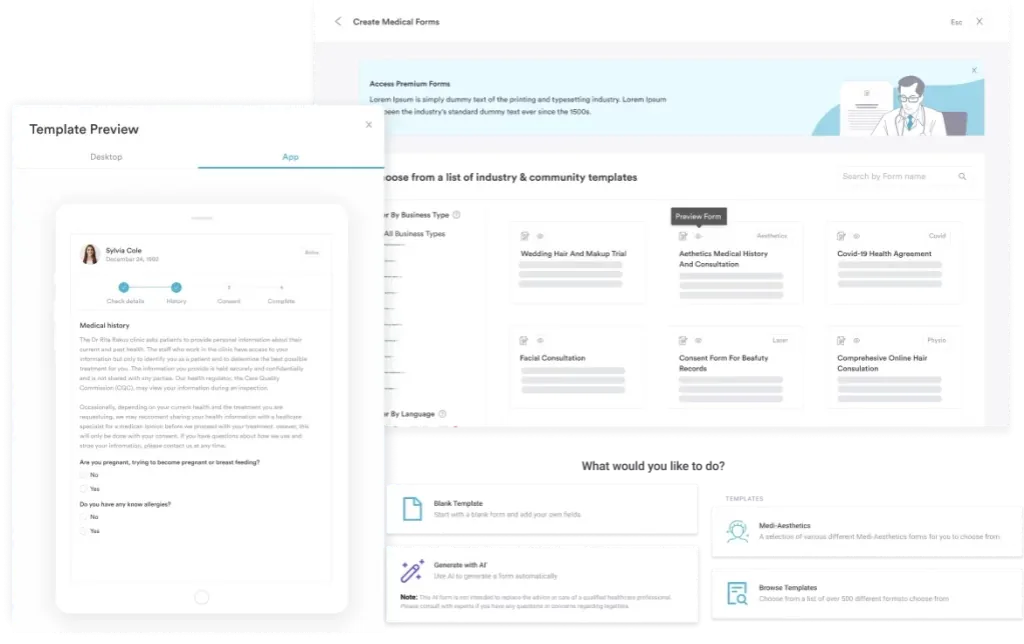
Practice management software like Pabau provides digital forms and clinical documentation tools that help clinicians manage the administrative burden fueling self-doubt, freeing mental bandwidth for patient care.
A ready-to-use 20-item assessment questionnaire (Clance IP Scale format) covering self-doubt, fear of exposure, perfectionism, and achievement attribution. Includes scoring key, result interpretation guide, and actionable next steps for clinicians.
Download templateImpostor syndrome affects an estimated 70% of healthcare professionals at some point in their careers. Whether you’re a nurse, doctor, therapist, or practice manager, the nagging feeling that you’re “faking it” can undermine confidence and fuel burnout.
This free burnout and self-doubt assessment helps you identify whether you’re experiencing impostor patterns and provides a clear scoring framework to understand your results. This guide walks you through the test itself, explains how to score your responses, and offers evidence-based strategies to move past self-doubt so you can focus on your actual competence and the care you deliver.
Impostor syndrome (also called impostor phenomenon) is a psychological pattern in which people doubt their accomplishments and fear being exposed as fraudulent, despite objective evidence of their competence.
First described by psychologists Pauline Rose Clance and Suzanne Imes in 1978, the syndrome is characterized by persistent feelings of self-doubt, perfectionism, and the tendency to attribute success to external factors rather than personal ability.
The core features are deceptively simple: you succeed, but you don’t believe you deserve the success. You attribute wins to luck, timing, or help from others, and you fear being “found out.”
This pattern isn’t a personality flaw or a sign of low ability – it’s a well-documented cognitive distortion that affects high-achievers across professions, with particularly high prevalence in healthcare.
Impostor syndrome presents as a cluster of cognitive and behavioral patterns. The most common include:
If you find yourself working late to meet impossibly high standards, hesitating to apply for roles you’re qualified for, or dismissing compliments, you may be experiencing impostor patterns. An emotional boundaries worksheet can help you separate your own standards from unrealistic external pressure, and this patient management assessment tracks your mental health outcomes over time.
The impostor syndrome test included in this template is based on the Clance Impostor Phenomenon Scale (CIPS), the most widely validated assessment tool for measuring impostor phenomena. The full CIPS consists of 20 items, each rated on a 5-point scale (1 = not at all true; 5 = very true).
The test measures core impostor dimensions: feelings of fraudulence, discounting your achievements, fear of evaluation, fear of success, and perfectionism. Unlike a diagnostic clinical interview, this is a screening and self-awareness tool that helps you understand your patterns, not diagnose a disorder. Use digital assessment forms to gather responses and automatically calculate scores for patients or team members.
Scoring is straightforward. Add up your responses across all 20 items (each ranges 1-5, so your total will fall between 20-100).
Important caveat: This test is a screening and educational tool, not a clinical diagnosis. Scores are self-reported and reflect subjective experience. If impostor patterns are significantly affecting your wellbeing or career, seek support from a licensed therapist or coach.
Dr. Valerie Young, author of “The Secret Thoughts of Successful Women,” identified five distinct impostor archetypes. Understanding which pattern resonates with you can help you choose targeted strategies.
Most people experience more than one type depending on context. A nurse might be a Perfectionist at work but an Expert in personal skill-building. Recognizing your primary pattern is the first step toward targeted change.
Healthcare professionals face unique impostor-syndrome triggers that set them apart from other high-achieving professions. Every clinical decision carries consequence: a missed diagnosis affects patient safety. Ongoing education requirements (continuing medical education, license renewal, new clinical guidelines) create a perpetual learning curve. Colleagues often appear more knowledgeable or confident, making comparison inevitable.
A psychology practice workflow that emphasizes clinician wellbeing, through structured scheduling, reduced administrative burden, and mental health support, can interrupt this cycle.
Moving past impostor syndrome requires awareness, reframing, and action. Here are the most effective evidence-based approaches:
The impostor syndrome test is a useful self-awareness tool, but it’s not a substitute for professional assessment. Consider reaching out to a therapist, coach, or counselor if:
Create a ‘proof of competence’ folder in your practice management system. Screenshot positive patient feedback, clinical wins, and completed learning milestones monthly. When impostor feelings arise, review the folder as a factual counter-narrative to self-doubt.
Administrative overload is one of the clearest drivers of impostor feelings in healthcare: the more time a clinician spends on charting, chasing paperwork, and re-entering the same patient details, the less mental bandwidth is left to trust their own clinical judgment. Practice management software tackles that overload directly, rather than leaving clinicians to manage it with willpower alone.
Pabau’s digital forms let practices send the impostor syndrome test, or any self-assessment, straight to a clinician’s device, then score it automatically and file the result in their record, with no manual tallying and no loose paper copies. AI-assisted documentation cuts down the note-writing that eats into evenings, and built-in scheduling keeps caseloads realistic instead of relentlessly stacked.
The outcome is fewer of the small, compounding admin failures that feed self-doubt: missed follow-ups, duplicate data entry, forgotten renewals. Clearing that noise gives clinicians the space to see their own competence clearly.

Reduce administrative burden, automate routine tasks, and reclaim time for what matters: delivering excellent care and protecting your mental health.

Impostor syndrome affects most high-achieving healthcare professionals at some point. The feelings persist, but they don’t reflect your competence. This free test gives you a concrete starting point: identify your pattern, understand your score, and choose one evidence-based strategy to begin shifting the narrative.
Whether that’s documenting your wins, asking for help, reducing perfectionism, or cutting administrative burden with better software, the goal stays the same: move from “I’m faking it” to “I’m learning and growing.” Book a demo to see how Pabau clears the administrative noise that fuels self-doubt, so you can spend that energy on patient care instead.

Curious about relationship dynamics in session? Passionate Love Scale scores relationship intensity across bands from thrill gone to wildly in love.
Screening for a different behavioral pattern? Pathological liar test maps a nine-statement screening form to the Pathological Lying Inventory.
Working with clients on fitness goals too? Personal trainer liability waiver covers assumed risk, liability release, medical clearance, and emergency permissions.
If you scored 61+ on the test and relate to the patterns described (self-doubt despite success, fear of exposure, perfectionism, attributing wins to luck), you likely experience impostor syndrome. The test is a screening tool, not a diagnosis. A therapist or coach can provide a fuller assessment.
No. This test is educational and designed for self-awareness. It is not a clinical diagnosis and cannot replace a professional mental health evaluation. If you’re experiencing significant distress, consult a licensed therapist, psychologist, or counselor.
The CIPS is a 20-item self-report questionnaire developed by Dr. Pauline Rose Clance in 1985. It measures impostor phenomena across five dimensions: impostor feelings, attributing success to external factors, discounting achievements, fear of evaluation, and fear of success. It’s the most validated instrument in impostor-syndrome research.
Yes. Cognitive behavioral therapy (CBT), coaching, peer support groups, and self-compassion practices have all shown efficacy. Addressing underlying perfectionism, reframing achievements, and reducing administrative burden also help shift the pattern.
Yes. Estimates suggest 70% of clinicians experience impostor patterns at some point. The stakes of clinical work (patient safety), ongoing education requirements, and comparison cultures in medicine create a perfect storm for self-doubt.
Retake it quarterly or after major career transitions (promotion, new role, new practice environment). Tracking your score over time reveals whether patterns are intensifying or improving with intervention.