Physician credentialing checklist
A physician credentialing checklist lists every license, certificate, verificati...

Last Updated: Oct 23, 2026

The healing journal template is a two-page clinical log, not a workbook of writing prompts and not a diary.
Each row captures one event: the date, the time, the situation or trigger, an intensity score from 0 to 10, and the action taken.
The form holds 21 entry rows, roughly three weeks at one entry a day. A header block above them carries the name, date of birth, record or MRN number, and period covered.
Two closing boxes ask the client for patterns they noticed and questions they want raised at the next appointment.
Practice management software like Pabau can collect the same fields as a digital form. The entries then land on the client record instead of a sheet that must be carried back.
A two-page printable log with 21 entry rows for date, time, situation or trigger, intensity (0-10) and notes or action taken. It opens with a patient header block and closes with boxes for patterns noticed over the period and questions for the next appointment.
Download templateA healing journal is a dated log of what set a client off and how hard it hit. This template is the clinical version, two printed pages the client fills in between appointments.
Each row carries the time, the trigger, an intensity score from 0 to 10, and the action the client took next.
Ask at the start of the next session and you get an impression, because recall flattens the peaks. That difference decides whether the review is worth your time. What follows is the sheet’s layout, the handover conversation that makes it work, and how to read a completed log.
The log captures single events in the client’s own words, each with a number attached. That puts it somewhere between a personal diary and a clinical assessment.
A diary records the day. This form records the events that matter to the treatment plan, and the score is what makes them comparable. You can then set two entries a week apart side by side.
For mental health practices, the log sits alongside your assessments and session notes. The client fills it in between appointments, and you read it at the start of the next one.
The file is two pages of print-ready fields, all of them blank. It names no presenting concern, so you decide what the client logs. Here is how the sheet is laid out.
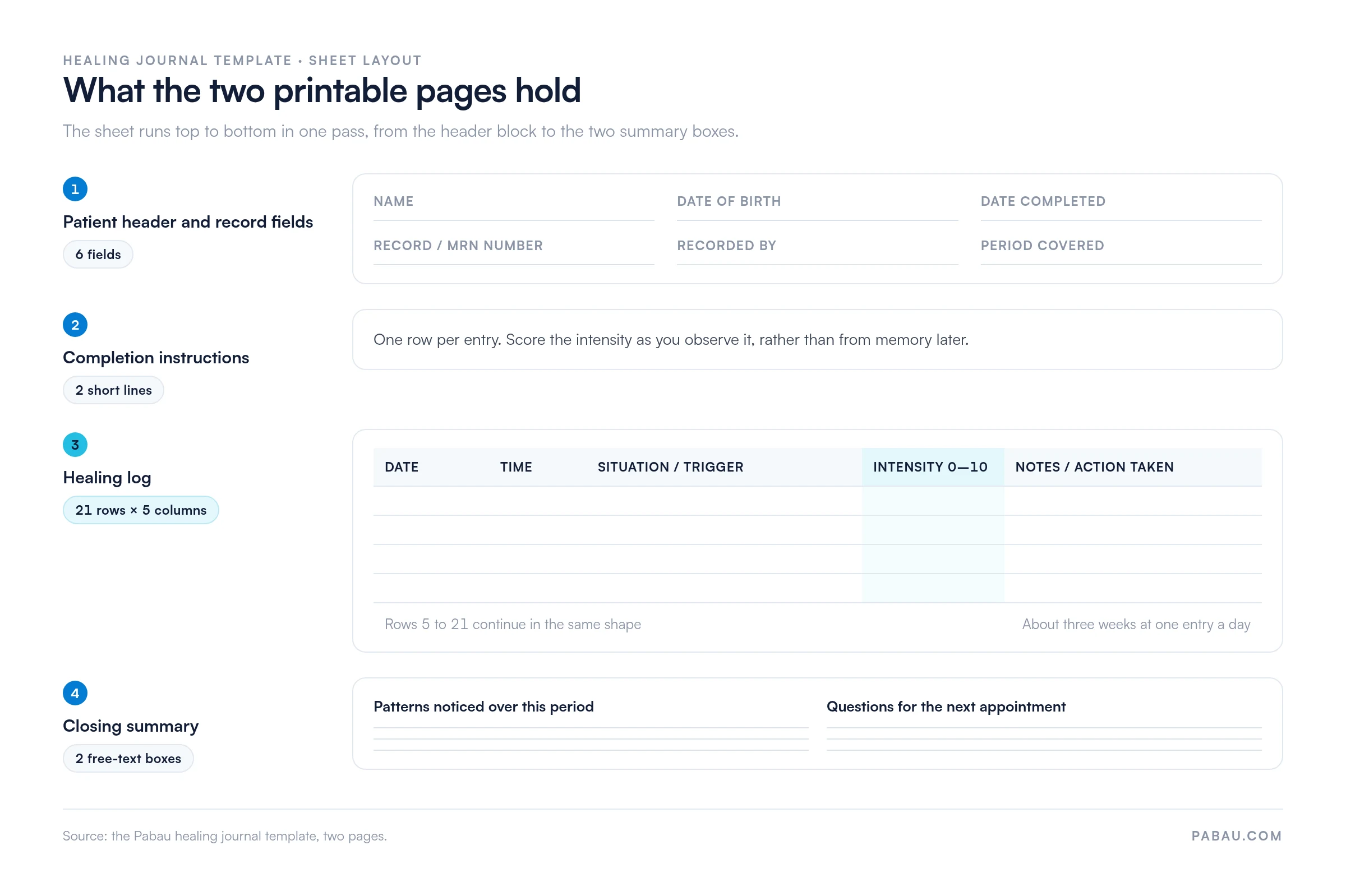
Each block on those pages does a specific job:
Twenty-one rows is about three weeks at one event a day, or ten days for a client logging twice daily. Set the period covered when you hand the form over, so the log has a defined start and end.
The form carries no prompts, no scoring key, and no diagnosis-specific fields. That is what keeps it usable across a caseload where every client is tracking something different.
Any practice that asks a client to observe something between visits can use it. The fields stay deliberately plain, so one sheet covers very different presenting concerns.
Counseling services use it most, since between-session work is already part of the plan. Therapy practice management software keeps the handed-out forms, the appointments, and the notes on one record.
The client benefits too. Writing the trigger down as it happens changes what they can still recall three weeks later.
Most of the value comes from the handover conversation, not the printing. Six steps cover it:
The header details do not have to start on paper. Digital intake forms in practice management software like Pabau already hold the client’s identifiers and baseline answers. The printout then only needs the rows.
Three problems account for most half-finished sheets:
Once the sheet comes back, read the situation column and the intensity column side by side. Together they show whether a trigger is becoming more frequent, more severe, or neither.
Three consecutive rows from a completed log look like this:
The trigger barely changed across those three rows. Intensity halved, and the action moved from avoidance to a planned response. That is the shape you are looking for.
Scan for four patterns before the appointment starts:
Read the client’s own patterns box last, and compare it with what you saw in the rows. Where the two accounts disagree, you have your opening question.
Hand the form over at the end of a session rather than the start. The client leaves knowing what to log, for how long, and what the scale means.
Set the period covered to the interval between appointments. A therapist seeing a client every two weeks closes the log the day before the review. That is easier to discuss than a sheet left running open-ended.
File the completed pages against the client record using the record or MRN number in the header. The “recorded by” field earns its keep when someone else fills the log in, such as a parent or a caregiver.
Running the same form across consecutive periods is what makes it clinically useful. Two logs showing the same trigger with falling scores are evidence the plan is working, and that belongs in the record.
The header asks for a record or MRN number, so a completed log becomes a clinical document the moment you file it. Treat it like any other patient record.
Once you scan or upload the pages, they fall under the same HIPAA duties as the rest of the file. Software with compliance management built in keeps the access log and the retention rules in one place.
Tell the client at handover that a filed log falls under your practice’s privacy policy. They can keep a private copy of any entry they would rather not submit.
The form carries no risk or crisis section, and it does not stand in for a risk assessment. If a client is in crisis, your safety protocol takes over and the log waits.
The file is generic by design, and the limits are worth naming before you hand it out:
None of that is a fault in a between-session log. Pair the form with a validated questionnaire when you need a score you can benchmark. A client who wants a day-by-day grid needs a daily mood chart instead.
A paper log only helps if it survives the trip back to the practice and then into the file. Often it does not. The pages get read once in the appointment, then end up in a drawer or a bag.
Pabau is practice management software for health and wellness practices. You can send the same fields out as a digital form instead of a printout.
The form goes by email or text message, and the client completes it on a phone. Their answers save straight to the client record on submission, so the review no longer depends on the sheet coming back.
Clients who prefer paper can still hand the pages in. Our patient portal gives them a secure place to upload the sheet before the visit. You then read the log while preparing, not while the client waits.
Whatever route the log takes, the patterns you spot in it belong in the note. Pabau Scribe, our AI scribe, drafts the session note from the consultation itself. What you read in the rows gets recorded while you are still discussing it.
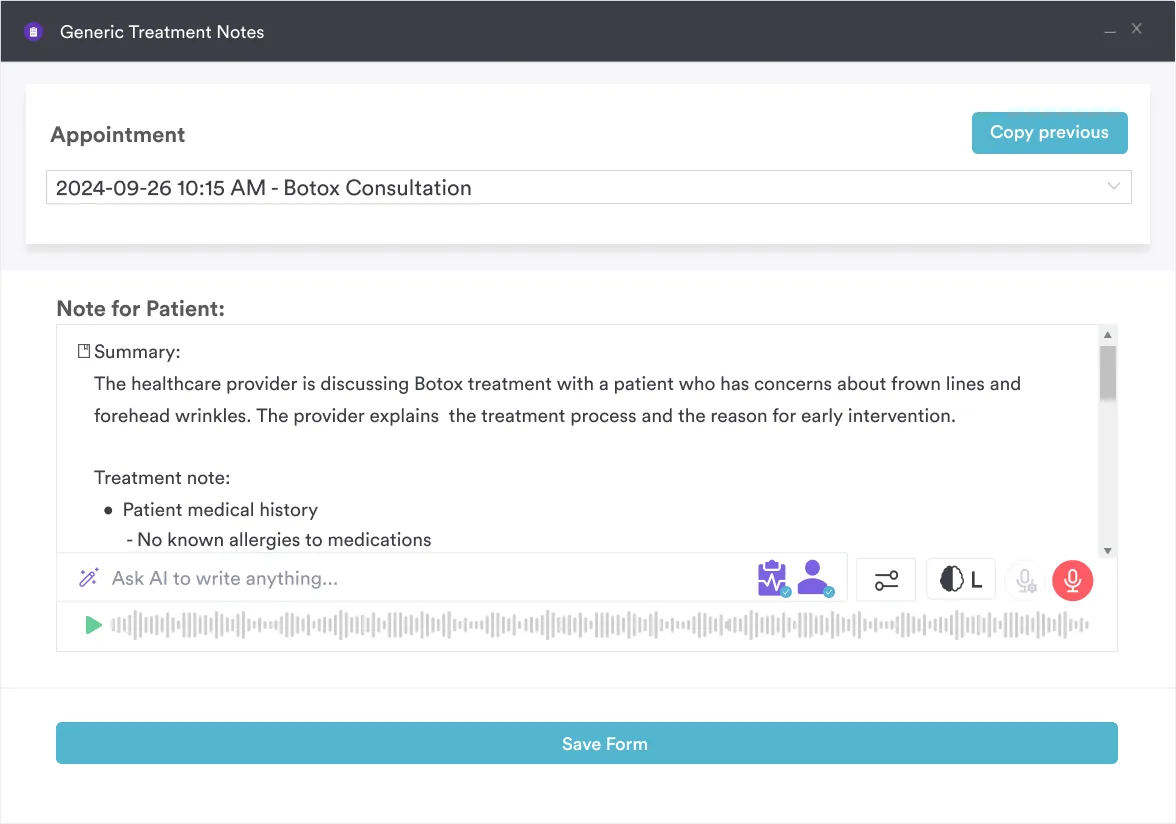

Send the healing journal fields as a digital form, and the client’s entries save to their record as soon as they submit. Every trigger, score, and note sits beside your session notes at the next review.

The healing journal template is a plain instrument, and that is the point. Twenty-one dated rows, each carrying a score, tell you more about a trigger than a month of recollection.
Two decisions do most of the work. Set the period covered before the client leaves, and agree what 0 and 10 mean for them.
Download the template and try it with the next client who cannot say what triggered it. Book a demo to see how Pabau collects those entries digitally and files them against the client record.

Need a documented baseline behind the log? Psychiatric evaluation template gives you a structured intake framework, so the trigger rows have a recorded starting point.
Want to work the triggers the log surfaces? Identifying triggers worksheet turns the situations a client wrote down into a named response plan.
Need the review written up properly? Progress notes for psychotherapy shows how to record what the log changed in the treatment plan.
The client, at the moment they notice it. You set what 0 and 10 mean before they leave, then leave the scoring to them. A score you assign afterwards measures your reading of the event rather than theirs.
That usually means the scale was never anchored. Ask the client what a 10 looks like at its worst, then what a 3 looks like. Write both answers in the margin and re-issue the form.
A gratitude journal collects what went well, in free writing. A healing journal records what set the client off and how hard it hit. One builds perspective, the other gives you a pattern to work from.
Blank stretches still carry information. Ask whether the period was quiet or the logging slipped, then note which it was. Five honest rows beat twenty filled in the waiting room.
Yes. Itch, pain flares, and headaches all suit a trigger and intensity format. The columns never name a presenting concern, so you decide what the client logs and what the scale measures.