Reflection questions: 14 examples and a free template
Reflection questions are open-ended prompts that guide a person through structur...

8
Last Updated: Oct 16, 2026

A growth mindset worksheet helps a client spot fixed thinking patterns and rewrite them into growth-oriented statements.
Carol Dweck’s research at Stanford University showed that ability grows through effort, which is the idea this worksheet puts to work.
The free PDF covers a fixed-versus-growth comparison, a trigger list, reframing prompts, learning goals, and persistence planning.
Most versions on the market are built for classrooms, so this one is written for adult clients in therapy or coaching.
Score the five-domain self-assessment at the start, then again after 90 days, so the mindset shift becomes measurable.
A five-part worksheet you can work through with an adult client across one or two sessions. It covers a fixed-versus-growth belief comparison, a trigger list, reframing prompts, learning goals, and a persistence plan.
Download templateA growth mindset worksheet gives a client a structured way to catch fixed thinking and rewrite it. Download it above, free, as a printable PDF. It runs through five short sections, from a belief comparison to a persistence plan.
Most worksheets on this topic are classroom printables for children. This one is built for adult clients in therapy or coaching, and it comes with a facilitation plan for the practitioner. It also produces a score you can re-measure, so you can show a client how far their thinking has moved.
A growth mindset worksheet is a structured tool that helps someone identify fixed thinking patterns and build growth-oriented beliefs about their own ability.
It moves through self-reflection prompts, then reframing exercises that turn limiting self-talk into workable statements.
The idea comes from Carol Dweck, whose Stanford University research found that ability is not a fixed trait. It grows with effort, learning, and persistence. The worksheet turns that finding into something a therapist, coach, or psychologist can hand a client and work through with them.
The comparison section is where most of the work happens. Reading the two columns side by side, a client usually recognizes their own self-talk before anyone names it for them.
Clients often see themselves in three or four rows at once. That is the moment to start reframing. A fact or opinion worksheet pairs well here, because it separates what happened from what the client concluded about themselves.
Work through the five steps in order. Each one moves the client from noticing a fixed pattern to practicing a different response.
Most practitioners spend 30 to 45 minutes on the worksheet, split across one or two sessions. Anyone running a mental health practice will get more out of it by revisiting it quarterly. Scoring it again gives the client something concrete to compare.
Psychologists often assign tools like this through psychology practice software, tracking completion between sessions.
The adult version is built around work, personal development, and relationships. Those are the three places fixed thinking does the most damage after school age.
Adults tend to underestimate how much fixed thinking shapes their working life. One session with the worksheet usually makes the pattern visible enough to act on.
Abstract definitions rarely move anyone. Read a client two or three of these scenarios and they will usually pick their own out of the set.
Recognition is the useful part. When a client says “that is exactly what I do”, the reframing work finally has somewhere to start.
The worksheet is a starting point, not the whole intervention. These four activities carry the thinking into the weeks between sessions.
Together these turn a one-off reflection into a habit the client can keep without you in the room.
The worksheet starts the change. Keeping it takes practice across five habits.
Mindset work is slow, and practitioners usually see it settle over months rather than sessions. Check progress at follow-ups, and have the client rescore the self-assessment. The American Psychological Association has published a readable overview of growth mindset research if they want to read further. Client management software for coaches links the goal set at intake to the review that follows.
Therapists, counselors, coaches, and clinical psychologists all use the worksheet, but at different points in their process. Five contexts come up most often.
Practitioners often describe one specific turning point. It is the session where a client stops treating a limiting belief as a fact about themselves.
Plenty of practices still print the worksheet, hand it over, and file the completed copy in a folder. Six months later, nobody can find the first score to compare against. The reflection happened, but the evidence of it did not survive.
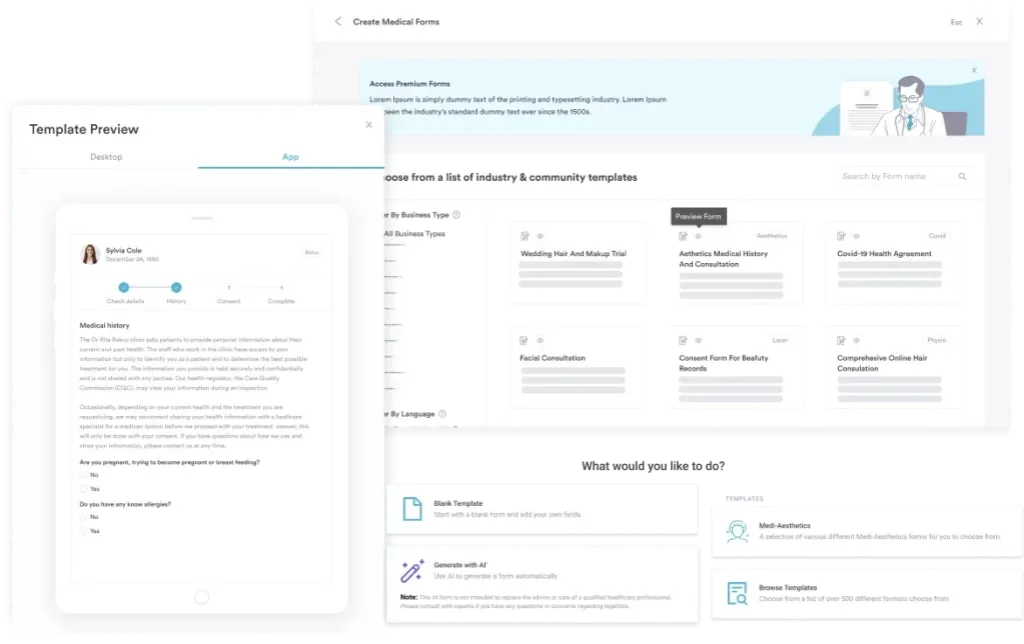
Practice management software like Pabau sends the worksheet out as a digital form before the appointment. The client’s answers land straight in their record, timestamped, next to the treatment notes. Send the same form again at 90 days and the two scores sit side by side.
That turns a reflection exercise into something you can show a client. The follow-up prompt also goes out on its own, so nobody has to remember to chase it.

Pabau’s digital forms send the worksheet before the appointment and file the answers in the client’s record. Re-send it months later and you can show a client how far their thinking has moved.

The worksheet only earns its place if someone facilitates it. Handed over as a printable, it becomes another sheet the client fills in and forgets. Worked through in a session, it changes how they talk about their own ability.
So score it, keep the score, and go back to it. That is the difference between a pleasant reflection exercise and a documented change you can point at. Book a demo to see how Pabau sends worksheets like this out and keeps every answer in the client’s record.

Watching for signs of mania, not just mindset? Altman Self-Rating Mania Scale flags probable mania at a score of six or higher.
Reading what a client is not saying? Nonverbal communication worksheet covers the cues that surface when a belief gets challenged.
It is a structured tool that helps someone spot fixed thinking and rewrite it as a growth-oriented belief. Comparison, reframing, and goal-setting sections do the work.
A fixed mindset treats ability as something you either have or you don’t. A growth mindset treats it as something effort and practice build over time.
Notice the fixed thought, reframe it deliberately, ask for feedback, and treat difficulty as a sign of learning. The worksheet starts that process, and months of practice settle it.
Carol Dweck, a psychologist at Stanford University, developed the fixed-versus-growth framework. Her research looked at how beliefs about ability affect learning and resilience.
Many are, including the PDF at the top of this page. Most free versions are aimed at classrooms, so check that the language suits an adult client.
Introduce it when a client presents perfectionism, fear of failure, or learned helplessness. Facilitate the reframing across one or two sessions, then assign a section as homework.