

HCPCS code Q4168: Amniotic membrane skin substitute billing guide
HCPCS code Q4168 is the Level II temporary billing code used to report an amniot...

Last Updated: Nov 20, 2026
HCPCS Code Q4163 is the Level II code for Woundex and BioSkin, a dehydrated human amniotic membrane allograft billed per square centimeter. It is an add-on code, so it is billed only alongside a skin substitute application procedure. From January 1, 2026, Medicare pays it as an incident-to supply at $127.14 per sq cm. CMS confirmed that figure in its November 2025 fee schedule correction.
That rate applies in the physician office and the hospital outpatient department alike, with no geographic adjustment. This guide covers the descriptor, 2026 payment by setting, units, modifiers, ICD-10 pairings and documentation. It closes with the denials that follow when one is missing.

HCPCS Code Q4163 reports one named product, Woundex or BioSkin, per sq cm. It is not a catch-all code for unlisted skin substitutes.
Q4163 is an add-on code. It is billed only together with an application procedure from the 15271–15278 range on the same claim.
In 2026 Medicare pays $127.14 per sq cm as an incident-to supply, in both the office and the hospital outpatient department, with no GPCI adjustment.
Hospital outpatient departments bill Q4163 separately in APC 6002, the group for 361 HCT/P products such as amniotic membrane allografts.
Wound measurements, product details and the treatment history must be recorded for every application date, or the claim is hard to defend.
HCPCS Code Q4163 is a product-specific code in the Q-series of skin substitute codes that CMS maintains. CMS added it on January 1, 2016, and it remains active in 2026. Each code in the series names one product or product family, and Q4163 names Woundex and BioSkin sheets.
Bill Q4163 only when the product applied is Woundex or BioSkin. A different skin substitute is reported with its own Q-code or A-code, never with Q4163. The residual code for unlisted products, Q4100 (“Skin substitute, not otherwise specified”), was terminated on December 31, 2025.
Two codes cause most mix-ups with Q4163. One is the flowable version of the same product line, and the other is the retired catch-all code that older claims and templates still carry.
Check the invoice before coding. If the product arrived as a vial of flowable material, Q4162 is the code, and the units follow volume, not wound area. If a claim template still defaults to Q4100 for amniotic grafts, retire it, because those lines will now reject.
A clean Q4163 claim pairs the product code with an application procedure, the correct units, any modifiers the MAC requires and a covered diagnosis. Understanding medical billing fundamentals provides the foundation, and the steps below add the parts specific to skin substitutes.
The application procedure depends on where the wound is and how large the total wound area is. Q4163 cannot stand on a claim without one of these primary procedures.
Most diabetic foot ulcers fall under 15275, because the foot is in the second site group. Most venous leg ulcers fall under 15271. The application code describes the wound area, while Q4163 units describe the product, so the two numbers rarely match.
Modifier requirements for HCPCS Code Q4163 are largely MAC-specific, but several apply broadly across payers. The table below covers the most common ones and the situations that trigger them.
Every Q4163 claim needs at least one ICD-10-CM code from the LCD’s covered-diagnosis list. The code must match the wound type, site and laterality written in the record. Diagnoses missing from that list cause a large share of skin substitute denials.
Cross-reference each code against the controlling MAC’s LCD before you submit. The CMS HCPCS code reference publishes the official descriptor, while each LCD lists the diagnoses that support coverage in its jurisdiction.
Medicare Part B covers HCPCS Code Q4163 for wound care indications set out in the Local Coverage Determinations of each Medicare Administrative Contractor (MAC). Each claim must show medical necessity against those criteria. A non-covered use is denied, and the practice cannot bill the patient unless a signed Advance Beneficiary Notice (ABN) is on file.
Covered indications are chronic wounds that have failed conventional care over a defined period. The wound types most often covered by MAC skin substitute LCDs are:
Non-covered uses include acute traumatic wounds without prior conservative treatment, cosmetic applications and wounds that fall short of the LCD’s minimum treatment period.
Each MAC publishes its own skin substitute policy, and the clinical criteria, documentation rules and covered diagnoses vary by jurisdiction. The A/B MACs include CGS Administrators (Jurisdiction 15) and Noridian Healthcare Solutions (Jurisdictions E and F). Palmetto GBA covers Jurisdictions J and M, and First Coast Service Options covers Jurisdiction N.
To find the controlling LCD for a patient, search the CMS Medicare Coverage Database by the MAC jurisdiction. LCD numbers and effective dates change when policies are revised, so check them at the start of each billing period.
Original Medicare does not generally require prior authorization for Q4163, but skin substitute claims face prepayment and post-payment review. Medicare Advantage plans set their own rules, and many require prior authorization for skin substitutes. Confirm the requirement with the patient’s plan before the first application.
Check Medicare Advantage prior authorization before the application date, not after it. A denial for a missing authorization is very hard to overturn once the graft is on. Record the authorization number and approval date in the patient record the day you receive them.
From January 1, 2026, Medicare pays Q4163 as an incident-to supply at one national rate of $127.14 per sq cm. CMS finalized it in the CY 2026 Physician Fee Schedule final rule (CMS-1832-F). The CMS correction notice to the CY 2026 Physician Fee Schedule final rule set the figure at $127.14. The CY 2026 OPPS final rule applies the same rate in hospital outpatient departments.
The rate carries no GPCI adjustment, so a practice in Manhattan and one in rural Kansas receive the same amount per sq cm. Only skin substitutes licensed as biologics under Section 351 (BLA products) stay on ASP plus 6%. Q4163 is a 361 HCT/P, so the flat rate applies.
Hospital outpatient departments now pay skin substitutes in new APCs grouped by FDA category. APC 6000 holds PMA products, APC 6001 holds 510(k) products and APC 6002 holds 361 HCT/P products. Woundex and BioSkin are amniotic membrane allografts regulated as 361 HCT/Ps, so Q4163 falls in APC 6002.
Before 2026, office payment for the product was based on its average sales price or set by the MAC. It was never a GPCI-adjusted fee schedule rate. Budgets built on 2025 remittances for Q4163 will need resetting to the flat 2026 figure.
Q4163 claims face close review because skin substitutes are a high-cost, high-audit category. Effective denial management workflows start with the Claim Adjustment Reason Code (CARC) on the remittance, because each CARC points to a specific fix.
A consistent pre-submission checklist prevents most of these. Mapping each of the denial codes in medical billing to the record it needs keeps first-pass acceptance high.
A Medicare redetermination must be filed within 120 days of receiving the initial determination. Build the appeal around the LCD criterion the denial cites, and attach the evidence for it:
Documentation failures cause more Q4163 denials than coding errors. The Wound, Ostomy and Continence Nurses Society (WOCN) tools and MAC LCDs agree on the core elements: each application date needs its own complete entry. Denials often hit dates where the chart held the facts, but not in a form the reviewer could find.
Medical billing compliance for skin substitute claims depends on recording these elements for each application:
Attach a dated wound photograph to the note for every application. Many MACs accept photographs as supporting evidence in audits and appeals. A visible reduction in wound size strengthens the medical necessity case at redetermination.
Q4163 claims fail when the procedure note, the product record and the claim are kept in three places. A coder then rebuilds the units and the graft details from memory, and the numbers drift.
Pabau, a practice management platform with built-in claims management, keeps those records together. Stock carries a batch number, and the lot is recorded against the patient and the appointment. US practices submit CMS-1500 claims through the Claim.MD clearinghouse, check eligibility and post ERA remittances against the same record.
Prior authorization codes, dates and sessions are tracked on the patient’s case, with a warning when one is missing. That matters for Medicare Advantage patients, whose plans often require authorization before the first application.
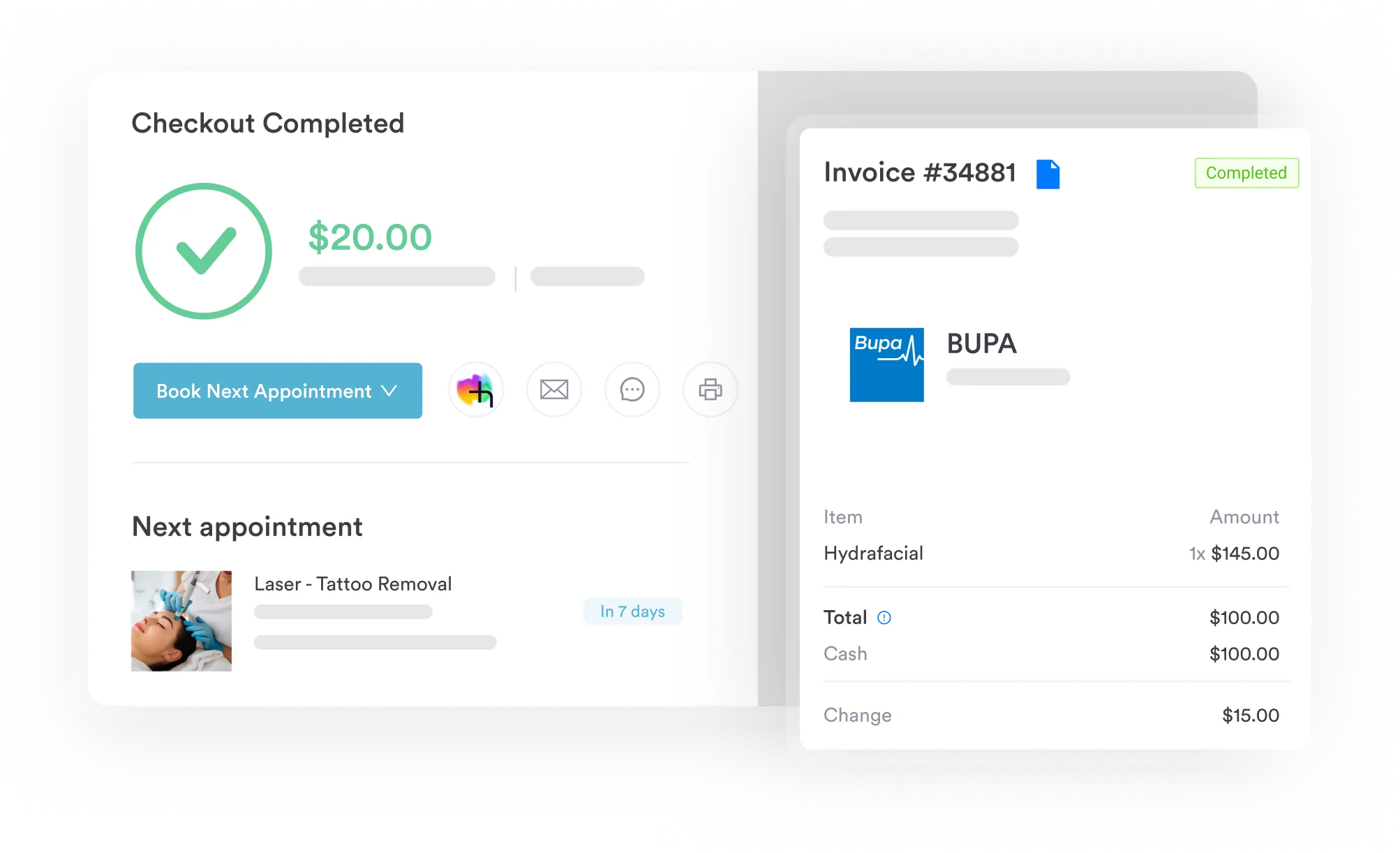

Pabau’s claims management helps US practices submit CMS-1500 claims through Claim.MD, check eligibility and post remittances against the patient record. See how it fits your wound care billing.

Q4163 is a narrow code with a simple 2026 price. It names one product, it rides on an application procedure, and Medicare pays $127.14 per sq cm wherever the graft goes on. The risk has moved from the rate to the record.
A claim now stands or falls on whether the note proves the product, the area and the four weeks of care before it. Practices that capture those at the bedside will spend less time on appeals. Book a demo to see how Pabau keeps wound records and claims in one workflow.

Need a foundation for wound care claim compliance? Clean claim submission breaks down what makes a claim pass on first submission and where skin substitute claims most often fail.
Scaling billing across a multi-provider wound care practice? Skin clinic software covers the operational workflow features that wound care and dermatology practices use to manage documentation, billing, and compliance in one platform.
HCPCS Code Q4163 reports Woundex or BioSkin, a dehydrated human amniotic membrane allograft, per square centimeter. It is used on chronic wounds such as diabetic foot ulcers and venous leg ulcers. It is billed as an add-on to a skin substitute application procedure.
No. Q4163 is a product-specific code for Woundex and BioSkin, added on January 1, 2016. The not otherwise specified code was Q4100, which CMS terminated on December 31, 2025.
Medicare pays Q4163 at $127.14 per square centimeter in 2026, as an incident-to supply. The same national rate applies in the physician office and the hospital outpatient department, with no geographic adjustment. Hospitals bill it in APC 6002.
Yes, when the wound meets the clinical criteria in the MAC’s Local Coverage Determination. That usually means a documented chronic wound, at least four weeks of standard care and measurements on every date of service.
Q4163 is billed with an application procedure from 15271–15278. The choice depends on the wound site and whether the total wound area is under or over 100 square centimeters.
Original Medicare does not generally require prior authorization for Q4163, though claims face prepayment and post-payment review. Many Medicare Advantage plans require it, so verify with the patient’s plan before the first application.
The most common are RT or LT for laterality and KX where the MAC requires certification that LCD criteria are met. GA applies when a signed ABN is on file, and GY when the service is statutorily excluded.