Despina Petrushevska

Values exploration worksheet
Download your free values exploration worksheet A two-page printable form that o...

1
Last Updated: Nov 6, 2026
Free PDF 5 pages, print-ready Clinician-reviewed
A Mounjaro diet plan PDF is a printable weekly meal planner, paired with food guidance for people taking Mounjaro (tirzepatide). Build each meal around lean protein, add fiber gradually, sip fluids through the day, and limit fried, greasy and very sweet foods. Nausea and reduced appetite are common side effects, especially while the dose goes up, so small meals usually work better than three large ones. This page covers what to eat and limit, how to manage nausea, and a sample seven-day menu. It supports the advice of your prescriber or a registered dietitian and does not replace it.
A printable seven-day meal planner with fields for your name, age, weight, height, medical history and goals. Each day has space for breakfast, a mid-morning snack, lunch, an afternoon snack and dinner.
Start from scratch, or upload this PDF or any form you already use, and Pabau's AI Form rebuilds it with tick boxes, text fields and a signature. Attach it to the treatment once, and every patient gets it on time.
AI Form rebuilds the consent, history and aftercare forms you already use. You review each one, then publish.
Patients complete forms on their phone before they arrive, so the front desk stops retyping paper.
Every signed form is versioned and attached to the treatment record, ready when you need it.
Set how long a consent stays valid. Returning patients skip forms they have already signed.
Supports HIPAA and GDPR compliance AES-256 encryption 4.8 on G2 4.7 on Capterra Trusted by 4,000+ practices worldwide

A Mounjaro diet plan PDF pairs general food guidance with a sample week of small, protein-led meals.
Lean protein, gradual fiber and steady fluids anchor the plan, because appetite drops and the stomach empties more slowly.
Fried, greasy and very sweet foods, alcohol and large portions are the usual triggers for nausea.
Stomach side effects are most common when the dose goes up, so log meals against each dose step.
Severe stomach pain, vomiting that stops you keeping fluids down, or signs of low blood sugar need a call to the prescriber.
A Mounjaro diet plan PDF is a printable handout that gives patients food guidance, portion principles and a sample week of meals. Used well, it works as a reference alongside prescribing information and dietetic advice, not as a treatment in its own right. Practices can also fold it into pre- and post-care workflows, so advice stays consistent from the first consultation to follow-up.
Mounjaro (tirzepatide) is a once-weekly injection that acts on two hormone receptors, GIP and GLP-1. It can reduce appetite and slow stomach emptying. In the US, the FDA approved Mounjaro for type 2 diabetes, while Zepbound is the tirzepatide brand approved for chronic weight management.
In the UK, Mounjaro is licensed for both uses, and NICE guidance on tirzepatide covers its use in type 2 diabetes. Whichever brand a patient takes, the dietary principles below are the same. Patients on semaglutide or another medicine in the class can use the GLP-1 diet plan instead.
The food guidance below reflects general healthy-eating principles, because diet studies specific to Mounjaro are limited. Smaller meals leave less room, so each plate has to carry more nutrition.
Protein comes first on the plate for a reason. When appetite is low, patients tend to fill up on vegetables or starch and run short on protein. That shortfall can speed up muscle loss during weight loss.
Fatty, fried and very sweet foods are the ones most patients struggle with on Mounjaro. Fat slows digestion further, so a heavy meal sits in a stomach that is already emptying slowly.
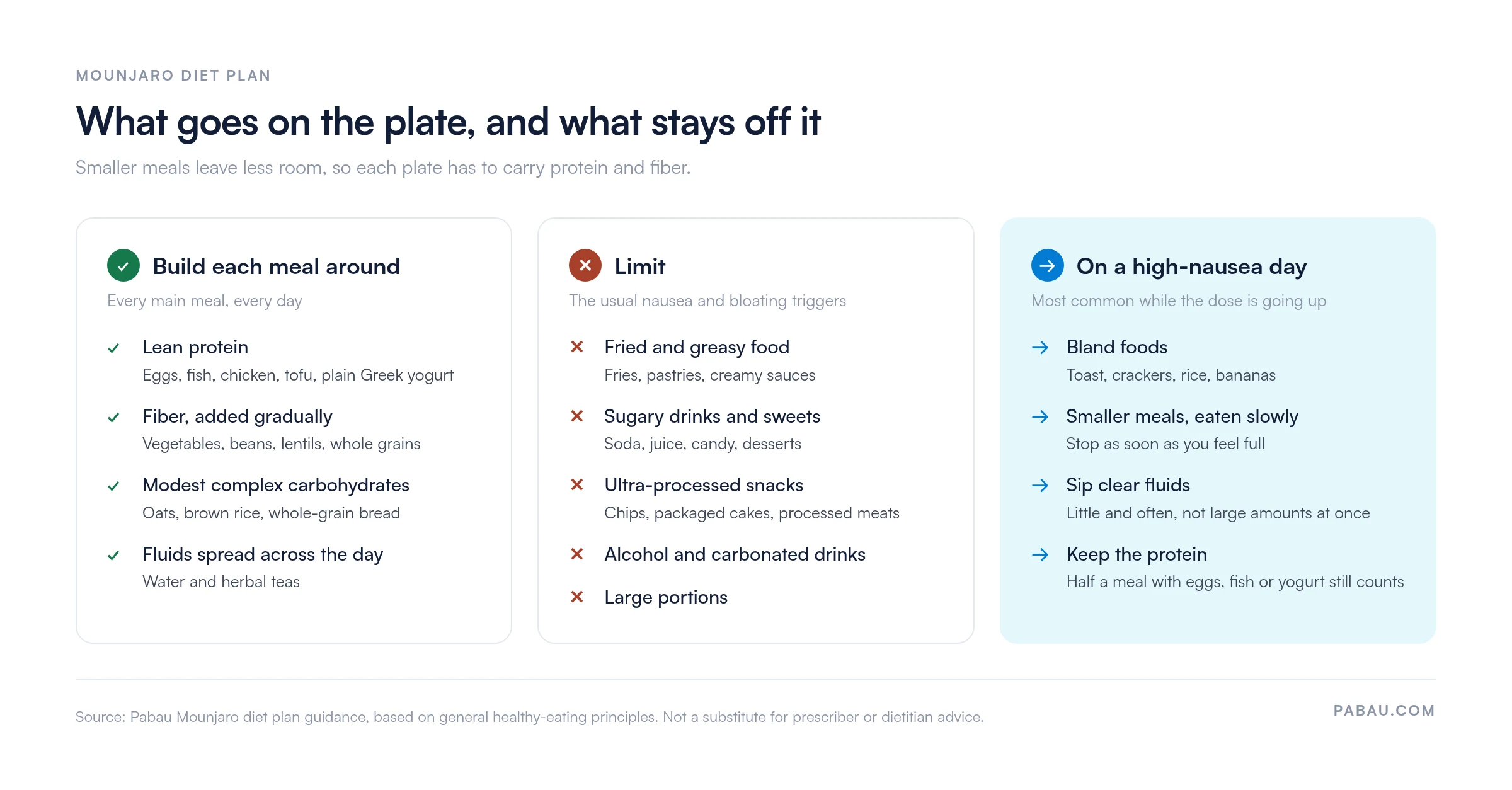
Set side by side, the two lists make a simple shopping rule, with a third column for the days when nausea takes over.
Nausea is one of the most commonly reported side effects of tirzepatide, along with diarrhea, reduced appetite, vomiting and constipation. These effects are most common while the dose is being increased, and they often ease as the body adjusts.
Vomiting and diarrhea can lead to dehydration, which can strain the kidneys. Replace lost fluids promptly, and tell the prescriber if you cannot keep fluids down.
Mounjaro usually starts at 2.5 mg a week and rises in 2.5 mg steps, at least four weeks apart. Write the current dose at the top of each week’s pages in the planner. Symptoms then line up against each dose change, which makes the next review far more useful. For more detail on portions and reactions, patients can keep a food diary alongside it.
This sample week follows the same five-slot layout as the PDF planner. Portions are deliberately small, and every main meal carries a protein source. Adjust quantities with your prescriber or dietitian to match your appetite and goals.
On a day when appetite is very low, keep the protein and drop the rest of the plate. Half a meal that includes eggs, fish or yogurt does more than a full plate of toast.
Use the plan as a flexible weekly framework rather than a fixed prescription, and adjust it with your prescriber or a registered dietitian.
Diet changes help with mild side effects, but some symptoms need medical advice rather than a new menu. Contact your prescriber promptly in any of these cases.
Medical disclaimer: this plan gives general dietary information only. It does not replace advice from your prescriber or a registered dietitian. Check any change to your diet with them, especially if you have diabetes, kidney disease or a history of eating disorders.
Many weight-loss practices hand the diet plan over on paper. The dose history sits in one note, the side-effect reports arrive by phone, and the food diary rarely comes back to the next review.
Pabau, our software for weight-loss practices, keeps the plan, the dose history and the side-effect reports on one patient record. The plan goes out as a digital form or an aftercare email, and the patient’s answers land on their file. Automated reminders bring them back for each review, and the clinician sees past notes and measurements before the consultation starts.
The outcome is a weight-loss service you can follow from week to week. You can see who missed a review, who reported side effects after a dose change, and who needs a dietitian referral.

Pabau sends diet plans as digital forms, books follow-up reviews with automated reminders, and keeps notes and measurements on the patient record. Your team can track each patient from the first dose to the last review.

Mounjaro shrinks appetite, so the diet plan’s job is to make each smaller meal count. Protein on every plate is the one habit worth defending on a bad day.
Treat a dose increase as the week to eat lightly. A patient who logs meals against each dose step lets the prescriber tell a food trigger from a dose effect. Without that record, every side effect gets blamed on the drug and the plan never changes.
Hand the planner over at the first consultation and set the review dates before the patient leaves. Book a demo to see how Pabau keeps diet plans, dose reviews and side-effect notes on one patient record.

Looking for the wider GLP-1 picture? GLP-1 diet plan covers protein targets, muscle protection and side-effect management across the medication class.
Need consent paperwork for tirzepatide? Informed consent for tirzepatide treatment covers the risks, side effects and monitoring a patient has to acknowledge.
Want a protein-first week to hand out? High protein plan for weight loss sets out a seven-day menu built around lean protein.
Want something practical to send home? Grocery list for weight loss turns the food categories into a shopping list patients can use straight away.
Build each meal around lean protein, such as eggs, fish, chicken, tofu or Greek yogurt. Add vegetables, beans and whole grains in modest portions, and sip fluids through the day. Small meals usually work better than three large ones.
Limit fried and greasy food, sugary drinks and sweets, ultra-processed snacks, alcohol and carbonated drinks. Large portions also cause trouble. These are the most common triggers for nausea, bloating and discomfort.
Eat smaller meals slowly, stop when you feel full, and choose bland foods on bad days. Avoid lying down after eating. Nausea is most common when the dose increases. Contact your prescriber if you cannot keep fluids down.
Alcohol is best kept to a minimum. It adds calories, can irritate the stomach, and raises the risk of low blood sugar in patients with diabetes. Ask your prescriber what is safe for you.
Yes. Zepbound and Mounjaro both contain tirzepatide, so the food guidance and the sample week apply to either brand. Your prescriber may still adjust the plan to your dose and health conditions.