Maja Popovska

Good character traits list
What is a good character traits list? A good character traits list is a structur...

3
Last Updated: Oct 30, 2026
Free PDF 4 pages, print-ready Clinician-reviewed
A fluid volume deficit nursing care plan is a structured document for nurses caring for a patient low on body fluid. It walks through assessment, diagnosis, treatment, and evaluation. NANDA-I files the problem as Deficient Fluid Volume (code 00027), and the plan builds on that label. It records the cause, the defining signs, measurable goals, and each intervention with its rationale. Nurses use it in acute, emergency, home health, and long-term care. Our free template turns that structure into a printable form with assessment and intervention rows, rationale fields, and space for physician notes.
A printable care plan with patient details, a checklist of fluid-loss causes, and eight assessment rows. Six nursing interventions follow, each with rationale and notes fields, plus physician notes and a signature line.
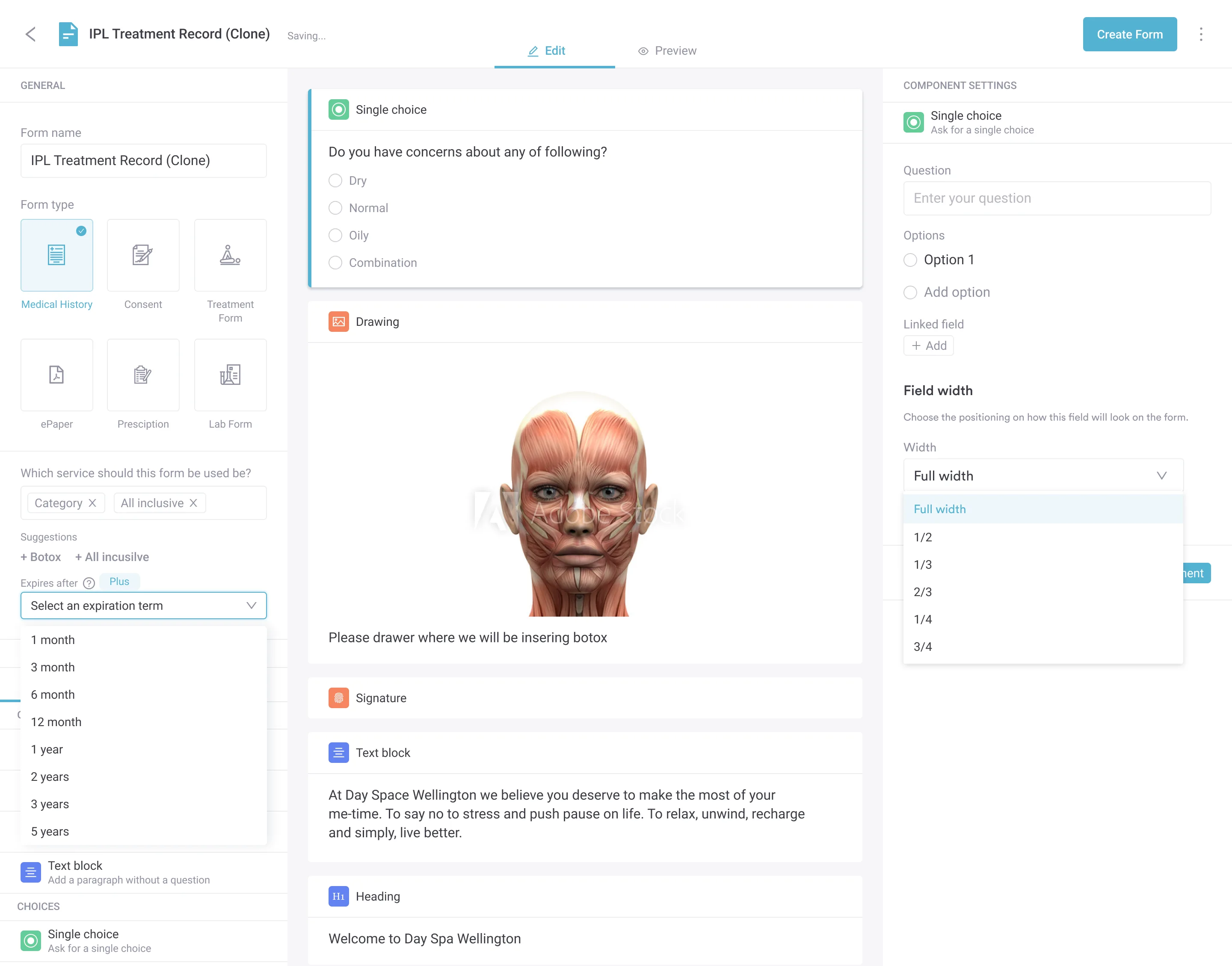
Start from scratch, or upload this PDF or any form you already use, and Pabau's AI Form rebuilds it with tick boxes, text fields and a signature. Attach it to the treatment once, and every patient gets it on time.
AI Form rebuilds the consent, history and aftercare forms you already use. You review each one, then publish.
Patients complete forms on their phone before they arrive, so the front desk stops retyping paper.
Every signed form is versioned and attached to the treatment record, ready when you need it.
Set how long a consent stays valid. Returning patients skip forms they have already signed.
Supports HIPAA and GDPR compliance AES-256 encryption 4.8 on G2 4.7 on Capterra Trusted by 4,000+ practices worldwide

NANDA-I lists the problem as Deficient Fluid Volume (code 00027), while “fluid volume deficit” is the informal shorthand most nurses use.
A complete diagnostic statement follows the PES format: Problem, etiology, and the signs or symptoms you observed.
Adult urine output below 0.5 mL/kg/hr is a primary sign that the fluid deficit has not resolved.
Daily weight is the most objective bedside measure, because 1 kg of acute loss reflects roughly 1 liter of fluid.
Digital forms in Pabau, our practice management platform, keep assessments, interventions, and outcomes in one patient record.
A fluid volume deficit nursing care plan is a standardized clinical document that organizes a nurse’s response to actual or risk-for fluid depletion. It follows the five steps of the nursing process, with NANDA-I supplying the diagnostic label and NIC and NOC supplying the interventions and outcomes. When a sodium or potassium disturbance is the main problem, an electrolyte imbalance care plan is the better fit.
The formal NANDA-I label is Deficient Fluid Volume, not “fluid volume deficit.” Using the approved label keeps the care plan aligned with institutional coding, audit standards, and the accreditation requirements of The Joint Commission.
The care plan covers four core components: The nursing diagnostic statement in PES format, measurable patient goals, evidence-based interventions with rationale, and evaluation criteria. Recording each one in structured digital patient forms creates an auditable clinical record.
Care plan documentation is a requirement under the CMS Conditions of Participation for hospitals and skilled nursing facilities. The plan must be developed, kept current, and updated as the patient’s clinical status changes. Facilities accredited by The Joint Commission must show that nursing care plans are individualized, goal-directed, and interdisciplinary where appropriate.
The downloadable template follows the order a nurse works through for a patient with dehydration or fluid loss. It takes five steps.
The template fits any setting where fluid balance is a recurring nursing responsibility.
A structured care plan lowers clinical risk and the documentation burden at the same time. Four benefits matter most to nursing teams.
Compliance and audit readiness: Structured rationale fields support CMS documentation requirements and Joint Commission standards without extra narrative. During a survey or audit, examiners can trace each clinical decision from assessment finding to intervention to outcome.
Consistency across shifts: Fluid balance management slips when assessment findings aren’t compared systematically across handovers. A standardized care plan gives every nurse on the team the same framework, so a worsening trend is less likely to go unnoticed between shifts.
Faster documentation: Documentation already takes a significant share of every nursing shift. A pre-built intervention list with rationale fields cuts the time needed to start a care plan, which frees time for direct patient contact.
Better handover communication: The notes fields create a dated record of goal progress that incoming nurses can review quickly. This matters most when a patient’s status is changing fast and the next shift needs to act.
Accurate assessment is the foundation of the care plan. A systematic approach covers six domains.
Thorough clinical documentation of these findings at admission and at each reassessment creates the evidence base for every intervention decision. For normal reference values at a glance, keep an electrolyte cheat sheet beside the chart.
Interventions are organized by priority. Fluid replacement and continuous monitoring come first. Patient education and electrolyte correction follow once the patient is hemodynamically stable.
IV fluid selection depends on the cause and severity of the deficit. Isotonic solutions are first-line for most presentations of extracellular fluid loss.
IV fluid type, rate, and total volume are always ordered by a physician or nurse practitioner. Nursing responsibilities include verifying the order, monitoring the infusion site, and tracking intake and output hourly during active resuscitation. Nurses also report signs of fluid overload, such as crackles, edema, or dyspnea.
The standard care plan needs adjusting for patients whose physiology or clinical context differs from the typical adult presentation.
Weigh the patient at the same time each day, on the same scale, in similar clothing. An overnight loss of 1 kg reflects roughly 1 liter of fluid. Daily weight is faster and more objective than I&O totals alone, which are often under-documented.
Expected outcomes define what clinical success looks like and set the standard for each shift’s evaluation. They align with the Nursing Outcomes Classification (NOC) framework.
These outcomes fall due at different points across the first 48 hours, so it helps to see them on one timeline.
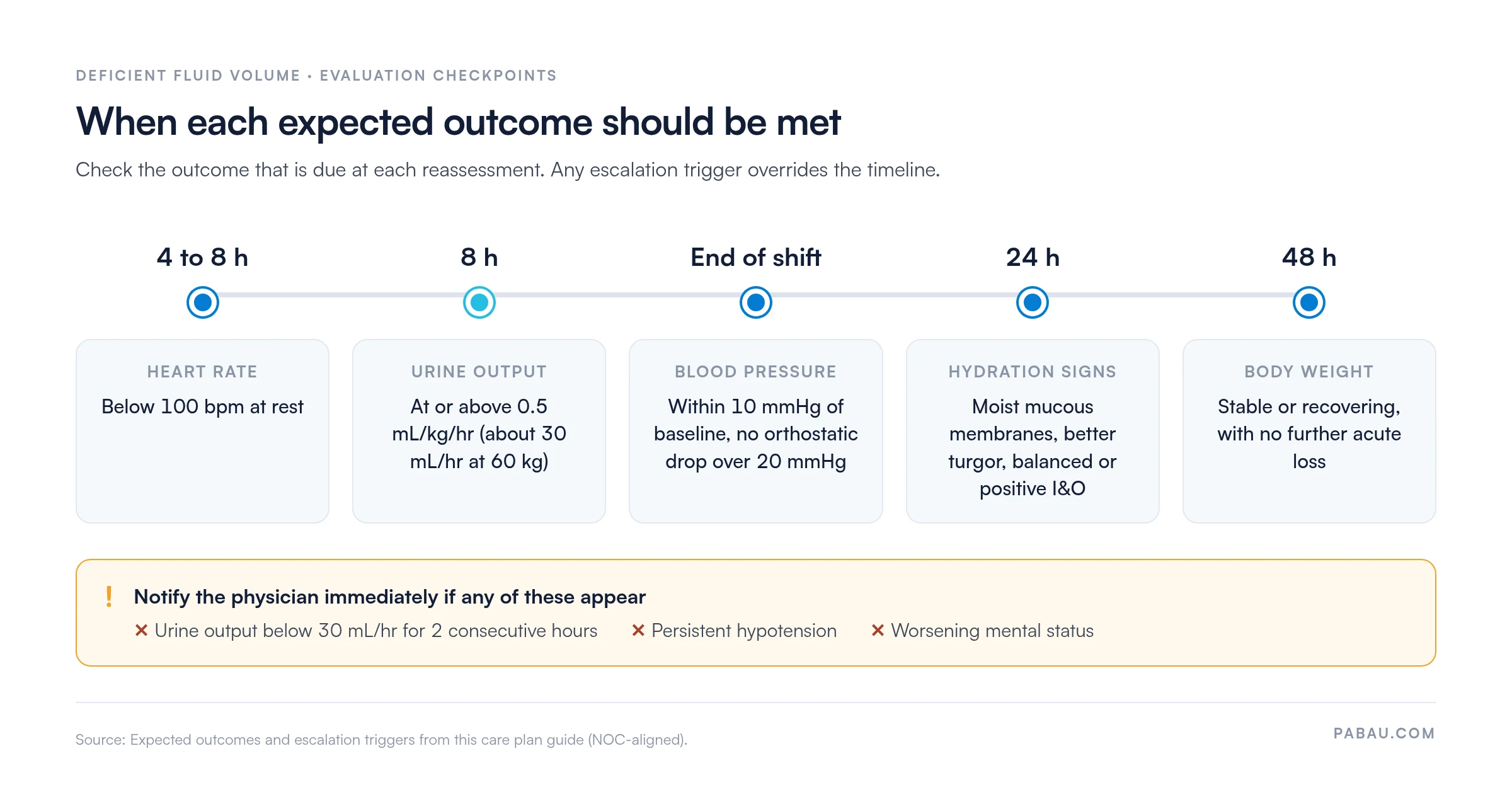
If outcomes are not met within the expected timeframe, revise the care plan. Persistent hypotension, worsening mental status, or urine output below 30 mL/hr for two consecutive hours are escalation triggers that need immediate physician notification.
On paper, a fluid balance care plan lives on a clipboard, and someone retypes the findings into the record at the end of the shift. The trend gets harder to read with every handover.
Pabau rebuilds the care plan as a digital form attached to the patient record, so assessments, interventions, and rationale are captured once. Automated care workflows then send follow-up reminders and patient communications, such as discharge hydration advice, without a manual step.
Pabau Scribe, our AI scribe, helps nursing teams capture structured clinical notes during the encounter. The result is one record the next nurse can read at handover, with no paper copy to reconcile.

Pabau keeps patient assessments, care plans, and clinical notes in one record, so your team spends less time on paperwork and more on patient care.

Deficient Fluid Volume is common, and it can progress to hemodynamic compromise when a trend goes unnoticed. A care plan with timed goals turns each shift’s findings into a clear decision: Continue, adjust, or escalate.
Start with a baseline weight and urine output, because both make later evaluation objective. Then hold every goal to its time window. The cost is some extra charting at each reassessment, and it buys a record the next nurse can act on.
Book a demo to see how Pabau keeps fluid balance assessments and care plans in one patient record.

Treating a patient who is losing blood? GI bleed nursing care plan applies the same nursing process to bleeding from the gastrointestinal tract.
Is infection driving the fluid loss? Sepsis nursing care plan pairs its NANDA-I diagnosis with early recognition and fluid resuscitation priorities.
Caring for a patient with persistent vomiting? Small bowel obstruction nursing care plan covers a frequent cause of vomiting, third-spacing, and fluid loss.
Building care plans from scratch? Nursing process worksheet walks through assessment, diagnosis, planning, implementation, and evaluation for any nursing diagnosis.
A fluid volume deficit nursing care plan is a structured clinical document for patients with actual or risk-for fluid depletion. It guides nurses through assessment, diagnosis, goal-setting, evidence-based interventions, and outcome evaluation. The diagnosis uses the NANDA-I label Deficient Fluid Volume (code 00027), and the plan supports CMS and Joint Commission documentation expectations.
The NANDA-I approved label is Deficient Fluid Volume (Domain 2, Class 5, code 00027). “Fluid volume deficit” is common clinical shorthand, but it is not the official NANDA-I term. Using the approved label matters for audit compliance and institutional coding.
Per NANDA-I, defining characteristics include decreased urine output, concentrated urine, decreased blood pressure, and tachycardia. Poor skin turgor, dry mucous membranes, acute weight loss, and altered mental status also count. Concentrated urine shows as a dark color and a specific gravity above 1.030. These findings fill the “as evidenced by” clause of the PES diagnostic statement.
Common causes, or related factors, include excessive vomiting, diarrhea, hemorrhage, burns, fever with diaphoresis, inadequate oral intake, diuretic overuse, and third-spacing after major surgery. Each cause goes in the “related to” clause of the diagnostic statement. It also guides which interventions are most relevant.
The diagnostic statement reads: “Deficient Fluid Volume related to excessive vomiting as evidenced by [specific findings].” Priority interventions include giving prescribed antiemetics before trying oral rehydration, monitoring I&O hourly, and keeping IV access for fluid replacement. Track weight daily. Once vomiting is controlled, add patient education on recognizing rebound dehydration.