HD Brows consultation form: Free template and guide
HD Brows is a seven-step brow treatment that combines consultation, tinting, wax...

3
Last Updated: Oct 13, 2026
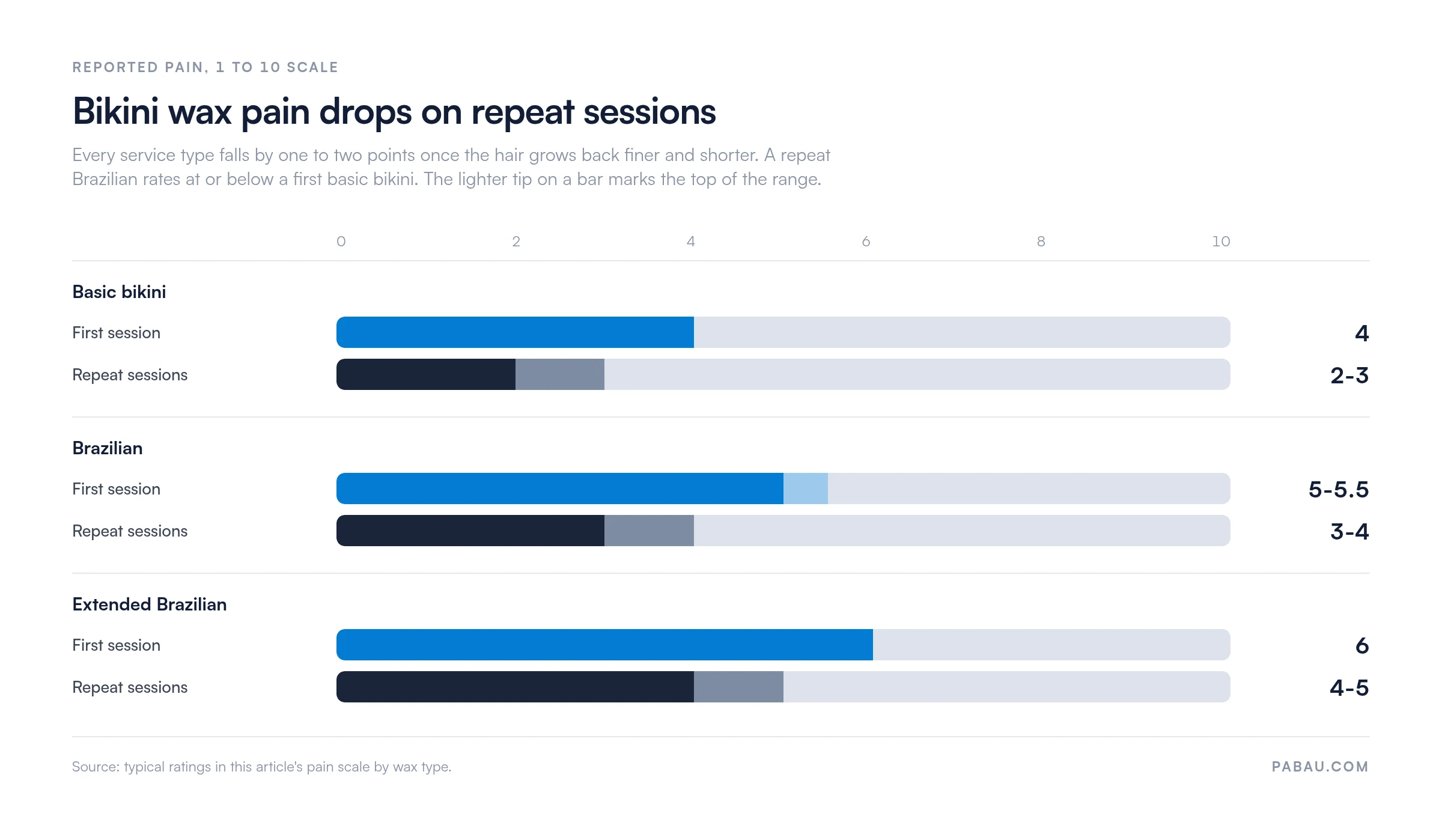
A bikini wax pain scale is a 1-10 rating system for what an appointment will feel like. It gives clients and estheticians the same words for pain before the wax starts. Most clients rate a basic bikini wax at 4/10, a Brazilian at 5-5.5/10, and an extended Brazilian at 6/10 on a first visit.
Repeat sessions land one to two points lower. Logging the rating at every visit turns a vague fear into a record you can show. A client who watches her own numbers fall from 5.5 to 3 books the next appointment without arguing.
A printable 1-10 chart with the expected rating for basic bikini, Brazilian and extended Brazilian waxes, first session and repeat. It has space to record each client’s tolerance, the wax type you used and the post-wax rating.
Download template
A basic bikini wax typically rates 4/10 on a first visit, a Brazilian 5-5.5/10, and an extended Brazilian 6/10.
Repeat sessions drop one to two points, because the hair grows back finer and the follicle adapts.
Hard wax grips hair rather than skin, so it hurts around 40-50% less than soft wax on a first session.
Trimming hair down to 0.25 inches before the wax lowers pain, because a shorter shaft grips the follicle less.
Recording the rating at intake and again after the wax gives your team a comparable history for every client.
A bikini wax pain scale is a numeric 1-10 rating that both the client and the esthetician use to describe discomfort. It gives you shared vocabulary for consent conversations and for calming nerves before the first pull.
Ratings vary because waxing pulls hair out of the follicle root. A deeper follicle involves more nerve endings, and a tighter grip on the hair causes more trauma. Hard wax sticks to the hair alone, while soft wax also sticks to skin and lifts it on removal.
First sessions hurt most because the hair is long and the follicle has never been cleared. Later sessions are easier once the hair regrows thinner and shorter. Comparing ratings across wax types, client histories and practitioners also shows you where technique or product needs to change.
Many salons log the pain rating and sensitivity notes in client record storage, so each client builds a history of tolerance and preferred wax type.
Putting the scale to work takes five steps that run from the intake conversation to the next booking.
Many salons collect this on a standard form rather than by memory. An esthetician client intake form keeps the wording identical across the team, so the ratings you compare later were all asked the same way. A signed wax consent form at the same visit puts those sensitivity and medication answers on the record.
A finished record might read baseline tolerance 5/10, first Brazilian 5.5/10, hard wax plus an ice pack, rebook in four weeks.
The scale earns its keep for estheticians, salon owners and spas that wax across a wide range of pain tolerances. First-timers want to know what is coming. Anxious clients want proof that you take the question seriously. Regulars use the numbers to watch their own pain fall session by session.
Give the whole team one shared spa software and every esthetician asks the same intake questions and stores the rating in the same field. That consistency is what makes a year of ratings comparable rather than anecdotal.
Skin clinics and medical spas that wax alongside laser hair removal get more out of it again. Their clients often arrive with post-procedure sensitivity or a healing timeline that changes what a wax will feel like.
A standard rating does four things for the business.
Clients notice when you adjust the service to their tolerance rather than running the same appointment for everyone.
Documentation also works as evidence. A record of tolerance, the wax you offered, the numbing cream and the post-wax healing answers a complaint before it becomes a claim. It also flags the client whose bruising or inflammation runs long enough to justify a dermatology referral.
Ratings differ by service because hair density, follicle depth and skin sensitivity all change with the area being waxed. The figures below reflect typical professional experience and client feedback.
Pain falls on repeat sessions because the hair no longer has a long shaft anchoring it. By the fourth or fifth wax most clients settle at 3-4/10 for a Brazilian, and 2-3/10 for a basic bikini. The hair is shorter and finer, and the follicle has adapted to regular removal.
Hard wax (Italian, stripless) and soft wax (strip wax) differ in how they are applied and in how much they hurt. Hard wax goes on warm, cools, hardens and comes off without a strip. Soft wax goes on warm and comes off immediately with a strip.
A first wax hurts most because the hair is long and the follicle has never given it up before. Untouched hair can reach 2-3 inches in the bikini area and sits on a deep, strong root. Pulling that from a tight follicle fires more nerve endings than lifting short, fine hair from an adapted one.
The size of the drop between a first wax and a fifth is the number worth showing a nervous client.
Skin sensitivity peaks on a first wax too. The area is not used to being hairless, so redness and folliculitis bumps show up more strongly. Some clients bruise or swell 24-48 hours later, which is normal but alarming if nobody warned them.
Yes. Longer hair grips the follicle harder, so it hurts more to remove. The sweet spot is 0.25 inches, or 6 mm, which is long enough for the wax to catch and short enough to spare the follicle.
If a client arrives with hair over 0.5 inches, offer a clipper trim first. That adds 5-10 minutes and takes a noticeable edge off the pain.
Tell repeat clients to stop shaving 3-4 weeks before the appointment so the hair reaches that length. Shaving within one or two weeks leaves hair too short to grip, which causes breakage and patchy results. Leaving it past five or six weeks makes removal more painful than it needs to be.
Ask about recent sun exposure or tanning before you wax. Sun-damaged skin is more fragile and more prone to pain, bruising and post-inflammatory hyperpigmentation. Tell clients to stay out of the sun for 24-48 hours before and after the appointment.
Pain relief works across three windows. There are the days before, the appointment itself, and the 48 hours after. Covering all three compounds the effect and shows an anxious client that you planned for it.
One to two days before. Skip intense exercise, saunas, steam rooms and hot baths, because heat dilates blood vessels and raises skin sensitivity. Stop retinoid creams, vitamin C serums and chemical exfoliants 24 hours out, since they thin the skin barrier.
On the day. Ibuprofen at 400-600 mg taken 30-60 minutes before the wax lowers inflammation and pain perception. Numbing cream with benzocaine or lidocaine goes on 15-20 minutes ahead, where the salon offers it.
During the appointment. Tell your esthetician about your tolerance and how previous waxes went. Breathe in slowly before each pull and out during it. Tense muscles hurt more, so let your legs and pelvic floor relax. Ask for a break between sections whenever you need one.
In the first two hours. Hold a cool compress or ice pack on the area for 10-15 minutes to bring the inflammation down. Ibuprofen can be repeated within the 24-hour limit of 1200 mg in divided doses. Avoid tight clothing, hot baths, swimming and saunas for 24-48 hours.
24 to 48 hours after. Send the client home with aloe, a fragrance-free moisturizer and a gentle cleanser, and loose cotton underwear to change into. Sending those steps as automated aftercare instructions means the advice arrives when they need it rather than at the door.
Gentle exfoliation with a soft washcloth after two or three days keeps ingrown hairs down. If redness or bumps last beyond three to five days, send the client to a dermatologist to rule out infection.
Most salons record pain the way they remember it. The esthetician asks how it felt, makes a mental note, and the next person to wax that client starts from scratch. Practice management software like Pabau puts the question on the intake form instead, so the answer lands on the record.
Build the 1-10 rating into your consultation form and it is captured at every visit without anyone remembering to ask. The client card then shows the whole history in one place, from tolerance at intake to the wax used and the rating afterwards. Aftercare goes out automatically after the appointment, so nobody is chasing it at the front desk.
The payoff shows up at rebooking. An esthetician who can say a client’s last Brazilian rated 3/10, down from 5.5, is selling the next appointment with her own numbers.

Pabau’s digital consultation forms capture the 1-10 rating at intake and after the wax, then store it on the client card. Your team opens the file and already knows which wax to use.

Waxing pain is subjective, and that is exactly why a number beats a reassurance. Once a client has rated her own tolerance and seen where the service usually lands, the conversation stops being about whether it will hurt.
The trade-off is discipline. A scale used on some clients but not others gives you no comparison at the end of the year. The rating has to be asked the same way every time. Start with the chart above and one field on your intake form.
Book a demo to see how Pabau stores pain ratings, wax preferences and aftercare on one client record.

Waxing clients asking what happens next? Eyebrow waxing aftercare gives you a ready-made aftercare sheet you can adapt for bikini and Brazilian services.
Standardizing what you ask at intake? Esthetician consultation form covers the sensitivity and medication questions that change how a wax will feel.
Comparing systems to hold all of this? Best software for spas weighs the options on booking, client records and aftercare automation.
A basic bikini wax typically rates 4/10 on first session and 2-3/10 on repeat sessions. A Brazilian wax rates 5-5.5/10 on first session and 3-4/10 on repeats. Pain depends on individual pain tolerance, hair density, and whether you are a first-time client.
Yes. Longer hair has a stronger grip in the follicle, increasing pain and trauma during removal. Optimal hair length is 0.25 inches (6 mm). If hair is longer than 0.5 inches, ask your esthetician to trim it beforehand to reduce pain by 30-40%.
Yes. The first wax is the most painful, because hair shafts are longest and follicles are most resistant. Later sessions hurt less as hair grows back finer and shorter. Most clients report that pain drops by around half by the fourth or fifth wax.
Yes. Hard wax is 40-50% less painful than soft wax on first sessions because it grips hair only, not skin. Hard wax is ideal for sensitive-skin and anxious clients, though it takes slightly longer to apply.
Take ibuprofen 30-60 minutes before your appointment and apply topical numbing cream 15-20 minutes pre-wax. Use breathing techniques during the pulls, and ask your esthetician for breaks if you need them. Post-wax, apply ice packs and avoid heat and tight clothing for 24-48 hours.