Head to toe assessment cheat sheet: Printable nursing guide
A head to toe assessment cheat sheet gives you one fixed order at the bedside, s...

2
Last Updated: Oct 23, 2026

A developmental assessment is a comprehensive evaluation of a child’s motor, language, cognitive, social-emotional, and adaptive skills.
The AAP recommends developmental screening at the 9, 18, and 30-month well-child visits, using validated tools such as the ASQ-3.
A full assessment combines standardized testing, parent interview, and clinical observation, then produces a report that drives referral decisions.
Report quality decides early intervention eligibility, so record scores, percentile ranks, and functional examples rather than impressions alone.
Practice management software like Pabau keeps assessment forms, scores, and referral letters in one client record.
The form covers all five domains, milestone checklists by age band, scoring space for standardized instruments, and a referral and follow-up section. Print it for the session or attach it to the client record afterwards.
Download templateA developmental assessment is a full evaluation of how a child is doing across motor, language, cognitive, social-emotional, and adaptive skills. It goes further than a screening. You test with validated instruments, interview the parent, watch the child play, then write the findings up as a report.
Below you will find the five domains, the instruments clinicians reach for most, and the milestone ranges that should trigger a referral. Later sections cover scoring, what belongs in the written report, and the coding difference between a screening and a full test.
Use the form above to keep every session consistent. Consistent documentation is what early intervention programs and payers look at when they review a child’s eligibility.
A developmental assessment gathers detailed information through standardized testing, direct observation, parent interview, and record review. A brief developmental screening only flags who needs a closer look. The full assessment tells you what is delayed, by how much, and what to do next.
Pediatricians, developmental specialists, psychologists, speech-language pathologists, occupational therapists, and physical therapists all run these evaluations. The reason to run them early is simple. Younger children respond better to intervention, and eligibility for state programs often turns on catching a delay before a birthday deadline.
The workflow is the same wherever you practice. A referral comes in, you test, you interpret, you write the report, and you refer on to early intervention or a specialist.
Each domain maps to a different set of skills and a different referral pathway.
The domains overlap. A child with speech-language delays may also struggle socially, because peers cannot follow what they are saying. Assessing all five at once shows you which delay is driving the others.
Adaptive behavior is the domain clinicians most often under-test. Working from a self-care checklist gives you concrete dressing, feeding, and toileting examples to score against.
Pick an instrument by the child’s age, the presenting concern, and the domains you need detail on. Standardized tools carry published norms and reliability data, which informal observation cannot match.
The AAP and CDC recommend screening at set ages because these instruments were validated against large pediatric populations. The ASQ-3 form is the usual first pass, and a positive result is what triggers the full battery.
The workflow below is the one most practices follow. Knowing each step helps you prepare the family, gather the right history, administer the tests cleanly, and explain what you found.
The whole process takes two to four hours across one or more sessions, depending on the child’s age and cooperation. Where motor findings look atypical, adding a reflex exam gives the observation notes objective detail.
A standard checklist stops critical information falling out of the record. Each session should capture:
Documentation quality decides early intervention eligibility, and it decides whether a claim gets paid. AI-assisted documentation captures structured assessment data more consistently, without trimming clinical detail.
Where attention or behavior is the presenting concern, a parent-completed SNAP-IV rating scale adds a scored measure alongside your interview notes.
Score and write up the assessment while the observations are still fresh. Leave it a few days and the behavioral notes, engagement details, and clinical impressions all get vaguer. Block out 15 to 20 minutes after each session for scoring, interpretation, and a first draft of the report.
Milestones describe what most children achieve within an age band. Individual variation is normal, and plenty of children arrive early or late while staying inside the expected range. A child running six months behind across several domains needs a formal assessment.
AAP and CDC guidance sets when to screen during well-child visits. At 9, 18, and 30 months, pediatricians run a brief instrument to find the children who need a full assessment. The screen for autism risk is added at 18 and 24 months to screen for autism risk.
Compare each standardized score with the normative data for the child’s age. A score 1.5 standard deviations or more below the mean signals a delay that needs intervention. Where the delay is confined to motor function, the diagnosis code is F82.
A complete report covers:
Write it so a parent and a school can read it without decoding jargon. Translate the numbers into plain language. “Your child’s language skills sit below what we expect at this age, and early intervention can help” does more work than a standard score.
A child scoring more than 1.5 standard deviations below the mean usually qualifies for early intervention. IDEA Part C covers birth to age 3, and Part B covers ages 3 through 21. Parent concern, several red flags, or regression can justify a referral even when the scores land in the average range.
Occupational therapy and speech therapy practices will want your scores and percentile ranks, so send the full report rather than a summary letter.
Screening and testing are billed differently, and confusing the two is a common denial reason. A brief screen with a standardized instrument such as the ASQ-3 is reported with 96110. Extended testing with interpretation and a written report falls under 96112.
The paperwork behind the code matters as much as the code itself. For a screening claim, keep the completed instrument, the score, and your interpretation in the record. For testing, the record needs the face-to-face assessment time plus the report.
Early intervention programs apply the same logic when they review eligibility. A percentile rank with a functional example behind it holds up under review. A clinical impression on its own does not.
Open the form at the first appointment and use it to collect demographics, medical history, and the developmental timeline. During testing, record behavior, engagement, and performance on each instrument as you go. Afterwards, use the scoring sections to work out results and set down your clinical impressions.
Storing completed assessments in the client record keeps a child’s developmental history in one place. That continuity matters when a child moves between providers, and it saves you rebuilding the history from scratch.
A pediatric or therapy practice running regular assessments juggles scored instruments, written reports, and referral letters for every child. Most of it ends up spread across paper forms, a scanner, and somebody’s inbox.
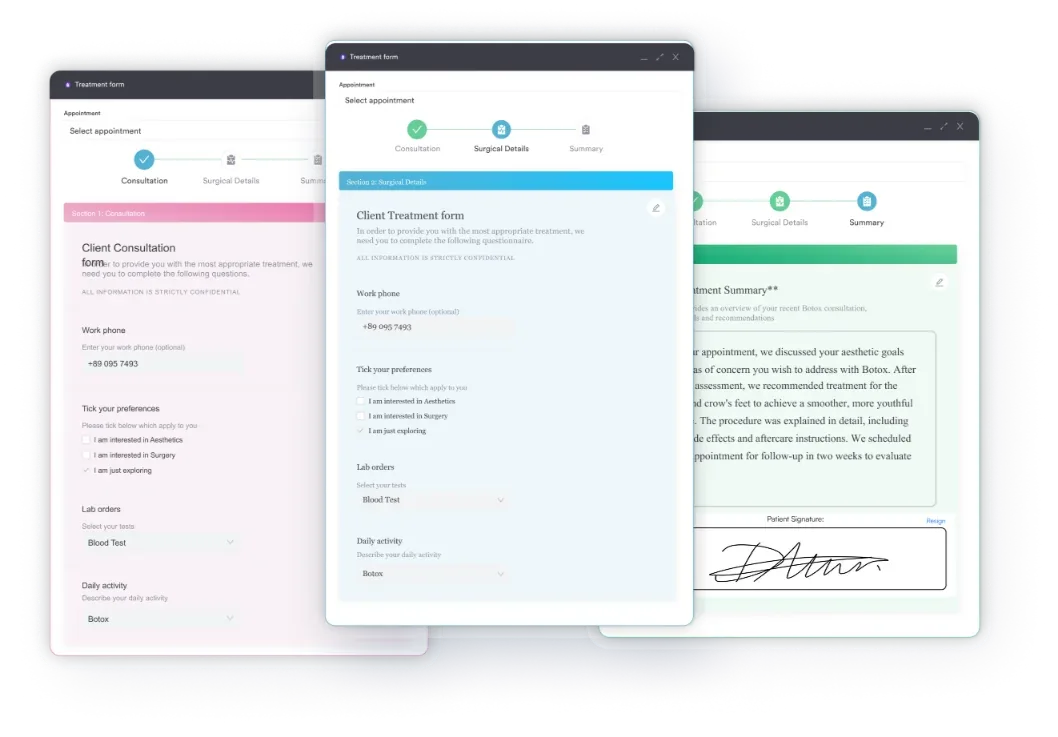
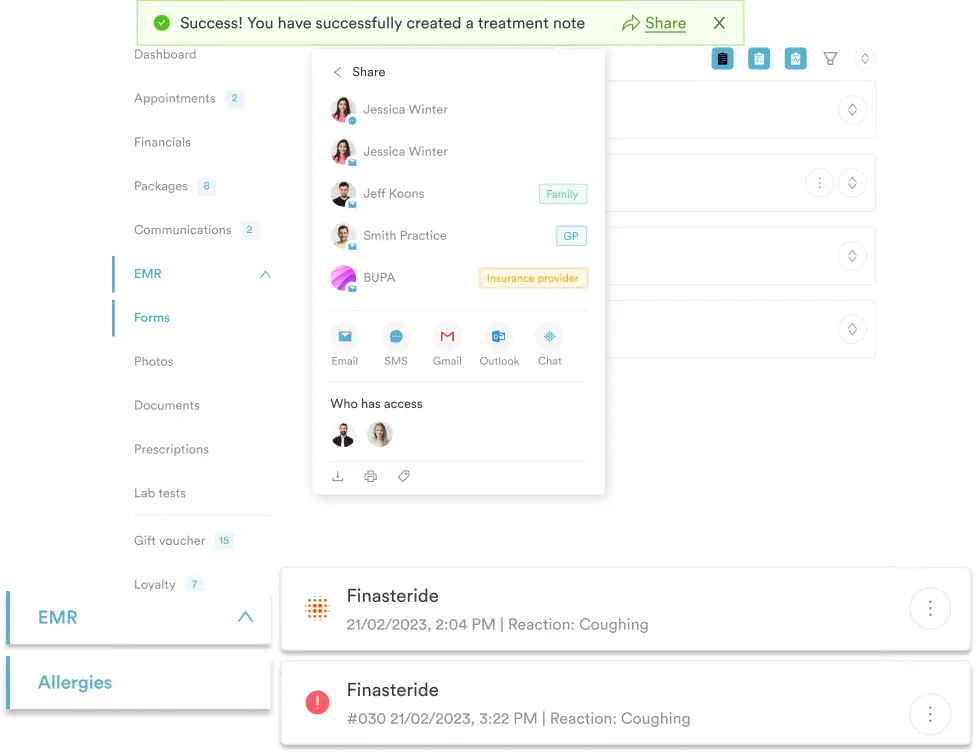
Practice management software like Pabau keeps the whole set in one client record. You build assessment forms that match your own protocols, store the scores and reports against the child, and book the reassessment before the family leaves.
Automated workflows take over the chasing. Children who score below your threshold get flagged for specialist review. Referral letters go out to early intervention, and the follow-up appointment is prompted without anyone having to remember it.

Pabau’s digital forms and client records let you document assessments consistently, track milestone progress, and send referrals from the same place.

The instruments do the measuring, but the report is what changes anything for the child. A tidy score sheet with vague recommendations just sends a family home to wait.
So be specific. Name the domain, give the percentile, ask for the service you want, and set a follow-up date the receiving program can work to. That is the difference between a referral that gets picked up and one that stalls.
The template above keeps that structure consistent from one child to the next. Book a demo to see how Pabau stores assessment scores and sends referral letters from the same client record.

Screening older children for depression or anxiety? PHQ-9 and GAD-7 template combines two validated tools for depression and anxiety into one intake document.
Assessing stress alongside a developmental workup? Perceived Stress Scale measures how unpredictable and uncontrollable situations feel to the client.
Is family history shaping the developmental picture? Psychiatrist parent intake questionnaire gathers family psychiatric history, developmental milestones, and medication responses from parents.
Is family history shaping the picture? Family dynamics worksheet structures the caregiver conversation behind a developmental history.
Concerned about reading and literacy? Dyslexia worksheet helps you screen school-age children whose language delay shows up in reading.
Screening is a brief test given to every child at well-child visits to flag who is at risk. A developmental assessment is the longer evaluation for children with a suspected delay. It combines standardized instruments, clinical observation, and parent interview to establish the nature and severity of the delay.
The AAP recommends developmental screening at the 9, 18, and 30-month well-child visits. A full assessment follows an abnormal screening result, or a concern raised between visits. Children with risk factors such as prematurity or a family history are often assessed sooner.
A comprehensive evaluation usually takes two to four hours, spread across one or more appointments. The exact time depends on the child’s age, their cooperation, and how many domains need detailed testing. Brief screenings take 10 to 15 minutes, while the full BDI-2 battery runs 60 to 90 minutes.
A child scoring 1.5 standard deviations or more below the age mean usually qualifies for early intervention under IDEA. Your clinician will go through the findings, name the therapy services to pursue, and explain what intervention looks like week to week.
Pediatricians, developmental pediatricians, clinical psychologists, speech-language pathologists, occupational therapists, and physical therapists all conduct developmental assessments. Some, such as autism screening, can be done in primary care. Others need specialist training, and your referral source will point you to the right clinician.