Free model waiver form + what it is and when your practice needs one
A model waiver form is a signed document that lets a healthcare practice use a p...

5
Last Updated: Sep 29, 2026

A dental new patient form collects essential registration, medical history, insurance, HIPAA consent, and financial information during the first appointment.
Standard sections include personal details, dental and medical history, insurance authorization, HIPAA privacy acknowledgement, payment policy, and treatment consent.
Pediatric forms require separate sections for parental/guardian consent and developmental history, and combined adult-child forms are not recommended.
Digital forms via practice management software like Pabau eliminate paper handling, automatically populate patient records, and reduce administrative time by removing manual transcription.
A ready-to-use intake form for capturing patient registration, medical history, dental concerns, insurance details, HIPAA acknowledgement, and treatment consent in one document.
Download templateNew dental patients arrive with medical history, insurance details, and consent requirements a practice needs on file before treatment starts. A well-designed dental new patient form captures all of it in one document, so front-desk staff and clinicians have what they need from the first visit. This guide covers what to include, how pediatric forms differ from adult ones, and how digital intake speeds up the process, plus the free template above that you can customize for your own practice.
A dental new patient form is a comprehensive intake document that dental practices use to collect essential information from patients at their first appointment. The form captures personal registration details, complete medical and dental history, current medications and allergies, insurance information, HIPAA privacy acknowledgements, and financial policy agreements.
This single document serves multiple clinical and administrative purposes: it establishes baseline health data for safe treatment planning, ensures regulatory compliance with HIPAA requirements, documents informed consent for examination and photography, verifies insurance coverage, and clarifies payment terms before treatment begins. For dental practices, the dental new patient form is the foundation of efficient patient onboarding.
The American Dental Association (ADA) covers patient registration forms as part of its practice management guidance, including compliance with state practice-act requirements and HIPAA notice-of-privacy-practices obligations. Standardized intake forms help front-desk staff collect this information consistently, and most dental practices complete them before or during the first appointment to support clinical decision-making.
Practices that implement digital intake forms instead of paper see significant time savings. Patient responses populate the clinical record automatically, eliminating manual data entry and transcription errors that commonly occur with handwritten forms.

A complete dental new patient form should include seven core sections. Each serves a distinct clinical or administrative function.
This section captures basic demographics: full name, date of birth, contact phone numbers (home and mobile), email address, home address, employer (if applicable), and emergency contact name and number. Include fields for preferred name and title (Mr., Ms., Dr.) for personalized communication.
This data populates the patient’s profile in your practice management system, enables appointment reminders via SMS or email. Many dental practices also ask for preferred method of contact, which helps reduce missed appointments.
Collect information on current dental concerns (pain, sensitivity, aesthetic concerns), date of last dental visit, current dental problems, history of gum disease, tooth loss or missing teeth, and previous orthodontic treatment. Include checkboxes for relevant medical conditions such as diabetes, heart disease, bleeding disorders, pregnancy, and immunocompromise.
Ask about current medications and supplements. Many medications affect oral health, including dry mouth and gum overgrowth. Document allergies explicitly, including drug allergies and latex sensitivity, which are critical for safe treatment.
Request primary and secondary insurance carrier names, member ID, group number, and the policyholder’s relationship to the patient. Many practices include a checkbox authorizing direct billing to insurance. This reduces patient billing surprises and improves collection rates. Returning patients confirm their plan, household details, and income once a year on a coverage renewal form.
Federal HIPAA regulations require dental practices to provide patients with a Notice of Privacy Practices and obtain written acknowledgement. Your form must include the full notice text (or a clear link to it) and a signed consent statement. Many practices use a checkbox: “I acknowledge receipt of the Privacy Notice and understand my rights under HIPAA.”
Clearly state payment terms: payment expected at time of service unless financial arrangements are made in advance, accepted payment methods, late payment policy, and how insurance claims are handled. Include information about cosmetic (non-covered) procedures and patient responsibility for out-of-network costs.
Include informed consent statements: “I consent to examination and treatment as recommended by the dentist,” “I consent to photography for clinical documentation,” and “I understand the risks and benefits of proposed treatment.” These signatures protect the practice legally and demonstrate informed consent for all procedures.
Pediatric patients require separate forms that reflect developmental differences and parental responsibility for consent.
Never use a combined adult-pediatric form. Mixing consent and medical history sections for different age groups creates confusion and potential compliance gaps. Maintain separate dental new patient form templates for each age group.
Patients should complete their intake form before or immediately upon arrival to maximize appointment time for actual clinical care.
Practices that dispatch forms digitally see significantly faster new patient check-in times because all information is already recorded in the system before the patient arrives.
Paper and PDF forms require manual transcription, lost forms, and inefficient workflows. Digital dental patient intake forms solve these problems by automating data capture and eliminating handwritten entry.
Digital forms sent via SMS or email before the appointment allow patients to complete intake on their phone or computer. Responses flow directly into the patient’s clinical record, eliminating the front-desk staff task of transcribing handwritten responses into your practice management system. Staff spend less time on administrative work and more time on clinical care.
Additionally, automated form workflows can dispatch pre-appointment reminders, follow-up surveys post-visit, and re-intake forms for returning patients who need to update their health history, all without manual scheduling.
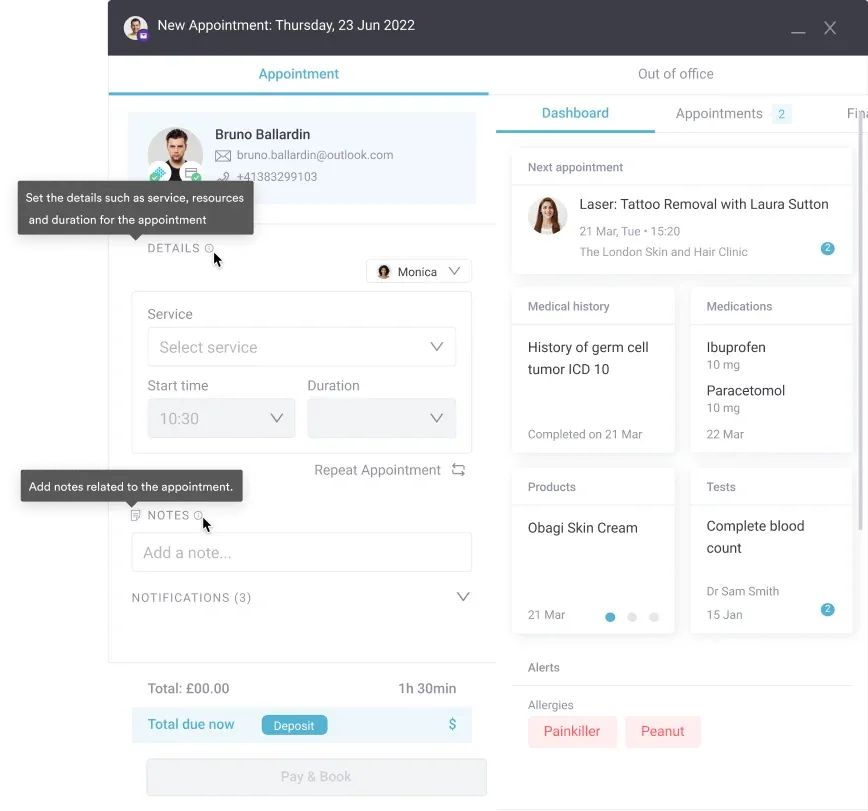
Any dental practice that accepts new patients needs a standardized dental new patient form. This includes solo practices, group dental practices, multi-location dental networks, corporate dental chains, and specialist practices (orthodontics, prosthodontics, oral surgery). The same registration-and-history approach shows up across outpatient care generally, from general practices to wellness clinics that also rely on standardized intake to speed up the first visit.
Pediatric dental practices benefit from separate age-appropriate forms. Orthodontic practices may use simplified forms (fewer medical sections, more focus on treatment expectations). Oral surgical practices need expanded medical history and medication sections to assess surgical risk.
Federally qualified health centers (FQHCs) and community dental practices serving underserved populations benefit from patient management systems that offer multilingual forms, as language accessibility is a compliance requirement under Title VI of the Civil Rights Act.
Clinical accuracy: Structured intake forms capture consistent information across all patients, ensuring clinicians have complete medical and dental history for safe treatment planning. Standardized questions reduce missed allergies or contraindications.
HIPAA compliance: A formal intake form with signed HIPAA acknowledgement satisfies federal documentation requirements (45 CFR § 164.520). The acknowledgement provides evidence you provided the Notice of Privacy Practices and the patient understood their rights.
Reduced administrative time: Digital intake forms eliminate transcription, since data enters the patient record automatically. Staff save meaningful time per new patient compared to paper workflows.
Improved collection rates: Clear financial policy statements at intake reduce billing disputes and payment surprises. Patients sign off on payment terms upfront, increasing acceptance of out-of-pocket costs.
Insurance authorization: Explicit patient authorization for direct insurance billing, included in the form, simplifies claims submission and reduces insurance company denials due to missing authorization.
Pabau’s digital forms eliminate paper entirely. Instead of printing, distributing, and filing paper intake forms, your staff sends a pre-appointment SMS or email with a link to the dental new patient form. Patients complete it on their phone, and responses automatically populate the patient’s clinical record, with no data entry required.
Book a demo to see how Pabau’s automated intake workflows cut new patient check-in time substantially compared to paper-based registration.
A comprehensive dental new patient form is the foundation of safe, compliant, and efficient patient care. Standardized intake forms ensure clinicians have complete medical history, satisfy HIPAA requirements, and reduce administrative time. Moving from paper to digital intake via automated workflows cuts check-in time considerably while improving data accuracy and patient experience.
Download the free template above and customize it for your practice. If you want to eliminate paper entirely and automate form dispatch, schedule a demo with Pabau to see how digital intake works in action.

Want a fast-reference form for high-risk patients? Medical referral form template streamlines patient transfers between providers while capturing every essential detail.
Want a fast-reference form for high-risk patients? Emergency medical form gives front-desk staff a one-page summary of critical health information to keep alongside standard intake paperwork.
Treating patients with complex medical histories? Vital signs record template gives your team a standardized sheet for tracking health metrics before and during treatment.
A dental new patient form should include seven core sections: patient registration (name, DOB, contact), dental and medical history, medications and allergies, insurance information, HIPAA privacy acknowledgement, financial policy, and informed consent for treatment and photography.
Patients should update their medical history at least annually for returning patients, or immediately if significant health changes occur (new diagnosis, medication changes, allergies). Many practices request updates every 12-24 months.
Yes. HIPAA regulations and standard-of-care guidelines require documented informed consent and baseline health information for every patient. A signed dental new patient form is essential legal documentation.
Yes. Digital intake forms sent via email or SMS before the appointment allow patients to complete them on their phone or computer. Completing the form online significantly cuts check-in time compared to filling it out in the waiting room.
HIPAA requires dental practices to provide patients with a Notice of Privacy Practices and obtain written acknowledgement (45 CFR § 164.520). Your registration form must include this notice and a signed consent statement.
Yes. Pediatric forms must include parental/guardian consent for all procedures, separate sections for developmental history and parental medical history, and age-appropriate consent language. Never combine adult and pediatric forms.