Patient follow up letter template
A patient follow up letter template lets your practice confirm a patient’s...

2
Last Updated: Oct 21, 2026

Cryotherapy uses liquid nitrogen to freeze and destroy abnormal skin tissue, requiring structured aftercare to support healing and prevent complications.
Blisters typically form 24 hours after treatment and are normal – patients should never pop them, as this increases infection risk.
Wound care involves daily cleansing and application of Vaseline or petroleum jelly with non-stick dressings, changing as needed during the 1-3 week healing period.
Digital forms and automated workflows in Pabau, practice management software, let you customize this template and send it instantly to every patient.
A ready-to-use template covering wound care, healing stages, activity restrictions, sun protection, and infection warning signs after liquid nitrogen cryotherapy.
Download templateProper cryotherapy aftercare is essential to support healing and prevent complications like infection or scarring after liquid nitrogen treatment. Yet many practices rely on verbal instructions or generic handouts, leaving patients uncertain about what to expect during the 1-3 week recovery period.
This guide walks through the clinical framework for cryotherapy aftercare, including wound care protocols, blister management, activity restrictions, and infection warning signs. You’ll also learn how to use this template in your practice with Pabau’s automated workflows to deliver consistent post-treatment guidance to every patient.
A cryotherapy aftercare template is a standardized patient instruction document distributed after liquid nitrogen cryotherapy procedures. It describes what patients should expect during healing, how to care for the treated area, and when to contact their clinician if complications arise.
Cryotherapy destroys abnormal skin tissue using extreme cold (liquid nitrogen at −196°C). Common indications include warts, actinic keratoses, seborrheic keratosis, and some skin cancers. After the procedure, the treated area undergoes predictable healing stages. Expect redness and swelling within hours, blister formation within 24 hours, and tissue regeneration over 1-3 weeks depending on the site and lesion size.
Aftercare documentation serves three purposes from a regulatory and clinical-safety perspective:
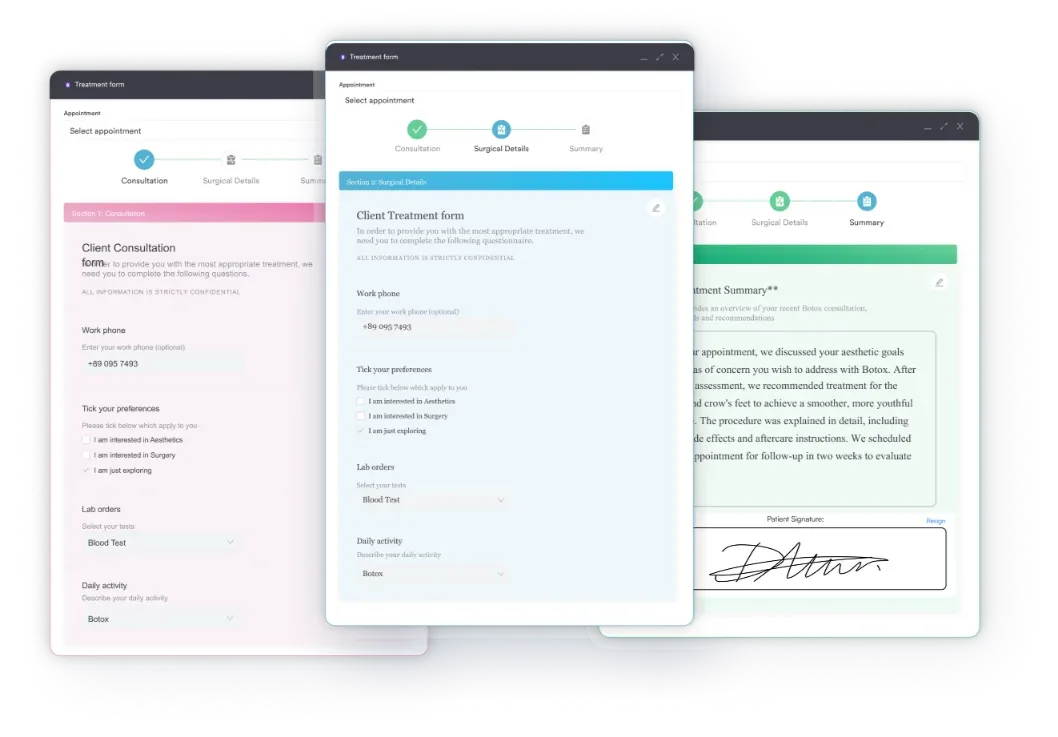
This template is designed as a patient-facing instruction sheet to be distributed immediately after treatment. Implement it across your practice using these five key steps:
This template is essential for any practice performing dermatology or aesthetic procedures using cryotherapy. Primary users include:
Weighing tools for your practice? Check how alternatives to Carepatron handle forms and client records.
Compliance and safety: A standardized, written aftercare protocol ensures every patient receives consistent guidance. This reduces off-protocol self-care decisions (e.g. popping blisters, using incorrect topicals) that can delay healing or cause infection.
Regulatory alignment: This template creates an auditable record that informed consent and safety instruction were delivered. GMC guidance on minor procedures similarly requires documented aftercare planning.
Reduced complications and callbacks: Clear wound-care instructions and infection red-flag lists decrease patient-initiated calls for minor concerns like normal redness or expected blister formation. Genuinely concerning symptoms still trigger rapid escalation.
Patient confidence: A professional, detailed aftercare document signals clinical competence and reduces post-procedure anxiety. Patients who understand the healing timeline and know what is “normal” report higher satisfaction with the treatment.
Operational efficiency: Automated aftercare workflows eliminate manual follow-up tasks. Customize the template once, and every future patient receives reminders tailored to their treatment details automatically.
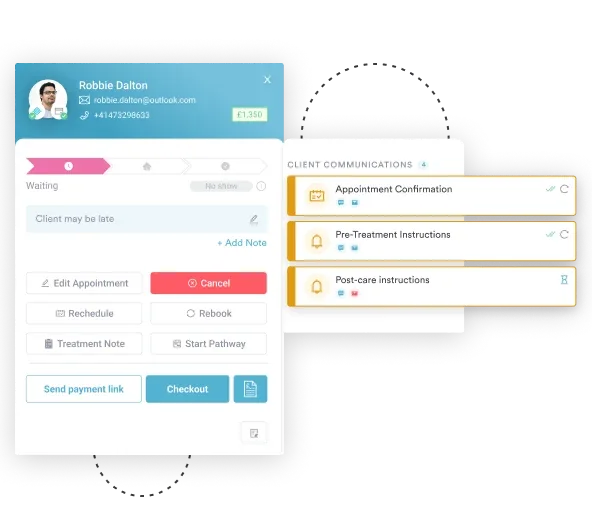
Build a library of body-area-specific variants (face, scalp, cervical, fingers/toes) and store them in Pabau’s digital forms templates folder. This lets you select the relevant variant during appointment checkout, automatically routing the correct instructions to each patient without manual intervention.
Most treated areas heal within 1-3 weeks, but healing varies by treatment site, lesion size, and individual skin response. Communicating this timeline to patients prevents the common concern that slow or prolonged healing signals treatment failure.
Days 1-2 (Immediate response): Expect redness, swelling (edema), and mild discomfort. The treated area may appear blistered or crusted. This is normal inflammatory response to tissue destruction.
Days 3-7 (Blister stage): The blister that formed on Day 1 matures and may enlarge slightly during this stage. It remains protective and should not be drained or popped. Keep the area moisturized and covered with a non-stick dressing throughout this phase.
Days 7-14 (Drying and peeling): The blister flattens and dries. The outer layer peels away, revealing new pink or slightly hypopigmented (lighter) skin beneath. Some mild scabbing is normal. Continue moisturizing and sun protection.
Days 14-21+ (Re-epithelialization): New skin fully forms. Redness gradually fades over weeks to months. Hypopigmentation (skin lightening) may persist for 3-6 months or longer, particularly on the face. Expect this as a normal post-cryotherapy finding in some patients, not a complication.
Facial cryotherapy typically heals faster (7-14 days visible improvement) than body-area cryotherapy (2-3 weeks), due to higher blood flow to the face. Document this expectation in your template.
Wound-care compliance is highest when patients understand the “why” behind restrictions. Include these key points in your aftercare guidance:
Document the rationale: wound-care compliance reduces infection risk and prevents blister contamination. It also minimizes post-inflammatory hyperpigmentation (darkening), which can occur if healed skin is exposed to sun too early.
Most practices still print aftercare instructions or read them aloud at checkout, hoping the patient remembers the details once they’re home. Verbal guidance fades fast, and a printed handout is easy to misplace.
Pabau turns this template into a digital form your team customizes once and sends to every patient automatically. Its digital forms deliver the instructions straight to the patient’s phone or portal, with a timestamped record of what was sent and when.
Automated workflows then follow up with wound-care reminders at set intervals, so patients get blister-care and sun-protection prompts without your front desk chasing them down. The result is fewer confused calls, better compliance, and a documented trail for every patient you treat.

Send consistent post-treatment instructions instantly and track patient compliance with automated reminders. Customize templates for each procedure and practice location.

Write the aftercare template once, and every patient leaves your practice with the same clear, evidence-based instructions. That consistency matters more than any single wound-care tip. It keeps blister care, sun protection, and red-flag symptoms front of mind long after the visit ends.
The trade-off is a few hours spent customizing the template to your protocols and clinician preferences up front. That investment pays off every time a patient calls with a question the handout already answered, or a regulator asks how you document informed consent.
Book a demo to see how Pabau turns this template into an automated part of your cryotherapy aftercare workflow.

Considering a med spa franchise instead? Med spa franchise benefits weighs franchise cost, speed to open, and risk against building a practice independently.
Also asked about hyaluron pen fillers? Hyaluron pen filler template covers contraindication screening, risk disclosures, and the FDA’s warning against hyaluron pens.
Looking to build more med spa packages? Med spa package ideas shares 10 package ideas, from welcome offers to loyalty-building client appreciation deals.
Worried about protecting patient data? Patient data security tools explains why treatment records, photos, and card numbers count as protected health information.
Also offering Accent Prime treatments? Accent Prime aftercare instructions covers the 24 to 48 hour recovery window and when patients should call.
A cryotherapy aftercare template is a standardized patient instruction document. It guides wound care, healing expectations, activity restrictions, and infection warning signs after liquid nitrogen cryotherapy treatment.
Apply petroleum jelly (Vaseline) or a similar emollient twice daily to the treated area, followed by a non-stick dressing. Change the dressing as needed if it becomes wet or soiled. Avoid ointments that trap heat or occlusive dressings that prevent air circulation.
Begin applying Vaseline immediately after the procedure (once any crust or initial fluid drains), then twice daily throughout the healing period. Consistency matters – skipping applications or switching to non-moisturizing products delays healing and increases blister infection risk.
Yes, you can shower 24 hours post-treatment using lukewarm water and mild soap. Gently pat the area dry without rubbing. Avoid hot baths, soaking, pools, and ocean immersion for at least 7-10 days to prevent bacterial contamination of the blister.
Facial cryotherapy typically shows visible improvement within 7-14 days, with complete re-epithelialization by 14-21 days. Redness and any hypopigmentation (lightening) gradually fade over weeks to months depending on treatment depth and individual healing.
Yes. Not all cryotherapy treatments result in a visible blister, especially for superficial lesions or small treated areas. Absence of a blister doesn’t mean the treatment failed. It simply reflects normal variation in individual healing response. Healing still follows the same timeline.