GLP-1 diet plan
A GLP-1 diet plan is a structured eating framework for patients taking semagluti...

2
Last Updated: Oct 13, 2026

The constitutional review of systems always comes first in a complete ROS, covering fever, chills, fatigue, weight loss, and night sweats before any single organ system is asked about.
A complete review of systems covers 10 or more organ systems under the legacy 1997 CMS documentation guidelines. Since 2021, and 2023 for most other visit types, Medicare selects the E/M level by medical decision-making or time, not a system count.
Constitutional symptoms form the baseline for clinical assessment, and negative findings matter as much as positive ones for establishing a complete medical history.
Practice management software like Pabau can automate ROS capture directly from patients through digital intake forms, cutting clinician documentation time and keeping all 14 body systems consistent across every visit.
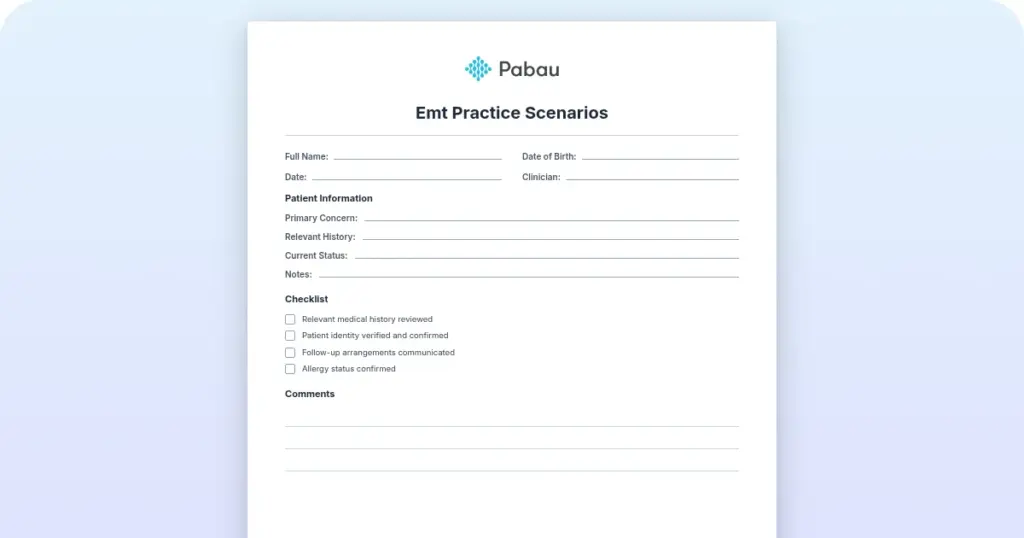
A comprehensive medical assessment form designed to systematically evaluate a patient’s overall health status across multiple organ systems. This structured checklist enables healthcare providers to gather detailed information about constitutional symptoms, medical history, and systemic concerns to support accurate diagnosis and treatment planning.
Download templateEvery review of systems starts in the same place: constitutional. Before you ask about a single organ system, you ask about fever, chills, fatigue, weight loss, and night sweats, the whole-body symptoms that don’t belong to any one system but shape everything that follows.
Skip it, or copy it over from the last visit without asking again, and two things suffer. You miss the systemic red flags that narrow a differential, and the documentation under a higher-level E/M code stops holding up.
Here’s what actually belongs in the constitutional component, how it feeds the rest of the ROS, and where clinicians typically lose points with reviewers.
The review of systems is a set of yes-or-no questions about symptoms tied to each body system. Unlike the physical exam, which is your direct assessment, the ROS runs entirely on what the patient tells you they’re experiencing.
It does two jobs at once: it surfaces symptoms the patient hadn’t mentioned yet, and it documents how thorough your history-taking was. Under the 1997 CMS E/M documentation guidelines, a comprehensive history called for at least 10 organ systems documented, though as covered further down, that count no longer sets your billing level on its own.
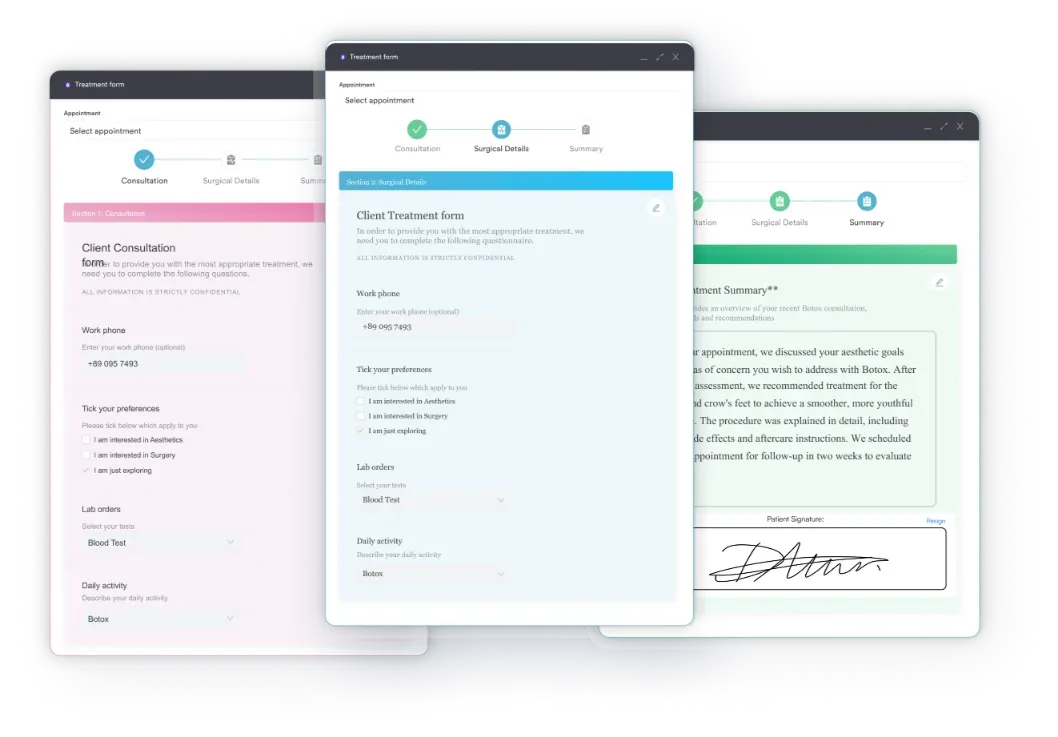
This is where digital intake forms earn their keep. Instead of you reading questions aloud during the visit, patients complete a structured questionnaire beforehand, capturing all 14 systems in a consistent, auditable format before they ever sit down with you.
The constitutional component is the ROS section that always comes first. It covers general, whole-body symptoms that don’t belong to any single organ system: fever, chills, fatigue, malaise, weight loss, and night sweats.
Constitutional symptoms matter because they can signal systemic illness, ranging from infection and malignancy to metabolic derangement or inflammatory disease. A patient who mentions fever and weight loss together raises red flags that a single-system review might miss.
That’s why constitutional is always documented before, and separately from, the other 13 organ systems.
Document both positive findings, such as a patient reporting fever, and negative findings, such as a patient denying night sweats. Negative findings matter because they narrow the differential diagnosis. A patient with fever but no weight loss or night sweats follows a different clinical path than one with the full triad.
Use this checklist during intake or at the start of the visit. Mark yes or no for each constitutional symptom, and if the answer is yes, capture the specifics: onset, duration, severity, associated symptoms, and any treatment already tried.
Many practices log scores like these in measurements tracking software, so progress charts update the moment a reassessment is saved.
Once constitutional is done, work through the remaining 13 organ systems. Under the legacy CMS framework, a complete ROS spanning 10 or more systems supported the comprehensive history level, though as covered below, that tier no longer sets your E/M code by itself.
For each system, ask: “Do you have any [symptom category] symptoms?” If yes, document specifics. If no, document the negative. This structured approach ensures completeness and audit readiness when claims reviewers examine your E/M documentation.
If you want a single document that walks through every system at once, our review of systems template follows the same order end to end.
The ROS used to be a distinct, countable component of the medical history under the 1995 and 1997 CMS guidelines, and for years it directly shaped your E/M code.
That changed for office and outpatient visits (99202–99215) on January 1, 2021, and CMS extended the same medical decision-making and time-based approach to hospital, nursing facility, emergency department, and most other E/M categories from January 1, 2023. Good ROS documentation still protects your billing integrity, just not by tallying systems anymore.
No, not for the level itself. Since 2021 (2023 for most other E/M categories), CMS and the AMA select the code by medical decision-making or by total time spent on the date of the encounter.
A thorough ROS is still expected as part of a medically appropriate history, and it still supports your clinical reasoning and your defense in an audit. It just isn’t the box-ticking exercise it used to be.
Under the old rules, established-patient visits only ever needed two of the three key components anyway, history, exam, or medical decision-making, never all three.
Today a level-5 established-patient visit (99215) is set by high-complexity medical decision-making, or by 40 or more minutes of total time on the date of the encounter, full stop. The ROS still shapes good clinical care. It just doesn’t do the arithmetic for your code anymore.
The same discipline applies wherever documentation changes hands. A nursing shift report works on the same principle: name what was actually asked and found, not just that a review happened.
Manually documenting ROS, reading questions aloud and typing up notes, consumes clinician time during or after every visit.
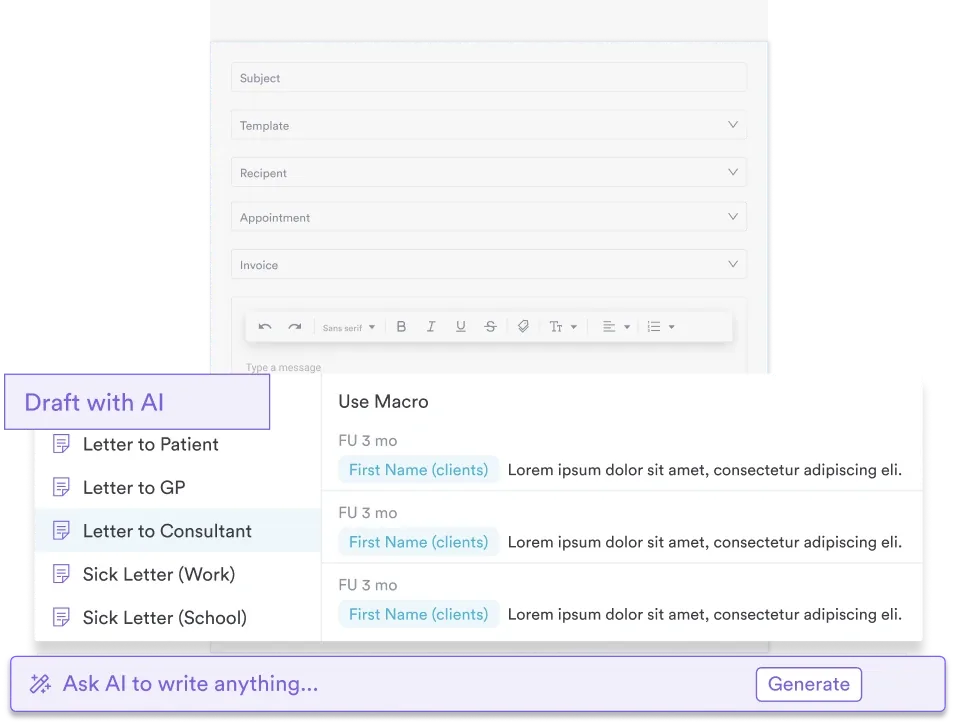
Patients get a link to a structured digital intake form before the visit and work through the constitutional and 14-system questions in a format that matches your EMR. Whether you’re running a general practice or a mental health EMR, the form is already complete, reviewed, and ready to fold into the note by the time they sit down.
That eliminates redundant questioning, keeps every chart consistent, and cuts the odds of missing a positive finding, because the form asks about all 14 systems by design.
The payoff: you spend the visit on diagnosis and treatment, not on re-asking questions a form already answered.

See how Pabau automates patient intake and ROS capture so your clinical team focuses on patient care.

Store completed ROS forms in your patient record and tag them by date. This creates a longitudinal symptom history that helps you spot emerging patterns. A patient with recurrent fever and fatigue over six months points to different pathology than an acute onset, and the record strengthens your documentation for audits.
Consistency is the real challenge with template documentation.
HIPAA-compliant digital forms.
The constitutional review of systems is the foundation of a complete medical history. It establishes baseline health, informs your differential, and backs up the medically appropriate history that today’s E/M documentation still calls for, even though the code level itself now runs on medical decision-making and time.
A well-structured EHR system that captures ROS consistently at intake saves clinician time and keeps your documentation audit-ready. See Pabau in action for ROS documentation as part of a complete patient management workflow, alongside scheduling, charting, and billing.

Building a care plan for a GI complaint? Constipation nursing care plan covers NANDA diagnoses, measurable goals, and evidence-based interventions.
Need a broader clinical assessment template? Emergency nursing assessment covers a systematic patient evaluation from triage through handoff.
Clearing a patient for a dental procedure? Dental clearance form covers medical history, medication review, and the physician sign-off a dental team needs.
A nurse, medical assistant, or a patient-completed intake form can record the ROS. CMS still requires the physician or qualified provider to review that information and document that they did, typically with a short note confirming or adding to what was already recorded. A nursing review of systems checklist gives nurses a bedside-ready format for recording those symptoms system by system.
Under the 1995/1997 CMS guidelines, a comprehensive history needed 10 or more systems documented. Since 2021 (2023 for most other E/M categories), CMS selects the code by medical decision-making or time instead, so this system count is legacy context rather than today’s billing rule.
The ROS asks about current symptoms across body systems. Past medical, family, and social history (together, the PFSH) cover prior diagnoses, surgeries, family conditions, and lifestyle factors. Both sit inside the history portion of the visit, but they capture different information.
No. A problem-focused visit needs no ROS at all, and many follow-up visits only call for a review of the system tied to that day’s complaint. A full, multisystem ROS is reserved for more complex or comprehensive visits.