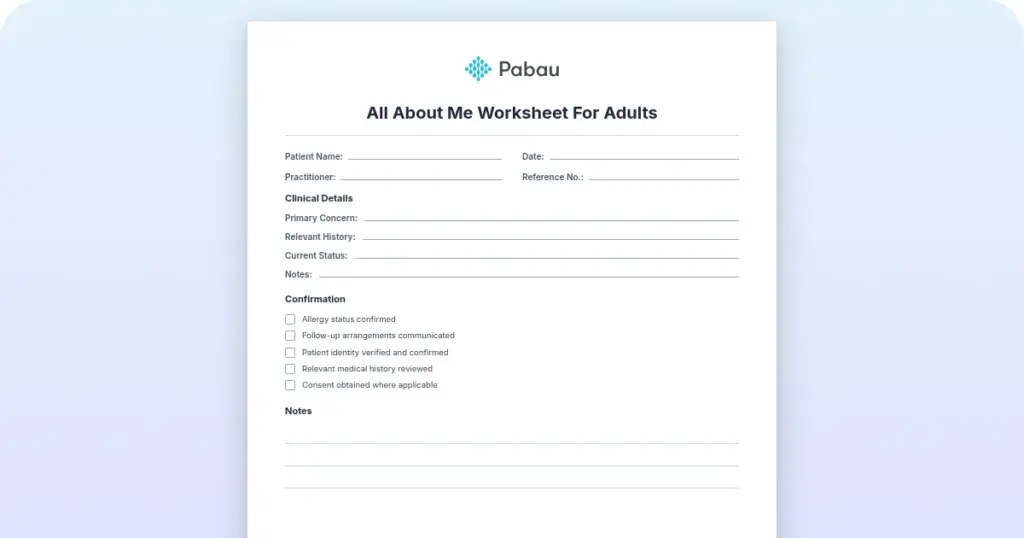
All about me worksheet for adults
An all about me worksheet for adults is a guided self-reflection form that maps ...

1
Last Updated: Oct 14, 2026

A bullying worksheet is a structured form that helps clinicians assess and document bullying experiences, types, and emotional impact in children and teens.
Bullying involves three key elements: repetition, intentional harm, and a power imbalance. Worksheets help distinguish these from normal conflict.
Effective worksheets include definition clarification, scenario-based decision-making, feelings identification, and clear pathways for reporting to trusted adults.
Practice management software like Pabau connects this downloadable bullying worksheet to digital forms and clinical notes, so therapists and school counselors can assess, document, and track interventions in one place.
A comprehensive bullying worksheet covering definition, types of bullying, emotional impact, coping strategies, and safe reporting pathways. Designed for use with children and teens in therapy, school counseling, and clinical settings.
Download templateBullying is one of the most prevalent mental health challenges facing children and adolescents today. According to StopBullying.gov, approximately 1 in 5 students experience bullying, yet many cases go unreported because young people lack the language to describe their experiences or fear retaliation.
A bullying worksheet provides the structured framework that clinicians, school counselors, and therapists need to help children identify, understand, and respond to bullying, whether physical, verbal, social, or digital.
This guide explains what a bullying worksheet is, how to use it effectively in your practice or school setting, and how it connects to broader therapeutic and educational goals. By the end, you’ll understand how worksheets support clinical documentation, evidence-based intervention, and child safety outcomes.
A bullying worksheet is a structured assessment and educational tool designed to help children and adolescents understand, identify, and respond to bullying experiences. Unlike generic mental health forms, a bullying worksheet combines three functions: psychoeducation (teaching what bullying is), self-assessment (helping clients recognize their own experiences), and skill-building (practicing coping strategies and reporting responses).
Typically used in therapy practices, school counseling offices, and clinical settings, these worksheets are administered by trained professionals during individual sessions, group programs, or classroom-based anti-bullying initiatives. A bullying worksheet becomes part of the client’s clinical record and helps practitioners track emotional progress, intervention effectiveness, and safety planning.
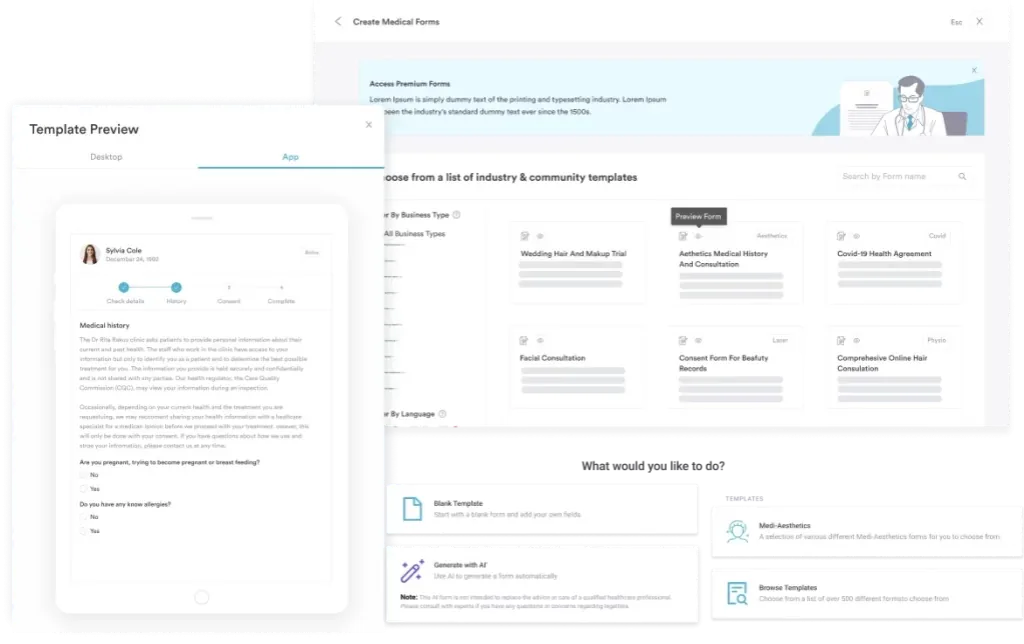
When integrated into a digital forms system, bullying worksheets become part of automated clinical workflows, enabling practitioners to document findings directly into client records and flag safety concerns for immediate follow-up.
Bullying worksheets come in several formats, each designed for specific educational outcomes and age groups. Here are the most common types:
For elementary-age children, a bullying worksheet should use simple, concrete language and visual aids. Key elements include:
Worksheet answers guide children to identify a trusted adult and practice saying “Stop” or walking away safely.
Teen-focused bullying worksheets go deeper into social dynamics, peer pressure, bystander roles, and online contexts. Teens need opportunities to explore the power imbalance element, discuss why friends sometimes participate in bullying, practice assertive responses, and understand reporting consequences and protection policies.
Many teen worksheets include role-play scenarios or case studies involving social media platforms and anonymous messaging apps. These are the contexts where teens encounter bullying most frequently.
Understanding bullying’s impact is essential context for why worksheets matter. The CDC documents that bullying is associated with anxiety, depression, reduced academic performance, social withdrawal, and in severe cases, suicidal ideation.
A bullying worksheet creates a safe space for children to name these effects and connect their emotional symptoms to a specific cause. That connection is the first step toward healing.
Therapists using a bullying worksheet can validate these responses, normalize them as understandable reactions to harm.
A cyberbullying worksheet addresses the unique challenges of digital bullying: permanence of posts, wider audience reach, anonymity of perpetrators, and difficulty with “turning it off.” These worksheets help teens document incidents (screenshots, usernames, dates), identify where the bullying occurred (social media platform, messaging app, gaming platform), and understand platform-specific reporting mechanisms.
They also address the amplification effect. A hurtful comment can be screenshotted and shared, then resurface weeks later, extending the harm.
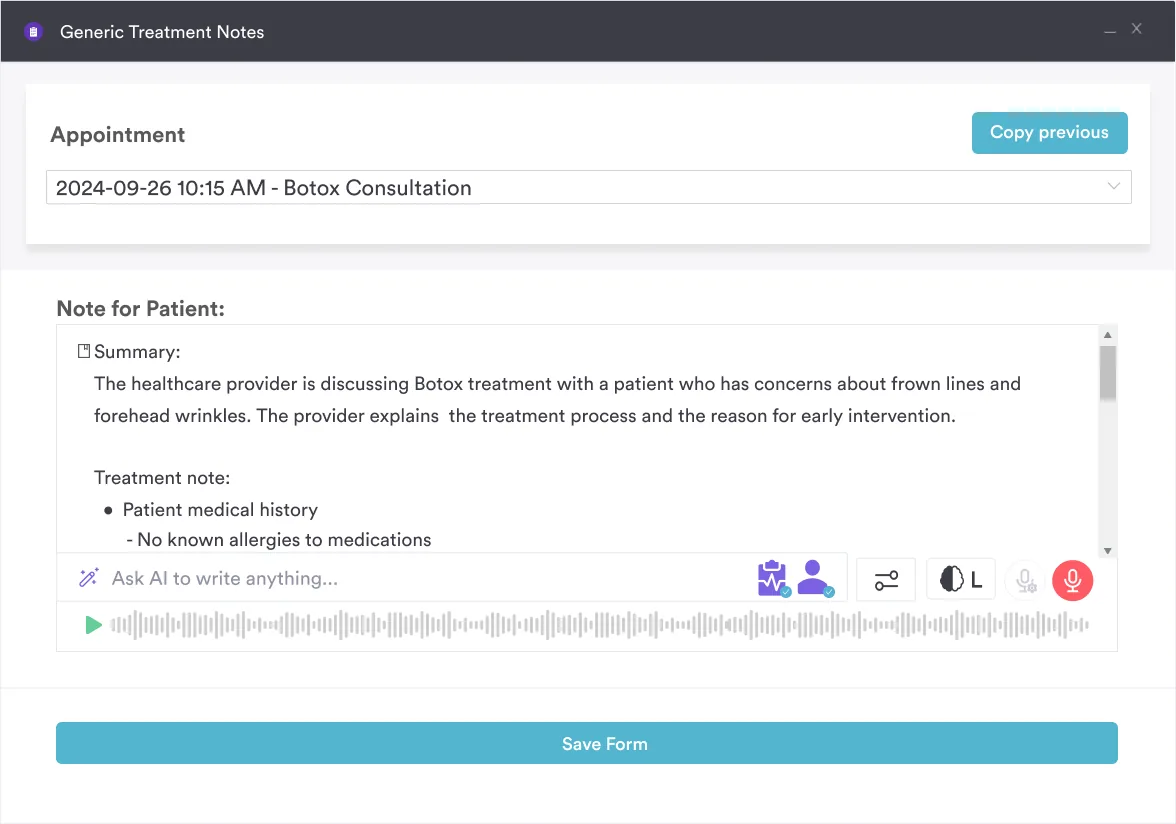
When a cyberbullying incident is documented with Pabau Scribe, our AI scribe, it becomes part of the client’s care history and informs ongoing trauma-informed treatment planning. Pabau Scribe writes up clinical notes from the session automatically, so nothing gets lost or delayed in write-up.
Many worksheet templates exist, but the difference between a worksheet sitting in a drawer and one that drives change is how it’s administered. Here’s a 5-step implementation framework for school counselors, therapists, and social workers:
This structured approach combines assessment, documentation, and treatment planning. It turns the bullying worksheet into part of evidence-based care rather than a one-off office activity.
Digital practice management tools can automate follow-up reminders and alert clinicians to high-risk indicators flagged during assessment. The PACER Center offers further implementation guidance for schools and practices.

Pabau’s digital forms and clinical notes help therapists and school counselors document bullying assessments, track intervention progress, and ensure no child falls through the cracks.

Not all bullying worksheets are created equal. Research on educational effectiveness and trauma-informed practice suggests these core components:
Effective bullying worksheets avoid victim-blaming language (“Why didn’t you just walk away?”) and instead emphasize agency, safety, and access to support. They are developmentally appropriate: picture-heavy for ages 6-8, scenario-based for ages 9-12, and discussion-driven for teens 13+. When clinicians use a bullying worksheet as part of structured patient engagement workflows, they increase follow-through and therapeutic effectiveness.
A bullying worksheet is far more than a form to file away. It is a therapeutic tool that helps children name their pain, understand what happened, and practice resilience.
When administered thoughtfully by trained professionals and documented systematically in clinical records, bullying worksheets become part of evidence-based care that changes outcomes. That means less isolation, stronger coping skills, and a clear signal to the child that they are not alone.
Download the bullying worksheet above and add it to your practice, school, or therapeutic program. Pair it with clear follow-up protocols, trusted adult engagement, and ongoing monitoring, so every child who experiences bullying has a pathway to safety and healing.

Want to screen a child for anxiety disorders? SCARED anxiety screening template is a validated 41-item tool that screens children and teens across five anxiety domains.
Want to measure a child’s social support? The Social Network Index helps clinicians assess peer connections and isolation risk alongside a bullying assessment.
Looking for group session tools? Pabau classes feature enables scheduling and tracking group anti-bullying programs alongside individual therapy sessions.
An effective bullying worksheet includes a clear definition of bullying, a checklist of bullying types (physical, verbal, social, cyberbullying), a feelings inventory, scenario-based decision-making activities, reporting pathways, and safety planning. The worksheet helps children identify their experience and practice coping responses.
The four main types are physical bullying (hitting, pushing, taking belongings), verbal bullying (name-calling, mocking, threats), social/relational bullying (exclusion, spreading rumors, public humiliation), and cyberbullying (online harassment, hurtful posts, private message attacks). Each type involves repetition, intent to harm, and a power imbalance.
Conflict is a disagreement between peers of roughly equal power that may be resolved through discussion or adult mediation. Bullying is repetitive, intentional harm by someone with greater power or status, aimed at making the target feel powerless. A bullying worksheet helps children recognize this distinction and understand why responses differ.
Validate the child’s feelings, listen without judgment, document the incident, involve parents/guardians, coordinate with school administration, create a safety plan, and provide trauma-informed counseling. A bullying worksheet is often the first step in this support process, as it helps the child articulate what happened and what they need.
Yes. Worksheets for children ages 6-12 use simple language, images, and concrete examples. Worksheets for teens (13+) address social media, peer pressure, and nuanced bystander dynamics. Effective worksheets are always developmentally appropriate and delivered one-to-one in a confidential setting.
Effective strategies include telling a trusted adult, using assertive language (“Stop”), removing themselves from the situation, documenting incidents, practicing relaxation or self-soothing, building supportive friendships, and engaging in confidence-building activities. A bullying worksheet guides children in choosing strategies that feel safe and realistic for their situation.