Physician credentialing checklist
A physician credentialing checklist lists every license, certificate, verificati...

Last Updated: Oct 23, 2026

An antihistamine medication list groups H1 and H2 agents by generation, brand name, OTC or prescription status, dose and sedation level.
First-generation agents such as diphenhydramine and hydroxyzine sedate heavily, so they suit acute itch and bedtime dosing rather than a working day.
Second-generation agents such as cetirizine, loratadine and fexofenadine are the first choice for daytime and long-term allergy control.
H2 antihistamines such as famotidine reduce gastric acid and treat no allergy symptoms, so they belong in a section of their own.
Ranitidine is no longer an option, because the FDA asked manufacturers to remove every ranitidine product on April 1, 2020.
The free template carries the full list, the pediatric dose bands, the cautions to check, and blank rows for your own formulary.
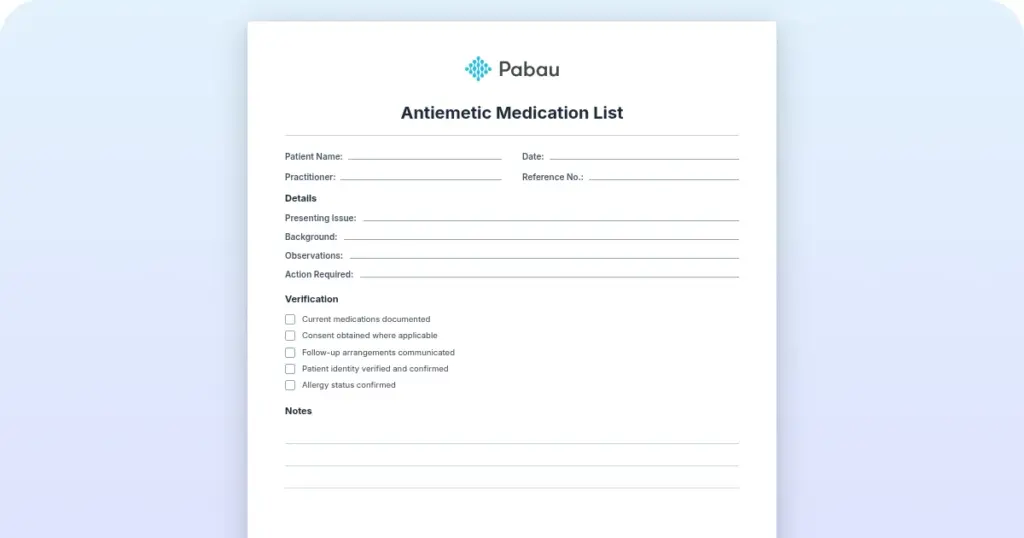
Three pages of H1 and H2 antihistamines, with brand names, OTC or prescription status, adult and pediatric dosing, sedation level and the cautions to check. The last page leaves blank rows for your own formulary and a review record.
Download templateAn antihistamine medication list sorts every H1 and H2 agent your team discusses by receptor, generation, availability, dose and sedation level. That last column decides most recommendations. A first-generation agent like diphenhydramine can leave a patient too drowsy to drive to work, while loratadine barely registers.
The name causes the second problem. Famotidine is sold as an antihistamine, and it treats no allergy symptom at all. Getting both right turns a recommendation into a ten-second lookup, rather than a search through five product labels.
This page sets out the full list by class, the adult and pediatric doses, the interactions worth checking, and a printable three-page reference.
A working list answers four questions at a glance. Is the agent H1 or H2? Does it sedate? Is it sold over the counter, or only on prescription? And which dose band applies, adult or pediatric?
Antihistamines block histamine receptors, which is what settles itching, hives, sneezing and a runny nose. Sorting them by receptor and generation keeps drug knowledge consistent across the practice.
The list also supports an honest conversation about drowsiness, and it leaves a record a reviewer can follow. Dermatology practices, allergy services, mental health teams and general medical offices all keep one.
The tables below group the agents by the decision you are making, not alphabetically. Adult doses follow current US labeling for the products named.
Check the carton in front of you before you recommend a dose, because strengths and age bands differ between formulations of the same drug.
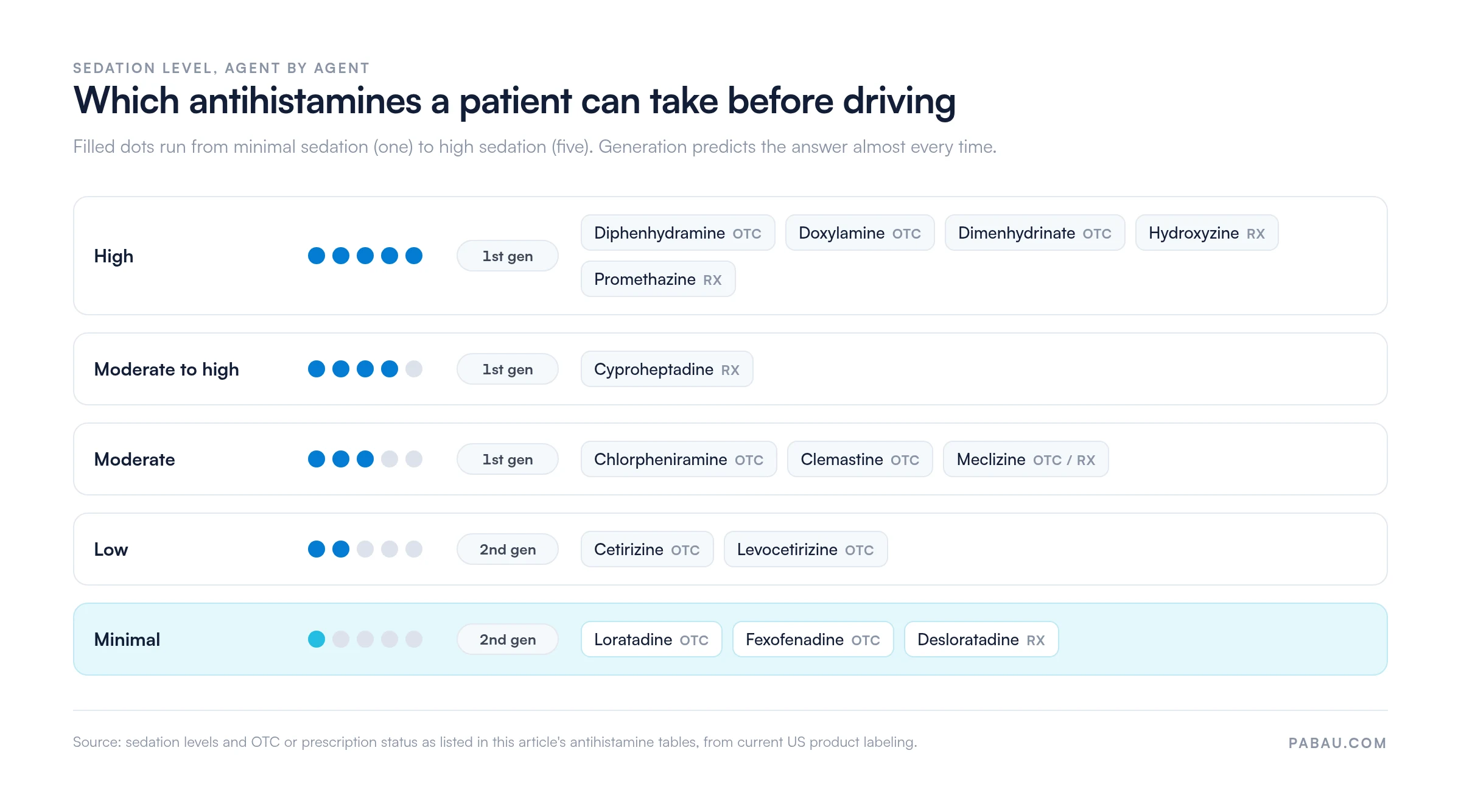
The dividing line is the blood-brain barrier. First-generation agents cross it, so sedation and anticholinergic effects come with the drug rather than by accident. Diphenhydramine, chlorpheniramine and hydroxyzine all sit in that group.
They act fast and dose flexibly, which still earns them a place in acute itch and hives. Second-generation agents, by contrast, are selective for peripheral receptors and barely enter the brain. Cetirizine, loratadine, fexofenadine and desloratadine all belong here.
That second group is the first choice for hay fever, chronic urticaria and any patient who needs to stay alert. Cetirizine and levocetirizine sit at its sedating end, so a minority of patients still report drowsiness.
Ranking the agents by sedation before the conversation starts is what makes the recommendation quick. The ladder below runs from the agents a patient can drive on to the ones that end the day.
Psychiatry and mental health teams sometimes want the sedating end on purpose. Hydroxyzine at bedtime can help a patient whose itch or anxiety keeps them awake.
H2 antihistamines block histamine at the H2 receptor in the stomach lining, which cuts acid production. Famotidine, cimetidine and nizatidine treat heartburn, reflux and peptic ulcers.
They have no effect on sneezing, hay fever or hives, yet patients mix the two groups up constantly, because both cartons say antihistamine.
Two facts are worth stating on the list itself. Ranitidine is gone. The FDA asked manufacturers to withdraw every prescription and OTC ranitidine product on April 1, 2020, because testing found NDMA in it.
Zantac 360, sold today, contains famotidine instead, so a patient who says they take Zantac may mean either drug.
The age bands differ from drug to drug, so a rule of thumb will not do. Cetirizine, levocetirizine, loratadine and fexofenadine all carry labels covering children from two years. Oral diphenhydramine liquid is stricter.
Its label rules the drug out under two years, and allows it between two and five only on a physician’s direction.
Promethazine carries a boxed warning against use under two years, because of fatal respiratory depression in that age group. Check the child’s weight and age against the pack in the room, and record both.
Collecting that weight on your pre-visit intake forms saves the guesswork later, when a parent calls to ask about a repeat dose.

First-generation agents bring an anticholinergic load. Expect dry mouth, blurred vision, constipation, urinary retention and confusion.
The Beers criteria advise against them in adults 65 and over for that reason. They also stack with alcohol, opioids, benzodiazepines and sedative-hypnotics, which raises the fall risk in the patients least able to absorb a fall.
Screen for a few specific problems first. Narrow-angle glaucoma, prostatic enlargement and stenosing peptic ulcer all argue against a first-generation agent. So does treatment with a monoamine oxidase inhibitor in the past 14 days.
Hydroxyzine and promethazine both carry a QT prolongation risk, so review the rest of the patient’s medicines first.
Second-generation agents are usually well tolerated, with headache and dry mouth the common complaints. Doses drop in kidney or liver impairment, and the OTC levocetirizine label rules the drug out in kidney disease altogether.
Fexofenadine has its own quirk. Fruit juice and antacids containing aluminum or magnesium both cut its absorption, so keep those doses apart.
In pregnancy, loratadine and cetirizine carry the largest safety datasets, and most obstetric guidance prefers them to first-generation agents.
Confirm the plan with the patient’s obstetric team rather than deciding alone. Ask what else the patient takes, too, because a cold or sleep combination may already contain an antihistamine.
When a patient does react, write it down while the detail is fresh. An adverse reaction form captures the agent, the dose, the timing and the outcome, which is what the next prescriber needs.
The template is built for lookup during a consultation, not for reading front to back. Set it up in five steps.
Log the agent, the indication and the date in the patient’s medical records, along with what they reported at follow-up. That history is what stops a duplicate recommendation at the next visit.
The list earns its place in any team that discusses allergy symptoms during a visit:
A reference list only pays off when the patient’s own medication history is in front of you at the same time. In most practices it is not. The list lives in a drawer or on a shared drive. Medications sit in free-text notes from three visits ago, and nobody remembers which antihistamine the last clinician recommended.
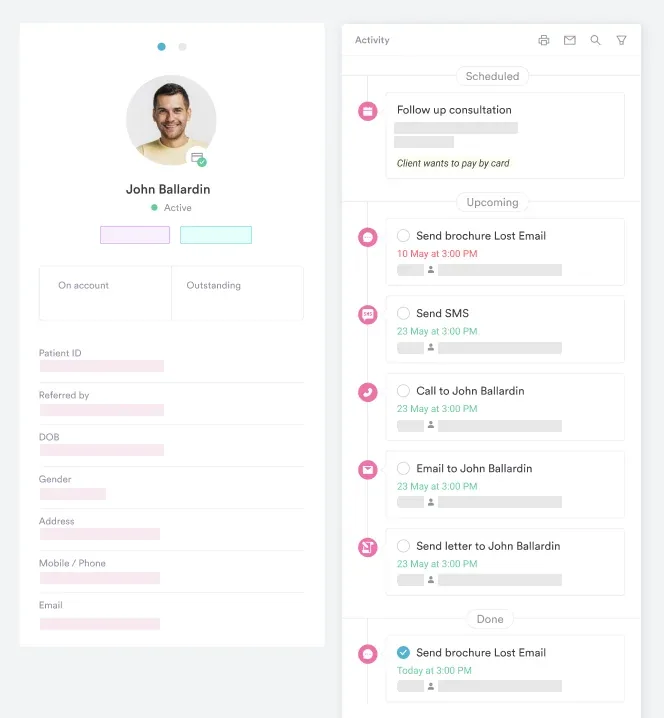
Practice management software like Pabau closes that distance. Digital intake forms collect current medications, allergies and weight before the appointment starts. The answers are waiting in the client record when the patient walks in.
Treatment notes then hold what you recommended and the reasoning behind it. Documents such as this reference attach to the client record, so the version your team reads is the version you approved.
The outcome is a shorter consultation and a cleaner record. You can see at a glance which agent the patient already takes, whether you discussed sedation, and what happened at follow-up. When a reviewer asks how a recommendation was reached, the answer sits in one place instead of four.

Pabau’s digital forms and client records collect medications and allergies before the appointment, then hold what you recommended and why. Your team opens one record instead of chasing four.

Antihistamines are the easiest drugs in the building to treat casually, and that is where the risk sits. The recommendation itself is rarely hard. What goes wrong is the recall, on a Friday afternoon, for a patient who is about to drive home.
So put the maintenance on someone’s name. Download the template, add your own formulary to the blank rows, and set a review date. Labeling changes, and ranitidine proved that a product can disappear outright. One named reviewer and one annual check is the whole cost of keeping it right.
The list is only half the job. The other half is the patient’s own history, current and visible at the moment you need it. Book a demo to see how Pabau keeps medications, allergies and your recommendation in one record your whole team can read.

Documenting a reaction? Adverse reaction form records what the patient reacted to, when it started and what you did about it.
Need a single-drug reference? Drug card template gives you one page per medication, covering the indication, the dose and the cautions.
Tracking what a patient takes at home? Medication log template sets out what to record for each medication, dose by dose.
Building a dosing timetable? Medication schedule template lays out the times and doses a patient has to keep to.
No. Epinephrine is the only first-line treatment, and an antihistamine never replaces it or delays it. An H1 agent can ease the hives and itching once epinephrine has been given. Write that order into your emergency protocol.
Most skin-prick protocols withhold oral antihistamines for three to seven days, because they blunt the wheal response. Hydroxyzine and cyproheptadine suppress it longest. Follow the testing service’s own instructions, and record the stop date in the patient’s notes.
Pairing an H1 agent with an H2 agent is a recognized approach in chronic urticaria, because the receptors differ. Doubling up inside one class needs a prescriber’s direction. The usual compromise is a non-sedating agent by day and a sedating one at night.
An oral second-generation agent usually eases symptoms within an hour. Nasal sprays such as azelastine act faster on sneezing and nasal itch. Chronic urticaria behaves differently, because steady daily dosing takes several days to reach its full effect.
Controlled studies have not shown tolerance to second-generation agents, so a drug that stops helping usually points elsewhere. A heavier allergen load, missed doses or a different diagnosis explain most cases. Review the trigger before you switch the agent.