CPT code 93503: Swan-Ganz catheter billing and modifiers
CPT code 93503: Official descriptor and procedure overview In the AMA CPT code s...

Last Updated: Oct 23, 2026
G0176 is the HCPCS Level II code for activity therapy, such as music, dance, art or play therapies not for recreation, related to the care and treatment of patient's disabling mental health problems, per session (45 minutes or more).
The phrase "not for recreation" in the official descriptor is a compliance checkpoint. Activity therapies offered as enrichment or leisure programming in a facility do not qualify. The service must be ordered as part of a treatment plan, directed at the patient's disabling mental health condition, and delivered by a qualified therapist. Billing teams should confirm this distinction is clearly documented before a claim is submitted.
Let Pabau's smart automation suggest the right codes, reduce claim denials, and keep your practice compliant—effortlessly.
Automate repetitive tasks and focus on what matters most—your patients.
Reduce coding errors and ensure compliance with the latest regulations.
Clean claims, fewer denials, and faster reimbursements.
Powerful insights and reporting to help your practice thrive.
HIPAA compliant SOC 2 certified GDPR-compliant Trusted by 4,000+ clinics worldwide

HCPCS Code G0176 covers activity therapy (music, dance, art, or play) provided to patients with disabling mental health problems, not for recreation.
Sessions must be 45 minutes or more; billing a shorter session under G0176 is incorrect and triggers claim denial.
G0176 applies primarily in partial hospitalization programs and inpatient psychiatric facilities; always verify with your Medicare Administrative Contractor.
Pabau’s claims management software and digital clinical forms help behavioral health facilities document and submit G0176 claims accurately.
Medicare covers HCPCS Code G0176 as part of the covered services in partial hospitalization programs (PHP) and inpatient psychiatric facilities. Coverage is subject to medical necessity criteria defined by the applicable National Coverage Determination (NCD) and Local Coverage Determination (LCD) from your Medicare Administrative Contractor (MAC). Always check your MAC’s LCD before submitting G0176 claims, because coverage criteria can differ by jurisdiction.
CMS updates fee schedule rates annually. Because rates shift each fiscal year, verify current figures against the official CMS Physician Fee Schedule lookup tool before quoting rates to payers or patients. The figures below reflect industry-reported ranges for 2025-2026 and are provided as a reference only.
Geographic Practice Cost Index (GPCI) adjustments mean a facility in a high-cost metropolitan area receives a higher rate than one in a rural region. Facilities operating across multiple locations should check locality-specific rates, not just the national figure.
Provider eligibility for G0176 varies by MAC and payer. In general, the code is billed by the facility rather than the individual therapist, reflecting the institutional nature of the settings where it applies. Check with your MAC before assuming a specific provider type or setting qualifies.
G0176 is primarily associated with structured behavioral health environments. Billing it in an inappropriate setting is a common audit trigger. The code is most commonly used in psychiatric facility billing software for the following settings.
The activity therapist delivering the service must meet qualifications recognized by the facility and any applicable accreditation body. Therapist credentials should be documented in the patient record and reflected in the claim.
Claim errors on G0176 almost always trace back to session duration, the non-recreational qualifier, or missing documentation. Getting these three right on every claim reduces denial rates significantly. Maintaining HIPAA-compliant billing workflows also protects against audit exposure when payers review G0176 submissions.
Modifiers clarify claim circumstances for payers. Incorrect modifier use triggers automatic claim denial. The table below lists modifiers commonly associated with G0176; always verify current applicability against CMS guidance and your MAC’s policies before submitting.
Common billing errors to avoid:
Run a pre-claim audit on every G0176 submission: confirm session start and end times are documented in the therapist’s note, the treatment plan references the specific mental health diagnosis, and the provider credentials are on file. These three checks resolve the majority of G0176 denials before they reach the payer.
Comparing the best EHRs for primary care matters here, since G-code services live or die on documentation quality.
G0176 documentation requirements are more demanding than many facilities expect. A treatment note that only describes the activity performed is not enough. The record must establish why the activity therapy is medically necessary for this patient’s specific condition, and how it relates to the treatment plan. Using a structured psychiatric evaluation template to anchor the baseline diagnosis before G0176 sessions begin strengthens this foundation.
Each G0176 session record should contain all of the following elements.
For facilities running group activity therapy sessions, the record must also indicate the group size and confirm that the session still meets individual treatment goals. Some MACs and payers require separate individual session notes even within a group format. Confirm this with your payer before assuming a single group note is sufficient. A well-structured group therapy informed consent process also supports the broader compliance picture for these sessions.
Paring G0176 with an ICD-10 diagnosis code that does not reflect a disabling mental health problem is one of the fastest routes to a medical necessity denial. The diagnosis must be documented in the patient record and supported by clinical findings before the claim is filed. Use anxiety ICD-10 crosswalk guidance alongside the table below when treating patients with mixed anxiety and mood presentations.
This crosswalk is not exhaustive. Any ICD-10 diagnosis used with G0176 must reflect an active, documented disabling mental health condition supported by the patient’s clinical record. Using a non-specific or insufficiently severe diagnosis code is a medical necessity audit risk.
Knowing which adjacent codes exist helps billers avoid miscoding and choose the most appropriate code when G0176 does not fit. The codes below are the most commonly referenced alongside G0176 in behavioral health billing. For a broader view of related behavioral health CPT codes, including those used in outpatient counseling and coaching contexts, that reference guide provides additional context.

Pabau connects clinical documentation directly to claim submission, so every G0176 session note captures the session time, diagnosis linkage, and therapist credentials your payer requires. See how behavioral health facilities use Pabau to reduce denials.

Behavioral health facilities billing G0176 face a documentation problem that static code reference guides cannot solve: the requirement to capture session time, medical necessity narrative, and therapist credentials consistently across every encounter. One missed field creates a denial. Pabau’s claims management software addresses this by connecting clinical documentation directly to the billing workflow, so the information required for a clean G0176 claim is captured at the point of care.
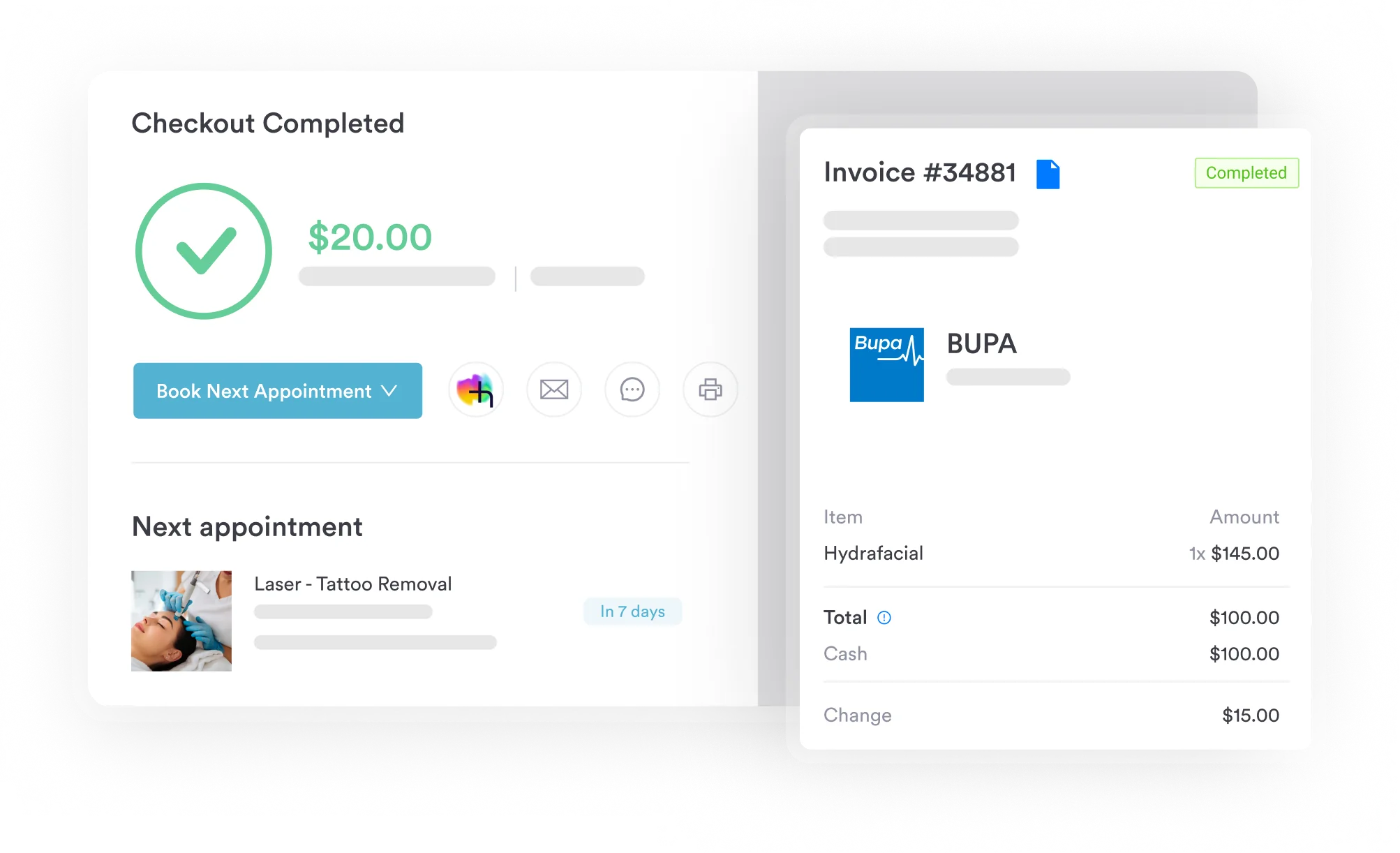
Three areas where the workflow difference is clearest for therapy practice management teams:
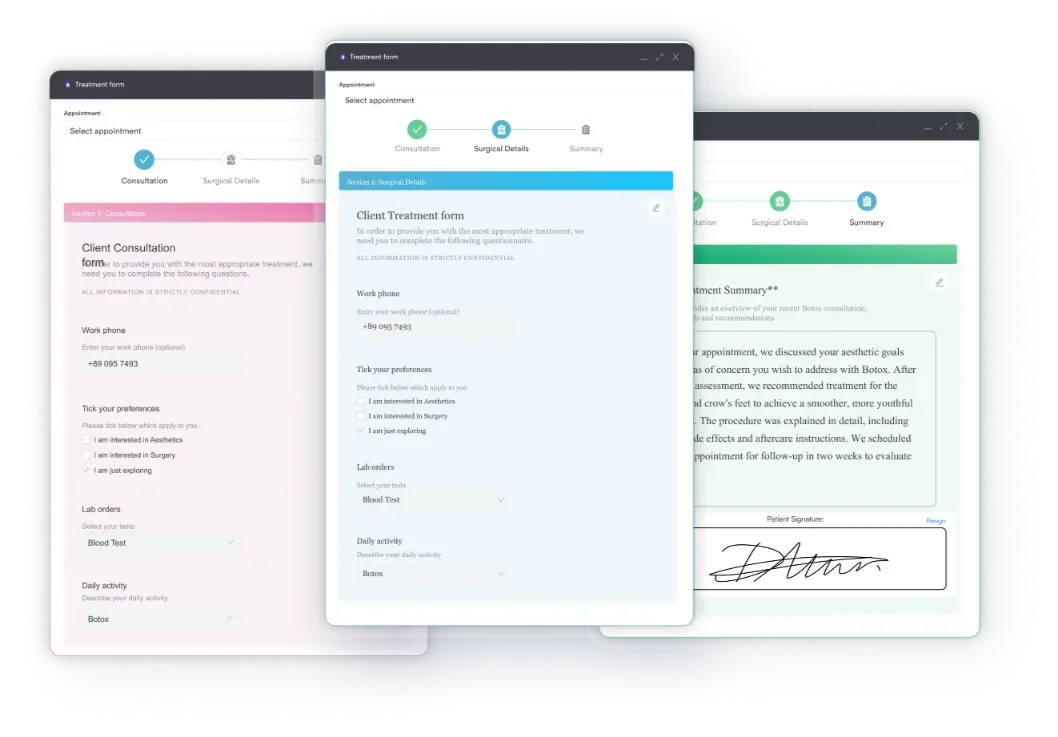
Pabau’s digital clinical forms also support the pre-session workflow: intake forms, consent documentation, and pre-authorization records can all be captured digitally and linked to the patient’s record, reducing the paper-based gaps that create audit exposure for behavioral health facilities.
Configure your G0176 note template to flag any session note where the end time minus start time is less than 45 minutes. Catching this at documentation saves a denial, a secondary review, and the administrative time to file a corrected claim. Automated workflow checks cost far less than the average denial rework cycle.
G0176 denials are rarely a mystery. They trace back to session duration, weak medical necessity documentation, or an ICD-10 diagnosis that does not clearly reflect a disabling mental health condition. Fixing those three points resolves the majority of claim rejections for this code.
Pabau’s claims management software gives behavioral health and psychiatric facilities the documentation structure to get G0176 right consistently, not just when the right therapist happens to write a thorough note. To see how Pabau handles activity therapy billing workflows, book a demo.

Coordinating a team-based behavioral health evaluation? multidisciplinary evaluation billing guide covers the team-based assessment of mental health and substance use needs this code bills.
Billing a behavioral health day program? day treatment billing guide covers who can bill this hourly code and which place of service codes hold up.
Billing skills training in 15-minute units? skills training billing guide covers the providers, modifiers, and audit rules for billing this Medicaid code.
HCPCS Code G0176 is used to bill for activity therapy services, including music, dance, art, and play therapies, provided to patients with disabling mental health problems in a treatment context, not for recreation. Sessions must be 45 minutes or longer per the CMS code descriptor. It is a Level II HCPCS G-code billed primarily by partial hospitalization programs and inpatient psychiatric facilities.
A session must be 45 minutes or more to qualify for G0176 billing. This is a hard requirement in the official CMS code descriptor. Billing G0176 for a session shorter than 45 minutes is incorrect regardless of any modifier applied, and the claim is likely to be denied.
Documentation must include the patient’s ICD-10 diagnosis reflecting a disabling mental health condition, a medical necessity narrative linking activity therapy to treatment goals, documented session start and end times, therapist credentials, the specific activity modality used, and a reference to the current treatment plan. Missing any of these elements is a common denial trigger.
Yes, G0176 is commonly billed within partial hospitalization programs (PHP) when the service meets Medicare or payer medical necessity criteria. PHP is one of the primary settings for this code. Coverage is subject to the applicable Local Coverage Determination from your Medicare Administrative Contractor, so verify your MAC’s LCD before billing.
Common ICD-10 codes paired with G0176 include F20.9 (schizophrenia), F31.9 (bipolar disorder), F32.9 and F33.9 (major depressive disorder), F43.10 (PTSD), F41.1 (generalized anxiety disorder when severity is disabling), and F84.0 (autistic disorder with co-occurring psychiatric conditions). The diagnosis must establish a disabling mental health problem; a mild or situational diagnosis is insufficient to support medical necessity.
G0176 covers activity-based therapy modalities (music, dance, art, play), while G0177 covers training and educational services for patients with disabling mental health problems. Both require sessions of 45 minutes or more. The distinction is the service type: G0176 is hands-on activity therapy; G0177 is psychoeducational or skill-building instruction. Billing the wrong code for the service delivered is a compliance risk.