

CCSD code G5100: Bypass of duodenum billing guide
CCSD code G5100 bills a bypass that leaves the duodenum in place CCSD code G5100...

Last Updated: Oct 16, 2026
A4720 is the HCPCS Level II code for dialysate solution, any concentration of dextrose, fluid volume greater than 249 cc, but less than or equal to 999 cc, for peritoneal dialysis.
It falls within the A4000-A4999 medical and surgical supplies section of the HCPCS Level II code set, and it remains active and billable for 2026.
Because A4720 is a permanent national code, it applies across all Medicare Administrative Contractor (MAC) jurisdictions without requiring a local coverage determination (LCD) to exist before it can be billed.
That said, the code's billing pathway depends entirely on who furnishes it and why: For a maintenance dialysis patient, A4720 sits on CMS's ESRD PPS consolidated billing list, so the ESRD facility bundles it into its per-treatment payment rather than a supplier billing the MAC directly.
MAC LCDs and DMEPOS fee-schedule pricing become relevant only for the narrow set of claims that qualify for the AY-modifier exception described below.
Let Pabau's smart automation suggest the right codes, reduce claim denials, and keep your practice compliant—effortlessly.
Automate repetitive tasks and focus on what matters most—your patients.
Reduce coding errors and ensure compliance with the latest regulations.
Clean claims, fewer denials, and faster reimbursements.
Powerful insights and reporting to help your practice thrive.
HIPAA compliant SOC 2 certified GDPR-compliant Trusted by 4,000+ clinics worldwide

HCPCS code A4720 describes dialysate solution, any concentration of dextrose, fluid volume greater than 249 cc but less than or equal to 999 cc, for peritoneal dialysis — a specific volume tier in the dextrose dialysate family, not a flat per-500 ml code
For ESRD beneficiaries on maintenance peritoneal dialysis, A4720 is bundled under Medicare’s ESRD PPS consolidated billing rules — it is generally NOT a stand-alone DMEPOS fee-schedule claim to the MAC
A non-facility DME supplier furnishing A4720 to a maintenance dialysis patient looks to the ESRD facility for payment — the facility folds the supply into its per-treatment bundled rate rather than billing Medicare Part B directly
The AY modifier — not KX, GA, GY, or GZ — is the mechanism for billing A4720 separately, and only when the supply is furnished for a reason unrelated to the treatment of ESRD
Pabau’s claims management feature keeps patient records, supporting documentation, and claim tracking in one place, helping billing teams confirm the order, diagnosis, and volume detail are on file before a claim goes out
Dialysate is the fluid used in peritoneal dialysis (PD) to draw waste products and excess fluid from the blood through the peritoneal membrane. Because PD is usually done at home rather than in a facility, the supply order and exchange detail are just as likely to sit in a home care form as in a facility chart.
A4720 covers a specific fluid-volume tier of dextrose-containing dialysate: Greater than 249 cc but no more than 999 cc per bag or container. The code is defined by volume, not by dextrose concentration, so understanding why matters for billing: Selecting the wrong volume tier creates a units-and-charges mismatch that a payer’s claim edits will catch.
Dextrose is the standard osmotic agent used in most peritoneal dialysis solutions, available in several concentrations (commonly 1.5%, 2.5%, and 4.25%) depending on how much fluid removal a patient’s exchange needs. A4720 applies regardless of the specific dextrose concentration used in the bag — the code is set entirely by fluid volume, not by strength.
Billers should confirm the physician order states the actual bag volume dispensed before applying A4720 — a 1.5-liter (1,500 cc) exchange bag belongs on A4721, not A4720. Maintaining accurate medical forms that capture the prescribed volume is the first line of defense against this error.
HCPCS code A4720 is a Medicare Part B benefit, but the billing pathway is not the standard durable medical equipment, prosthetics, orthotics, and supplies (DMEPOS) fee-schedule claim that most A-series supply codes use.
Peritoneal dialysis supplies, including dialysate solution, are part of the end-stage renal disease (ESRD) benefit, and CMS bundles them into the ESRD PPS consolidated billing framework.
A4720 appears on CMS’s annual ESRD PPS consolidated billing list, which means it is treated as already paid for within the ESRD facility’s per-treatment bundled rate for patients on maintenance dialysis.
A non-facility DME supplier that furnishes A4720 to one of these patients generally cannot submit a separate DMEPOS claim to the MAC for it — payment is looked to from the ESRD facility instead.
Medicare’s ESRD benefit has historically been among the most audited segments of Part B billing, and consolidated billing edits are a routine part of that oversight. CMS runs claims through consolidated billing edits at the MAC level specifically to catch supplies like A4720 being billed outside the bundle without an AY modifier.
Billing teams using Medicare compliance checklists can reduce the risk of a rejected claim by confirming, before submission, whether a patient’s dialysate supply belongs on the ESRD facility’s bundled claim or qualifies for a separate AY-exception claim.
Every A4720 claim needs an ICD-10-CM diagnosis code that establishes medical necessity for peritoneal dialysis, whether that claim is the ESRD facility’s bundled consolidated billing claim or a stand-alone AY-exception claim. The diagnosis must appear on the claim and match the patient’s documented condition.
Because some causes of kidney failure, such as polycystic kidney disease, run in families, a family medical history form completed early in a patient’s workup can help confirm which diagnosis the chart actually supports.
The following codes are commonly used to support A4720; verify against your applicable MAC LCD for the complete covered diagnosis list, as MAC-specific policies may expand or restrict coverage.
N18.6 paired with Z99.2 is the most common diagnostic combination for A4720 claims, and it’s also the combination that confirms the supply belongs in the ESRD PPS bundle rather than on a separate MAC claim.
If the chart instead documents an unrelated kidney condition, that’s the signal to consider the AY-modifier exception path covered in the next section.
Codes N18.1-N18.4 reflect the chronic kidney disease stages that come before ESRD. By the time a patient reaches N18.6, that care has usually already moved to a nephrologist and an ESRD facility.
For questions about ICD-10 linkage, AAPC’s HCPCS code reference provides additional crosswalk context.
Supply billing leaks revenue quietly, and medical practice management software catches unbilled items before they’re written off.
Unlike A4728, which is priced per flat 500 ml unit, A4720 (and its A4721-A4726 sibling codes) are defined by a fluid-volume range, and the unit of service is “each” bag or container within that range. If a patient’s exchange prescription calls for three 750 cc bags in a day, that’s 3 units of A4720 — not a volume calculation.
If the same patient also receives one 1,500 cc bag that same day, that bag is billed as 1 unit of A4721 on a separate line, because it falls into a different volume tier.
But before unit accuracy even comes into play, the bigger question for A4720 is which claim it belongs on at all. For a maintenance dialysis patient, A4720 is bundled under ESRD PPS consolidated billing — it does not go out as a stand-alone DMEPOS claim with KX, GA, GY, or GZ modifiers the way most Part B supply codes do. Medicare billing for other procedures follows separate claiming channels and compliance rules than this ESRD consolidated pathway.
The only modifier that unlocks separate payment for A4720 is AY, and only when the supply was furnished for a reason unrelated to the treatment of ESRD.
ESRD PPS consolidated billing rules are governed by CMS and enforced through MAC claims-processing edits. Always verify a code’s current consolidated billing status against the annual CMS ESRD PPS consolidated billing list before assuming a supply is bundled or separately payable, since the list is updated each year.
Appending AY without documentation that clearly supports a non-ESRD reason is a common audit trigger. CMS has noted that some ESRD-bundled items still receive no separate payment even with AY appended, so don’t assume the modifier guarantees reimbursement.
Update your digital intake forms to capture the bag volume dispensed and the clinical reason a supply was furnished, so the AY-exception documentation exists at the point of care rather than being reconstructed after a denial.
Before you count a single bag, confirm the billing pathway: If the patient is on maintenance dialysis, A4720 belongs on the ESRD facility’s bundled consolidated billing claim, not a stand-alone MAC claim from a non-facility supplier. Only after confirming that (or confirming an AY exception applies) does bag-size accuracy matter: Match each bag dispensed to its correct volume-tier code (A4720 for 250-999 cc, A4721 for 1,000-1,999 cc, and so on) rather than lumping every bag under one code.
CMS does publish a national DMEPOS fee-schedule allowable for A4720, priced per bag within its volume tier. But for the code’s primary use case — a patient on maintenance dialysis — that fee-schedule rate is not what gets paid.
The supply is bundled into the ESRD facility’s per-treatment ESRD PPS rate, so quoting the standard DMEPOS allowable as the expected reimbursement for a routine A4720 claim is incorrect.
The DMEPOS fee-schedule rate becomes relevant only for the narrow AY-modifier exception claims described above, where CMS treats the supply as unrelated to ESRD treatment and prices it outside the bundle.
Even then, according to the CMS DMEPOS Fee Schedule, pricing is subject to competitive bidding program adjustments in applicable areas, which can affect the reimbursement amount depending on the supplier’s location and enrollment status.
For current allowable amounts on an AY-exception claim, check the CMS DMEPOS fee schedule directly. For a standard maintenance dialysis patient, don’t quote a DMEPOS rate to patients or practice leadership at all — direct that conversation to the ESRD facility’s bundled per-treatment payment instead.
A4720 sits within a cluster of A-series HCPCS codes covering peritoneal dialysis and hemodialysis supplies. Billers managing dialysis accounts need to know the adjacent codes to select the correct one for each supply type.
Conflating volume tiers within the dextrose dialysate family, or confusing dextrose with non-dextrose formulations, is a common coding error, and most of the codes in this cluster share the same ESRD PPS consolidated billing status as A4720 for maintenance dialysis patients.
Always cross-check the current CMS HCPCS annual update for any descriptor changes, additions, or deletions within the A4719-A4736 range, and check the current-year ESRD PPS consolidated billing list before assuming any of these codes is separately payable.
Teams tracking EHR integration can automate code-to-supply matching to reduce selection errors in high-volume dialysis billing environments.
A4720 documentation needs differ depending on which claim it lands on: The ESRD facility’s bundled consolidated billing claim for a maintenance dialysis patient, or a stand-alone AY-exception claim for the narrow case where the supply is unrelated to ESRD treatment. Four elements support either version.
Missing any one of these four elements is a common reason A4720 claims get denied or recouped on review, on either side of the billing pathway. Keep the physician order, the ICD-10 linkage, the bag-count detail, and, where an AY-exception claim applies, the clinical rationale together in the patient’s record rather than spread across separate systems.
When a patient moves from an inpatient stay to home peritoneal dialysis, carrying the same order and volume detail onto a discharge planning checklist keeps that information from getting lost in the handoff.

Pabau’s claims management feature keeps patient records, supporting documentation, and claim submissions together in one system, helping dialysis billing teams confirm what a claim needs before it goes out. Book a demo to see how it fits your workflow.

A4720 claims have a narrow set of failure points, and most denials and take-backs cluster around a handful of predictable errors, starting with billing pathway mistakes. Billing teams that document a specific review protocol for dialysis supply codes tend to catch these before submission rather than on a remittance advice.
For billers managing multiple ESRD accounts, paperless practice workflows make it easier to produce the order, AY-exception rationale, and chart documentation chain required if a claim is reviewed under consolidated billing edits.
Paper-based systems make that chain harder to produce quickly, which becomes expensive when an audit pulls a sample of claims across multiple dates of service. Consistent nursing documentation habits at the point of care reduce that reconstruction burden.
Build a pre-submission checklist specifically for A4720: (1) Is this patient on maintenance dialysis, meaning A4720 belongs on the ESRD facility’s bundled claim rather than a stand-alone MAC claim? (2) If a separate claim is genuinely warranted, does the documentation support the AY modifier (supply not related to ESRD treatment)? (3) Is the physician order on file and does it specify a dextrose formulation and the exchange volume? (4) Does the bag count match the volume tier billed — 250-999 cc for A4720, not a neighboring tier? (5) Do N18.6 and Z99.2 appear where expected? Run this before every batch submission.
Static code references tell billers what the rules are for A4720. What actually prevents a denial is keeping the physician order, the diagnosis code, and the bag-volume detail attached to the same patient record the claim gets built from, rather than scattered across a filing cabinet or a separate spreadsheet.
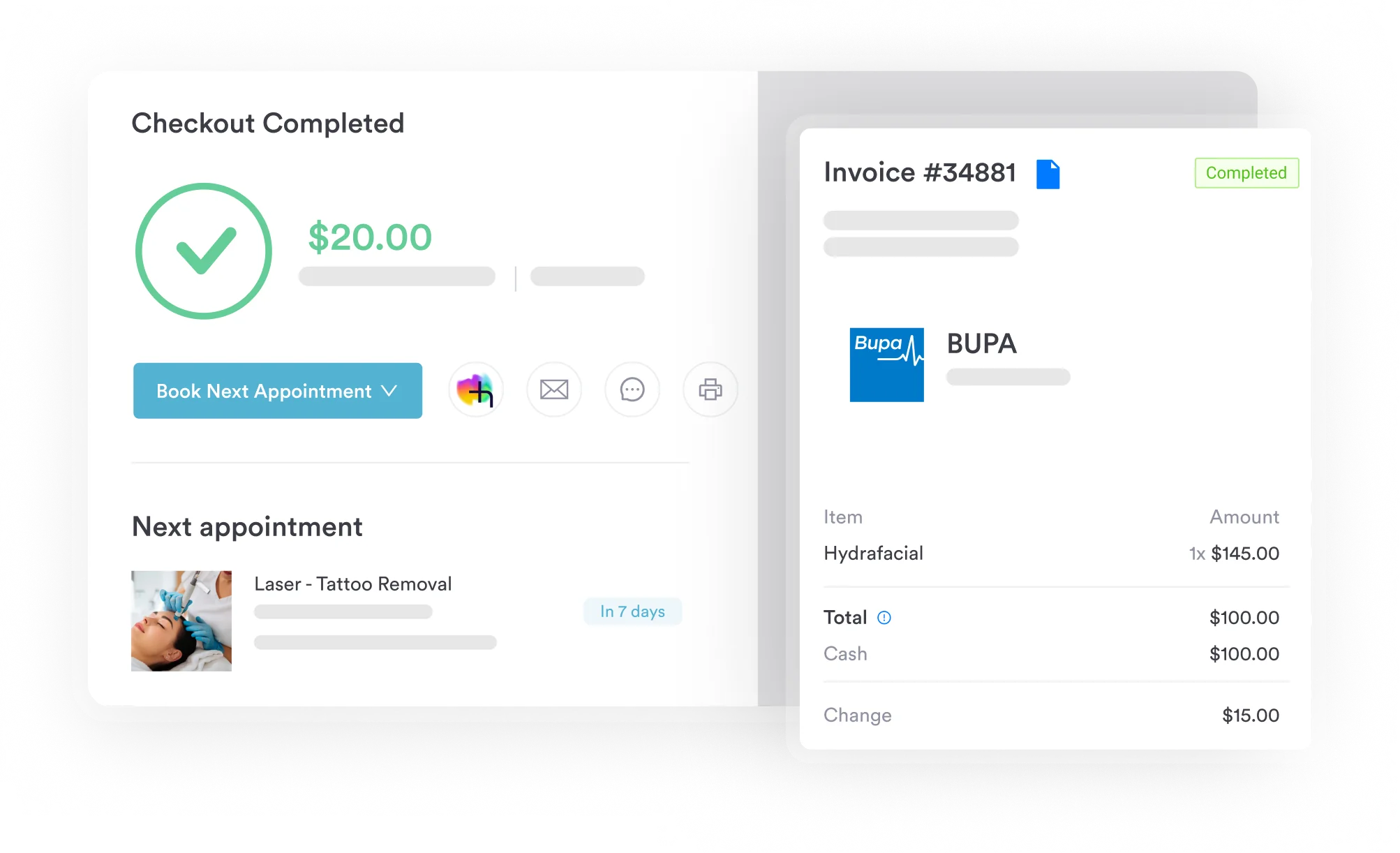
Pabau’s claims management feature keeps patient records, invoicing, and claim submissions in one system rather than three separate ones. Claims can be submitted electronically or by email with the invoice attached, and every claim’s status — pending, submitted, processing, paid, or error — is visible on a single dashboard rather than scattered across separate emails or spreadsheets. The CARC denial code list is short enough to learn, and most rework traces to a handful of entries.
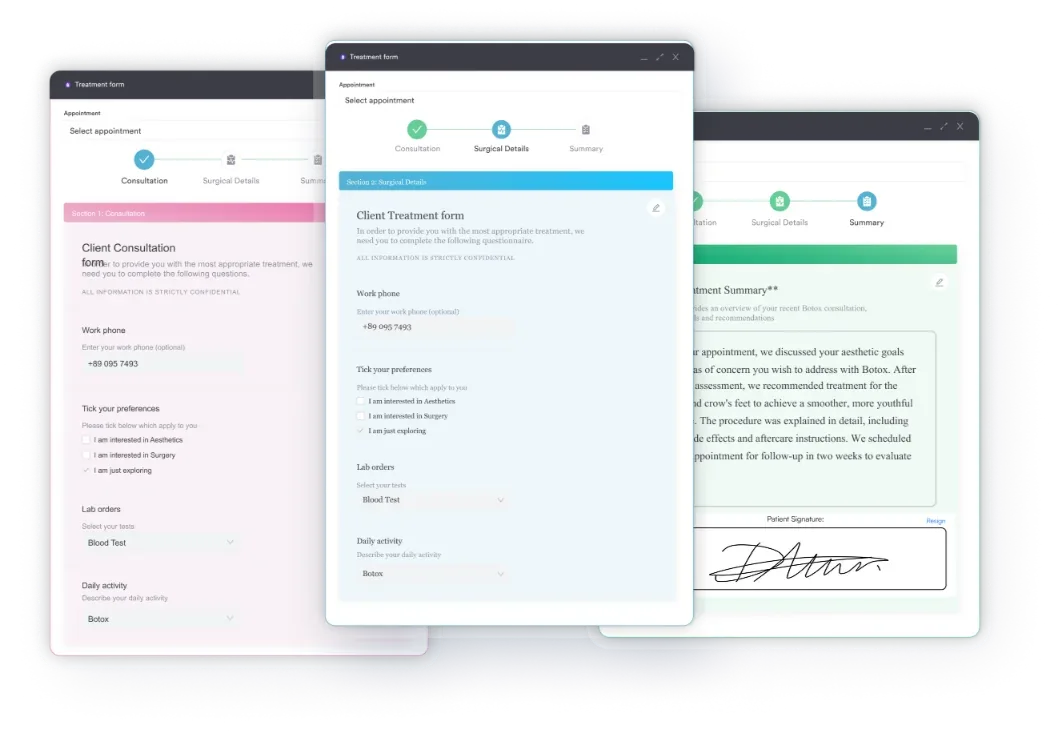
For the supporting documentation an A4720 claim depends on — the physician order, the volume documented on the chart, the ICD-10 code — Pabau’s digital forms and document storage keep that paperwork attached to the patient’s record instead of a separate filing system.
A biller building the claim can then confirm the order and diagnosis are on file before it goes out.
For teams evaluating how to structure their HCPCS supply billing process, a practice management platform that keeps clinical documentation and billing information in the same patient record reduces the back-and-forth between separate systems that creates most of the manual errors outlined above.
HCPCS code A4720 has a narrow clinical definition, a specific fluid-volume-tier requirement, and a billing pathway that trips up teams who treat it like a standard DMEPOS fee-schedule code. For a maintenance dialysis patient, A4720 is bundled into the ESRD facility’s per-treatment ESRD PPS payment, not billed separately to the MAC.
The AY modifier, not KX, GA, GY, or GZ, is the only route to a separate claim, and only when the supply was not for the treatment of ESRD. Beyond the billing pathway, the remaining denials trace back to the wrong volume-tier code, an absent ICD-10, or a dextrose/non-dextrose mismatch in the physician order.
Pabau’s claims management feature keeps the patient record, the supporting documentation, and the claim itself in one place, so billing teams can confirm what a claim needs before it goes out rather than after a denial comes back. To see how that works in practice, book a demo with the Pabau team.

Billing a similar DME nutrition-supply code? B4185 covers parenteral nutrition solution billing and its own consolidated-billing rules.
Managing enteral nutrition claims too? B4159 is the enteral formula billing guide for DME suppliers.
Want to see how billing rules compare across the dialysate family? A4728 walks through the non-dextrose dialysate code, its ESRD PPS bundling, and the same AY-modifier exception.
HCPCS code A4720 is a permanent national Level II supply code that describes dialysate solution, any concentration of dextrose, fluid volume greater than 249 cc but less than or equal to 999 cc, for peritoneal dialysis. It is used for peritoneal dialysis supplies for patients with end-stage renal disease (ESRD). For maintenance dialysis patients, A4720 is bundled under Medicare’s ESRD PPS consolidated billing rules, so it is generally paid through the ESRD facility’s per-treatment payment rather than as a stand-alone Medicare Part B claim.
For a patient on maintenance dialysis, you generally don’t bill A4720 as a separate claim to the MAC at all. It’s bundled under ESRD PPS consolidated billing, so a non-facility supplier looks to the ESRD facility for payment, and the facility folds the supply into its per-treatment bundled rate. Bag counts still matter for internal tracking — the unit of service is ‘each’ bag within the 250-999 cc tier, so three 750 cc bags is 3 units — and the diagnosis should reflect N18.6 and/or Z99.2. A separate claim to Medicare is only appropriate when the supply was furnished for a reason unrelated to the treatment of ESRD, in which case it’s billed with modifier AY.
N18.6 (end-stage renal disease) and Z99.2 (dependence on renal dialysis) are the most commonly used ICD-10 codes to support A4720, whether it appears on the ESRD facility’s bundled consolidated billing claim or on an AY-exception claim. N18.5 (chronic kidney disease, stage 5) may apply in certain clinical scenarios. Verify the complete covered diagnosis list against your applicable MAC LCD, as jurisdictional policies can vary.
The KX, GA, GY, and GZ modifiers used on standard DMEPOS claims generally do not apply to A4720 for a maintenance dialysis patient, because the supply is bundled under ESRD PPS consolidated billing rather than billed as a stand-alone fee-schedule claim. The modifier that matters for A4720 is AY, defined as ‘item or service furnished to an ESRD patient that is not for the treatment of ESRD.’ Append AY only when documentation clearly supports that the supply was furnished for a reason unrelated to ESRD treatment. Even then, some ESRD-bundled items may still receive no separate payment, so confirm against current CMS guidance before assuming AY guarantees reimbursement.
Yes, A4720 is a Medicare Part B benefit and remains active for 2026. But coverage doesn’t mean a separate fee-schedule payment for most patients: A4720 sits on CMS’s ESRD PPS consolidated billing list, so for a patient on maintenance dialysis it’s bundled into the ESRD facility’s per-treatment payment rather than paid as a stand-alone DMEPOS claim. Confirm the code’s status against the current-year CMS ESRD PPS consolidated billing list, since bundled-item lists are reviewed annually.
A4720 and A4728 are both dialysate solution codes for peritoneal dialysis, but they are structured differently. A4720 covers dextrose-containing dialysate at a specific fluid-volume tier (greater than 249 cc, up to 999 cc), billed one unit per bag in that tier. A4728 covers non-dextrose dialysate (such as icodextrin-based formulations), billed per flat 500 ml unit regardless of bag size. Using A4720 for a non-dextrose formulation, or A4728 for a dextrose-containing one, is a false-descriptor error. Both codes generally follow the same ESRD PPS consolidated billing pathway and AY-modifier exception for maintenance dialysis patients.



