HCPCS code E0198: Water pressure pad billing guide
HCPCS code E0198 is a water pad for a standard mattress HCPCS code E0198 is the ...

Last Updated: Oct 13, 2026
H0001 is the HCPCS Level II code for alcohol and/or drug assessment.
Practices using a mental health EMR built for behavioral health billing catch this misclassification before the claim goes out.
Let Pabau's smart automation suggest the right codes, reduce claim denials, and keep your practice compliant—effortlessly.
Automate repetitive tasks and focus on what matters most—your patients.
Reduce coding errors and ensure compliance with the latest regulations.
Clean claims, fewer denials, and faster reimbursements.
Powerful insights and reporting to help your practice thrive.
HIPAA compliant SOC 2 certified GDPR-compliant Trusted by 4,000+ clinics worldwide

HCPCS code H0001 is a Level II HCPCS code for alcohol and/or drug assessment, distinct from CPT codes, which it is often mistakenly labeled as.
Medicaid is the primary payer, and Medicare coverage is limited and varies by plan, so verify with the specific payer before submitting.
Missing or mismatched ICD-10 codes (the F10-F19 substance use disorder range) are the leading cause of H0001 claim denials.
Pabau’s claims management software helps behavioral health practices document assessments accurately and submit clean H0001 claims.
HCPCS code H0001 describes an alcohol and/or drug assessment conducted by a qualified substance abuse treatment provider. Per the CMS HCPCS Level II system, H codes (H0001-H2041) cover behavioral health and substance abuse treatment services that fall outside CPT’s scope.
H0001 sits at the start of this range and represents the initial clinical evaluation of a patient’s substance use disorder.
The distinction from CPT matters. CPT codes are maintained by the AMA and cover physician-performed procedures. HCPCS Level II codes are maintained by CMS and cover services, supplies, and non-physician procedures, including the behavioral health services that H0001 represents. Mislabeling H0001 as a CPT code on a claim form causes an immediate rejection.
Provider eligibility for HCPCS code H0001 is governed by state Medicaid agency rules, not a single national standard. Practices using psychiatry EMR software that integrates credentialing data can flag eligibility issues before claims reach the payer.
Provider types that typically qualify to bill H0001, depending on state licensing rules, include:
State-level variation is significant. Some states restrict H0001 billing to licensed agencies, while others allow independent practitioners. Verify provider eligibility with your specific state Medicaid billing manual before submitting claims under this code.
Pairing HCPCS code H0001 with the wrong ICD-10 code is the single most common trigger for claim denials. The accepted diagnosis range is F10-F19 (substance-related and addictive disorders) under ICD-10-CM.
Diagnosis codes outside this range typically cause a payer to reject the claim as medically unnecessary. You can verify current ICD-10 coding guidance through the AAPC HCPCS code reference.
Always verify covered diagnosis codes against your specific payer’s LCD (Local Coverage Determination) policy. Some managed Medicaid plans restrict coverage to specific F-range subcategories. Practices tracking diagnosis codes across multiple specialties benefit from systems that link diagnosis codes directly to the service code at the claim level.
Before submitting an H0001 claim, confirm the ICD-10 code maps to the F10-F19 range AND matches the documented clinical finding in the assessment record. Payers cross-reference the diagnosis against chart notes during audits. A mismatch between the code and the record creates both a denial risk and a compliance exposure.
Miscellaneous codes are easy to mishandle, and medical practice management software keeps their documentation attached and auditable.
Medicaid covers H0001 in most states as part of its behavioral health benefit. Coverage details, prior authorization requirements, and reimbursement rates vary significantly by state Medicaid agency and managed care organization. Before billing any state’s Medicaid program, review that state’s behavioral health billing manual.
Medicare’s coverage of H0001 is limited. Traditional Medicare Part B does not typically cover H codes, which are HCPCS Level II behavioral health codes. Some Medicare Advantage (Part C) plans include H0001 coverage as a supplemental benefit. Verify directly with the patient’s Medicare Advantage plan before submitting.
Practices managing HIPAA-compliant practice software workflows can build payer-specific eligibility verification into the scheduling process, which prevents this type of coverage error.

Pabau’s claims management software helps behavioral health and substance abuse practices document assessments, attach accurate ICD-10 codes, and submit clean claims. Reduce denials before they happen.

H0001 reimbursement is not published on the CMS Physician Fee Schedule the way CPT codes are, because H codes fall outside the Medicare RBRVS system. Medicaid rates are set by each state and administered by the state Medicaid agency or its contracted MCOs.
Rates range widely, with state Medicaid programs in some states paying less than $30 per assessment encounter while others pay considerably more. Practices should obtain current rates directly from their state Medicaid billing manual or from each MCO’s fee schedule.
H0001 is generally billed per encounter rather than per unit of time, though some state Medicaid plans and MCOs define billing units differently. Confirm the unit definition with your specific payer before submitting. You can look up H0001 across payer systems using the PGM HCPCS lookup tool, which pulls from CMS data.
Inadequate documentation is the second leading cause of H0001 denials, after ICD-10 mismatches. Substance use disorder records are governed by both HIPAA and 42 CFR Part 2, the federal regulation imposing stricter confidentiality standards on SUD patient records than standard HIPAA requirements. This affects how records can be shared with payers during audit requests.
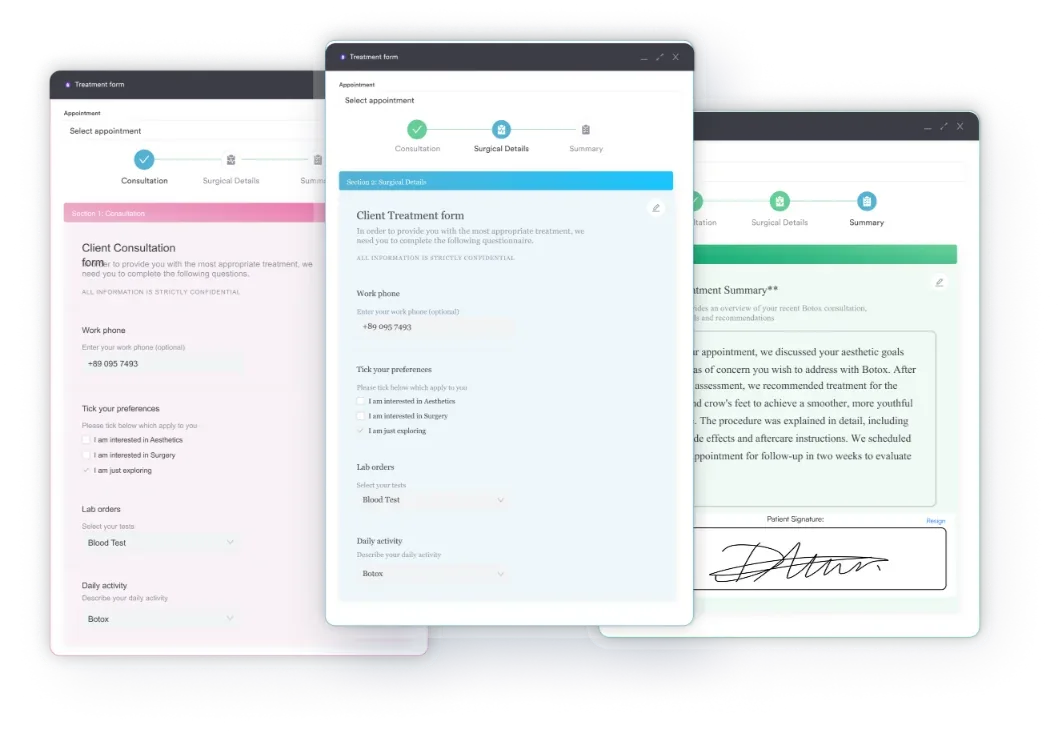
Practices using digital intake forms that capture structured assessment data at the point of care avoid the missing documentation that leads to denials. The required documentation elements for a clean H0001 claim are consistent across most state Medicaid programs.
For HIPAA compliance in behavioral health practices, all assessment records should be stored in a system that supports 42 CFR Part 2 consent tracking before sharing with third parties. Failing to document consent separately from HIPAA authorization is a common compliance failure in SUD billing audits.
Modifier applicability for H0001 varies by payer. Some state Medicaid programs require a service setting or provider specialty modifier appended to H0001. Verify modifier requirements with your specific payer’s billing manual, as applying an incorrect modifier or omitting a required one will trigger a denial. Common HCPCS modifiers used with behavioral health H codes include:
Modifier applicability for each payer should be confirmed against the current state Medicaid billing manual or MCO contract. Do not apply modifiers the payer hasn’t specified. Some payers treat unapproved modifiers as a reason to deny or downcode the claim. You can also verify HCPCS modifier combinations through the NLM HCPCS Level II API.
H0001 is the entry point in the H00xx series. Substance abuse treatment providers frequently bill a combination of these codes in a single episode of care. Practices with medical forms at their healthcare practice can link each service type to the correct H code at the point of documentation.
Most H0001 denials fall into a short list of preventable categories. Practices using claims management software that validates code combinations before submission catch the majority of these before the claim leaves the practice. Billing teams managing substance abuse assessments without automated claim scrubbing should review these patterns regularly.
Run a quarterly audit of your H0001 claims against your state Medicaid billing manual. Medicaid MCO contract terms change annually, and modifier requirements or PA thresholds that were optional last year may now be mandatory. Catching these changes before your next billing cycle prevents a batch of preventable denials.
Behavioral health practices that consolidate patient care management and billing in a single platform reduce the handoff errors between clinical documentation and claim submission. When the assessment record and the claim share the same data source, ICD-10 mismatches and missing documentation errors are caught automatically rather than discovered during a payer audit.
Effective compliance management software for SUD practices also tracks 42 CFR Part 2 consent documentation alongside HIPAA authorizations, which is a distinct requirement that general healthcare compliance tools often miss.
Most H0001 denials are preventable. The code itself is straightforward: an alcohol and/or drug assessment billed as a HCPCS Level II code, not CPT. The billing errors around it are consistent — wrong code type, mismatched ICD-10 diagnosis, missing modifier, and documentation that doesn’t hold up during an audit.
Pabau’s claims management software supports behavioral health practices in structuring assessment documentation, attaching accurate ICD-10 codes, and validating claims before submission. To see how Pabau handles substance abuse billing workflows, book a demo with the team.

Coding a different parasitic infection? Trichinellosis diagnosis and billing guide This guide covers the billable code for trichinellosis, a parasitic infection caused by Trichinella species nematodes.
Need the code for whipworm infection? Trichuriasis coding guidance This guide covers billable status and documentation for trichuriasis, an intestinal infection caused by the whipworm Trichuris trichiura.
Coding a confirmed pinworm case? Enterobiasis and pinworm infection guide This guide covers the billable code for enterobiasis, preferred over the general symptom code once pinworm infection is confirmed.
HCPCS code H0001 is a Level II HCPCS code that describes an alcohol and/or drug assessment performed by a qualified substance abuse treatment provider. It is used to bill for the initial clinical evaluation that determines the nature and severity of a patient’s substance use disorder. It is not a CPT code, which is a common mislabeling that causes claim rejections.
Traditional Medicare Part B generally does not cover H0001, as H codes fall outside the Medicare RBRVS fee schedule. Some Medicare Advantage (Part C) plans include H0001 as a supplemental behavioral health benefit. Verify coverage directly with the patient’s specific Medicare Advantage plan before delivering the service.
H0001 reimbursement rates are set by individual state Medicaid agencies and managed care organizations, not by the CMS national fee schedule. Rates vary significantly by state. Obtain current rates from your state’s Medicaid behavioral health billing manual or from each MCO’s fee schedule directly.
Common modifiers include HF (substance abuse program), HH (integrated mental health/SUD program), HN (bachelor’s-level staff), HO (master’s-level staff), and HP (doctoral-level staff). Modifier requirements vary by payer. Always verify which modifiers your specific state Medicaid program or MCO requires for H0001 before submitting claims.
Required documentation typically includes the assessment date, the provider’s credentials and licensure, a detailed substance use history, a clinical severity rating using a recognized tool (such as the AUDIT or DAST-10), an ICD-10-CM diagnosis from the F10-F19 range, treatment recommendations, and the clinician’s signed signature. SUD records are also subject to 42 CFR Part 2 confidentiality requirements beyond standard HIPAA rules.