CPT code 21011: Excision of soft tissue tumor of the face
CPT code 21011: Official descriptor and procedure overview CPT code 21011, as pu...

Last Updated: Oct 8, 2026
C1727 is the HCPCS Level II code for catheter, balloon tissue dissector, non-vascular (insertable).
One digit away sits C1726, the balloon dilatation catheter. Coders reach for it by mistake more often than they make any other error in this range. Packaging status is the second trap, because a device line that paid last year can pay nothing this year.
So the code itself is the easy part. What decides whether the line survives is your operative note, the claim form your setting uses, and the current OPPS status indicator.
Let Pabau's smart automation suggest the right codes, reduce claim denials, and keep your practice compliant—effortlessly.
Automate repetitive tasks and focus on what matters most—your patients.
Reduce coding errors and ensure compliance with the latest regulations.
Clean claims, fewer denials, and faster reimbursements.
Powerful insights and reporting to help your practice thrive.
HIPAA compliant SOC 2 certified GDPR-compliant Trusted by 4,000+ clinics worldwide

HCPCS code C1727 covers a catheter, balloon tissue dissector, non-vascular (insertable), and the facility bills it rather than the surgeon.
A freestanding ASC reports it on the CMS-1500 with place of service 24, while a hospital outpatient department uses the UB-04.
Check the current OPPS status indicator first, because a packaged device line pays nothing on its own.
The costly mistake in this range is billing C1726, the dilatation catheter, when a dissector was used.
The operative note has to name the device as non-vascular and insertable, or nothing supports the line.
C1727 identifies a catheter, balloon tissue dissector, non-vascular (insertable). It sits in HCPCS Level II. The Centers for Medicare and Medicaid Services (CMS) maintains that code set for supplies, equipment, and devices CPT does not cover.
The device separates tissue by inflating a balloon inside a non-vascular space. “Insertable” means the surgeon introduces it during the case and removes it afterwards, so it is not an implant. CMS shortens the descriptor to “Cath, bal tis dis, non-vas.”
C-series codes belong to the Outpatient Prospective Payment System, known as OPPS. The facility reports them, never the surgeon on a professional claim. C1727 sits in the C1700 block with the other catheter and insertable device codes.
Effective dates move with the annual OPPS final rule, published each November in the Federal Register. Codes in this range also get retired. CMS terminated C1720 and pointed billers to two replacement codes, and a charge master still carrying a dead code keeps producing denials. Common claim denial codes repeat by specialty, so the pattern is worth reading before reworking.
Balloon dissectors open a working space by separating tissue planes under controlled inflation. That spares the surrounding structures from sharp dissection, which is the whole reason a surgeon reaches for one.
C1727 applies to non-vascular use only. Balloon catheters used in cardiovascular work carry their own codes. Non-vascular covers the spaces outside the vascular system, such as the preperitoneal and retroperitoneal planes.
Different teams own these cases. A retroperitoneal kidney approach usually sits with urology and men’s health practices. Whoever performs the case, the facility bills the device.
Because the catheter comes out at the end of the case, the record has to name the device and the procedure. The device code travels alongside the procedure code, never in place of it.
The best medical practice management tools let you standardize how unlisted and miscellaneous codes get documented.
Payment turns on one field. CMS assigns every device code a payment status indicator in the annual OPPS final rule. That indicator says whether the device is packaged into the procedure payment or paid separately.
Device pass-through status: CMS grants temporary pass-through payment to new devices that meet its criteria. Pass-through pays the device separately from the procedure for a defined window, usually two to three years. Confirm where C1727 currently stands in the OPPS quarterly addenda, because the designation changes year to year.
2026 rates: Pull the figures from the CMS OPPS Addendum B file for the current year. Third-party aggregators are fine for orientation but not for billing, since geographic adjustment and annual updates both move the number. The AAPC HCPCS lookup works as a cross-check against the CMS files.
Take a laparoscopic hernia repair that uses one balloon dissector. The coder posts the CPT code for the repair, then C1727 on its own line with one unit. If the current indicator packages the device, the payment for the repair covers it and the C1727 line pays zero.
Report it anyway. CMS builds future rates from the claims data facilities submit, so a device line dropped for convenience quietly argues for a lower rate next year.
Rates also differ by setting. A freestanding ASC and a hospital outpatient department sit under separate payment methodologies, so one facility’s number tells you nothing about the other’s.
A freestanding ASC bills its facility charges on the CMS-1500, or the 837P electronically, with place of service 24. Modifier SG marks the line as an ASC facility charge where a payer still asks for it.
A hospital outpatient department bills the same device on the UB-04, or the 837I. CMS sets out how the two systems differ on its ASC payment system page.
Three claims can come out of one case. The facility bills the device and its facility fee, the surgeon bills a professional claim, and anesthesia bills separately again. Confusing those three is how a device code ends up on the wrong form. Secondary payers often allow a shorter window than the primary, so the filing deadline differs by claim.
Audit your charge description master once a quarter, not once a year. C-series codes move with the annual OPPS rule, and CMS can add or terminate them in a quarterly update. A master file still carrying a dead device code produces denials every time that device is used.
Usually none. A modifier belongs on a device line only where the payer’s own policy asks for one. Check the CMS Medicare Claims Processing Manual and your MAC’s guidance before adding anything. The four below come up most often with C-series codes.
Modifier errors are a leading trigger for facility claim audits. If you cannot point to the policy that asks for the modifier, leave the line clean.
The C1700 block groups catheters and insertable devices, and the codes separate by what the device does. The procedure it supports is not what decides the code.
The expensive mistake is billing C1726 when a dissector was used. Dilatation catheters widen something that has narrowed. Dissectors separate tissue planes to make a space that was not there before. The operative note decides which one you bill.
The rest of the C-series runs on the same mechanics. Read the descriptor, match the device, check the status indicator, then check the form.
The weak point in device billing is the handoff. The operative note lives in the clinical record, the charge lives in billing, and somebody retypes the code from one into the other.
Pabau’s claims management tools work on the submission itself. Required insurer fields have to be complete before a claim can be sent. A status dashboard then shows what is pending, submitted, paid, or sitting in error. So an incomplete claim stops with you rather than returning as a denial weeks later.
Procedure detail gets captured once, then stays attached to the file the charge was posted from, which is where a device line finds its support.
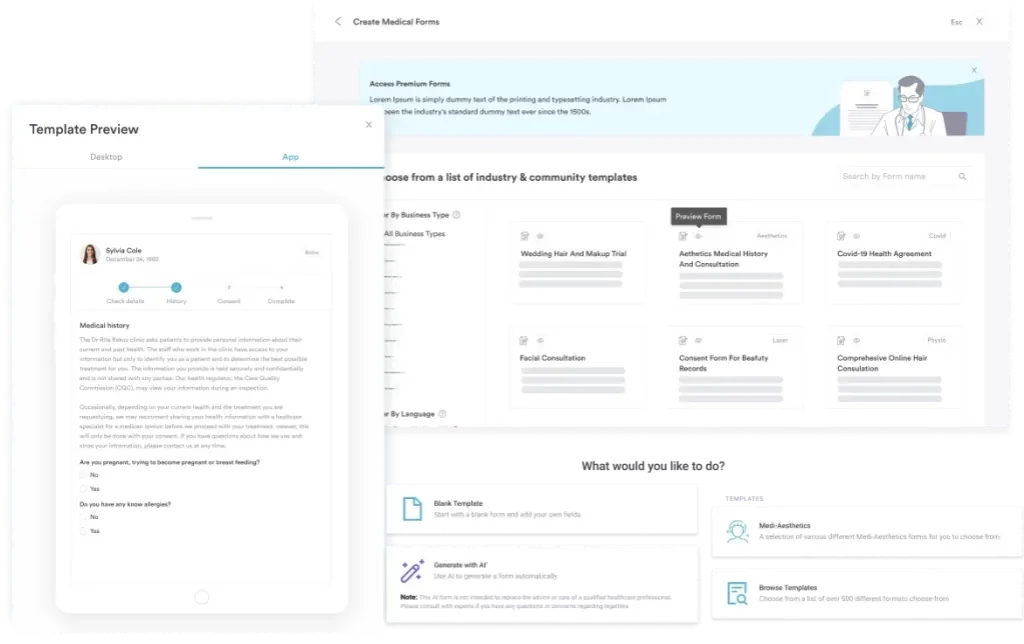
That connection matters most under audit. Every code on a claim traces back to the note behind it. That is exactly what a payer asks for when it questions a device line. Facilities keeping HIPAA-compliant records get that trail as a by-product.

Pabau links clinical documentation to charge capture and checks required submission fields before a claim can be sent. Facility billers see what is pending, submitted, or in error without chasing paperwork.

The descriptor is rarely what decides payment on C1727. What decides it is the note behind the device and the claim form your setting uses. After that, the current status indicator decides whether the line pays at all.
Check the indicator once a quarter, audit the charge master on the same schedule, and this code stops being interesting. That is the aim. Device codes should be boring.
Book a demo to see how Pabau keeps operative documentation and device charges in one place. A line like C1727 then leaves with everything that supports it.

Billing the anesthesia side of the same hernia case? CPT code 00756 sets out how the anesthesia claim is built and what the record has to carry.
Need the diagnosis code that pairs with a hernia repair? ICD-10 code K42.1 covers the documentation and specificity a complicated umbilical hernia needs.
Coding a supply rather than a device? HCPCS code A4565 shows how supply codes are documented and billed under a different benefit.
Fighting repeat denials on supply lines? HCPCS code B4082 works through the documentation that stops those lines bouncing back.
Comparing billing platforms for a facility? Best medical billing software reviews seven US platforms on claim handling, reporting, and price.
No. C1727 is an OPPS device code, so it has no home on an office claim. Medicare bundles the supplies for an office procedure into the payment for the procedure itself. At place of service 11 there is no separate device line to report.
Medicare runs no prior-authorization program for device lines like C1727. Commercial plans authorize the surgery itself, and the device rides on that approval. Check the plan’s surgical policy before the case, because an unauthorized procedure takes the whole claim down with it.
Not always. Many mirror OPPS packaging, while others ask for the device invoice or the manufacturer name in the record. Read the contract’s device and implant language before you assume the Medicare treatment carries over.
CMS updates HCPCS Level II quarterly, so a C code can be added or terminated between annual OPPS rules. Check the quarterly update files rather than waiting for the November final rule.
Send the page of the operative note that names the device, the device log for the case, and the payer’s own packaging policy. Most device denials come down to documentation rather than code choice.