

CCSD code G5100: Bypass of duodenum billing guide
CCSD code G5100 bills a bypass that leaves the duodenum in place CCSD code G5100...

Last Updated: Oct 16, 2026
B4105 is the HCPCS Level II code for in-line cartridge containing digestive enzyme(s) for enteral feeding, each.
Let Pabau's smart automation suggest the right codes, reduce claim denials, and keep your practice compliant—effortlessly.
Automate repetitive tasks and focus on what matters most—your patients.
Reduce coding errors and ensure compliance with the latest regulations.
Clean claims, fewer denials, and faster reimbursements.
Powerful insights and reporting to help your practice thrive.
HIPAA compliant SOC 2 certified GDPR-compliant Trusted by 4,000+ clinics worldwide

HCPCS code B4105 describes an in-line cartridge containing digestive enzymes for enteral feeding, each unit billed separately under HCPCS Level II.
B4105 is covered under Medicare Part B as a DMEPOS enteral nutrition supply, governed by CMS Policy Article A58833 and applicable DME MAC LCD.
Billing requires a Standard Written Order (SWO) with all five required elements, treating-practitioner documentation of medical necessity in the medical record, and the KX modifier on the claim to confirm LCD coverage criteria are met — CMS eliminated the Certificate of Medical Necessity (CMN) for dates of service on or after January 1, 2023.
Pabau’s claims management software helps DME suppliers and healthcare practices track documentation, reduce denials, and streamline DMEPOS billing workflows.
HCPCS code B4105 covers the billing of one in-line cartridge containing digestive enzymes for use in an enteral feeding system. Getting the descriptor right, and matching it to the supply dispensed, is the starting point for clean billing. A service billed to Australian Medicare needs the matching schedule item and the documentation the descriptor asks for.
The code belongs to HCPCS Level II, the code set maintained by the Centers for Medicare and Medicaid Services (CMS) for products, supplies, and services not captured by CPT. B4105 sits within the B4100-B4162 enteral formulas and additives range, a subset of the broader B-range covering enteral and parenteral therapy supplies.
The “each” unit designation matters for quantity reporting. Bill one unit per cartridge dispensed. Billing multiple units as a single line item without supporting documentation is a frequent audit flag.
Medicare Part B covers enteral nutrition supplies, including HCPCS code B4105, under the prosthetic device benefit when a beneficiary cannot absorb sufficient nutrients through standard oral intake. Coverage is administered through the Durable Medical Equipment, Prosthetics, Orthotics, and Supplies (DMEPOS) benefit, not the outpatient physician benefit. Medicare coverage is only half the picture; getting paid also depends on the claiming channel and billing model a practice uses.
The governing policy document is CMS Policy Article A58833, which outlines covered codes and documentation standards for enteral nutrition.
Suppliers must reference this article alongside the applicable Local Coverage Determination (LCD) issued by their Durable Medical Equipment Medicare Administrative Contractor (DME MAC). Coverage details, including covered ICD-10 codes and documentation standards, can vary by DME MAC jurisdiction.
Verify the applicable LCD from your jurisdiction’s DME MAC before submitting B4105 claims.
Medicare will not cover HCPCS code B4105 without documented medical necessity. Per CMS Policy Article A58833 and applicable LCD guidance, the following conditions .
Coverage is never automatic. Each of these criteria must be independently documented. Relying on a verbal order, or missing medical-record documentation of medical necessity, is the most common reason B4105 claims are returned. Tightening medical forms fixes this. Frame all coverage determinations as “per CMS policy article A58833 and applicable LCD” rather than treating coverage as guaranteed.
The specific ICD-10-CM codes that support HCPCS code B4105 are determined by each DME MAC’s LCD, not by a single national list. The following codes appear frequently in coverage determinations for the GI and pancreatic malabsorption conditions that functional medicine practices manage. Verify against your MAC’s current LCD before billing.
This table isn’t exhaustive. CMS Policy Article A58833 lists additional Group 1 diagnosis codes for GI and pancreatic malabsorption, including K50.118, K50.818, K50.918, K51.818, K51.918, K86.0, E84.8, E84.9, Q45.3, Z90.410, Z90.411, and the diabetes-complication codes E08.69, E09.69, E10.69, E11.69, and E13.69.
Consult the MAC’s LCD and Policy Article A58833 for the complete Group 1 covered-diagnosis list before billing. Coding to the highest specificity reduces audit risk. Use the most specific code available rather than an unspecified combination code.
With built-in inventory tracking, every dressing or catheter billed under these codes matches recorded stock movement.
Incomplete documentation is the leading cause of B4105 claim denials. CGS Medicare’s enteral nutrition correct coding guidance, which applies to DME MAC Jurisdictions B and C, specifies a checklist of records that must be on file before a claim is submitted. Other MAC jurisdictions follow substantially the same requirements under their LCDs.
Use digital forms to reduce manual errors and ensure nothing is missing before claim submission . The required elements are:
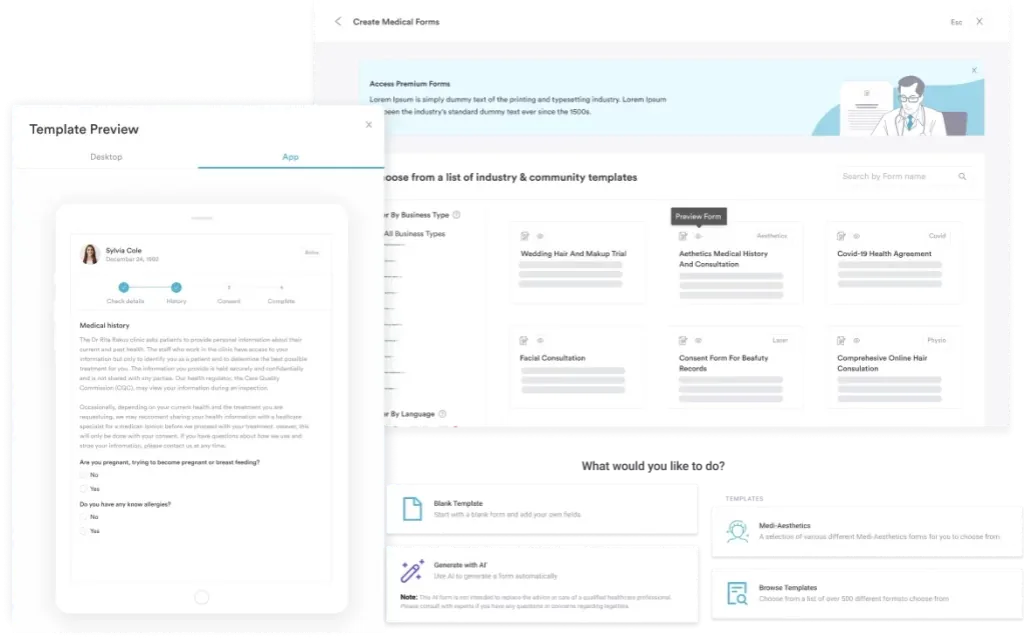
The SWO and all medical records containing protected health information must be stored and transmitted in compliance with HIPAA’s Security Rule.
Audit your SWO and medical-necessity documentation quarterly. DMEPOS auditors frequently find the SWO is missing the treating practitioner’s signature or order date, or that the medical record doesn’t independently support the medical necessity described on the order. A pre-submission documentation checklist built into your billing workflow catches these errors before they become denials.
HCPCS code B4105 is billed by DMEPOS suppliers, not physician offices, using the CMS-1500 claim form or its electronic equivalent (837P transaction). The claim routes to the beneficiary’s assigned DME MAC jurisdiction based on the patient’s zip code.
Before submitting, confirm the automated billing workflows in your practice management system are configured for DME claim routing.
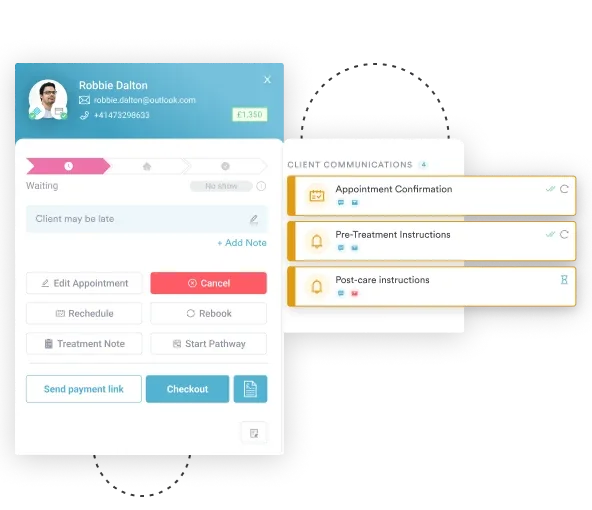
Using practice management software that integrates DME claim submission with your documentation workflow reduces manual re-keying errors and keeps audit trails clean.

Pabau’s claims management software helps DME suppliers and healthcare practices track documentation, automate follow-ups, and reduce enteral nutrition claim denials. See how it works in a live demo.

HCPCS code B4105 is priced under the CMS DMEPOS fee schedule, which is updated annually and varies by geographic locality. Stating a fixed dollar figure here would be misleading because rates change each January 1 and differ across fee schedule areas.
To find the current allowable for B4105 in your locality, use the CMS DMEPOS fee schedule — B4105 is priced under the DMEPOS fee schedule, not the Physician Fee Schedule. Search by HCPCS code B4105 and select your state or pricing area, or use your DME MAC’s fee schedule lookup (Noridian or CGS) for jurisdiction-specific amounts.
Enteral nutrition claims, including HCPCS code B4105, carry a higher-than-average denial rate in DMEPOS audits. Most errors are preventable with a pre-submission checklist. The table below maps the most frequent denial scenarios to their corrective actions.
Practice management software that automates modifier checks and frequency tracking helps DME suppliers.
Choosing the wrong B-range code is a straightforward error that triggers a corrected claim and delays payment. The table below maps the codes adjacent to HCPCS code B4105, helping billers distinguish the enzyme cartridge supply from enteral formulas and other delivery accessories.
B4105 is specifically for the in-line enzyme cartridge supply, not the formula itself. Billers frequently confuse accessory supply codes with formula codes. Each must be billed on a separate claim line. Pabau’s procedure code library covers related supply codes.
Review the CGS Medicare HCPCS coding verification resources when confirming product coding for enteral supplies. The PDAC (Pricing, Data Analysis and Coding) contractor verifies that specific products meet HCPCS code descriptors before Medicare will pay. Confirm your enzyme cartridge product has been PDAC-verified before billing B4105 at scale.
HCPCS Level II codes are updated annually by CMS, with changes taking effect on January 1 of each year. Codes can be added, revised, or deleted.
Based on available data from reference sources including hcpcsdata.com, HCPCS code B4105 appears to be active for 2026 with no description change noted. However, this cannot be confirmed without checking the official CMS HCPCS annual update file directly.
To verify the current status of any HCPCS code, including B4105, use the CGS Medicare coding resources or download the current-year HCPCS release file from CMS’s official HCPCS page. Check the “deleted codes” and “revised codes” tabs in the CMS update file before the start of every plan year.
Always treat the CMS official release file as the authoritative source. Third-party code databases (including this page) reflect available data but may not capture mid-year revisions or corrections issued by CMS between major updates.
Consult your HIPAA compliance obligations alongside code status verification as part of your annual billing readiness review.
HCPCS code B4105 is a narrowly defined supply code for in-line digestive enzyme cartridges used in enteral feeding systems.
Coverage hinges on three non-negotiable requirements: a qualifying diagnosis, a complete Standard Written Order (SWO) backed by medical-record documentation of medical necessity, and confirmation that the beneficiary meets the functional GI tract criteria under CMS Policy Article A58833 and the applicable MAC LCD.
CMS eliminated the Certificate of Medical Necessity (CMN) for dates of service on or after January 1, 2023 — the SWO, the medical record, and the KX modifier now carry that weight.
Pabau’s claims management software gives DME suppliers and healthcare billing teams a structured workflow for tracking documentation, flagging incomplete files before submission, and managing remittance data to reduce denial rates. To see how Pabau handles DMEPOS claim workflows, book a demo with the team.

Billing a wrist orthosis claim? wrist hand orthosis billing guide explains the coding decision that most often causes these claims to be denied.
Billing an off-the-shelf wrist orthosis? wrist hand orthosis guide covers the nontorsion joint and elastic band descriptor for this off-the-shelf device.
Billing a custom-fitted hand orthosis? hand finger orthosis billing guide explains the customization service this code covers and the most common billing error.
HCPCS code B4105 is a Level II supply code that describes an in-line cartridge containing digestive enzymes for use in an enteral feeding system, billed per each unit dispensed. It falls within the B4100-B4162 enteral formulas and additives range and is administered under the Medicare Part B DMEPOS benefit.
Yes, Medicare Part B covers HCPCS code B4105 as a DMEPOS enteral nutrition supply when the beneficiary cannot absorb sufficient nutrients orally and meets the criteria in CMS Policy Article A58833 and the applicable DME MAC LCD. Coverage is not automatic and requires a valid Standard Written Order (SWO), medical-record documentation of medical necessity, and the KX modifier on the claim — Medicare no longer uses a Certificate of Medical Necessity (CMN) for this determination.
Billing HCPCS code B4105 requires a Standard Written Order (SWO) with all five required elements, medical-record documentation from the treating practitioner supporting why enteral nutrition is clinically necessary, the KX modifier on the claim line, and delivery records confirming the cartridge was received by the beneficiary. CMS eliminated the Certificate of Medical Necessity (CMN) for dates of service on or after January 1, 2023, so no CMN is required or accepted.
Coverage criteria for HCPCS code B4105 include: a functioning gastrointestinal tract, inability to maintain adequate oral nutrition due to a medical condition, a Standard Written Order (SWO) specifying the need for enzyme supplementation, medical-record documentation of medical necessity, the KX modifier on the claim, and a diagnosis code from the DME MAC’s LCD covered-diagnosis list. Criteria vary by jurisdiction.
Commonly linked ICD-10-CM codes include K86.81 (exocrine pancreatic insufficiency), K86.1 (other chronic pancreatitis), E84.19 (cystic fibrosis with other intestinal manifestations), K90.0 (celiac disease), and K50.018 (Crohn’s disease of small intestine with other complication) — diagnoses reflecting the exocrine pancreatic insufficiency/malabsorption indication that governs B4105’s in-line enzyme cartridge. The definitive covered-diagnosis list is set by each DME MAC’s applicable LCD and should be verified before billing.
Available reference sources indicate HCPCS code B4105 is active for 2026 with no description change, though this should be confirmed against the official CMS HCPCS annual release file. Download the current-year update file from the CMS HCPCS page each January to verify status before billing.



