CPT code 21011: Excision of soft tissue tumor of the face
CPT code 21011: Official descriptor and procedure overview CPT code 21011, as pu...

Last Updated: Oct 8, 2026
A4404 is the HCPCS Level II code for ostomy ring, each.
Let Pabau's smart automation suggest the right codes, reduce claim denials, and keep your practice compliant—effortlessly.
Automate repetitive tasks and focus on what matters most—your patients.
Reduce coding errors and ensure compliance with the latest regulations.
Clean claims, fewer denials, and faster reimbursements.
Powerful insights and reporting to help your practice thrive.
HIPAA compliant SOC 2 certified GDPR-compliant Trusted by 4,000+ clinics worldwide

A4404 is the HCPCS Level II code for an ostomy ring, the moldable seal that fits around a stoma under the skin barrier. One unit is one ring.
Medicare covers ostomy supplies under the prosthetic device benefit rather than the durable medical equipment benefit. Claims go to the beneficiary’s DME MAC.
LCD L33828 sets the usual maximum at 10 rings per month. Higher quantities are payable, but the medical record has to explain the need.
A4404 is not a pouch closure and not a clamp. The ostomy clamp code is A4363, and A4405 is non-pectin barrier paste billed per ounce.
Practice management software like Pabau keeps the written order, the diagnosis, and the delivery record on one patient file, so claims go out complete.
HCPCS code A4404 is a Level II Healthcare Common Procedure Coding System supply code maintained by the Centers for Medicare and Medicaid Services (CMS). The official descriptor reads Ostomy ring, each. One unit of service is one ring.
An ostomy ring is also sold as a barrier ring or a seal. The patient stretches or molds it around the base of the stoma, then applies the wafer or skin barrier over the top. The ring fills dips, creases, and scar lines in the peristomal skin so output cannot track underneath the barrier.
Ostomy nurses reach for a ring when a flat wafer alone keeps leaking. Because the ring is an accessory to the pouching system, it is billed separately from the pouch and from the skin barrier under A4362.
A-series codes cover transportation services along with medical and surgical supplies. A4404 belongs to the ostomy supply group inside that series, alongside barriers, pouches, pastes, filters, and belts.
HCPCS contains no code that splits ostomy pouch closures into rubber band and clamp types. That distinction does not exist in the code set, so it should never drive a coding decision. Three neighboring codes are the ones people confuse with A4404.
Medicare Part B covers A4404 when the beneficiary has a surgically created opening that diverts urine or fecal contents outside the body. Policy Article A52487 places ostomy supplies under the prosthetic device benefit in Section 1861(s)(8) of the Social Security Act, not the durable medical equipment benefit.
That benefit category has practical consequences. A ring is a purchased supply, so rental logic never applies to it. Rental and new-equipment modifiers such as RR and NU belong on durable medical equipment lines like E0112, not on an A4404 line.
Coverage extends to colostomies, ileostomies, and urinary ostomies. Use for any other condition is denied as noncovered. Urinary diversions are often followed in urology or pelvic health practices, and those notes confirm the ostomy type.
The policy is administered by the four DME MACs. Noridian serves Jurisdictions A and D, and CGS serves Jurisdictions B and C.
One payment rule trips suppliers up. Ostomy supplies are not separately payable while the beneficiary is inside a covered home health episode. The home health agency has to provide them, and its payment rate already includes them, so those claims do not belong with the DME MAC.
Continued need does not have to be re-documented. Once initial medical need is on file, ongoing need is assumed. The policy article states that no further documentation of continued medical need is required while the beneficiary meets the prosthetic device benefit.
Payment comes from the DMEPOS fee schedule, which CMS updates each year and publishes by state. Confirm the current-year allowable before you quote a figure to a patient.
Ostomy supplies have never been competitively bid, and that is about to change. The CY 2026 home health and DMEPOS final rule adds ostomy supplies to the competitive bidding program as a nationwide remote item delivery category. CMS expects the next round to begin no later than January 1, 2028, so fee schedule amounts govern every A4404 claim until then. Patient coverage can change between the referral and the procedure, so eligibility verification belongs close to the date of service. Common claim denial codes repeat by specialty, so the pattern is worth reading before reworking.
LCD L33828 sets the usual maximum for A4404 at 10 rings per month. The figure is a guideline rather than a hard cap.
The LCD ties quantity to the type of ostomy, its location, its construction, and the condition of the skin around the stoma. When a beneficiary needs more than 10 rings in a month, the medical record has to explain why. If that explanation is not available on request, the excess units are denied as not reasonable and necessary.
Two timing rules govern refills. The supplier must contact the beneficiary and record an affirmative response no sooner than 30 calendar days before the current supply is expected to end. The refill itself cannot be delivered more than 10 calendar days before that date.
Volume limits apply per delivery as well. A supplier cannot dispense more than a one-month supply to a beneficiary in a nursing facility. For a beneficiary at home, the limit is a three-month supply. The same windows and caps govern other recurring supplies billed to the DME MAC.
Automatic shipments do not satisfy the rule. Shipping rings on a standing schedule without confirming need first breaks the refill requirement, even when the beneficiary authorized the shipments in advance.
Billing supply codes accurately starts with inventory management software that knows what actually left the shelf.
Policy Article A52487 lists 10 diagnosis codes that support medical necessity for ostomy supplies. Any other diagnosis reported on an A4404 line is treated as not supporting medical necessity.
Two near misses cause avoidable denials. Z93.4 and Z93.5 read as though they should qualify, but neither appears on the covered list for ostomy supplies. Recheck the policy article each year, since CMS updates ICD-10-CM every October.
Clean payment on A4404 depends on a file that is complete before the claim goes out. Capturing these elements at the point of care with structured medical forms prevents the scramble after a denial.
One document you no longer need is a Certificate of Medical Necessity. CMS stopped accepting Certificates of Medical Necessity and DME Information Forms for dates of service on or after January 1, 2023. A claim that carries one is rejected. The ostomy supplies policy never required a CMN in the first place.
Ostomy accessories are also not on the CMS list of items that require a face-to-face encounter and a written order prior to delivery. The written order still has to be signed and dated before you bill. If you bill before it arrives, the line needs modifier EY.
Practices running paperless practice workflows can attach the written order, the signed delivery record, and the refill contact note directly to the patient file. That makes the whole set retrievable in seconds during an audit or an appeal.
Audit a sample of A4404 claims every quarter and check four things on each one. Look for the signed standard written order, a covered ICD-10-CM code, proof of delivery, and a record note for any month above 10 rings. Finding the error yourself costs far less than answering a post-payment review.
Suppliers report A4404 on the CMS-1500 claim form or the 837P transaction. Claims route to the DME MAC that serves the beneficiary’s permanent address, not the supplier’s location.
Using EHR integration removes several of the manual steps here. When the order, the diagnosis, and the dispensed quantity already sit in a connected record, the biller works from that record instead of retyping it.
Fewer modifiers apply to A4404 than to most supply codes, because the item is purchased outright and the ostomy policy has no attestation requirement.
Two modifiers that circulate in ostomy billing advice do not belong on an A4404 line. Neither the ostomy LCD nor its policy article carries a KX requirement. Extra quantities are supported by the medical record instead of by an attestation modifier.
The AU modifier applies only to A4450.
A4404 sits inside a wider set of ostomy supply codes, and most miscoding happens between neighbors. The descriptors below are the current official wording, so use them to check a product against the code before you bill.
The A4404 error worth guarding against is a product-type mismatch. A ring, a paste, and a clamp all seal or close part of a pouching system, and all three have separate codes with separate units. Check the manufacturer’s product description before you pick one.
A4404 denials cluster around a short list of repeating mistakes. The practice management workflows you set up before billing decide whether these appear at all.
Capturing product type, quantity. When the dispensing record and the billing record come from the same file, unit errors and descriptor mismatches get much rarer.
Build a six-point pre-submission check for every A4404 line. Confirm the product is a ring and that the units match the delivery record. Confirm the diagnosis is on the covered list and the written order is signed. Then check that any month above 10 rings carries a record note, and that the jurisdiction matches the beneficiary’s address. That check takes under two minutes and catches the errors behind most A4404 denials.
Ostomy supply billing is a documentation problem more than a coding problem. The written order, the diagnosis, the delivery record, and the refill contact often live in four different places. A claim fails when any one of them cannot be produced on request.
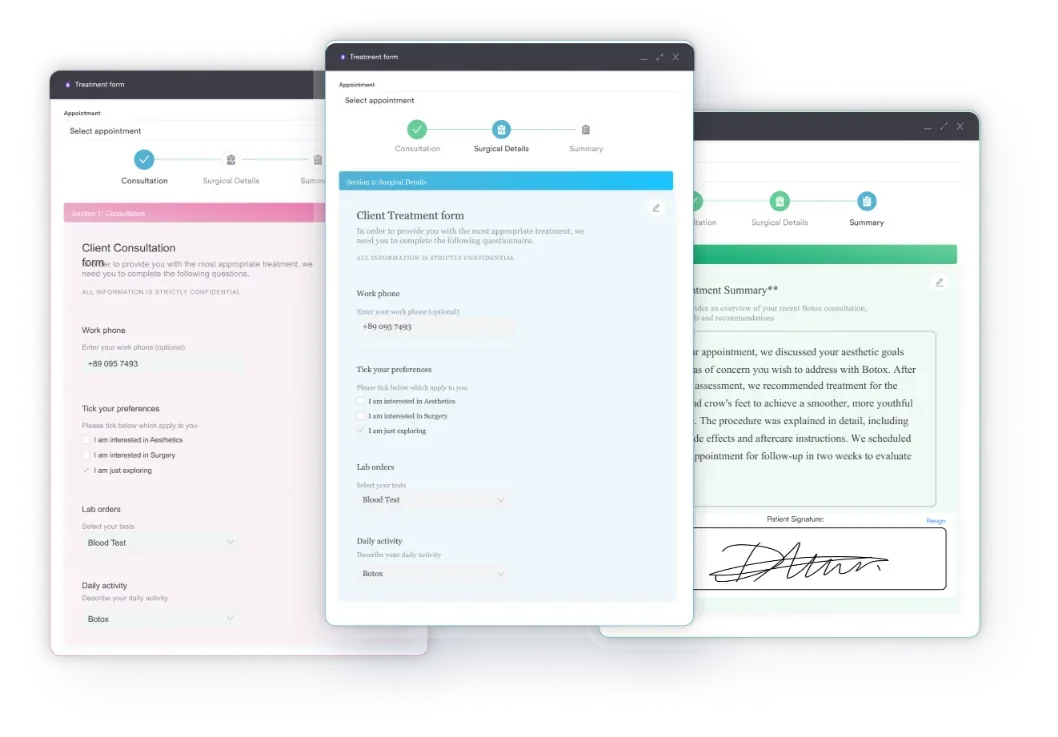
Consent and treatment forms capture the ordered item and quantity at the point of care, with the signature on the same document.
Our claims management tools then track each submitted claim by status, so a rejection surfaces within days rather than at month end. Your coder still chooses the code and the quantity. What changes is retrieval time when a contractor asks for the order behind a two-year-old A4404 line.
Primary care teams using our GP practice software can capture the medical necessity narrative in the record at the visit. It is then already on file when the supplier or the DME MAC asks for it, which shortens the path from dispensing to payment.
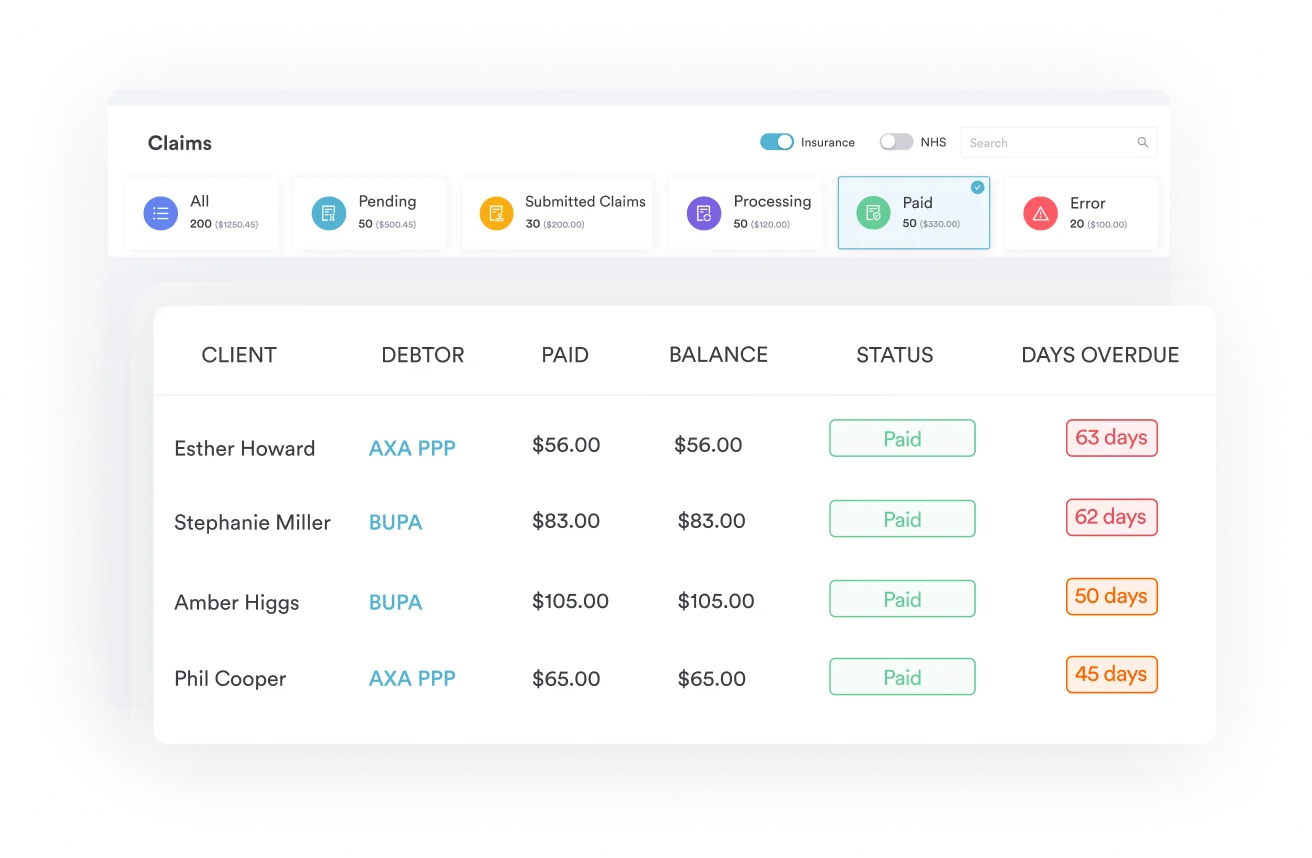

Pabau helps suppliers and practices hold written orders, delivery records, and claim status on one patient file, so ostomy supply claims go out complete.

A4404 is one ostomy ring, and nearly every rule attached to the code follows from that single fact. Medicare pays it under the prosthetic device benefit, and the usual maximum is 10 per month. The file needs a signed order, a covered diagnosis, and proof of delivery.
Sources that describe A4404 as a pouch closure are wrong, and following them produces denials. Rings are A4404, paste is A4405 or A4406, and a replacement clamp is A4363. Coding from the current descriptor, rather than from memory, prevents the mismatch.
If your team bills ostomy supplies alongside clinical care, the documentation layer is where the time goes. Book a demo to see how Pabau keeps orders, forms, and claim status on one patient file.

Billing the ostomy belt as well? A4367 covers the belt rules under the same LCD, including its one-per-month maximum.
Supplying skin barrier wipes? A5120 explains the AU modifier requirement that applies to shared-use ostomy codes.
Coding the wafer under the ring? A4362 sets out the solid skin barrier rules and its 20-per-month maximum.
Billing a mental health clubhouse program? Mental health clubhouse billing covers H2031, billed per diem for each full calendar day attended.
No. A4404 is an ostomy ring, which is a peristomal sealing product. HCPCS does not divide pouch closures into rubber band and clamp types, so that distinction should never guide a coding decision. The clamp code is A4363, ostomy clamp, any type, replacement only, each.
LCD L33828 sets the usual maximum at 10 rings per month. More than 10 is payable, but the medical record has to explain why the beneficiary needs the extra quantity. Without that explanation, the excess units are denied as not reasonable and necessary.
No. CMS stopped accepting Certificates of Medical Necessity and DME Information Forms for dates of service on or after January 1, 2023. A claim submitted with one is now rejected outright. The ostomy supplies policy never required a CMN.
You need a signed and dated standard written order, medical records confirming the stoma, a covered ICD-10-CM diagnosis code, and proof of delivery. Refill claims also need a dated refill contact showing an affirmative response from the beneficiary.