CPT Code 62284: Injection procedure for myelography
CPT Code 62284: official descriptor and procedure overview The American Medical ...

Last Updated: Oct 19, 2026
99492 is the CPT code for the first calendar month of psychiatric collaborative care management. It pays the treating physician or nonphysician practitioner for a month of team-based behavioral health care, delivered by a care manager with a psychiatric consultant.
The descriptor states 70 minutes, but Medicare pays once 36 care manager minutes are documented. The 2026 national Medicare rate is approximately $160 before locality adjustment. Bill it in the wrong month, or without the consultant's review on file, and the claim stalls. This guide covers each requirement, then walks the claim from enrollment to payment.
Let Pabau's smart automation suggest the right codes, reduce claim denials, and keep your practice compliant—effortlessly.
Automate repetitive tasks and focus on what matters most—your patients.
Reduce coding errors and ensure compliance with the latest regulations.
Clean claims, fewer denials, and faster reimbursements.
Powerful insights and reporting to help your practice thrive.
HIPAA compliant SOC 2 certified GDPR-compliant Trusted by 4,000+ clinics worldwide

CPT code 99492 bills the first calendar month of psychiatric collaborative care management, once per episode of care.
The descriptor states 70 minutes, but the CPT time rule lets you bill once 36 care manager minutes are documented.
The treating physician or nonphysician practitioner bills the claim, not the care manager or the psychiatric consultant.
Without a documented psychiatric consultant review, a 99492 claim is unlikely to survive an audit.
Time cannot be counted toward both CCM (99490) and CoCM in the same month, and payer rules vary, so check before billing both.
Medicare pays approximately $160 for 99492 in 2026, before locality adjustment.
CPT code 99492 is the billing code for the first calendar month of psychiatric collaborative care management, or CoCM. A care manager delivers the work, a psychiatric consultant advises, and the treating physician or nonphysician practitioner (NPP) directs the plan and bills.
The AMA CPT code set describes the code as the initial month of this team-based care. Its descriptor names 70 minutes of behavioral health care manager (BHCM) activity and five required elements:
The code belongs to the Behavioral Health Integration (BHI) family, which the AMA created and CMS began paying for in 2017. You bill 99492 once, for the month care starts. Every later month moves to 99493.
So which code fits which month? The answer turns on two questions: is this the first calendar month, and how many care manager minutes were logged?
These thresholds come from the CPT time rule, which lets a timed service be billed once its midpoint has passed. The APA collaborative care billing FAQ sets out the full ladder, and it notes that payer policies vary.
A common billing error is holding the claim until the month reaches 70 minutes, even though 36 was enough. The ladder below shows how the first month’s total maps to codes.
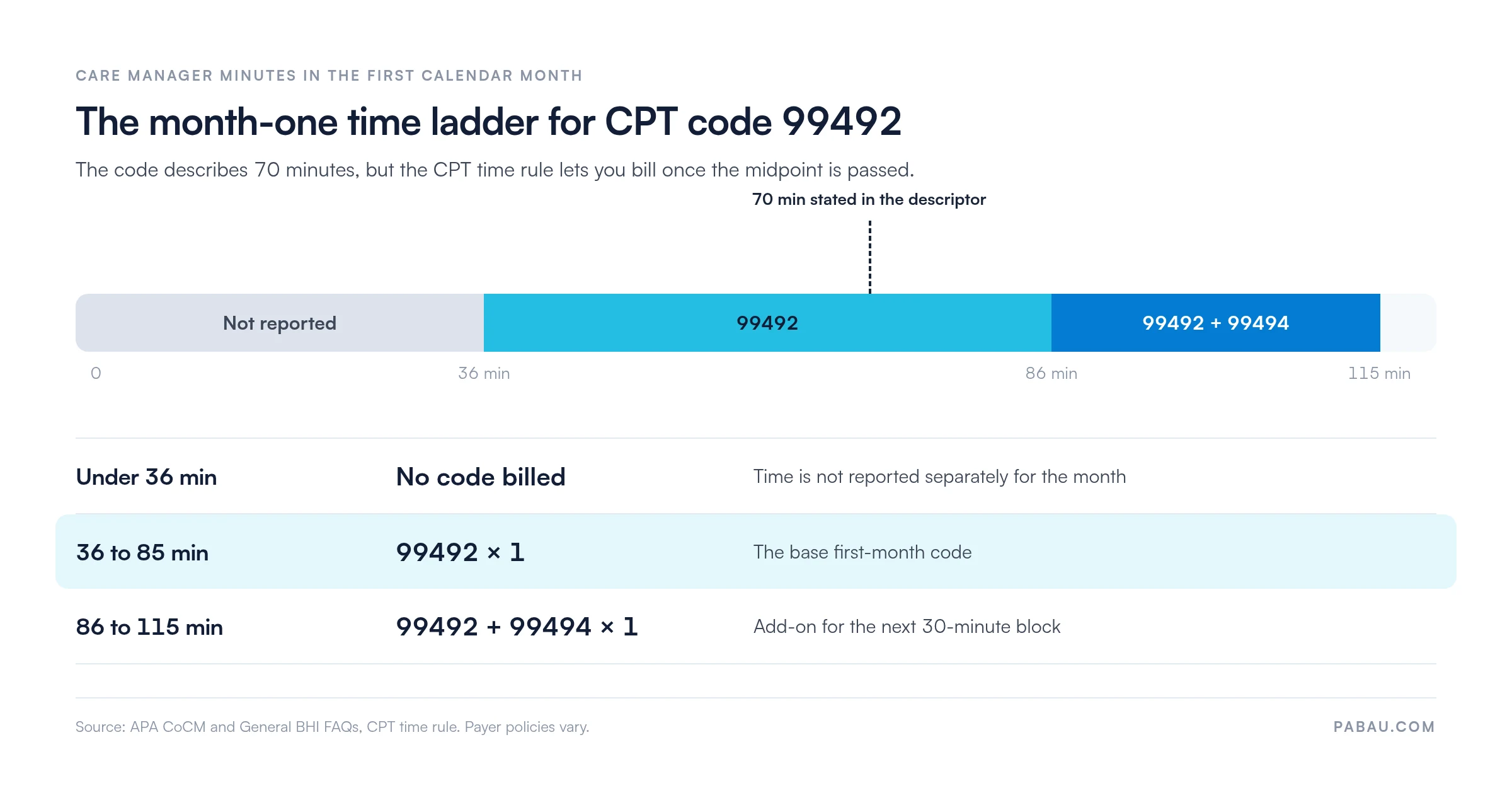
Worked example. A patient enrolls on March 14. The 99492 month still ends on March 31, because a calendar month runs first day to last. By then the care manager has logged 52 minutes, so you bill 99492 once.
On April 1, the patient moves to 99493, however few days March covered. Had March reached 90 minutes, you would add one unit of 99494.
One exception matters for safety-net sites. The APA notes that federally qualified health centers and rural health clinics do not use the CPT time rule, so check their separate CMS guidance.
CoCM is a team service by definition. Each role has a fixed job, and mixing them up is a common audit finding.
CMS doesn’t generally expect psychiatrists to bill the CoCM codes, because psychiatric work is already built into them. Submit under the directing clinician’s NPI, never the care manager’s or the consultant’s.
The 99492 clock tracks the care manager’s minutes across the calendar month, face to face or not. These activities count:
What does not count: the psychiatric consultant’s own time, and time spent on any separately billed service. A separately documented E/M visit can be billed in the same calendar month. Its time cannot also count toward the BHCM aggregate.
Log care manager time on the day it happens, not at month end. Minutes rebuilt from memory are the weakest part of any 99492 audit file.
Thin documentation drives more 99492 denials than coding errors do. Keep each record below on file, because medical billing compliance expects it to be ready at any time.
Medicare pays CPT code 99492 under the Medicare Physician Fee Schedule. Based on the 2026 RVU data for 99492, the national non-facility rate is approximately $160 (2026, before locality adjustment). Rates reset every January 1, so confirm your locality in the CMS Physician Fee Schedule lookup before you bill.
Coverage outside traditional Medicare varies more:
Before you add a second code to the claim, check it against this table. Rules differ by code, and payers can add their own edits.
Chronic care management has its own page if you need the detail on 99490. Both programs need their own consent, and each minute can only count once.
CoCM codes (99492, 99493, 99494) and general BHI (99484) pay for two different care models. Picking the wrong one can be costly to correct, so decide at enrollment.
Now for the claim itself. A clean claim for 99492 follows these steps in order.
A two-minute review catches most problems while you can still fix them. Before any 99492 claim leaves, confirm:
Good denial management starts with prevention. These seven triggers cause most 99492 denials, and each has a fix.
If a claim still comes back, the denial codes in medical billing guide explains each reason code on the remittance.
Collaborative care teams often juggle three tools: a registry spreadsheet, a notes system and a billing portal. Each handoff between them is a chance for a minute, a note or a consent record to go missing.
Pabau, the practice management platform we build, keeps the clinical record and the claim in one place. Structured treatment notes and digital forms capture consent, rating scales and consultant reviews against the patient file. Our claims management software then pre-fills the claim from that record.
In the US, claims go out electronically through Claim.MD. Pabau checks the codes and required fields before submission, so incomplete claims don’t reach the payer.
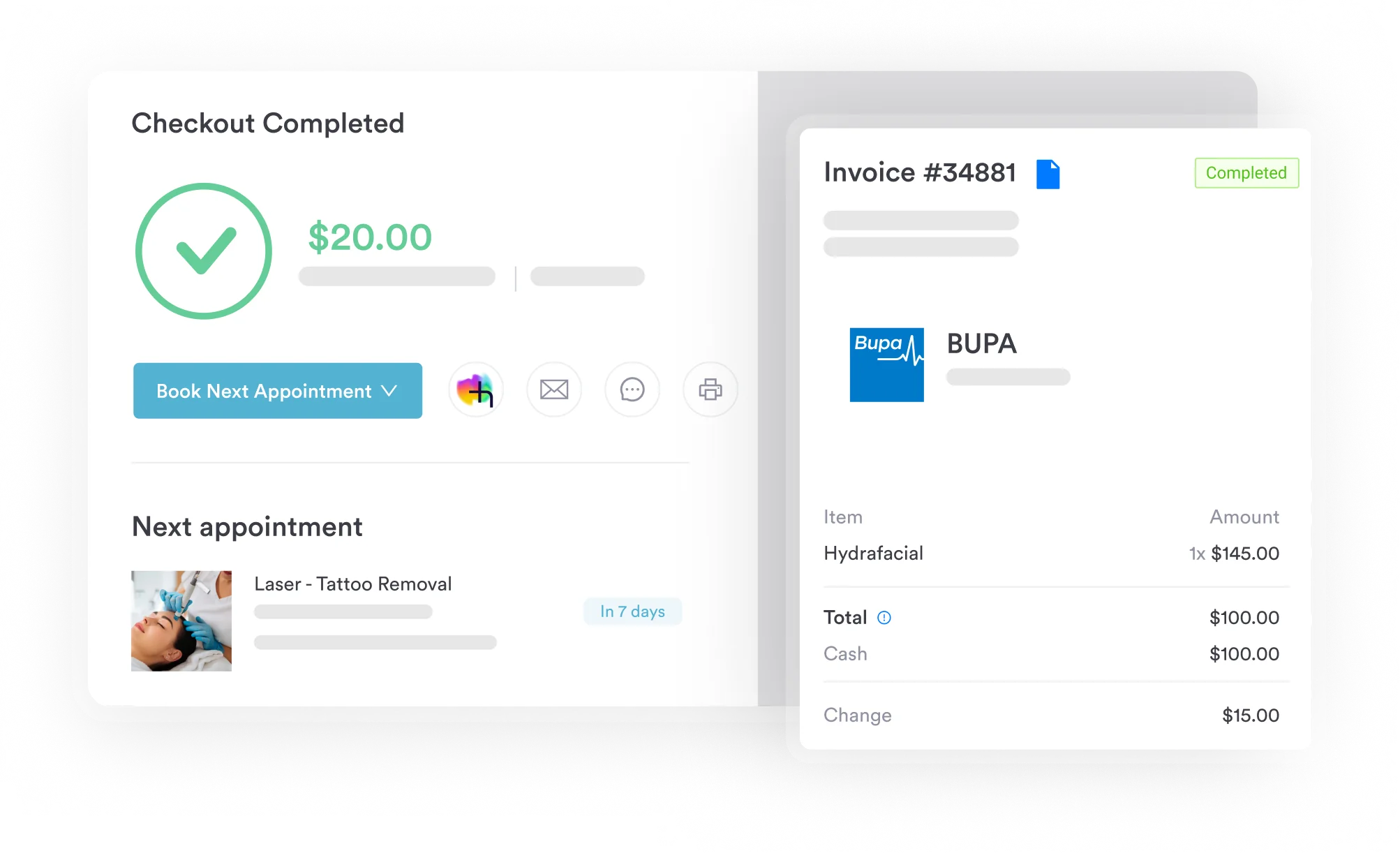

Pabau keeps structured notes, consent forms and claims in one record. Claims for CPT 99492 go out through Claim.MD with code and required-field checks.

CPT code 99492 rewards teams that set up the month before it starts. Decide on CoCM over general BHI at enrollment, and get consent on file early. Then log every care manager minute as it happens.
Do that, and the 36-minute threshold stops being a month-end scramble. Skip it, and a missed note may require a corrected claim or appeal.
If your claims already run through a Claim.MD clearinghouse setup, keeping notes and claims together is the next step. Book a demo to see how Pabau handles collaborative care documentation and claims in one record.

Need to understand how clearinghouse submission works end to end? How medical claims clearinghouses work explains the electronic submission pathway from practice to payer.
Working through a denied 99492 claim? Denial codes in medical billing covers CARC reason codes and how to respond to common remittance denials.
Deciding between CCM and collaborative care? CPT code 99490 covers the time, consent and documentation rules for chronic care management.
Managing patients with more complex chronic needs? CPT code 99487 explains how complex chronic care management is billed.
Yes, if a new episode of care begins. Under the CPT episode definition, a break of six consecutive months without CoCM services ends the episode. Payers such as state Medicaid programs then allow 99492 again. Check the payer’s policy first.
Yes, for new patients and patients not seen within a year. The billing practitioner must discuss CoCM at a qualifying E/M visit, annual wellness visit or initial preventive exam. A 99211 visit does not qualify.
Yes. Part B cost sharing applies to collaborative care, even for months without a face-to-face visit. The consent conversation should tell patients this up front.
No. Once the minimum time is documented, CMS allows the claim to go out mid-month. Care should continue for the rest of the month if it’s medically necessary.
No. Consent is needed once per billing practitioner. A new consent is only required if the patient switches to a different billing practitioner.