

HCPCS Code Q4185: Cellesta flowable amnion billing guide
HCPCS Code Q4185: definition and official descriptor HCPCS Code Q4185 is the Lev...

Last Updated: Nov 20, 2026
58548 is the CPT code for a laparoscopic radical hysterectomy with bilateral total pelvic lymphadenectomy and para-aortic lymph node sampling. Its official descriptor adds removal of the tubes and ovaries, if performed.
Gynecologic oncologists report it mainly for early-stage cervical cancer, where the uterus, cervix and parametrium come out with the pelvic nodes in one session. The node dissection is part of the descriptor, so the component lymphadenectomy codes are not billed separately.
Let Pabau's smart automation suggest the right codes, reduce claim denials, and keep your practice compliant—effortlessly.
Automate repetitive tasks and focus on what matters most—your patients.
Reduce coding errors and ensure compliance with the latest regulations.
Clean claims, fewer denials, and faster reimbursements.
Powerful insights and reporting to help your practice thrive.
HIPAA compliant SOC 2 certified GDPR-compliant Trusted by 4,000+ clinics worldwide

CPT code 58548 describes a laparoscopic radical hysterectomy with bilateral total pelvic lymphadenectomy and para-aortic lymph node sampling, used mainly for cervical cancer.
58548 pairs a radical hysterectomy with node procedures, while 58575 is a total hysterectomy for tumor debulking with omentectomy.
Pelvic and para-aortic lymph node dissection codes are bundled into 58548 by NCCI edits and cannot be billed separately.
A laparoscopic case converted to open is reported with the open radical hysterectomy code, 58210, not with 58548.
Pabau’s claims management software submits claims electronically, tracks denials, and keeps prior authorization codes and dates on the case.
CPT code 58548 is the Category I code for a laparoscopic radical hysterectomy with bilateral total pelvic lymphadenectomy and para-aortic lymph node sampling. Under the AMA’s CPT code set, its descriptor also covers removal of the tubes and ovaries, if performed. Gynecologic oncologists report it mainly for early-stage cervical cancer. Confirm the global period and RVU values against the current Medicare Physician Fee Schedule for your locality before you submit.
CPT code 58548 describes a laparoscopic radical hysterectomy with en bloc removal of the uterus, cervix, and parametrial tissue. Bilateral total pelvic lymphadenectomy and para-aortic lymph node sampling are part of the same code. The procedure addresses early-stage cervical carcinoma, where complete surgical staging requires both the primary resection and lymph node assessment in a single operative session.
The descriptor explicitly includes bilateral pelvic and para-aortic node procedures. That inclusion decides which code applies and which bundling rules govern the claim. The operative record has to capture the node work before billing staff ever touch the chart.
The operative report for CPT code 58548 must document each component of the procedure in enough detail to withstand payer audit. A vague note that says “radical hysterectomy with node dissection” is not sufficient.
Auditors look for the following elements in the operative report:
Missing node counts and an undocumented para-aortic sampling leave a 58548 claim exposed if a payer requests records in a post-payment audit.
AMA CPT guidance separates the codes by procedure. 58548 covers radical hysterectomy with pelvic and para-aortic node procedures, while 58575 covers total hysterectomy for tumor debulking. They serve different oncologic scenarios and must not be used interchangeably.
CPT code 58571 describes a laparoscopic total hysterectomy for a uterus weighing more than 250 grams. It does not include lymph node dissection, making it categorically distinct from 58548 regardless of uterine weight. The table below maps the laparoscopic hysterectomy family so coders can confirm the right code for the documented procedure.
Coders reading a gynecologic oncology operative report can settle the code with four questions, asked in order. The first match decides it.
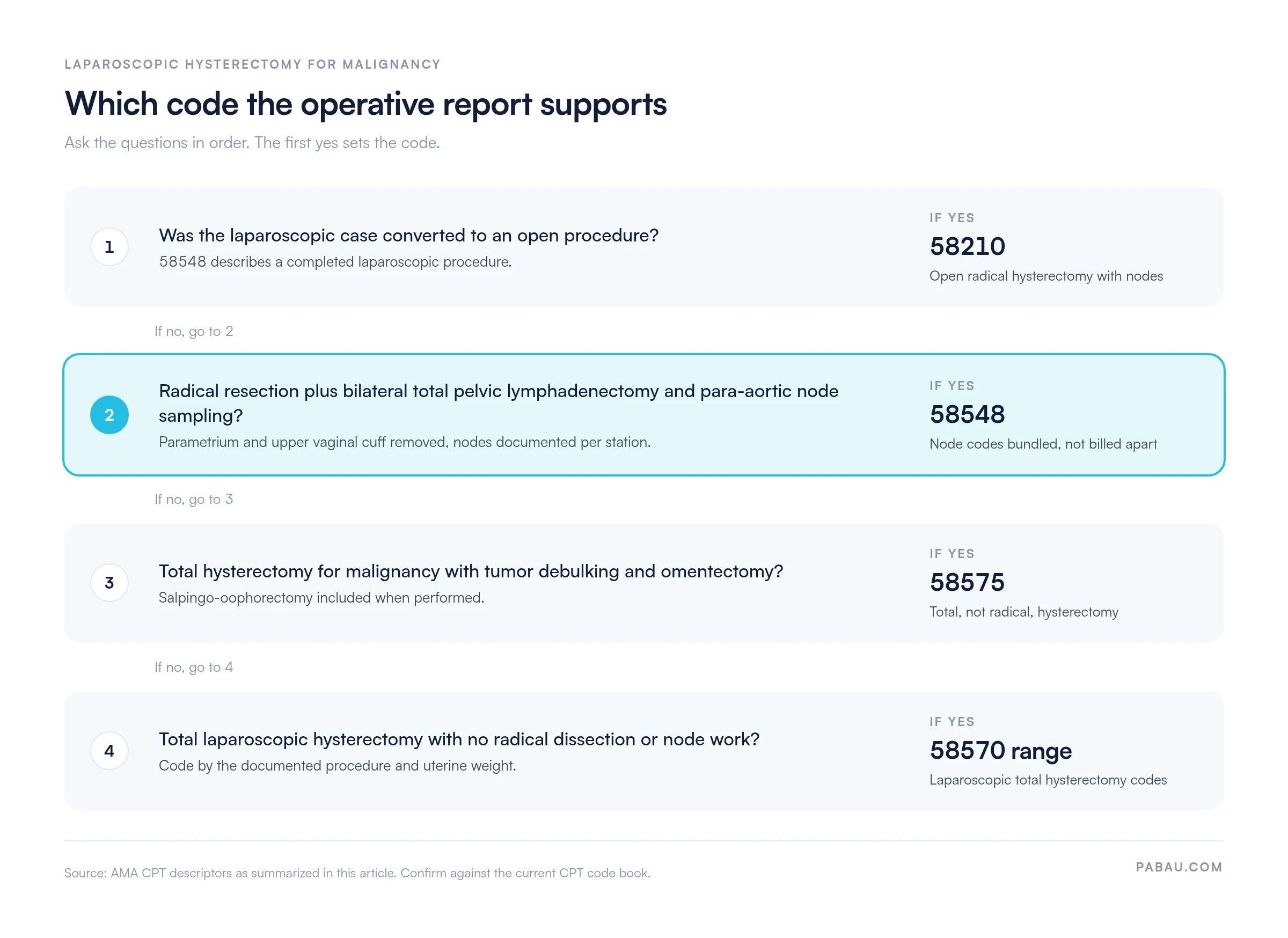
Medical necessity for CPT code 58548 requires a supported oncologic diagnosis. Payers audit the link between the ICD-10-CM codes and 58548 on radical hysterectomy claims. Using a benign gynecologic diagnosis (such as uterine fibroids) with 58548 is an automatic denial.
CPT code 58548 carries a substantial relative value unit (RVU) weight reflecting its operative complexity. The work RVUs below are drawn from published Medicare Physician Fee Schedule data. Actual payment amounts vary by geographic pricing locality and are updated annually. Always verify current figures using the CMS Physician Fee Schedule lookup tool for your locality before quoting reimbursement to providers.
Use FastRVU’s RVU lookup tool to retrieve the current work, practice expense, and malpractice RVU values for 58548 by year.
Prior authorization requirements for CPT code 58548 vary by payer and plan. Medicare does not require prior authorization for surgical procedures performed in the inpatient hospital setting, but Medicare Advantage plans frequently impose their own authorization requirements. Commercial payers almost universally require authorization for radical hysterectomy given the procedure’s cost profile.
Confirm insurance eligibility verification and authorization status before the procedure date. Submitting without required authorization is the single most preventable denial type for 58548 claims.
Run insurance eligibility verification at least 72 hours before the procedure date for CPT 58548. For Medicare Advantage patients specifically, download the plan’s current surgical authorization list and confirm 58548 is listed. A missing authorization number on a $15,000+ claim creates a denial cycle that can take 60-90 days to resolve.
CPT code 58548 claims fail at a higher rate than most gynecologic surgery codes. Three factors intersect here: complex NCCI bundling rules, strict medical necessity linkage, and prior authorization gaps. Understanding each denial pattern allows billing staff to address the root cause rather than re-submitting the same claim unchanged.
Structured denial management workflows that sort 58548 denials by root cause cut the rework on each resubmission. In Pabau, a practice management platform with US insurance billing, the claims management software submits claims electronically and tracks each denial. It also keeps prior authorization codes and dates on the patient’s case.
The National Correct Coding Initiative bundles the pelvic and para-aortic lymph node dissection codes into CPT code 58548. Those procedures are written into the 58548 descriptor itself. Billing them as separate line items alongside 58548 triggers an automatic NCCI edit denial. The NCCI edit files are updated quarterly by CMS; always check the current edit file for the applicable date of service. The AAPC CPT code lookup tool includes NCCI edit indicators by code.
CPT code 58548 carries a 90-day global surgical package. Understanding what is included in that package prevents billing staff from inadvertently bundling separately reimbursable services or missing legitimate separate-billing opportunities.
The medical billing fundamentals of the global package apply here. Routine post-operative visits within 90 days of surgery are included in the 58548 payment and cannot be billed separately. Complications, unrelated E/M services, and new diagnoses arising after surgery can be billed separately with the correct modifier.
A clean claim submission for CPT code 58548 requires specific operative report elements. Billing staff should review the operative note against this checklist before coding and submitting.
A superbill documentation workflow checks the operative report against this checklist at the point of coding. That step reduces claim edits and prevents the most common denial types for 58548. The AMA CPT code set overview provides the authoritative descriptor framework for surgical code selection.
A 58548 claim passes through several hands before it pays. The surgeon dictates the operative report, a coder reads it, and billing staff chase the authorization number and the remittance.
Pabau keeps the case, its prior authorization code and dates, and the claim on one patient record, with a warning when an authorization is missing. Claims go out through the Claim.MD clearinghouse, which submits 837P claims to thousands of US payers and matches ERAs back to the claim.
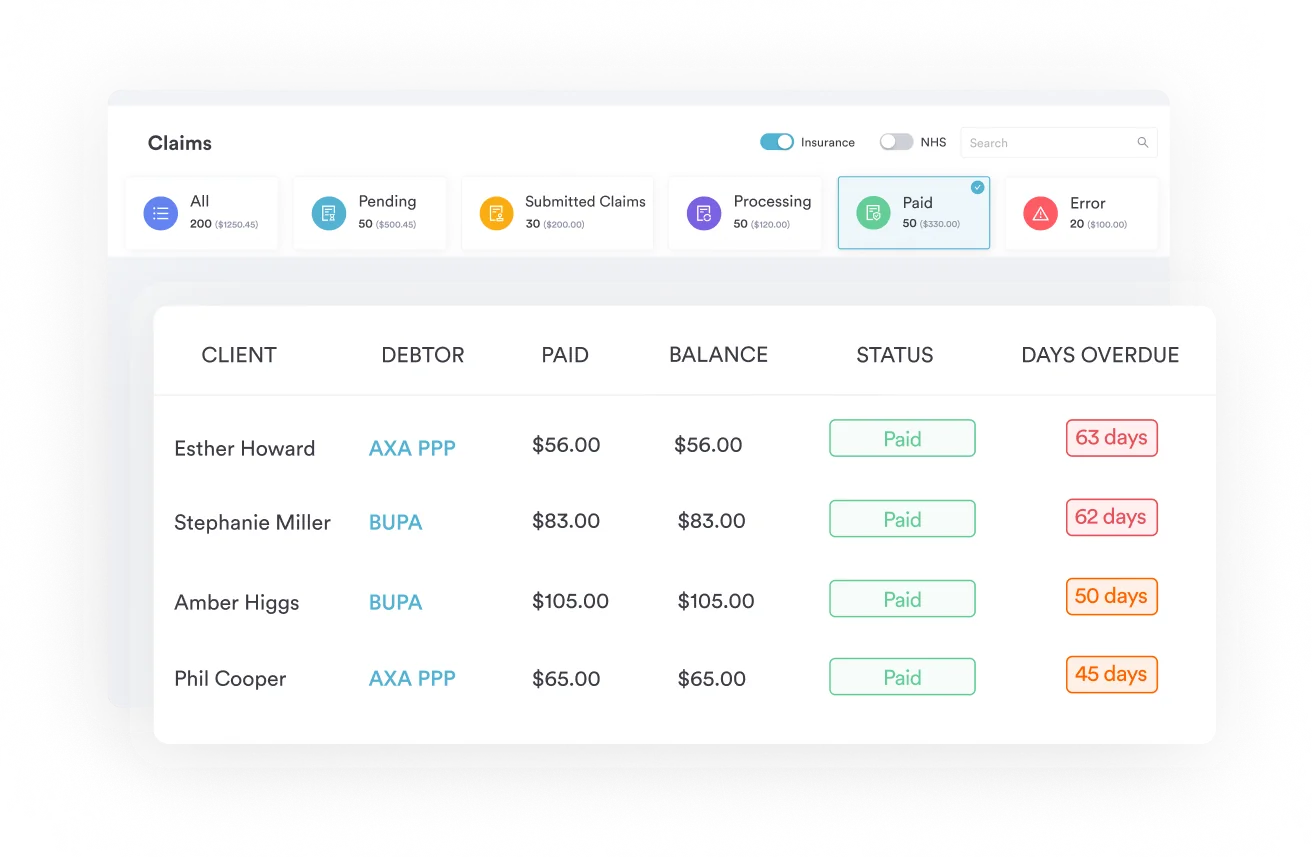
Your billing team sees which claims are pending, paid or denied without switching systems. A denied 58548 claim can go back out sooner, because the authorization details and the payer’s response sit on the same record.

Pabau’s claims management sends 58548 claims electronically, tracks each denial, and keeps prior authorization codes and dates on the patient’s case.

Report 58548 only when the operative report shows a completed laparoscopic radical resection and both node procedures. If either piece is missing, the claim belongs on 58210, 58575 or a laparoscopic total hysterectomy code instead.
Get the authorization number on file before the surgery date, and leave the component lymph node codes off the claim. Those two steps head off the denial patterns that slow payment on this code the most.
Book a demo to see how Pabau keeps the authorization, the claim and the remittance for each 58548 case on one record.

Sending gynecologic surgery claims through a clearinghouse? Claim.MD clearinghouse guide covers how the clearinghouse fits into US claim submission.
Coding a total rather than a radical hysterectomy? CPT code 58571 walks through a laparoscopic total hysterectomy code without node work.
Want to reduce claim denial rates across your practice? Denial management in healthcare breaks down the root-cause approach to reducing first-pass denial rates.
CPT code 58548 describes a laparoscopic radical hysterectomy with bilateral total pelvic lymphadenectomy and para-aortic lymph node sampling (biopsy). Removal of the tubes and ovaries is included, if performed. Gynecologic oncologists use it mainly for cervical cancer staging and treatment. It differs from non-radical laparoscopic hysterectomy codes because it requires radical parametrial resection and bilateral lymph node procedures.
CPT code 58548 pairs a radical hysterectomy with bilateral pelvic lymphadenectomy and para-aortic node sampling. CPT code 58575 is a laparoscopic total hysterectomy for resection of malignancy, with tumor debulking and omentectomy. Use 58548 for cervical cancer staging that requires node dissection. Use 58575 for cytoreductive surgery in ovarian or uterine malignancy.
Most denials trace back to four causes. The first is a missing prior authorization, especially with Medicare Advantage and commercial plans. The second is an ICD-10 code that does not support a radical hysterectomy. The third is an NCCI edit conflict from unbundled lymph node codes. The fourth is an operative report that does not describe the para-aortic sampling or pelvic node dissection.
Prior authorization requirements depend on the payer. Medicare fee-for-service does not require prior authorization for inpatient surgical procedures, but Medicare Advantage plans commonly require it. Commercial payers (Blue Cross, Aetna, UHC, Cigna) almost universally require authorization for radical hysterectomy. Always verify authorization requirements with the specific plan before the procedure date.





