



HCPCS code E0198: Water pressure pad billing guide
HCPCS code E0198 is a water pad for a standard mattress HCPCS code E0198 is the ...

Last Updated: Oct 13, 2026

CPT code 21120 covers genioplasty augmentation with an autograft, an allograft, or prosthetic material.
Work RVU is 4.97 and total non-facility RVU is 21.42, which pays roughly $715 before geographic adjustment.
Medicare and most commercial payers treat genioplasty as cosmetic unless the documentation proves a reconstructive indication.
An approved prior authorization does not guarantee payment, because payers compare the operative note against the authorized plan.
Practice management software like Pabau tracks authorization status and denial patterns for every 21120 claim you submit.
CPT code 21120 is the billable code for genioplasty augmentation using an autograft, an allograft, or prosthetic material. One code covers all three materials. It sits in the Repair, Revision, and/or Reconstruction of Facial Bones section of the AMA’s CPT code set, which spans 21120 through 21296.
The surgeon places the implant or graft against the chin bone, the mandibular symphysis, to add projection or correct a contour deficiency. No bone is cut. That single fact separates 21120 from the sliding osteotomy codes sitting next to it.
Practices handling plastic surgery billing need to record which material went in. Payer documentation standards differ between prosthetic implants and biologic grafts, even though the code does not.
Genioplasty augmentation is performed under general anesthesia, or local anesthesia with sedation. The usual approach is an intraoral incision along the lower gum line. The surgeon dissects down to the mentum, creates a subperiosteal pocket, and seats the augmentation material against the mandibular symphysis.
Three augmentation approaches all map to this one code:
The operative indication drives payer review. Aesthetic augmentation for cosmetic chin projection is typically non-covered. Augmentation that restores post-traumatic chin contour, corrects congenital mandibular hypoplasia, or addresses functional malocclusion is more likely to read as reconstructive.
So document three things on every case: the specific clinical indication, the material selected, and the fixation method used. Those three details carry the claim.
Relative value units, known as RVUs, set Medicare payment for this code. The CMS Physician Fee Schedule republishes them every calendar year. The figures below are the 2026 Medicare Physician Fee Schedule values.
National payment comes from multiplying total RVU by the 2026 conversion factor of $33.4009. CMS has finalized that figure, and it applies to clinicians who are not qualifying APM participants. Geographic Practice Cost Index adjustments then modify each component by locality.
So your actual payment moves with where you operate. A practice in Manhattan or San Francisco collects more than the national average, and a rural practice collects less.
Coverage, not payment rate, is the critical billing variable here. Genioplasty is classified as cosmetic under the Social Security Act Section 1862(a)(10) exclusion. Medicare does not pay for the procedure when it is performed solely to improve appearance.
Reconstructive exceptions can apply in these documented clinical scenarios:
Commercial payers apply much the same logic. Most want a letter of medical necessity, clinical photographs, radiographic documentation, and an operative plan that addresses the reconstructive indication head-on. A panoramic radiograph or a CT of the mandible usually satisfies the imaging requirement.
Most denials trace back to an incomplete authorization package. Code selection is rarely the problem.
Medicaid coverage varies by state. North Dakota Medicaid lists 21120 on its prior authorization code list, so the procedure needs pre-approval there even when medical necessity is documented.
A chiropractic platform links every spinal or joint procedure to its treatment schedule and the outcome you record.
Modifiers tell a payer something the code alone cannot, and they change what you get paid. Four apply most often to 21120. Using any of them without matching operative documentation is an audit risk with the Office of Inspector General, or OIG. Modifier 22 draws the most attention.
Audit modifier 22 usage before submission. Payers want the added complexity spelled out in the operative report: time spent, anatomical challenges encountered, and a comparison to a standard genioplasty. A generic line saying the procedure was more complex than usual will not meet the modifier 22 standard, and the claim will be denied.
Payers match the submitted diagnosis code against 21120 to judge medical necessity. A cosmetic diagnosis code triggers an automatic denial with most of them. The ICD-10-CM codes below are the ones most likely to support a reconstructive claim.
Watch M27.69 here, because it is a common mix-up. That code means other endosseous dental implant failure, and it has nothing to do with this procedure.
The AAPC’s CPT-to-ICD-10 crosswalk tools confirm whether a payer recognizes your chosen pairing. A clean crosswalk does not promise coverage. It only tells you an edit will not block the pair. For HIPAA-compliant billing, always transmit the most specific code the documentation supports.
Correct code selection means separating 21120 from the facial bone codes around it. The most common miscoding error is reaching for 21120 when the operative report describes a sliding osteotomy. Larger jaw procedures carry their own codes.
The operative report has to name the anatomical site and the technique to support 21120 over these neighbors. Reconstructive work on the temporomandibular joint falls to 21050, and forehead contouring to 21138. A short code-specific checklist at the coding step cuts selection errors across the team.
Most payers require prior authorization whenever genioplasty is submitted as reconstructive. The whole process turns on the cosmetic versus reconstructive question, so the documentation package has to answer it directly.
A complete submission for 21120 usually includes:
A plastic surgery EMR that keeps photographs, radiographs, and consent on the patient record makes that package much faster to assemble. Everything the payer wants is already in one file.
Approval is not payment, though. Payers run a post-service review comparing the operative report to the procedure they authorized. Switching from a prosthetic implant to an autograft mid-surgery can produce a denial after the fact.
So document any intraoperative change, and call the payer for an authorization amendment when that is clinically practical. Tracking authorization status by code inside plastic surgery documentation workflows keeps these cases from going unbilled.
A denied or audited 21120 claim almost always traces back to the operative note. The report needs five elements to survive payer and OIG scrutiny:
Standardizing your operative note template is the cheapest fix available. It removes the variability between surgeons and gives coders what they need without a round of chasing. Practices using digital forms can build the five prompts straight into the postoperative workflow.

Here are the denial reasons that come up most often on this code, and what stops each one:
Run a quarterly audit on every 21120 claim you submitted. Filter for the ones carrying modifier 22, then compare their approval rate against submissions without it. If the modifier 22 claims are denied at a much higher rate, walk your surgeons through the operative note template again.
Most surgical practices track authorizations in a spreadsheet and denials in an inbox. The operative note sits in one system, the claim in another, and the appeal deadline in someone’s head. Nothing links a denial back to the note that caused it.
Practice management software like Pabau keeps all of it on the patient record instead. Pabau’s claims management software holds the authorization reference, the supporting documents, and the claim status together. When a 21120 claim is denied, the reason code lands beside the operative note and the photographs you submitted. Reworking denied claims one at a time keeps cash moving but never lowers the denial rate. Practices that review a sample of notes each month catch documentation level drift before a payer does.
So you can filter a quarter of denials by CPT code and see the pattern for yourself. If modifier 22 claims are failing, you know it before the next surgeon dictates a note. It works the same way for the surgical and dermatology practices that bill facial reconstruction alongside cash cosmetic work.
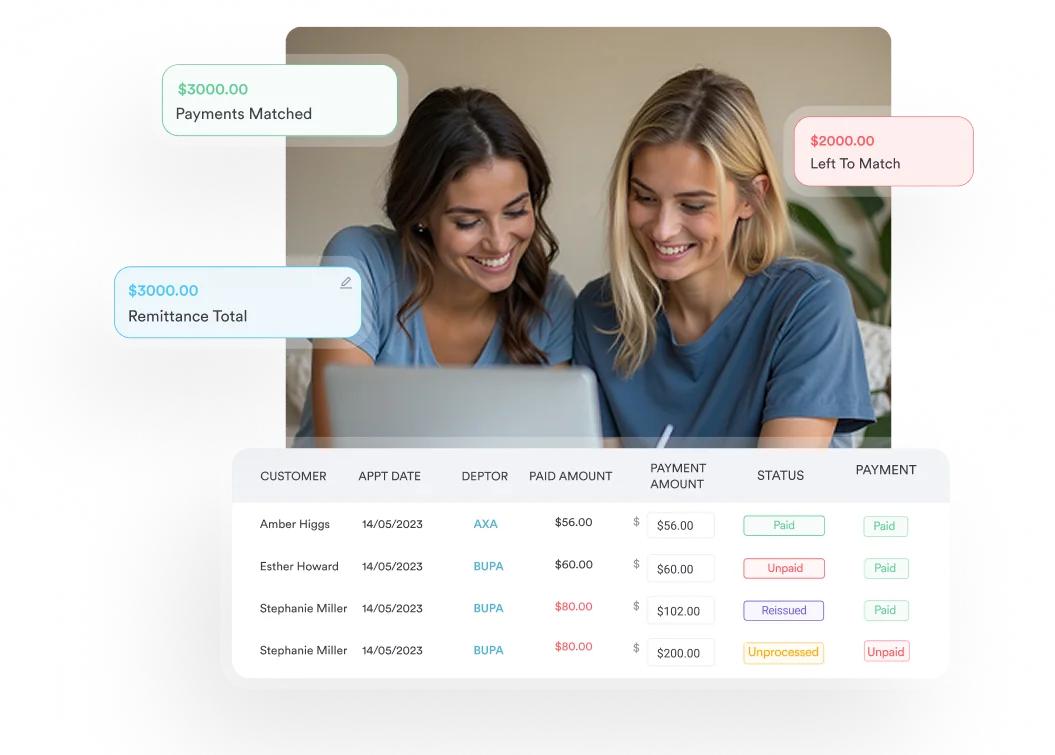

Pabau keeps prior authorization status, operative documentation, and denial reasons on one patient record. Your billing team can see why a claim failed and fix the pattern before the next case.

Write the operative note for the payer as well as for the chart. Name the reconstructive indication, the material, and the fixation method every time. Those two extra lines at dictation save the billing team an appeal later.
The trade-off worth remembering is that genioplasty starts from a cosmetic exclusion. You argue your way out of it on every single claim. So build the argument before surgery, rather than after a denial lands.
Pabau keeps authorization status, operative documentation, and denial history on one patient record. Book a demo to see how your team can stop rebuilding denied genioplasty claims from scratch.

Coding another facial bone procedure from the same operative session? 21026 covers excision of facial bone, with the documentation payers look for.
Billing a major craniofacial reconstruction alongside chin work? 21433 walks through Le Fort III repair, its RVUs, and its coverage rules.
Harvesting bone or sampling it in the same case? 20245 explains open bone biopsy billing and when it can be reported separately.
Documenting congenital rectal absence with fistula? ICD-10 code Q42.0 covers the billable code for congenital absence of the rectum when a fistula is present.
Need the code for imperforate hymen? ICD-10 code Q52.3 covers the billable code for imperforate hymen, where the hymenal membrane fully obstructs the vaginal opening.
CPT code 21120 bills genioplasty with augmentation of the chin. The augmentation can use an autograft, an allograft, or prosthetic material, and one code covers all three. It applies when the surgeon augments chin projection without performing an osteotomy. The code sits in the Repair, Revision, and/or Reconstruction of Facial Bones section of the AMA CPT code set.
Genioplasty is not routinely covered by Medicare or most commercial payers when it is performed for cosmetic reasons. Coverage may apply when the procedure is reconstructive, for example after a post-traumatic chin deformity, congenital mandibular hypoplasia, or an oncologic resection. Prior authorization and a detailed letter of medical necessity are usually required. Some state Medicaid programs, including North Dakota, list 21120 on their mandatory prior authorization code list.
CPT 21120 describes genioplasty by augmentation, where an autograft, allograft, or prosthetic material is placed against the chin bone without cutting it. CPT 21121 describes a sliding osteotomy genioplasty, where the chin bone is surgically cut and repositioned. The operative report has to specify which technique was performed. Billing 21120 when the report describes an osteotomy is a coding error that triggers a denial or an audit.
The most common modifiers for CPT 21120 are 22, 51, and 59. Modifier 22 covers increased procedural complexity and needs detailed operative note justification. Modifier 51 applies to multiple procedures performed in the same session, and modifier 59 clears a Correct Coding Initiative edit for a distinct service. Modifier 47 for anesthesia by the surgeon is occasionally applicable, but it is uncommon because genioplasty usually involves a separate anesthesia provider.
The 2026 Medicare values for CPT 21120 are a work RVU of 4.97 and a malpractice RVU of 0.92. The practice expense RVU is 15.53 in a non-facility setting and 8.74 in a facility. That gives a total RVU of 21.42 non-facility and 14.63 facility. Applied to the finalized 2026 conversion factor of $33.4009, that works out to roughly $715 non-facility and $489 facility before geographic adjustment.
CPT 21120 applies to any genioplasty augmentation at the chin symphysis, whether the surgeon uses an autograft, an allograft, or prosthetic material. If the augmentation sits at the mandibular body or angle instead of the chin, the code changes. Use CPT 21125 for prosthetic material, or CPT 21127 for a bone graft with harvest included. The anatomical site of the augmentation decides the code, not the material.



