HCPCS code E0198: Water pressure pad billing guide
HCPCS code E0198 is a water pad for a standard mattress HCPCS code E0198 is the ...

Last Updated: Oct 13, 2026

CPT code 17107 reports destruction of cutaneous vascular proliferative lesions with a combined treated area of 10.0 to 50.0 sq cm.
The descriptor sets no anatomic site limit. The face and mucous membrane rule belongs to other families, such as 17280 to 17286 and 11440 to 11446.
Add the treated area of every vascular lesion in the session together, then report one code from 17106, 17107, or 17108.
Medicare gives 17107 a 90-day global period, so a planned second laser session inside that window needs modifier -58.
For 2026 the code carries 13.26 non-facility total RVUs, which is about $442.90 before any locality adjustment.
CPT code 17107 reports destruction of cutaneous vascular proliferative lesions when the combined treated area falls between 10.0 and 50.0 sq cm. Area picks the code. Nothing in the descriptor names a body region.
That last point is where claims come apart. Coders at dermatology practices borrow the face and mucous membrane rule from other lesion families. A port wine stain on the shoulder then lands on the wrong code, at the wrong payment.
The 90-day global period is the second trap. It pulls three months of follow-up into the surgical package, so the next laser session needs a modifier rather than a fresh claim. Get the measurement and the calendar right, and 17107 becomes one of the steadier codes in the 17000 series.
CPT code 17107 covers destruction of cutaneous vascular proliferative lesions when the combined treated area measures 10.0 to 50.0 sq cm. The AMA’s CPT code set files 17106 to 17108 under destruction of benign or premalignant lesions, in the Integumentary System chapter.
Laser technique appears in the descriptor as an example, not as a requirement. Laser ablation, cryosurgery, electrosurgery, and chemical destruction all report under 17107 once the lesion type and area criteria are met.
Read the descriptor again and notice what is absent. There is no face-only rule, and no exclusion for the trunk, arms, or legs. Lesion type and treated area are the only two variables in play.
The three vascular destruction codes differ in one variable, the combined surface area treated in the session.
Every other element of the descriptors matches. Picking the wrong tier is the most common reason a 17107 claim gets downcoded or denied.
Work an example. A patient presents with a 4 x 3 cm port wine stain on the cheek and a 2 x 4 cm hemangioma on the neck. That is 12 sq cm plus 8 sq cm, so 20 sq cm in total, which sits inside 17107.
One session produces one code from the family, whatever the lesion count. Report 17106 when the total stays under 10 sq cm, and 17108 once it passes 50.0 sq cm.
Document each lesion’s dimensions as well as the combined total. That is what makes the arithmetic auditable when a reviewer asks how you reached the tier.
Plenty of coders believe 17106 to 17108 stop at the face, ears, eyelids, nose, lips, and mucous membranes. That language does sit in CPT, but it belongs to two other families. Carried across, it sends a trunk or limb lesion to the wrong code.
So a port wine stain on the shoulder still belongs to 17106 to 17108, priced by area. A malignant lesion destroyed on that same shoulder moves to 17260 to 17266, the trunk, arms, and legs set.
Site language travels with the malignant and excision families, never with vascular destruction.
The lesion has to be a cutaneous vascular proliferative one. Reporting 17107 for anything else misuses the code. These lesion types qualify at any body site:
Two neighboring treatments sit outside the family. Sclerotherapy of leg spider veins reports with 36468 rather than a 17100-series code. And a lesion that is excised rather than destroyed belongs to the excision codes.
Name the specific lesion type in the operative note. “Vascular lesion” on its own will not satisfy most payers. Give the clinical entity, then add the supporting history or pathology your Local Coverage Determination asks for.
A 17107 claim clears medical necessity review only when the diagnosis code matches the documented finding. Reach for the most specific code available.
The table below lists the diagnoses paired with vascular lesion destruction most often.
Check every pairing against the policy that applies to the patient’s plan. Commercial rules differ from Medicare, and some payers demand prior authorization for vascular lesion destruction whatever the diagnosis code says.
Relative value units drive Medicare payment through the fee schedule formula.
The values below come from the CMS 2026 national relative value file. Facility values run lower, because the practice expense component shifts to the facility.
CMS republishes these values every January, and quarterly correction files can move them mid-year. Confirm the current figures in the CMS fee schedule lookup before you set your charges.
Payment is total RVUs multiplied by the conversion factor, then adjusted by your locality’s geographic practice cost indices.
For 2026 there are two conversion factors. Practices in advanced alternative payment models are paid from $33.5675, and everyone else from $33.4009.
These are unadjusted national amounts. The GPCI lifts them in high-cost localities such as New York City and San Francisco, and trims them in rural areas.
Commercial contracts usually sit at a negotiated percentage of the Medicare amount, so run your own numbers before quoting a patient.
Reconcile your fee schedule every quarter. Pull the current 17107 rate from the CMS fee schedule lookup, compare it against your charge master, and flag any difference wider than 10%. A charge set once and never revisited leaves money behind on every session.
Because 17107 carries a 90-day global period, its modifier set looks like major surgery rather than a minor office procedure. Most edits on this code trace back to that one difference.
Bilateral modifiers rarely help here. CMS gives 17107 a bilateral surgery indicator of 0, so modifier -50 brings no 150% adjustment. The code already totals area across the whole session, so treating both cheeks produces one total rather than two sides.
Thin notes are the top reason 17107 claims fail on audit, because the operative note has to support every element of the descriptor. Building those fields into digital intake forms and clinical progress notes captures them while the patient is still in the room.
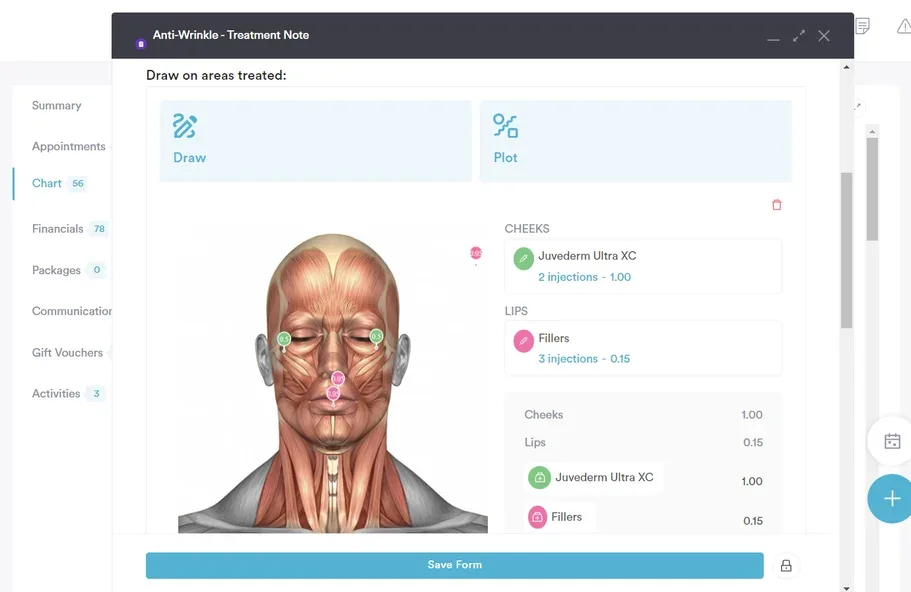
A defensible 17107 claim needs all of the following in the structured medical forms and the operative note:
Store clinical records where you can retrieve them fast. Records requests for lesion destruction codes are common, and same-day retrieval protects the practice inside a time-limited response window.
The National Correct Coding Initiative sets out which code pairs cannot go on a claim together without a modifier. Four of its edits touch 17107 regularly, and each one has a clean way through.
Check the current CMS NCCI edit tables before billing 17107 with any adjacent code. They are updated quarterly, so last quarter’s pairing is not a safe guide.
Medicare coverage for 17107 turns on medical necessity. Cosmetic intent is an outright exclusion under Section 1862(a)(10) of the Social Security Act. Separating cosmetic cases from medically necessary ones at intake, through compliance management tools, keeps them out of the billing queue.

Two MAC billing and coding articles, A57161 and A57162, cover benign skin lesion removal and exclude actinic keratosis and Mohs surgery.
They set the documentation expectations local coverage builds on. Check the policy in your own jurisdiction, since laser treatment of vascular lesions often carries a separate one.
Confirming coverage beforehand costs less than appealing afterwards. A completed prior authorization form sitting next to the appointment stops a case reaching the laser before the coverage answer arrives.
Both codes destroy skin lesions, and neither descriptor limits the body site, which is why they get mixed up. Lesion type is the split. CPT 17110 excludes cutaneous vascular proliferative lesions and skin tags, so a vascular lesion has only one route.
Treated a port wine stain and three warts in one visit? That session earns two codes, one from each family. Document each treatment on its own terms, then check the edit before both go on the claim.
And where do skin tags land? A third route again, 11200 and 11201. Lesion type picks the family every time, and the measurement only picks the tier inside it.
CMS assigns 17106, 17107, and 17108 a 90-day global period, which makes them major surgical procedures for billing purposes.
That is far longer than the 10-day window on most dermatology destruction codes. CMS spells out what the package covers in its global surgery booklet.
Vascular lesions rarely clear in one visit, which is why this matters so much here. Port wine stains usually need a series of pulsed dye laser sessions. Every session inside 90 days needs the staged modifier, plus a note showing the plan called for it.
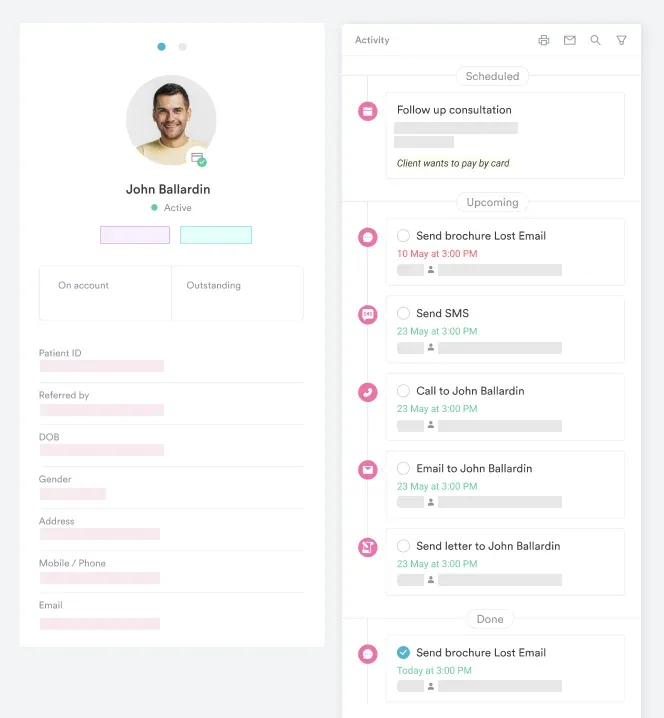
Track those 90 days on the schedule rather than in someone’s memory. Practices running laser series in a plastic surgery EMR can see the window on the appointment itself, before the follow-up claim goes out.
The errors below turn up again and again on vascular destruction claims. None of them are modifier problems, which is what makes them easy to miss on a first read.
A reference page tells you what the code means, and your billing system is where the claim gets built. The steps below hold whether you run a standalone billing platform or claims management software inside the patient record.
Run this list on any 17107 claim before it leaves the practice. It takes a minute and catches nearly every avoidable denial on this code.
Practices running billing through automated workflows can keep that checklist inside the treatment form itself. The note is then complete before anyone starts building the claim.
Most 17107 denials start in the treatment room rather than the billing screen. The measurement, the lesion type, and the plan for further sessions all have to reach the claim intact. On paper, they usually do not.
Practice management software like Pabau keeps the note and the claim in one patient record. Staff record each lesion’s dimensions and the combined total in a structured treatment form, then build the claim from that same record. Because the staged treatment plan lives in the note, a biller can see why the second session carries modifier -58. Claim accuracy is cheaper to build at entry than to repair in an appeal. Coding sits in the middle of the revenue cycle, between registration and payment posting.
Claim status, payments, and denials land in one worklist, so a rejected 17107 claim surfaces in days instead of at month end. When a records request arrives, the note, the measurements, the consent, and the photographs all come out of the same record.

Pabau’s claims management software lets dermatology and plastic surgery practices enter CPT codes, attach ICD-10 pairings, apply modifiers, and track claim outcomes in one system. Nothing gets retyped between a reference site and a separate billing platform.

Two variables carry this code, and both are settled in the treatment room rather than the billing screen. Measure every lesion, add the areas together, and write the arithmetic down. That one habit prevents most downcodes across 17106 to 17108.
Then treat the 90-day window as part of the code itself. A series of laser sessions is normal care for a port wine stain. Each session inside the window needs the staged modifier, and a plan in the note that supports it.
Get the measurement, the diagnosis pairing, and the staged-session modifier right, and the claim holds up on audit. To see how Pabau keeps 17107 coding, documentation, and claim tracking in one record, book a demo.

Coding hearing loss before the type is known? Unspecified right ear hearing loss code applies when the loss type in the right ear has not yet been determined.
Wondering how a post-procedure service is reported? CPT code 15851 walks through suture and staple removal, and how it meets a global period.
Billing injectables in the same practice? HCPCS code J0585 covers unit-based reporting for botulinum toxin, where arithmetic drives the claim in much the same way.
Unsure how charges reach the claim form? Superbill explains what belongs on one and how it feeds the codes your biller submits.
Tracking denials across a whole practice? Revenue cycle management shows where a denied dermatology claim is caught and reworked.
It falls to 17107. CPT 17106 stops below 10 sq cm, and 17107 opens at 10.0. Never round a smaller area up to reach the higher tier, and keep the dimensions that produced the total.
Office treatment uses place of service 11, which pays the non-facility rate. Use 22 for hospital outpatient and 24 for an ambulatory surgery center, where the lower facility rate applies instead.
Cosmetic treatment is excluded by statute, so an Advance Beneficiary Notice is voluntary rather than required. Issuing one anyway puts the patient’s financial responsibility in writing before treatment starts.
No. The device, the disposables, and the treatment room are already paid for through the practice expense RVU. There is no separate supply or equipment code to add.
Not automatically. Commercial global periods come from your contract and the payer’s own policy, and some run shorter than Medicare’s. Check the fee schedule attachment before you assume 90 days.
Medicare allows 120 days from the initial determination to request a redetermination. Send the operative note, the measurements, and the photographs with the request rather than waiting for a records demand.