



HCPCS code E0198: Water pressure pad billing guide
HCPCS code E0198 is a water pad for a standard mattress HCPCS code E0198 is the ...

Last Updated: Oct 13, 2026

CPT code 11950 covers a subcutaneous injection of filling material, such as collagen, at a total volume of 1 cc or less.
Volume alone separates 11950 from 11951, 11952, and 11954, so one code goes on the claim per session.
Medicare treats soft tissue augmentation as cosmetic, so 11950 is normally non-covered without documented functional impairment.
For HIV-associated facial lipoatrophy, the code Medicare pays is G0429 rather than anything in the 11950 family.
Practice management software like Pabau keeps the treatment note, the diagnosis, and the claim on one record, so problems surface before you submit.
CPT code 11950 is the billing code for a subcutaneous injection of filling material, such as collagen. It applies when the total volume injected is 1 cc or less. The code sits in the Introduction or Removal Procedures on the Integumentary System section of the CPT code set.
Reading the descriptor is the easy part. Getting paid for it usually isn’t. Medicare treats most filler work as cosmetic, so a claim only survives when the record proves otherwise. And because the four codes in this family differ only by volume, one undocumented cubic centimeter is enough to trigger a denial.
So most of the work that gets 11950 paid happens in the treatment note, well before the claim goes out. Here’s what belongs in it, and where these claims usually break.
CPT code 11950 describes injecting filling material under the skin at a total volume of 1 cc or less. The material itself doesn’t change the code.
AMA’s official descriptor reads: Subcutaneous injection of filling material (e.g., collagen); 1 cc or less.
In practice that covers far more than collagen. Hyaluronic acid, calcium hydroxylapatite, and poly-L-lactic acid all fall under 11950 when the session total stays at or below 1 cc. Billers in plastic surgery and dermatology practices see the code most often for atrophic scar correction, perioral lines, and lip augmentation.
Pick the code that matches the total volume injected during the session. That single decision, not the number of syringes or sites, is what separates 11950 from 11951, 11952, and 11954.
Only one code from the family goes on the claim. Report the code whose threshold covers the full volume injected that day, and never stack two of them for multiple syringes.
Worked example. A patient receives 0.6 cc in the nasolabial folds and 0.8 cc in the lips at one visit. The session total is 1.4 cc, so the claim carries 11951 once. Reporting 11950 twice, or 11950 plus 11951, reads as unbundling.
Practices that map filler placement visually catch these mismatches faster. Comparing the filler face mapping record against the billed volume takes seconds, and it prevents the most common denial on this family.
Usually nothing. Medicare classifies soft tissue augmentation as cosmetic, so the fee schedule amount matters mainly as a benchmark. Practices use it to set self-pay prices and to sanity-check commercial contracts.
The figures below are approximate 2026 national amounts. Check them against your own Medicare Administrative Contractor payment file before you rely on them. The CMS fee schedule lookup returns current rates by locality.
Those estimates come from published 2026 fee schedule data and still need confirmation against the current CMS file. Geographic adjustment can move the non-facility figure 10% to 20% in either direction.
Medicare multiplies a code’s relative value units, known as RVUs, by a national conversion factor. For 2026, CMS finalized two conversion factors. Which one applies depends on whether you qualify under an advanced alternative payment model.
The same conversion factor applies in both settings, so the difference between them sits entirely in practice expense. Confirm the component values against the published fee schedule files before using them in projections.
A work RVU near 0.75 reflects a short, low-complexity injection. In the office the practice buys the filler, the needles, and the room, so CMS assigns a higher practice expense value there.
Codes built around equipment go a step further: a bone density scan billed under CPT code 77080 splits into technical and professional components. The facility that owns the scanner bills TC, and the physician who reads the images bills modifier 26. No code in the 11950 family divides that way.
Most modifier decisions on 11950 come down to one question. Was the injection a distinct service, or part of another procedure billed the same day? That is precisely what modifier -59 signals on the claim.
Say a provider injects filler at one site and bills a Mohs excision as 17313 at another on the same date. Modifier -59 tells the payer those were separate services. Leave it off and an NCCI edit can deny the line automatically.
Document the anatomic site and the clinical indication separately for every procedure performed on the same date as 11950. A note that records the injection site, the volume, and the diagnosis driving necessity gives that modifier real support. Without those three details, a -59 line rarely survives an audit.
The ICD-10-CM code you link to 11950 is what tells a payer the injection was reconstructive. Nothing else on the claim carries that signal.
No diagnosis code turns 11950 into a covered service on its own. The record still has to explain why the defect matters clinically rather than cosmetically. Time-based and complexity-based selection can point at different codes, so the documented medical decision making decides.
One exception sits outside the family altogether. Where Medicare covers filler for HIV-associated facial lipoatrophy, the payable code is G0429, not 11950. The filler supply is billed separately under its own HCPCS code. Check that route first when the diagnosis is B20.
The diagnosis then reaches the biller with the note, instead of being reconstructed from memory weeks later.

Under CMS policy, soft tissue augmentation performed to improve appearance is not medically necessary care. LCD L34698 sets out the cosmetic and reconstructive surgery rules that cover 11950. You can pull the current wording from the Medicare coverage database.
Exceptions exist, and they all rest on documentation. The strongest cases involve tissue loss after trauma, disease, or surgery. For any of them, the clinical record needs to establish:
Commercial coverage varies far more. Some plans do pay for soft tissue augmentation under a reconstructive benefit, with named indications. Read the medical policy before you schedule, and issue an Advance Beneficiary Notice for Medicare patients whenever coverage looks uncertain.
Practices that already run a med spa compliance routine should fold that notice into it. Any service sitting in a coverage gray zone deserves the same treatment.
Sending the claim takes seconds. Everything that decides its fate happens either before the injection or in the note straight afterwards. Here is the sequence in a practice that bills this code regularly.
Two steps carry most of the risk. Step one decides whether you are billing anyone at all, and step three decides whether the volume can be defended six months later.
A claims management queue that shows the status of each claim surfaces trouble in days rather than months. That timing matters, because a stalled claim is still fixable and a written-off one isn’t.
The National Correct Coding Initiative, known as NCCI, defines which code pairs CMS treats as one procedure. For 11950 the edits bite hardest when another skin procedure happens at the same site on the same day. CMS republishes the NCCI edit files quarterly.
Teams running plastic surgery practice billing should add an edit check to any encounter that pairs 11950 with another skin procedure. One missed edit can trigger a recoupment worth several times the original claim.
Everything above collapses into a short pre-submission list. Work through it and most 11950 denials never happen.
No universal rule applies to 11950. New York Medicaid lists the code on its prior authorization schedule, per eMedNY documentation. Many commercial plans skip authorization for small cosmetic injections, and require it only on reconstructive claims.
Practices handling both cosmetic and reconstructive cases need the indication flagged at intake, so each claim takes the right route before the treatment date. That decision is much harder to make after the fact.
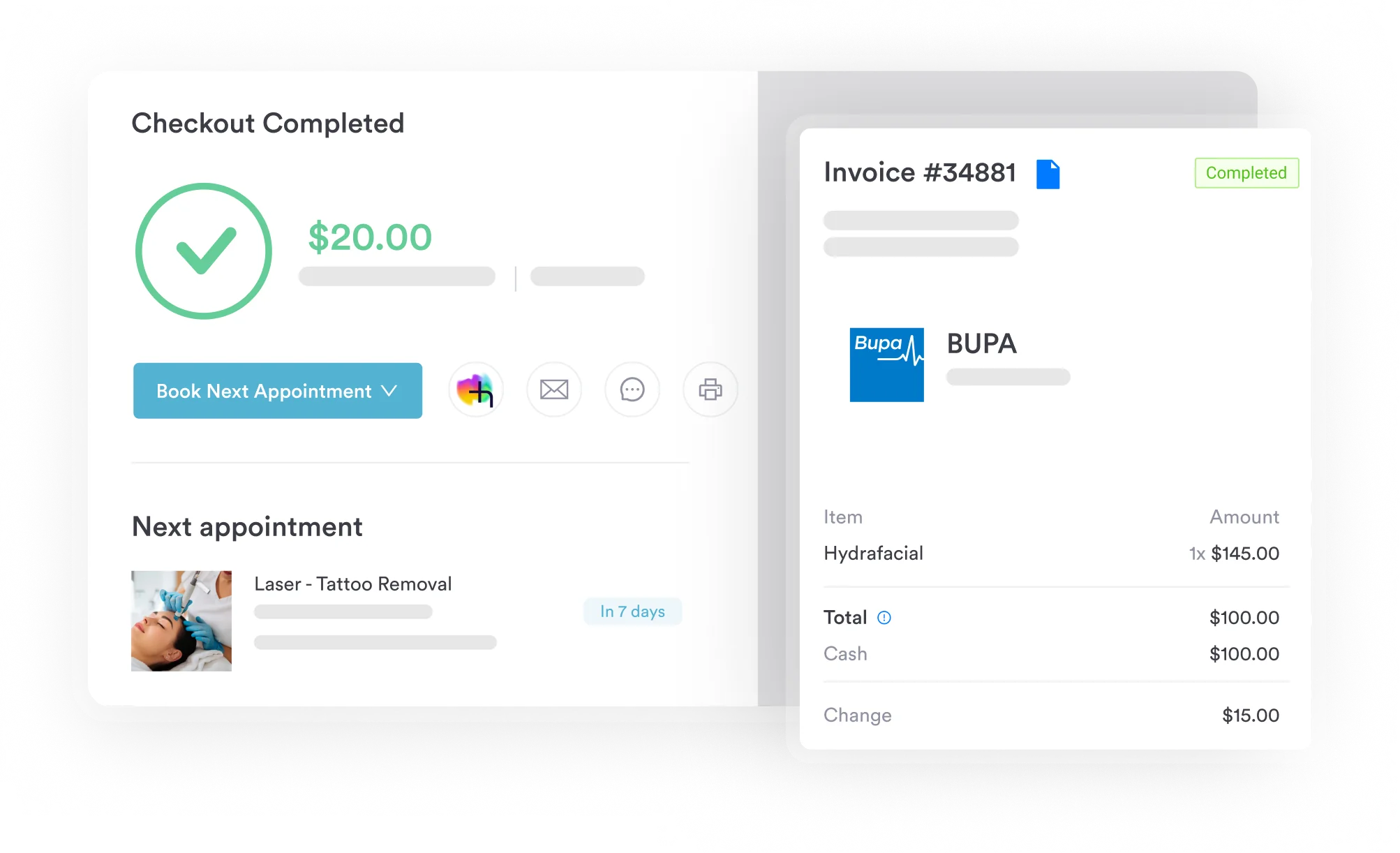
Build an authorization status field into every patient record for procedures in the 11950 family. Track the approval number, the approval date, and the expiry date in the same place as the treatment record. When a payer audits a claim six months later, you need those three data points immediately, not buried in email threads.
The documentation problem here is practical. Volume, site, material, and indication all have to reach the biller from the treatment note. They also have to map cleanly to one code and one diagnosis. In most setups the clinician writes the note in one system, and someone re-enters the codes in another.
Pabau, an all-in-one practice management system, keeps both on the same record. Treatment note templates for injectables prompt the clinician for volume, site, and material while the patient is still in the chair.
On the billing side, Pabau’s claims tools validate the fields an insurer needs before a claim can be sent. The send stays locked until those are complete, and a status view then tracks each claim from submitted through to paid or errored. You still choose the code and the modifiers, but nothing leaves the practice half-finished.
At med spa volumes the same problem repeats hundreds of times a month. A medical spa EMR that links each session’s documentation to its billing entry takes the reconciliation work off someone’s desk entirely.

Pabau links each injectable treatment note to the claim, validates the fields insurers require, and tracks every claim through to payment. Your billers stop chasing volumes and lot numbers after the fact.

Two decisions settle almost every 11950 claim. Get the volume right, then pair it with a diagnosis the record can defend. The rest of the claim is mechanical.
It’s worth being honest with patients about the rest of it. Most filler work is cosmetic, and saying so before treatment is far easier than explaining a denial afterwards. A signed waiver and a clear price beat an appeal every time.
If your notes and your claims live in different systems, that split is where the rework comes from. Book a demo to see how Pabau keeps injectable documentation, diagnoses, and claims on one record.

Coding an uncommon diabetes complication? ICD-10 code E11.69 applies when a diabetes complication does not fit the kidney, eye, neurological, circulatory, or skin categories.
Coding non-diabetic low blood sugar? ICD-10 code E16.1 covers non-diabetic, non-drug-induced hypoglycemia, including reactive and functional forms.
Coding alcohol-induced Cushing’s-like symptoms? ICD-10 code E24.4 covers alcohol-induced pseudo-Cushing’s syndrome, clinically distinct from other forms of Cushing’s syndrome.
Coding an uncommon testicular disorder? ICD-10 code E29.8 is a male-specific code for testicular dysfunction that does not meet criteria for hyperfunction or hypofunction.
Billing another cosmetic-versus-medical dermatology service? 15788 walks through the same coverage judgment for chemical peels.
The injection code pays for the work, not the material. Commercial payers that cover the service sometimes allow a separate HCPCS supply code for the filler, so check the plan’s policy first. Medicare will not pay a supply code when the underlying injection is non-covered.
No. Botulinum toxin is chemodenervation, not soft tissue augmentation. Therapeutic facial toxin injections are reported with a chemodenervation code such as 64612, plus a J code for the units of drug supplied. Mixing the two families is a common source of denials in aesthetic practices.
Only where the payer’s incident-to and supervision rules allow it, and those vary by state and by plan. The record must name who performed the injection and show that the required supervision was in place. Purely cosmetic, self-pay treatments sit outside this, because no claim is filed.
You don’t have to, because no claim reaches a payer. Many practices still log the code internally, since it keeps volume data, consent, and pricing consistent between practitioners. Keep the cosmetic and insurance-billed workflows clearly separated so nothing crosses over by accident.



