HCPCS code E0198: Water pressure pad billing guide
HCPCS code E0198 is a water pad for a standard mattress HCPCS code E0198 is the ...

Last Updated: Oct 13, 2026

CPT code 01770 describes anesthesia for procedures on arteries of the upper arm and elbow, not otherwise specified (NOS).
The code carries a base unit value of 6; total reimbursement uses the formula (Base Units + Time Units) x Anesthesia Conversion Factor.
Physical status modifiers P1-P6 are required on every claim; omitting them is one of the most common denial triggers for anesthesia billing.
Practice management software like Pabau helps surgical practices keep anesthesia time records and operative documentation organized and audit-ready.
CPT code 01770 is the anesthesia billing code for procedures on arteries of the upper arm and elbow when the surgeon hasn’t specified the exact artery. In fact, it shows up most often in vascular and orthopedic surgery. Getting the claim right depends on matching the base unit value, calculating time units correctly, and appending the required physical status and provider modifiers. In short, this guide covers the official descriptor, base units, modifiers, ICD-10 pairings, and Medicare reimbursement for CPT code 01770.
According to the American Medical Association (AMA), CPT code 01770 belongs to the Anesthesia section (codes 00100-01999). Additionally, the AMA maintains and publishes the CPT code set, and 01770 is an active, billable code. It covers anesthesia administered for procedures performed on the arteries of the upper arm and elbow when the specific arterial target is not separately identified, hence the “not otherwise specified” (NOS) qualifier.
The NOS designation matters. In particular, it signals that the claim is appropriate when the documentation describes a qualifying arterial procedure in the anatomical region but does not specify a named vessel beyond the general category. If a specific artery (such as the brachial artery with a more targeted repair) is documented and a more specific code exists, that code takes precedence over 01770.
Every anesthesia CPT code carries an assigned base unit value. For CPT code 01770, the base unit value is 6, as established in the CMS Anesthesiologists Information Center base unit file and the ASA Relative Value Guide. Generally, base units reflect the relative complexity and risk of delivering anesthesia for a given procedure. Thus, a higher base unit value means greater complexity. For reference, simple superficial procedures typically carry 3-4 base units, while major vascular surgery can carry 13 or more.
However, base units alone do not determine payment. In addition, time units, qualifying modifiers, and the anesthesia conversion factor all factor in. Billing teams should verify the base unit value for 01770 against the current-year CMS Anesthesia Base Unit file, as values are subject to annual review. In contrast, commercial payers may apply different base unit values from their own fee schedules.
Anesthesia billing uses a unit-based formula rather than a flat fee per service. The standard formula, confirmed by ResDAC and AAPC coding guidelines, is:
Total Units = Base Units + Time Units + Modifying Units
Reimbursement = Total Units x Anesthesia Conversion Factor (ACF)
Specifically, time units are calculated by dividing total anesthesia time (in minutes) by 15. Most payers use 15-minute increments, though some use 10-minute intervals. Always verify with the specific payer. Finally, modifying units come from qualifying circumstances (CPT 99100-99140) when applicable.
Practices using Pabau’s medical records management can keep anesthesia start and stop times alongside the operative note, so time units are easy to verify later. For specialty surgical practices, having anesthesia records and clinical documentation in one place is where the biggest time savings occur.
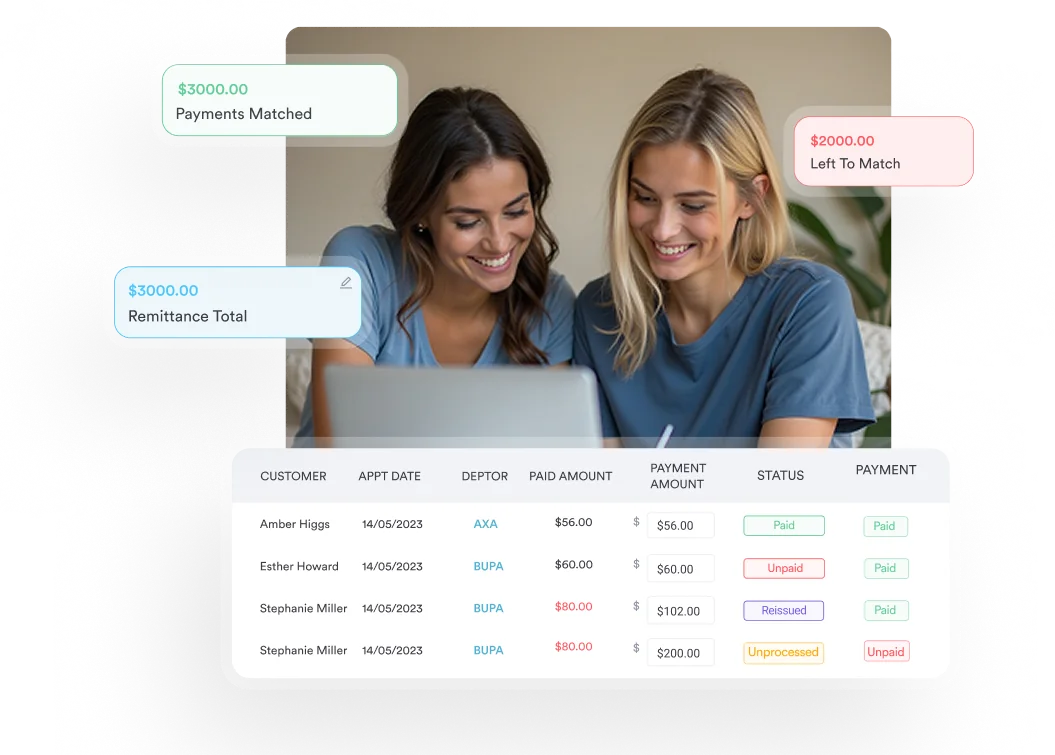
Always document anesthesia start and stop times to the minute in the operative record. Payers audit time unit calculations frequently for anesthesia codes. A 15-minute discrepancy between the operative note and the claim can trigger a full medical record review.
A claims management tool flags underpaid anesthesia claims quickly, so base-unit and time-unit errors don’t quietly cost you revenue.
Notably, anesthesia modifier requirements differ from those applied to other CPT code sections. Two modifier categories apply to CPT code 01770: physical status modifiers (P1-P6) and anesthesia provider modifiers (AA, QK, QX, QY, QZ). Moreover, both categories affect reimbursement. Furthermore, both are required on Medicare claims.
Physical status modifiers reflect the patient’s pre-anesthesia health classification. They are derived from the American Society of Anesthesiologists (ASA) physical status classification system. Each modifier also adds a different number of base units to the claim total. As a result, omitting this modifier is a leading cause of anesthesia claim rejection under Medicare.
Provider modifiers identify who delivered the anesthesia and under what supervision model. Consequently, these determine the reimbursement percentage Medicare pays. A CRNA billing under medical direction (QX) receives 50% of the allowable; the supervising physician bills QY for the other 50%. By contrast, an anesthesiologist who personally performs and continuously supervises the case bills modifier AA for 100% of the allowable. These rules are payer-specific. Therefore, check your Medicare Administrative Contractor (MAC) local coverage determinations before assuming any modifier applies universally.
Qualifying circumstance codes (99100-99140) may be billed alongside CPT code 01770 when patient or procedural conditions significantly complicate the anesthesia. Each adds modifying units to the calculation. Not all commercial payers reimburse these separately. Verify coverage before billing.
Practices that handle complex surgical cases can connect their clinical documentation to billing workflows more easily when both live in the same platform. Separate systems for operative notes and billing create gaps that make qualifying circumstance claims harder to substantiate during audit.

Pabau helps surgical and procedural practices organize operative notes, anesthesia time records, and pre-anesthesia evaluations in one place, so billing teams have what they need for coding and audits.

First, every anesthesia claim must be supported by a primary diagnosis code that establishes medical necessity. Specifically, for CPT code 01770, the paired ICD-10-CM code reflects the underlying condition requiring the vascular procedure on the upper arm or elbow. Specifically, the table below lists the most commonly reported diagnosis codes alongside this anesthesia code. In addition, medical necessity must be documented in the pre-anesthesia evaluation for each claim. In addition, payers may have local coverage determinations (LCDs) that restrict which ICD-10 codes satisfy medical necessity for a given anesthesia code. A payer reviewing this code looks for the reasoning in the note, not only the conclusion, so the documentation level matters. An appeal filed after the timely filing window is denied on timeliness alone, whatever the coding showed.
This crosswalk is not exhaustive. When selecting the ICD-10-CM code for claims paired with CPT code 01770, always code to the highest level of specificity supported by the operative note and pre-anesthesia evaluation. Use the AAPC CPT-to-ICD-10 crosswalk to identify additional valid pairings for your specific clinical scenario. Reviewing ICD-10 coding for surgical practices is also a core part of HIPAA-compliant billing workflows, particularly when preparing for payer audits.
Generally, Medicare calculates anesthesia reimbursement using the anesthesia conversion factor (ACF) published annually by the Centers for Medicare and Medicaid Services (CMS). Moreover, the ACF changes every year and varies by geographic location through the Geographic Practice Cost Index (GPCI) adjustment. As a result, no single dollar figure applies to all claims for CPT code 01770 nationwide.
To calculate estimated Medicare payment for a specific claim, multiply the total units (base + time + modifying) by the ACF for the relevant year and locality. Finally, always verify the current ACF through the CMS Anesthesia Conversion Factor file or your MAC. Meanwhile, commercial payers apply their own conversion factors, which typically differ from Medicare rates. Notably, anesthesia codes are priced by units, not work RVUs, so an RVU-based lookup tool doesn’t apply here; use your MAC’s published anesthesia fee schedule for historical benchmarks instead.
Surgical practices billing anesthesia codes can simplify the annual fee schedule update process through practice management software that centralizes billing records alongside clinical documentation. When conversion factors change, having a single source of truth for procedure codes and payer rules reduces the risk of billing at the wrong rate through the transition period.
CPT code 01770 carries the NOS qualifier because a more specific code doesn’t exist for every arterial procedure in this anatomical region. Before defaulting to 01770, review the adjacent codes in the anesthesia section to confirm the right selection. Using a specific code when one exists is required under HIPAA medical coding standards for electronic healthcare transactions.
For example, the most common selection error is billing 01770 when 01772 (embolectomy) applies. For instance, if the operative report documents an embolectomy of an upper arm artery, 01772 is the correct code. Therefore, CPT code 01770 is appropriate only when no more specific code in the 01770-01782 range matches the documented procedure. Review the AAPC Codify CPT lookup to confirm the full descriptor for each adjacent code before finalizing the claim.
Billing teams preparing for payer audits or internal compliance reviews should watch for the following common errors when billing CPT code 01770.
For surgical practices managing a high volume of anesthesia cases. This is especially useful when multiple providers share anesthesia responsibilities across a day’s caseload. The patient scheduling workflow directly feeds the data that anesthesia billing depends on.
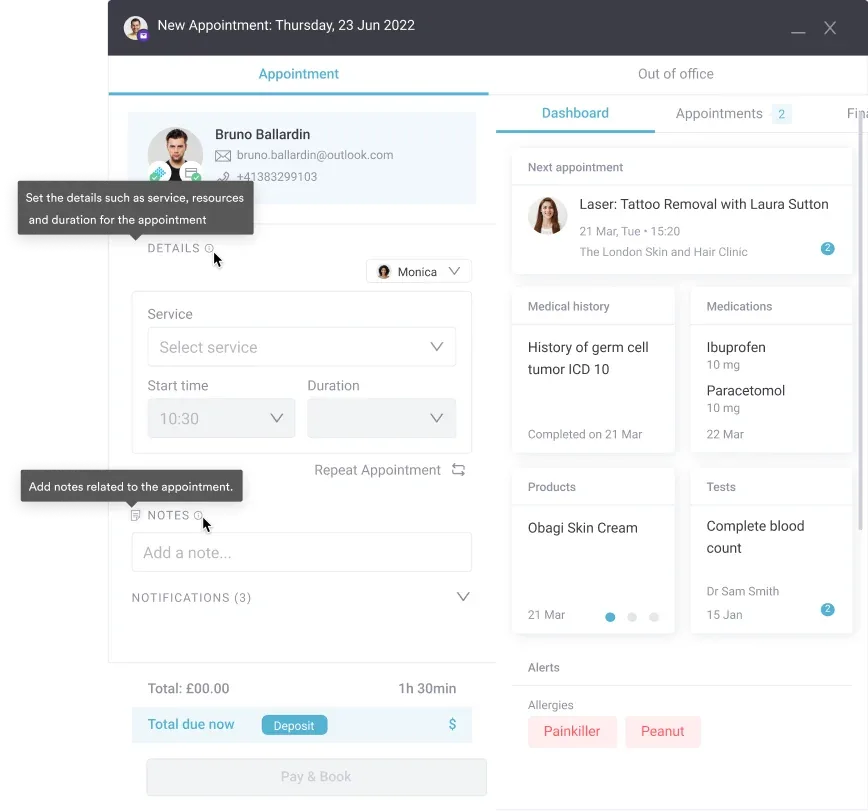
Run a quarterly audit of all CPT code 01770 claims submitted in the prior 90 days. Check three things: physical status modifier present, time units consistent with operative record, and provider modifier matching the documented supervision arrangement. Catching these systematically costs far less than a payer audit.
Anesthesia billing is one of the most documentation-intensive areas of medical coding. Claim accuracy depends on operative notes, pre-anesthesia evaluations, time records, and supervision logs all aligning with the submitted code and modifier combination. For surgical and procedural practices.
Practices managing multi-provider anesthesia teams can use Pabau’s team management tools to track which provider delivered anesthesia for each case, making supervision modifier selection more straightforward. The digital forms feature supports pre-anesthesia evaluation documentation, keeping consent and assessment records accessible alongside billing data.
For practices across multiple surgical sites. See how the full platform works for plastic surgery practices.
If your practice handles complex surgical anesthesia cases and wants documentation that holds up to a payer audit, practice management software is a useful starting point before evaluating specific solutions.

Billing a prenatal at-risk assessment? prenatal assessment billing guide covers the documentation, modifiers, and units that keep a state Medicaid claim paid.
Billing anesthesia for a hip procedure? CPT code 01210 uses the same base-unit-plus-time-unit formula for open procedures on the hip joint.
Need the anesthesia code for lithotripsy? CPT code 00873 covers anesthesia for lithotripsy performed without a water bath.
Looking up anesthesia for an amputation? CPT code 01140 applies to anesthesia for hindquarter amputation.
CPT code 01770 is a specific, billable anesthesia code for procedures on arteries of the upper arm and elbow when no more specific code applies. The claim’s accuracy depends on matching the base unit value correctly, calculating time units from the right start and stop points, appending the required physical status and provider modifiers, and pairing the right ICD-10-CM code. Missing any one of these components is enough to trigger a denial or a payer audit.
For surgical practices submitting high volumes of anesthesia claims, keeping clinical documentation and time records in one platform removes the reconciliation step that slows claim preparation. To see how Pabau helps procedural and surgical specialties keep anesthesia documentation organized and audit-ready, book a demo with the team.
CPT code 01770 is an anesthesia billing code that covers anesthesia services for procedures on the arteries of the upper arm and elbow when no more specific arterial procedure code applies. It is classified under the CPT Anesthesia section (00100-01999) and is an active, billable code maintained by the American Medical Association.
CPT code 01770 carries a base unit value of 6, as established by CMS. This value is used in the anesthesia billing formula: (Base Units + Time Units + Modifying Units) x Anesthesia Conversion Factor. Verify the current value annually against the CMS Anesthesia Base Unit file, as commercial payers may apply different values.
Two modifier categories are required: a physical status modifier (P1-P6 reflecting the patient’s pre-anesthesia health status) and a provider modifier (AA, QK, QX, QY, or QZ reflecting who delivered the anesthesia and the supervision model). Omitting the physical status modifier is the most common cause of denial for anesthesia claims under Medicare.
Commonly paired ICD-10-CM codes include I74.2 (embolism and thrombosis of arteries of upper extremities), I72.1 (aneurysm of artery of upper extremity), and I77.2 (rupture of artery). The correct diagnosis code must reflect the specific condition documented in the operative record and pre-anesthesia evaluation, coded to the highest level of specificity.
Yes, CPT code 01770 is billable under Medicare. Reimbursement is calculated using the Medicare anesthesia conversion factor for the applicable year and locality, multiplied by the total units. Rates vary by geographic location due to GPCI adjustments. Verify the current conversion factor with CMS or your Medicare Administrative Contractor before projecting payment amounts.