CCSD code XR940: Foreign body retrieval billing guide
CCSD code XR940 is the UK private healthcare code for retrieval of a foreign bod...

Last Updated: Nov 26, 2026
CCSD code XR917 is the UK private-sector code for inserting a peripherally inserted central venous catheter (PICC) under X-ray guidance. The XR prefix names the guidance method, while the procedure itself is vascular access, so code and document it as a line insertion.
XR917 sits in sub-chapter 17.13.0, “Other”, of chapter 17, Interventional Radiology, in the CCSD schedule. That sub-chapter also holds XR920, which covers cyst ablation under imaging control. So does code XR963, for percutaneous chemical ablation of a tumor under CT guidance. A PICC placed without X-ray guidance takes a different code, XR918, so the procedure note has to name the guidance. Fees and pre-authorization rules come from each insurer rather than from CCSD.

CCSD code XR917 covers PICC insertion under X-ray guidance, filed in sub-chapter 17.13.0 of chapter 17, Interventional Radiology.
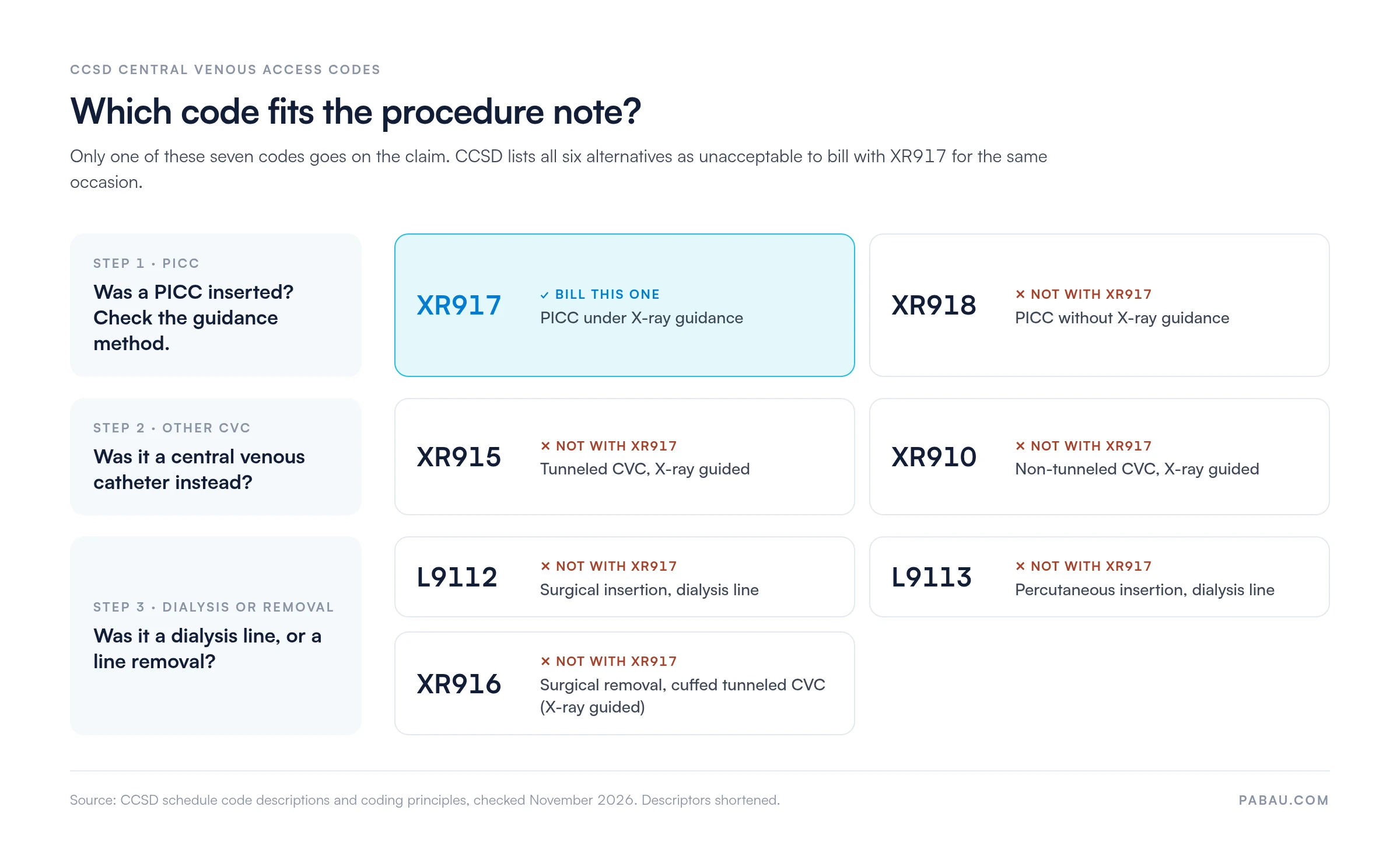
A PICC placed without X-ray guidance is coded XR918, and a tunneled central venous catheter under X-ray guidance is XR915.
CCSD lists XR917 as unacceptable to combine with XR910, XR915, XR916, XR918, L9112 and L9113.
CCSD sets no fees, so each insurer pays XR917 from its own schedule and sets its own pre-authorization rules.
Pabau supports UK insurance billing through Healthcode and Bupa, so XR917 claims can leave from the patient record.
CCSD stands for the Clinical Coding and Schedule Development Group. It maintains the procedure codes that UK private insurers and hospitals use to describe treatment. Its board includes the insurers Aviva, AXA Health, Bupa and Vitality, plus rotating representatives from private hospital groups.
On that schedule, XR917 reads “Peripherally inserted central venous catheters (PICCs) under X-ray guidance”. The XR prefix doesn’t make it a radiology exam. Here’s how the code is set up:
The full CCSD descriptor and its coding principles sit behind a CCSD login, so check them there before you code. For other codes on the same schedule, browse our CCSD code library.
XR917 sits in a short run of central venous access codes. The two easiest to confuse are XR918 and XR915. One drops the X-ray guidance, and the other swaps the PICC for a tunneled line.
Surgical removal of a cuffed, tunneled line under X-ray guidance is coded separately again, as XR916. If a PICC fragment has to be retrieved from a vein, XR940 applies instead, since it covers retrieval of a foreign body under X-ray guidance.
Write the guidance method into the procedure note in plain words. A note that says the PICC was placed under X-ray guidance supports XR917. A note that is silent on guidance leaves the coder choosing between XR917 and XR918.
CCSD names six codes it treats as unacceptable to bill with XR917 on the same occasion. Four are the XR codes in the table above. The other two are dialysis-line insertions, L9112 by the surgical route and L9113 by the percutaneous route.
The chart below works from the procedure note to the one code that fits it.
Insurers decide whether to adopt CCSD’s combination rules, so one insurer may apply them more strictly than another. Check each insurer’s own coding guidance before you add a second code to an XR917 claim.
There’s no single pre-authorization rule for XR917. Each insurer sets its own, and those rules change. Check the patient’s insurer before the procedure, and confirm the policy covers it.
When an insurer issues an authorization number, record it at booking. Then carry it through to the claim, so the reference and the code travel together.
Your records need to show a PICC placed under X-ray guidance, not just a line inserted. Keep these documents on file before you submit:
CCSD doesn’t publish fees or set reimbursement. Each insurer pays XR917 from its own schedule, and the rate can depend on your recognition agreement. Look the code up in each insurer’s tools:
Confirm the current rate before you set a patient charge. A shortfall between your fee and the insurer’s rate can fall to the patient. For how one insurer’s schedule works, see our Bupa CCSD codes guide.
Many practices still handle XR-series procedure codes across separate systems. The procedure note sits in one place, the authorization number in another, and the claim is keyed into a third. Each hand-off is a chance for the code and its paperwork to drift apart.
Pabau, a practice management platform, keeps them together. Its private practice claims management supports UK insurance billing through Healthcode and Bupa. The clinical record, the authorization reference and the claim then stay on one patient record.
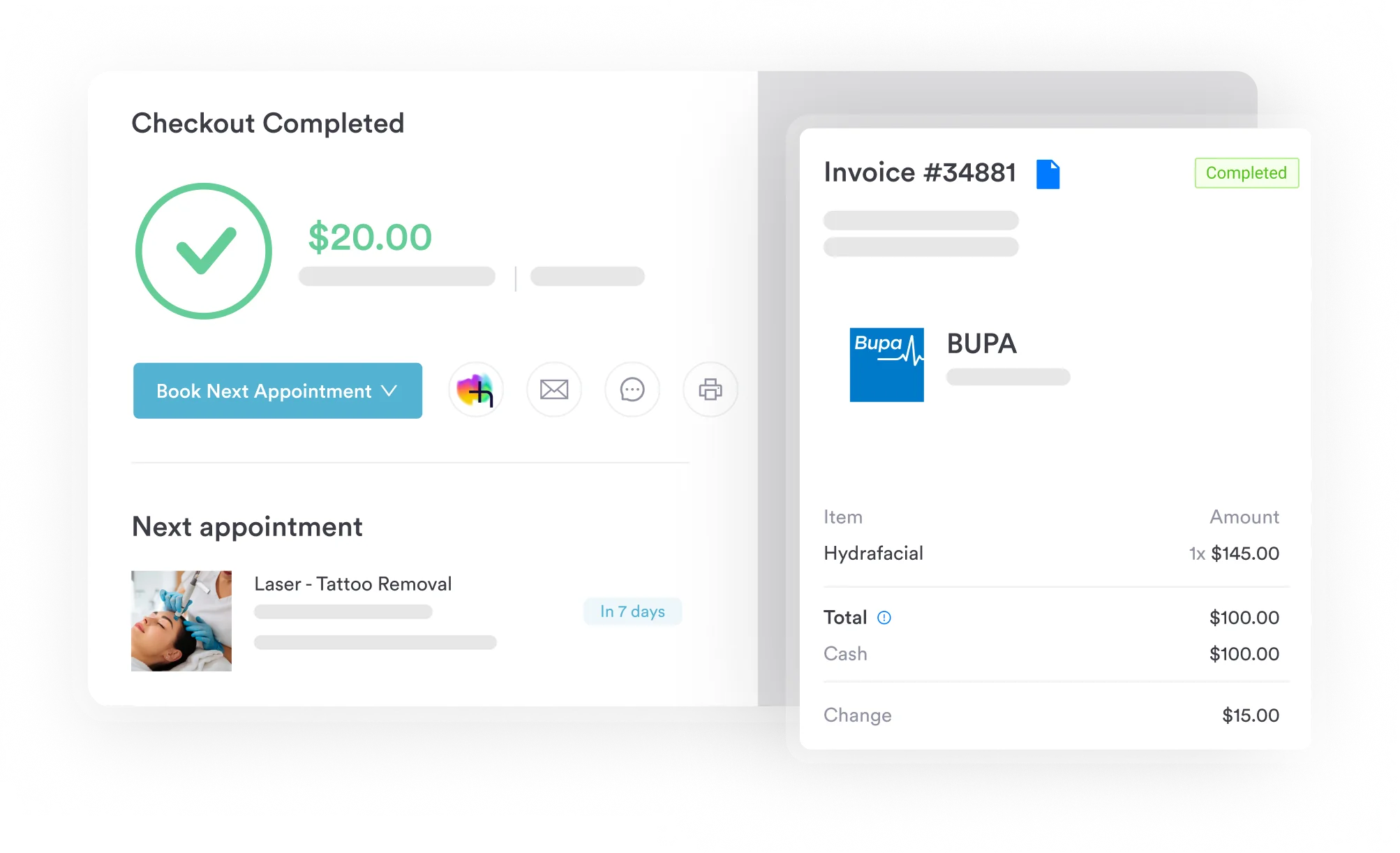
The same record holds your consent forms and clinical notes. When an insurer queries an XR917 claim, the procedure note, consent and authorization number are already in one place.

Pabau supports UK insurance billing through Healthcode and Bupa, so procedure notes, consent and claims share one patient record. See how it works for your practice.

XR917 claims go wrong when the code is read as imaging rather than vascular access. Once you treat it as a guided PICC insertion, the rest follows. The note names the guidance, XR918 stays off the claim, and the CCSD exclusions hold.
The trade-off is that CCSD only sets the code. Fees and pre-authorization stay with each insurer, so check them per claim. Book a demo to see how Pabau keeps XR-series procedure code claims and their records on one patient record.

Need a full reference for Bupa procedure codes? Bupa CCSD codes guide covers the structure of the Bupa procedure code schedule, how fees are set, and how to look up specific codes.
Checking what Bupa pays for a CCSD code? Bupa procedure codes fee schedule explains how Bupa’s published fee schedule works and where recognized practitioners can access current rates.
Taking a tunneled line out? CCSD code XR916 guide covers surgical removal of a cuffed, tunneled central venous catheter under X-ray guidance.
Removing a dialysis line instead? CCSD code L9114 guide explains how removal of a central venous dialysis line is coded.
XR917 covers inserting a PICC under X-ray guidance. CCSD files it in sub-chapter 17.13.0 of chapter 17, Interventional Radiology. The full descriptor needs a CCSD login.
CCSD doesn’t publish fees. Each insurer, such as Bupa, Aviva, AXA Health or Vitality, pays XR917 from its own schedule. Check the current rate with each insurer before billing.
Each insurer sets its own pre-authorization rules for XR917. Check the patient’s insurer before the procedure, and put any reference number on the claim.
Keep the procedure note, the imaging record showing tip confirmation, the operator’s details, signed consent, the referral and any pre-authorization reference.
CCSD lists XR917 as unacceptable to combine with XR910, XR915, XR916, XR918, L9112 and L9113. Insurers choose whether to adopt that rule.
Most queries start when the procedure note doesn’t mention X-ray guidance. Others follow an excluded code on the same claim or a missing authorization number.