Pabau Engage inbox

Pabau Engage is here: every patient conversation in one inbox.

Learn more
Book a demo Book a demo
☰
CCSD Code

CCSD code L9113 – Percutaneous insertion of central venous dialysis line


Code Definition

L9113 is the CCSD code for percutaneous insertion of a central venous dialysis line. It covers placing a hemodialysis catheter into a central vein through a skin puncture, using the Seldinger technique rather than a surgical cutdown.

UK private insurers use L9113 to pay for this access when a consultant places the line for acute kidney injury or as bridging access. Surgical insertion of the same line is coded L9112, and removal is coded L9114.

Group
9 Vascular system
Category
Non-specific
Subcategory
9.6.0 Non-Specific
Billable
No
Code also known as
dialysis line insertion, haemodialysis catheter placement, central venous dialysis catheter insertion, temporary dialysis access, Seldinger dialysis line
Save time. Improve accuracy. Get paid faster.
Automate coding with Pabau

Let Pabau's smart automation suggest the right codes, reduce claim denials, and keep your practice compliant—effortlessly.

  • AI-powered code suggestions
  • Real-time compliance checks
  • Faster claims, fewer denials
Why practices choose Pabau
Save hours every week

Automate repetitive tasks and focus on what matters most—your patients.

Improve accuracy

Reduce coding errors and ensure compliance with the latest regulations.

Get paid faster

Clean claims, fewer denials, and faster reimbursements.

Grow with confidence

Powerful insights and reporting to help your practice thrive.

HIPAA compliant SOC 2 certified GDPR-compliant Trusted by 4,000+ clinics worldwide

Key takeaways

Key takeaways

CCSD code L9113 covers percutaneous insertion of a central venous dialysis line, placed through a skin puncture rather than a surgical cutdown.

Surgical insertion of the same line is coded L9112, and removal of a central venous dialysis line is coded L9114.

The operative note should state that the catheter is non-tunneled, because tunneling status is where most coding errors on these claims start.

Most UK private insurers require pre-authorization for an elective L9113 insertion, while emergency insertions may allow retrospective authorization.

Pabau, the practice management platform we build, keeps the procedure note, the authorization reference and the insurer claim on one patient record.

What is CCSD code L9113?

CCSD code L9113 is the code for percutaneous insertion of a central venous dialysis line in the Clinical Coding and Schedule Development Group (CCSD) schedule. The CCSD Group’s published schedule holds the standard procedure codes for the UK private healthcare sector. L9113 sits in its vascular system chapter.

The code applies to catheter placement through a skin puncture using the Seldinger technique, without surgical cutdown, subcutaneous tunneling, or a cuff. Its scope is narrow by design. L9113 is the non-tunneled, non-surgical route to central venous hemodialysis access, while surgical insertion of the same line is coded L9112.

CCSD is the recognized procedure coding schedule for private healthcare billing in the United Kingdom. Payers including Bupa, AXA Health, Vitality, Aviva, and WPA process claims for consultant-performed procedures using CCSD codes. When a nephrologist or interventional radiologist places the catheter percutaneously in a private hospital, L9113 is the code that prices that work.

The procedure: Percutaneous central venous dialysis line insertion

Percutaneous central venous dialysis line insertion places a large-bore double- or triple-lumen catheter into a central vein through a skin puncture. The vessel is never exposed surgically. The standard approach is the Seldinger technique, which proceeds through the following sequence:

  1. Site selection. The internal jugular vein (IJV) is preferred for most acute insertions due to lower pneumothorax risk and easier compressibility. The subclavian and femoral veins are alternatives, with femoral access reserved for patients whose upper-body access is constrained.
  2. Ultrasound guidance. Real-time ultrasound is now standard for IJV and subclavian access. It confirms vein patency, identifies anatomy, and reduces arterial puncture risk.
  3. Needle-wire-dilator sequence. A hollow needle punctures the vein under ultrasound guidance, and a guidewire is threaded through the needle lumen. The needle is removed, and a dilator is passed over the wire to open the tract.
  4. Catheter advancement. The dialysis catheter (typically 11.5 Fr dual-lumen) is passed over the wire into the central vein. The tip is advanced to the cavoatrial junction for optimal flow dynamics.
  5. Tip position confirmation. A chest X-ray is obtained immediately after insertion to confirm the tip position and exclude pneumothorax. Only then is the catheter used for hemodialysis.

Fluoroscopy guidance may supplement or replace ultrasound in interventional radiology suites, particularly for complex anatomies or when repositioning is required. Whether the procedure happens at the bedside, in a procedure room, or under fluoroscopy affects which add-on codes may be billed alongside L9113.

Clinical indications: When is L9113 used?

L9113 is performed and billed when a patient needs urgent or time-limited hemodialysis access. That access cannot wait for a surgically created arteriovenous fistula or graft to mature. The main clinical scenarios are:

  • Acute kidney injury (AKI). Patients with AKI requiring renal replacement therapy need immediate vascular access. A percutaneous non-tunneled catheter provides access within hours.
  • End-stage renal disease (ESRD) bridging access. Patients awaiting fistula or graft maturation (typically six to eight weeks) require a temporary central venous catheter to continue hemodialysis.
  • Fistula or graft failure. When an established access point fails, a central venous catheter provides emergency bridge access while definitive repair or revision is planned.
  • Acute-on-chronic renal deterioration. Patients with known chronic kidney disease (CKD stage 4 or 5) who decompensate acutely may need temporary access while their chronic access is re-established.
  • Hemofiltration in critical illness. Some patients in private critical care units require continuous renal replacement therapy (CRRT). L9113 covers the catheter insertion that enables it.

The clinical indication documented in the operative note must align with the submitted diagnosis code. An AKI insertion where the note records no cause is usually paired with N17.9. Claims citing an elective indication for a catheter inserted as an emergency may be queried on audit.

Tunneled vs non-tunneled dialysis catheters: Choosing the right CCSD code

The most common coding error on dialysis catheter claims is picking the wrong code for the catheter’s tunneling status. L9113 covers only non-tunneled, percutaneous insertion.

Tunneled catheters have a cuff and a subcutaneous tunnel between the skin exit site and the vein entry point. They are billed under a separate CCSD code. Using L9113 for a tunneled insertion is a material coding error and a denial trigger.

FeatureNon-tunneled (L9113)Tunneled (separate CCSD code)
Subcutaneous tunnelNoYes
Dacron cuffNoYes (anchors catheter in tunnel)
Intended durationDays to weeks (temporary)Weeks to years (long-term)
Typical indicationAKI, bridge access, emergencyLong-term HD where fistula not feasible
Procedural complexityLower (no tunnel formation)Higher (tunnel creation required)
Code to useL9113Verify the current CCSD schedule for the tunneled variant

When the operative note does not state the catheter type, claims may be queried or returned for clarification. Write “non-tunneled” or “tunneled” in the procedure record every time.

Pro Tip

Before selecting L9113, scan the operative note for three terms. ‘Tunnel’, ‘cuffed’ and ‘Permcath’ each signal a tunneled insertion that needs a different CCSD code. Non-tunneled catheters exit directly at the vein puncture site with no subcutaneous passage.

Adjacent CCSD L9-series vascular access codes

Knowing the codes next to L9113 prevents under-coding, where a separately reportable procedure is missed, and over-coding, where the wrong code is used. The CCSD Technical Guide (October 2025) also explains the wording of these codes.

An “insertion” code covers a device placed to be removed later, such as a non-tunneled central venous catheter, and includes that removal. An “implantation” code covers a device meant to stay in place, and its removal is coded separately.

CodeOfficial CCSD descriptorKey distinction from L9113
L9113Percutaneous insertion of central venous dialysis lineReference code for this article
L9112Surgical insertion of central venous dialysis lineOpen surgical access to the vein instead of a skin puncture
L9114Removal of central venous dialysis lineRemoval only. An insertion code already covers later removal, so check before billing L9114 after L9113.
L9110Insertion of tunnelled central venous catheter (Hickman line)A tunneled central venous catheter, not a dialysis line
Imaging guidance codesImaging guidance (fluoroscopy, ultrasound)Billed alongside the primary code only when the guidance is separately documented and not bundled by the payer

The Bupa CCSD billing guide shows how one major insurer applies the schedule. Cross-reference the current CCSD schedule edition before submitting any L9-series code combination, as descriptor wording and code numbers can change at schedule updates.

Guidance modalities and add-on codes: Fluoroscopy and ultrasound

Imaging guidance used during percutaneous central venous dialysis line insertion may be separately reportable under CCSD, but only when it meets specific conditions.

Whether that guidance is bundled into L9113 or billable through an add-on code depends on the current CCSD schedule edition and each payer’s fee schedule. Billers should verify the applicable guidance code and bundling rules against the current schedule before submitting.

Key principles that apply across payers:

  • Ultrasound guidance for vascular access is increasingly treated as a clinical standard of care rather than an optional add-on. Some payers bundle it within the primary code fee. Check the current Healix fee schedule and the insurer-specific schedule for bundling rules.
  • Fluoroscopy guidance used for tip positioning or trajectory adjustment in an interventional radiology suite is more often separately reportable. The operative note must state that fluoroscopy was used, its purpose, and that it was performed by or under the supervision of the billing practitioner.
  • Tip confirmation chest X-ray obtained immediately after insertion is part of standard procedural care. It is not separately reportable as imaging unless a different practitioner performs the radiological interpretation.
  • Radiologist co-billing: When an interventional radiologist performs the guidance and a nephrologist inserts the catheter, each practitioner may bill their component separately. The operative note must clearly attribute each element to the responsible practitioner.

Documentation requirements for a valid CCSD code L9113 claim

A valid CCSD code L9113 claim stands or falls on the operative note. Payers reviewing dialysis catheter claims expect documentation that maps one-to-one to what was billed. Digital procedure documentation in your practice management system reduces omissions by prompting for mandatory fields at the point of care.
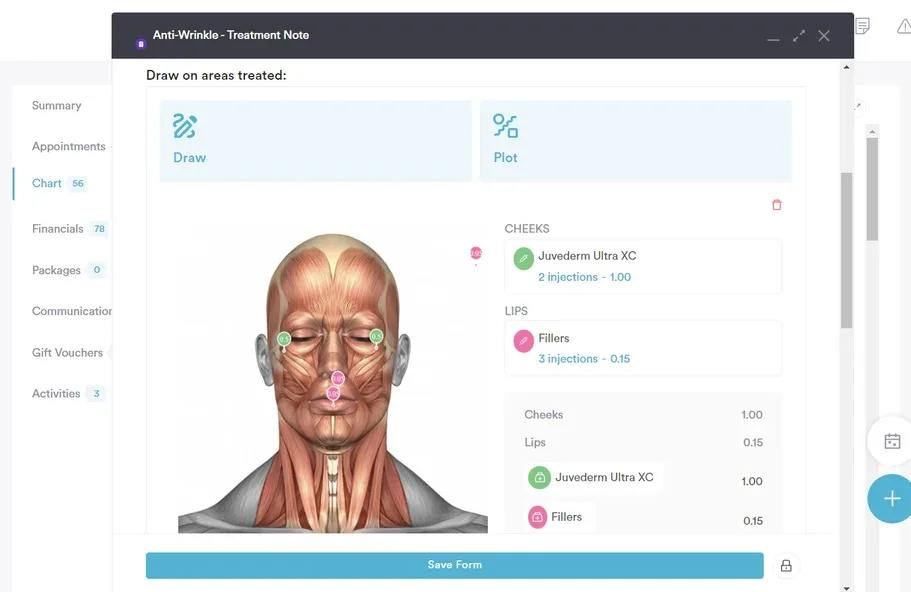
Pabau treatment note with a body diagram for marking treated sites
Pabau’s treatment notes let clinicians mark sites on a body diagram, so the access vein for an L9113 line sits where billing can see it.

The operative note should include all of the following:

  • Clinical indication. The diagnosis driving the procedure (AKI, ESRD bridging access, fistula failure) with enough clinical detail to justify urgent or elective access.
  • Access site. The specific vein used (right internal jugular, left subclavian, right femoral) and the reason for site selection if the preferred site was not used.
  • Catheter type and size. Explicit statement that the catheter is non-tunneled and non-cuffed, with lumen count and French size (for example, 11.5 Fr dual-lumen).
  • Technique. Confirmation that the Seldinger (needle-wire-dilator) percutaneous method was used, without open surgical exposure.
  • Guidance modality. Whether real-time ultrasound guidance was used, fluoroscopy was used, or neither. If guidance was used, state the modality and who performed it.
  • Tip position. Confirmation that a post-insertion chest X-ray was obtained and the tip position (ideally “tip positioned at the cavoatrial junction”). The note also confirms the catheter was aspirated and flushed satisfactorily before use.
  • Complications. Explicit statement that no immediate complications occurred, or documentation of any complication and its management.
  • Operator details. Name, grade, and GMC number of the performing practitioner.

Pre-authorization requirements for CCSD code L9113

Most major UK private payers require pre-authorization before an elective CCSD code L9113 insertion can be billed. The Vitality Health fee finder and equivalent portals for Bupa, AXA Health, and Aviva show whether a procedure needs authorization before booking. A pre-authorization check built into booking prevents the most common avoidable denial, which is a missing authorization on an elective procedure.

Key considerations by scenario:

  • Elective insertion (planned bridging access). Pre-authorization is typically required. Submit the clinical indication, proposed procedure date, and the treating nephrologist’s recommendation to the funder before the procedure date.
  • Emergency insertion (AKI, acute deterioration). Where clinical urgency makes prior authorization impractical, most payers offer retrospective authorization. Contact the funder within 24 to 48 hours of the procedure with full clinical documentation. Confirm the retrospective window in the patient’s policy terms before proceeding.
  • Information funders typically request. The clinical indication with its ICD diagnosis code, the proposed CCSD code (L9113), and the consultant’s name and practitioner number. Funders also ask for the proposed hospital and, where relevant, the estimated length of stay.

Common claim denial reasons and how to avoid them

Funders treat dialysis catheter insertion claims as evidence-dependent. The medical necessity, the catheter type, and the access route each affect what they will reimburse. Pabau’s claims management software gives billing teams a structured workflow for tracking, appealing, and resubmitting denied CCSD claims.

Denial reasonWhy it happensCorrective action
Missing pre-authorizationElective procedure submitted without prior funder approvalBuild a pre-authorization check into booking, and request it before the procedure date
Wrong tunneling codeL9113 submitted for a tunneled insertion, or a tunneled code for a non-tunneled procedureDocument catheter type explicitly in the operative note; audit code selection against note
Inadequate operative noteMissing tip position confirmation, catheter size, or guidance modality documentationUse a structured procedure note template with mandatory fields before submission
Unbundling queryGuidance add-on code billed without adequate documentation of the guidance elementDescribe and attribute the guidance separately in the note, and confirm that payer does not bundle it into L9113
Diagnosis code mismatchICD diagnosis submitted does not support the clinical need for a dialysis catheterMap the clinical indication in the note to the most specific ICD-10 code before submission
Duplicate billingSame procedure billed twice, for example during a re-admission within a short periodConfirm dates and record the clinical reasoning for any repeat insertion

Each denial in the table traces back to one entry in the record. The diagram below pairs each entry with the query it heads off.
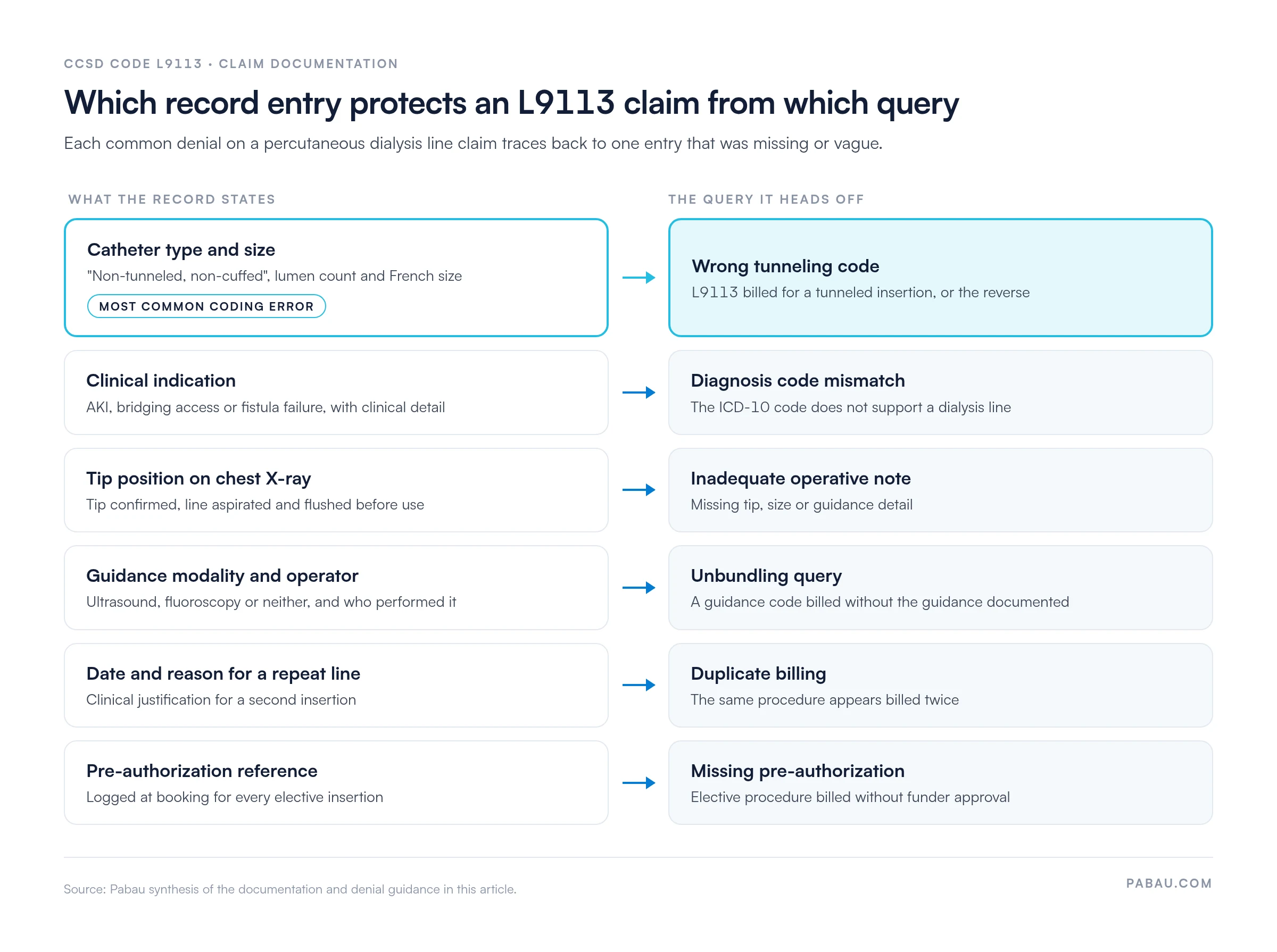
Diagram pairing six record entries with the L9113 claim query each prevents: catheter type and size with wrong tunneling code, clinical indication with diagnosis code mismatch, tip position with inadequate operative note, guidance modality with unbundling query, repeat-line justification with duplicate billing, and pre-authorization reference with missing pre-authorization
Catheter type is the entry to get right first, because tunneling status drives the most common L9113 coding error. Pabau synthesis of this article’s documentation and denial guidance.

How to bill CCSD code L9113: Step-by-step for practice managers

Billing CCSD code L9113 correctly requires coordination between the performing clinician, the billing team, and the insurer, before and after the procedure. The workflow below is relevant to private practice billing teams in UK private healthcare.

  1. Confirm insurance and policy details. Before booking, verify the patient’s insurer, policy number, and whether dialysis catheter insertion is a covered procedure. Check whether the specific funder requires a referring consultant letter or a renal specialist’s recommendation.
  2. Request pre-authorization. For elective procedures, submit a request with the clinical indication, the proposed CCSD code (L9113), the consultant’s name and practitioner number, and the hospital. Keep the authorization reference number.
  3. Confirm the procedure and documentation. After the procedure, obtain the signed operative note from the performing clinician. Verify it contains all mandatory documentation elements: Indication, site, technique, catheter type, guidance modality, tip position, operator details.
  4. Select the correct CCSD code. Confirm the catheter was non-tunneled and non-cuffed. If tunneling occurred, use the tunneled insertion code from the current CCSD schedule. If guidance was used and the payer treats it as separately reportable, add the relevant guidance code.
  5. Submit the claim. Submit L9113 (and any validated add-on codes) alongside the corroborating ICD diagnosis code. Include the pre-authorization reference number. Submit within the insurer’s claim window, typically 90 to 180 days from the procedure date, but verify it per payer.
  6. Track and respond to queries. Monitor the claim status. If the funder asks for more information, send the operative note and any supporting clinical correspondence within its stated response window.

Pro Tip

Set a calendar reminder for 14 days after submission. If an L9113 claim has not been acknowledged or paid by then, call the funder’s provider line. Confirm receipt and ask whether more documentation is needed, so the claim does not age past the appeal window.

How Pabau keeps L9113 claims aligned with the procedure note

In many private practices, an L9113 claim is assembled from three places. The operative note sits in the clinical record, the authorization reference sits in an email, and the claim goes out through a separate portal. Each handoff is a chance for the tunneling status or the authorization number to drop out.

Pabau holds the procedure note, the insurer details and the invoice on the same patient record. Treatment note templates can require catheter type, tip position and guidance modality, so the note is complete before billing starts. In the UK, Pabau submits insurer claims through Healthcode and Bupa.

The result is a claim that matches the note it came from, with the authorization reference attached. When a funder queries it, your billing team answers from one record instead of chasing the consultant for details.
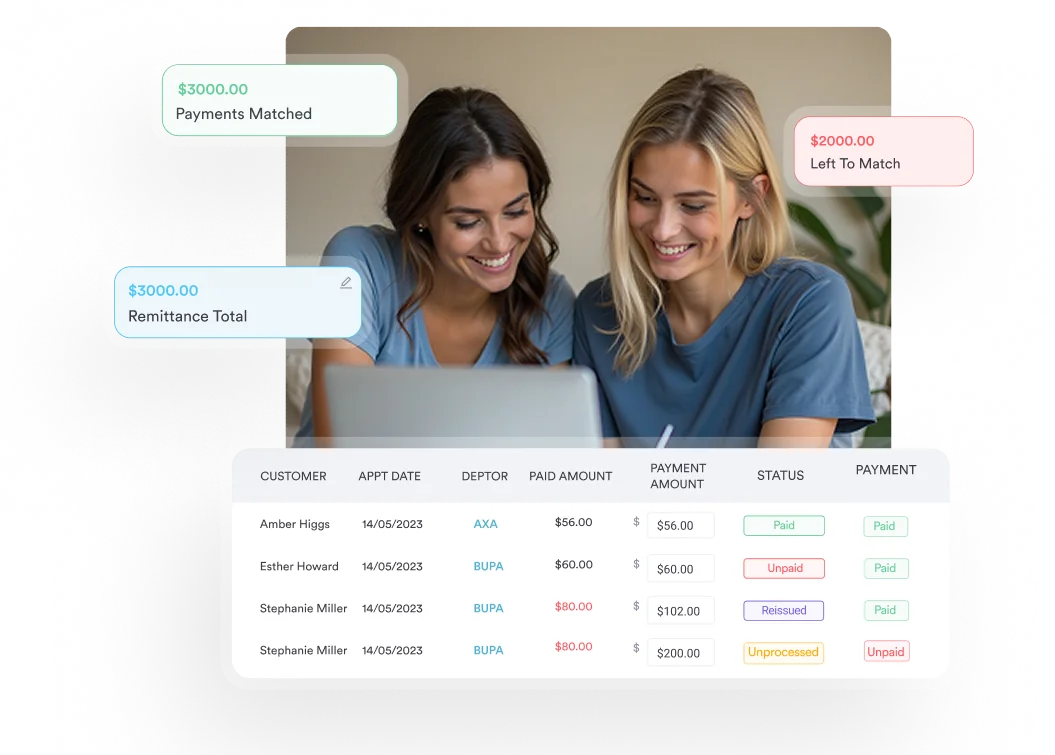
Pabau billing view matching insurer remittances to invoices, with Bupa and AXA as debtors
Pabau matches each insurer remittance to its invoice, so a short-paid L9113 claim stands out before it ages past the appeal window.

Manage CCSD billing from documentation to resubmission

Pabau keeps the procedure note, the authorization reference and the insurer claim on one record. Your dialysis line claims go out complete and are tracked through to payment.

Pabau private practice billing dashboard

Conclusion

On an L9113 claim, choosing the code is rarely the hard part. Payment turns on whether the operative note proves the line was percutaneous and non-tunneled, and whether an elective case was authorized before the procedure date.

The practical move is to make those entries mandatory at the point of care instead of chasing them after the claim is queried.

A practice that does this answers funder queries from the record and spends less time on resubmissions. Book a demo to see how Pabau links the procedure note, the authorization and the insurer claim for dialysis line insertions.

Continue your research

Continue your research

Billing other private procedure codes? Bupa CCSD codes billing guide covers how to navigate the CCSD schedule for Bupa claims, including fee rules and code lookup.

Was the dialysis line placed surgically? CCSD code L9112 covers surgical insertion of a central venous dialysis line and how it differs from L9113.

Coding a long-term venous access device? CCSD code L9115 explains billing for port device implantation, the other end of the vascular access range.

Struggling with claim denials across your practice? Pabau’s claims management software tracks each claim from submission through denial resolution for CCSD-coded procedures.

Frequently asked questions

What does CCSD code L9113 cover?

CCSD code L9113 covers percutaneous insertion of a central venous dialysis line, using the Seldinger technique without surgical cutdown, tunneling or a cuff. It applies to temporary hemodialysis catheters placed in the internal jugular, subclavian, or femoral vein.

What is the difference between a tunneled and non-tunneled dialysis catheter for CCSD billing?

A non-tunneled catheter billed as L9113 exits the skin at the vein puncture site, with no subcutaneous tunnel and no cuff. It stays in for days to weeks in acute or bridging cases. A tunneled catheter runs under the skin and has a Dacron cuff that anchors it for long-term access. It is billed under a separate CCSD code, so using L9113 for it is a material coding error.

Does L9113 include fluoroscopy guidance, or is that billed separately?

Whether fluoroscopy is bundled into L9113 depends on the current CCSD schedule edition and each payer’s fee schedule. Ultrasound guidance is frequently bundled. Fluoroscopy in an interventional radiology suite is more often separately reportable when the billing practitioner performs and documents it. Check the current schedule and the payer’s billing manual before submitting a combined claim.

Do private payers require pre-authorization for CCSD L9113?

Yes, most major UK private payers require pre-authorization for an elective L9113 insertion. Emergency insertions, such as for acute kidney injury, may allow retrospective authorization within 24 to 48 hours. The window and requirements vary by payer, so confirm the patient’s policy terms before proceeding without prior approval.

What documentation is required to support a claim for CCSD L9113?

The operative note must record the clinical indication, the vein used, and the catheter type and French size. It must also state the Seldinger technique, the guidance modality, chest X-ray confirmation of tip position, and the operator’s name and GMC number. Missing any of these is a leading cause of claim queries and denials.

Can L9113 be billed with an anesthesia or sedation code on the same claim?

Yes, when a separately identified practitioner administered the sedation or anesthesia and bills for it. If the inserting clinician also gave the sedation, separate billing may not be supported. Rules differ by payer and setting, so check the insurer’s billing manual and the CCSD Technical Guide before submitting a combined claim.
Avatar photo
Maja Popovska
Content Writer

Maja is a Senior Content Writer at Pabau, where she covers everything from practice management and compliance to medical aesthetics and patient experience. Off the clock: binging true crime docuseries, baking and dreaming about travel.
×