HCPCS Code J1110: Dihydroergotamine mesylate injection billing guide
HCPCS Code J1110: Official descriptor and drug overview HCPCS Code J1110 is the ...

Last Updated: Oct 29, 2026
CCSD code L9510 is the UK private billing code for venography (and bilateral), a contrast X-ray study of the veins. It sits in chapter 9, Vascular system, of the schedule UK private insurers use for specialist billing. A clinician injects contrast into a vein, and X-ray images then map any narrowing, blockage or clot.
Because the descriptor already includes bilateral studies, one L9510 line covers one leg or both. Queries tend to start when a claim adds a second line, or bills venography beside a linked vein procedure. Code it once, explain why ultrasound wasn't enough, and insurers have fewer reasons to query the claim.
Let Pabau's smart automation suggest the right codes, reduce claim denials, and keep your practice compliant—effortlessly.
Automate repetitive tasks and focus on what matters most—your patients.
Reduce coding errors and ensure compliance with the latest regulations.
Clean claims, fewer denials, and faster reimbursements.
Powerful insights and reporting to help your practice thrive.
HIPAA compliant SOC 2 certified GDPR-compliant Trusted by 4,000+ clinics worldwide

CCSD code L9510 covers venography, a contrast X-ray study of the veins, in chapter 9 (Vascular system) of the CCSD schedule.
The descriptor reads “Venography (and bilateral)”, so one L9510 line covers one side or both sides.
CCSD lists L9510 as an unacceptable combination with vein procedures such as L8651 and L8780, so keep it off those claims.
Insurers expect the clinical reason for venography, the radiology report and a diagnosis that supports the scan.
Pabau, the practice management software we build, submits invoices to UK insurers through Healthcode and shows each claim’s status afterward.
CCSD code L9510 is the UK private billing code for venography, an X-ray study that maps the veins with contrast dye. Its official descriptor reads “Venography (and bilateral)”. The code sits in chapter 9, Vascular system, of the schedule run by the Clinical Coding and Schedule Development (CCSD) Group.
During the test, a clinician injects contrast into a vein, often in the foot for a leg study. X-ray images then follow the dye through the deep and superficial veins. As a result, the images show narrowing, blockages, clots and the layout of the venous system.
Hospital coders may know the same work from OPCS-4 category L95, diagnostic transluminal operations on a vein. Private specialist invoices work differently. Insurers such as Aviva, AXA Health, Bupa and Vitality expect a code from the CCSD code schedule.
You don’t need a second line or a modifier when both legs are imaged. The words “and bilateral” in the descriptor mean L9510 covers a one-sided study and a two-sided study alike.
This sets L9510 apart from many vein procedure codes. Saphenous vein ligation and stripping, for example, splits into L8510 for one side and L8520 for both sides. Venography carries no such split.
Even so, record which side or sides were imaged. A reviewer will compare the radiology report with the invoice, and a clear note on laterality ends that check quickly.
Duplex ultrasound is the standard first test for vein problems. NICE guideline CG168 recommends it to confirm varicose veins, measure reflux and plan treatment. Venography therefore tends to appear where ultrasound can’t answer the clinical question.
Typical reasons a specialist requests a venogram include:
Because duplex comes first, the clinical reason is the first point a claims reviewer checks. A short line explaining why ultrasound wasn’t enough does most of the work.
Also check the scan type before you code it. L9510 describes contrast venography, so confirm the schedule entry before using it for a CT or MR venogram.
Insurers can ask for clinical records before or after they pay. A complete venography file answers their questions without a phone call. Keep these items together in the patient record:
Ask the referrer to write the clinical question on the request form, such as suspected iliac vein obstruction. That one line often answers a reviewer’s first query.
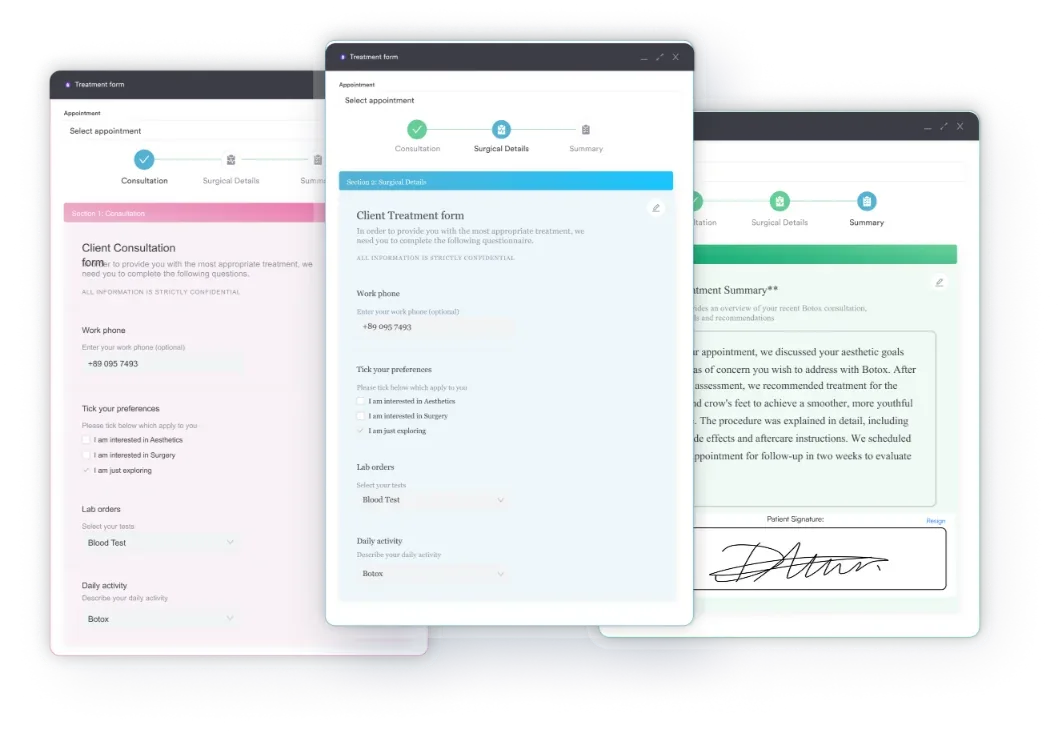
Records like these also fall under UK GDPR, so store them with access controls.
CCSD lists L9510 as an unacceptable combination on the entries for L8651 and L8780. In other words, venography shouldn’t be billed alongside those vein procedures. An insurer that applies the CCSD rules will query or reject the extra line.
The rule makes sense in practice. When contrast imaging guides or checks a vein procedure, it forms part of that procedure. Billing it again as a separate study counts the same work twice.
So keep a diagnostic venogram clearly separate in the record. It needs its own date, its own request and its own report. Then, before adding any other chapter 9 vein code to the same claim, check that code’s combination table on the CCSD schedule.
CCSD describes its coding principles as guidance, and each insurer decides how to apply them. If a combination looks unclear, ask the insurer before you invoice.
Several vein codes sit close to L9510 in the schedule. Most of them describe treatment rather than imaging, which makes them easy to tell apart once you know the descriptors:
Descriptors change between schedule editions, so confirm the current wording before you bill. For a worked example of a vein treatment code, see our guide to CCSD code L8540.
Most UK insurers receive specialist invoices through Healthcode. Before the L9510 invoice goes out, the four questions below settle whether the study takes this code at all.
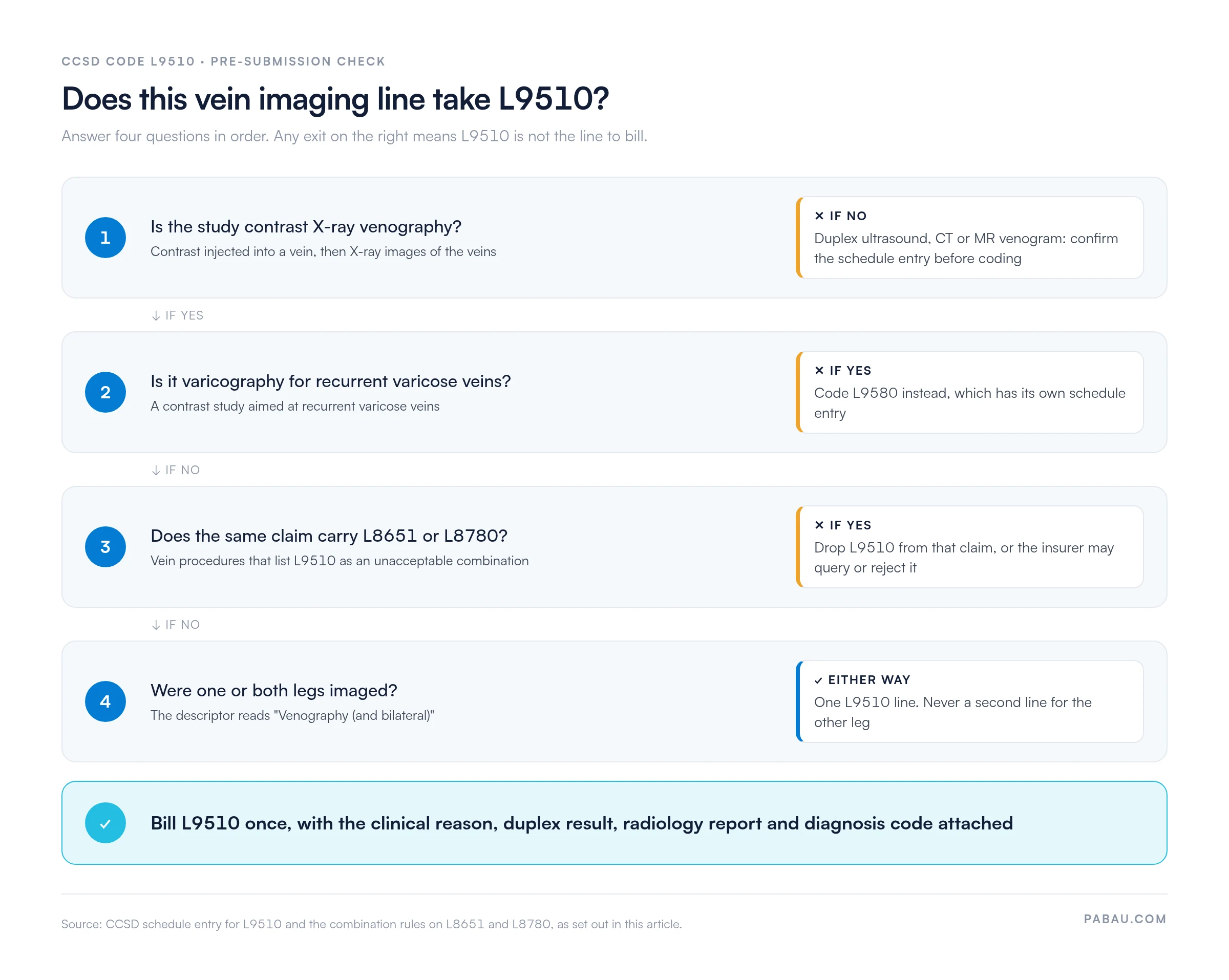
Once the code is settled, work through these points on the claim itself:
Afterward, note the submission reference. You’ll need it if the insurer comes back with a query.
Most venography queries trace back to a short list of errors. Each one has a simple fix:
When a claim comes back, fix the cause first. Then resubmit with the original reference so the insurer can match the two.
Many practices still hold referrals in one place, consent forms in another and invoices in Healthcode. Staff then chase claim status by phone or email. Each handoff adds a chance to lose a reference or a report.
In Pabau, the referral, consent form and radiology report sit in one patient record. Its claims management software then sends the invoice to the insurer through Healthcode. After submission, your team can follow each claim’s status in Pabau.
As a result, your billing team spends less time hunting for paperwork. Queries also get answered faster, because the supporting records sit next to the claim.

Pabau keeps venography referrals, consent forms and reports in one record and submits invoices to insurers through Healthcode. Your team then follows every claim’s status in one place.

L9510 rewards precision more than paperwork volume. Bill it once, however many legs were imaged. Keep it off claims for the vein procedures CCSD won’t pair it with. Above all, explain why venography was needed when duplex ultrasound is the usual first test.
Get those three points right and most queries never start. Book a demo to see how Pabau keeps your venography records and Healthcode claims together.

Billing other vein procedures? CCSD code L8540 explains how radiofrequency ablation of more than one venous trunk is coded.
Billing multiple Bupa CCSD codes? Bupa CCSD codes reference covers Bupa’s procedure coding framework and submission requirements for UK private practices.
Treating varicose veins with injections? CCSD code L8600 covers how unilateral injection sclerotherapy is billed to UK insurers.
Choosing a billing system for a UK practice? Best medical billing software in the UK compares the tools UK practices use to send and track insurer claims.
Yes. Phlebography is another name for venography, and both describe a contrast X-ray study of the veins. You may see the older term in European referral letters and reports.
No. L9510 describes venography, which uses injected contrast and X-ray imaging. A duplex scan is an ultrasound test without contrast, so check the schedule for the correct ultrasound code before you invoice.
Only when the patient’s policy covers the condition behind the scan. Some policies limit cover for varicose veins, especially where the concern is cosmetic. Ask the insurer to confirm cover before the scan, and tell the patient what happens if the claim is declined.
A radiologist or vascular specialist usually performs it in an imaging suite with X-ray equipment. The hospital or imaging center may invoice the facility costs separately, so agree who bills what before the appointment.