CPT Code 19361: Latissimus dorsi flap breast reconstruction
CPT code 19361: Official descriptor and payment basics CPT code 19361 is the Cat...

Last Updated: Nov 18, 2026
L8530 is the CCSD code for operations for recurrent varicose veins with re-exploration of the groin and/or popliteal fossa, on one leg. The surgeon reopens a junction treated before, at the groin or behind the knee.
The code sits in chapter 9.0.0 Vascular System of the CCSD schedule used by UK private medical insurers. Both legs in one operation are billed as L8580, and recurrent surgery without re-exploration as L8532.
Let Pabau's smart automation suggest the right codes, reduce claim denials, and keep your practice compliant—effortlessly.
Automate repetitive tasks and focus on what matters most—your patients.
Reduce coding errors and ensure compliance with the latest regulations.
Clean claims, fewer denials, and faster reimbursements.
Powerful insights and reporting to help your practice thrive.
HIPAA compliant SOC 2 certified GDPR-compliant Trusted by 4,000+ clinics worldwide

CCSD code L8530 covers operations for recurrent varicose veins with re-exploration of the groin and/or popliteal fossa, on one leg.
The bilateral form is L8580. L8540 is a different procedure, radiofrequency ablation of more than one venous trunk on one leg.
If the surgeon treats the recurrence without reopening the groin or popliteal fossa, the code is L8532, or L8582 for both legs.
CCSD is the UK schedule that private insurers such as Bupa, AXA Health, Aviva and Vitality work from, and claims usually travel through Healthcode.
The operation note should record the earlier treatment, the side, the site reopened and the findings, because those facts decide the code.
CCSD code L8530 is the code UK private insurers use for redo varicose vein surgery on one leg. It covers operations for recurrent varicose veins that re-explore the groin, the popliteal fossa, or both. National Friendly’s CCSD-based schedule of fees lists it under that narrative as a Major procedure.
The schedule comes from the Clinical Coding & Schedule Development (CCSD) group, and UK private medical insurers and Healthcode e-billing work from it. L8530 sits in chapter 9.0.0, Vascular System, under sub-chapter 9.7.0, Varicose Veins.
Each insurer sets its own fee against the code, so check the payer’s current schedule before you invoice. Our index of CCSD codes lists the other procedure codes we cover.
Re-exploration means the surgeon reopens a venous junction that was treated before. At the groin, that is the saphenofemoral junction (SFJ), where the great saphenous vein meets the common femoral vein.
The usual finding there is neovascularization, a web of small new veins that regrow after the first ligation. The surgeon dissects through the old scar, ligates any residual or recanalized stump, and clears the new channels.
Behind the knee, in the popliteal fossa, the target is the saphenopopliteal junction (SPJ). There the small saphenous vein drains into the popliteal vein. Scarring from the earlier operation often distorts the anatomy, so the note should say what the surgeon found.
The narrative reads “groin and / or popliteal fossa”. One L8530 covers either site, or both, on the same leg in one operation.
Four CCSD codes cover surgery for recurrent varicose veins. Two questions sort them: did the surgeon reopen the groin or popliteal fossa, and was it one leg or both?
The bilateral form of L8530 is CCSD code L8580, reference FI.074. L8540 is sometimes mistaken for the bilateral code. It is radiofrequency ablation of more than one venous trunk, on one leg.
When the surgeon treats recurrent veins without reopening either junction, code L8532 applies instead. Its bilateral form is L8582.
Code numbers don’t reveal the side in this family. L8510 pairs with L8520, and L8750 with L8751, so read the narrative each time. The decision path below puts the three coding questions in the order the operation note answers them.
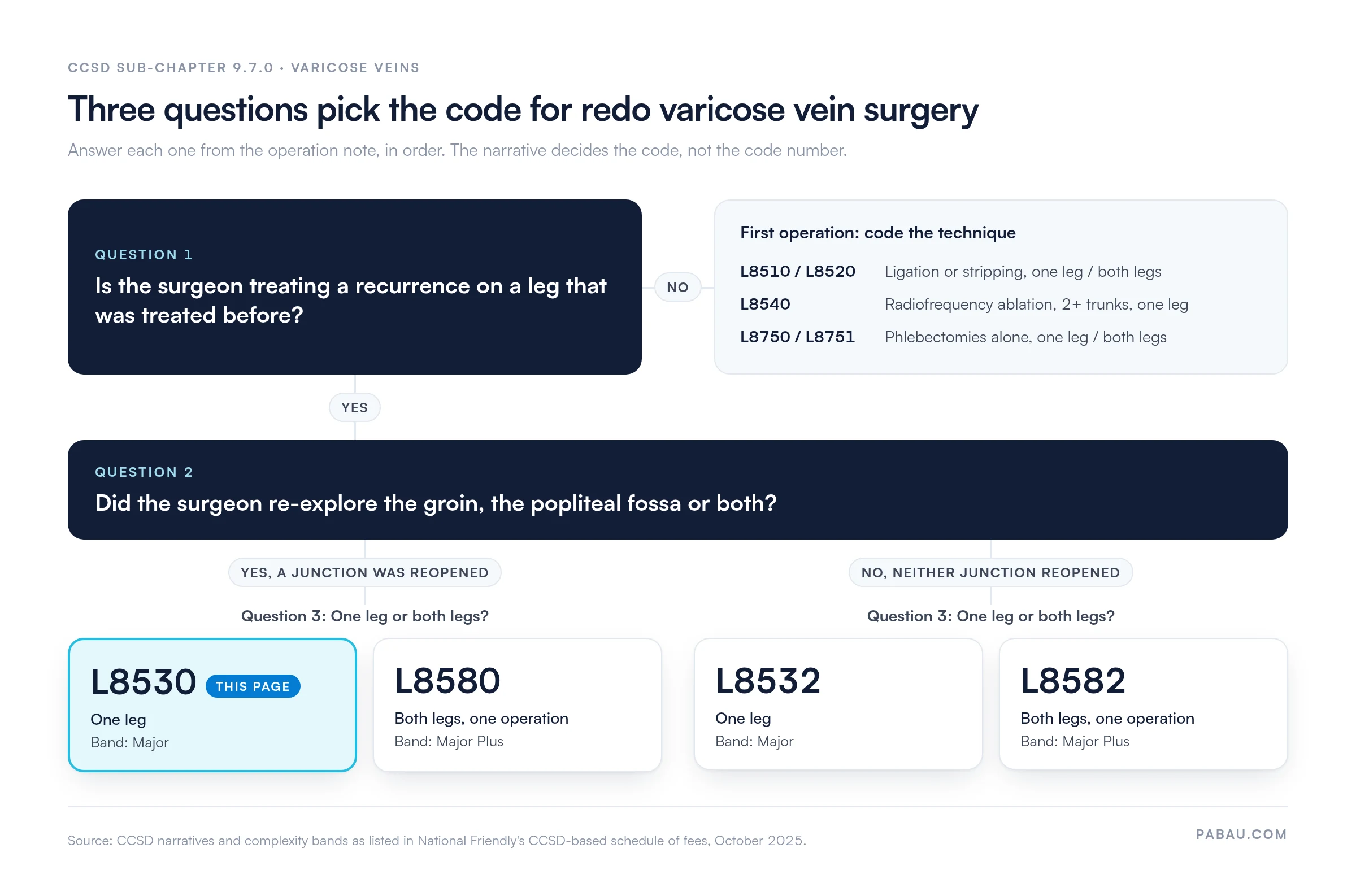
The 9.7.0 sub-chapter also holds codes for first operations, ablation and phlebectomy. The table shows when one of them fits better than L8530.
A first operation on a leg is never coded L8530, but no single code replaces it. The technique decides. Ligation and stripping run through L8510 and code L8520, while ablation and phlebectomy have codes of their own.
CCSD code L8540 carries a note that pre- and peri-operative imaging is included in the code. L8530’s entry carries no such note.
Surgeons often remove tributary veins in the same operation as a re-exploration. L8510’s narrative includes multiple phlebectomy, but L8530’s doesn’t mention it. Check the CCSD coding principles and the insurer’s combination rules before code L8750 goes on the same claim.
NICE guideline CG168 recommends duplex ultrasound to confirm the diagnosis and plan treatment for suspected recurrent varicose veins. It also asks clinicians to tell patients that recurrence is more likely after treatment for recurrent veins than for primary ones.
A pre-authorization request is easier to approve when it carries that evidence. Cases that typically support re-exploration include:
Most private medical insurance policies exclude cosmetic treatment. Visible recurrent veins with no symptoms and no junctional reflux are unlikely to be authorized, so check cover before you book theater time.
An L8530 claim rests on the operation note. If it just says “redo varicose veins”, the coder can’t tell L8530 from L8532, and the insurer may query it.
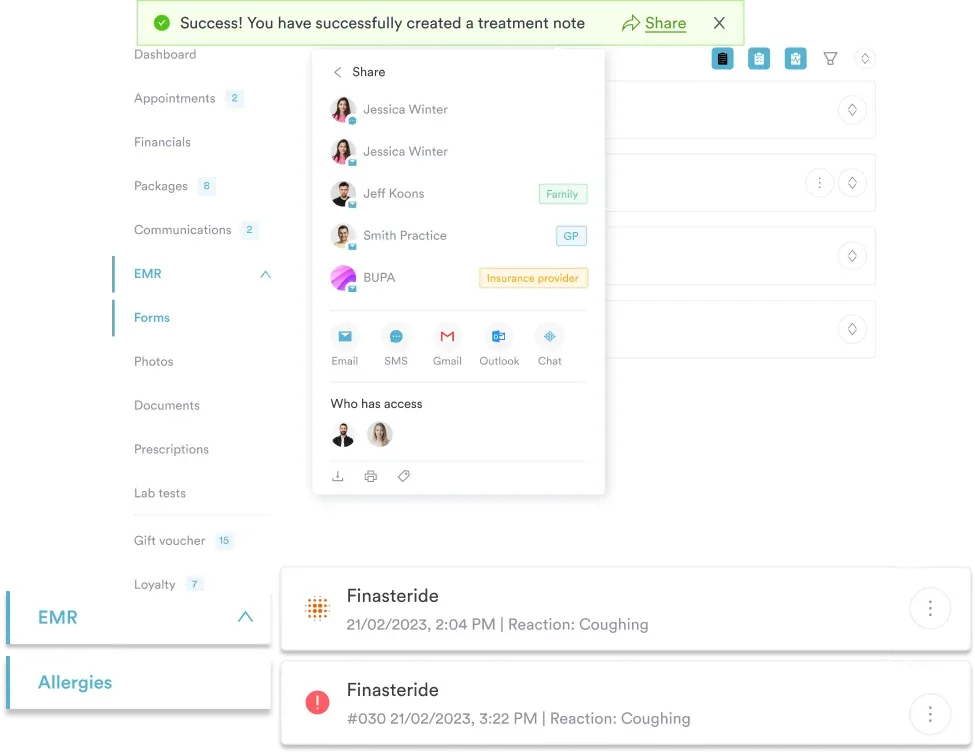
Add a required field for the junction re-explored to your redo varicose vein note, with groin, popliteal fossa, both and none as options. That one answer settles L8530 against L8532 before the note reaches the billing desk.
When an insurer asks for a diagnosis, UK claims use WHO ICD-10 codes. For varicose veins of the leg that means category I83, and the fourth character records any ulcer or inflammation.
WHO ICD-10 carries no laterality in the I83 codes, so the side lives in the note and on the claim. The WHO ICD-10 browser lists the full I83 category. Code from the findings in the note, not from the referral alone.
Planned venous surgery usually needs the insurer’s approval before the operation, and the patient’s policy decides what is covered. The table below is a starting point, so confirm each detail with the payer.
Once the operation is done, the claim follows the same five steps whichever insurer pays.
Insurer schedules typically list a separate anesthetist fee against the same CCSD code. The anesthetist invoices that fee apart from the surgeon’s claim.
Most refused redo varicose vein claims trace back to one of the slips below, and each one has a straightforward fix.
If a claim is still refused, check the insurer’s current provider manual for its appeal route. Our guide to Bupa CCSD codes explains how Bupa’s procedure list and claim process work.
In many vascular practices, the authorization sits in an email and the duplex report in a shared folder. The operation note lives in another system, and someone keys the claim in by hand days later.
Pabau keeps those pieces on one patient record. Its claims management software sends claims electronically through Healthcode and to Bupa. The authorization code, its dates and sessions sit on the patient’s case, with a warning when one is missing.
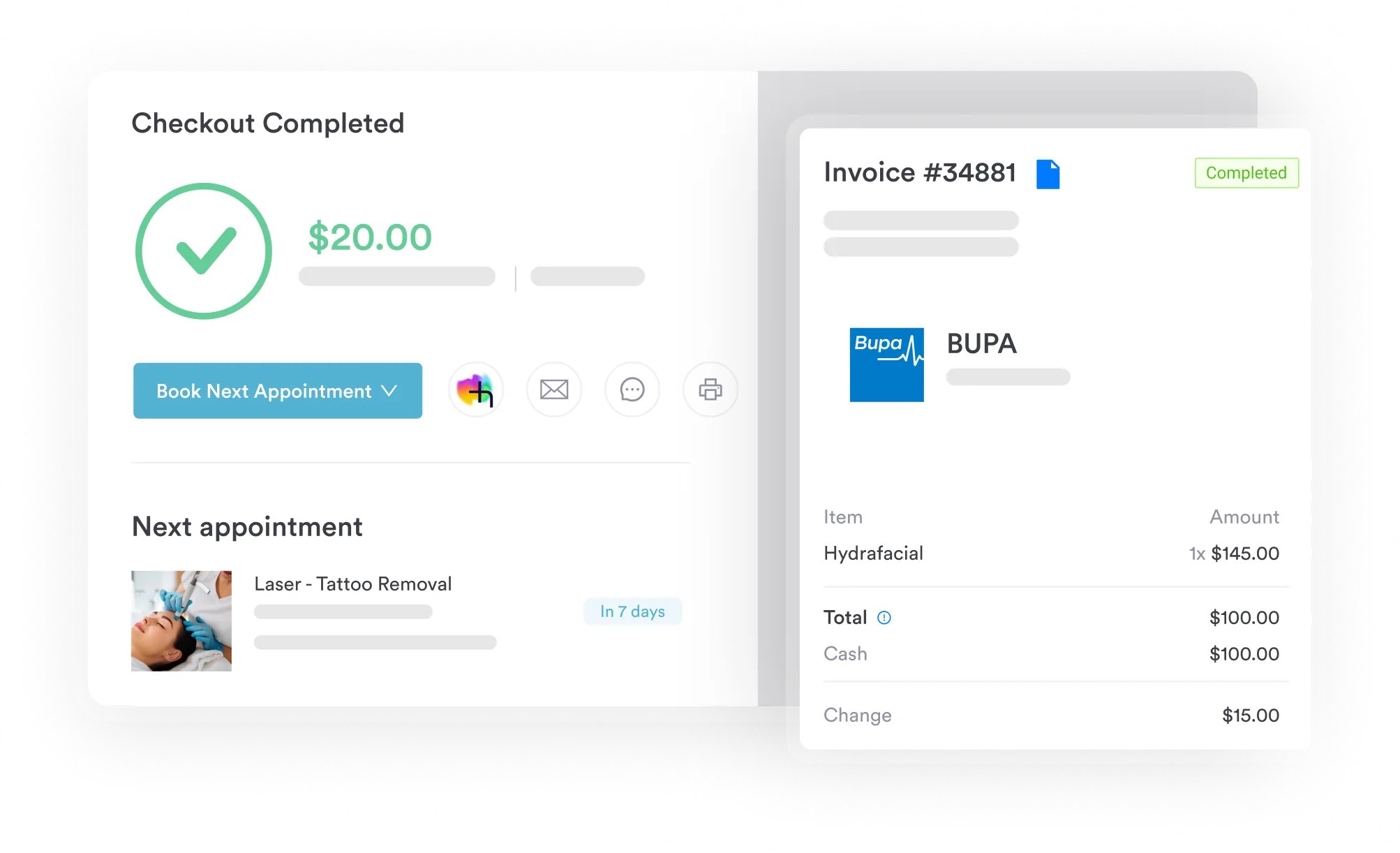
Fewer claims come back for a missing reference or a side that doesn’t match. Your team spends less time chasing insurers and more time with patients.

Pabau keeps the authorization, duplex report and operation note on the patient’s case, and sends CCSD claims through Healthcode and to Bupa. You see each claim’s status without phoning the insurer.

L8530 rewards a precise note. Once the note names the earlier treatment, the side and the junction reopened, the choice between L8530, L8532 and L8580 is settled.
Record those three facts in theater, check that the authorization covers what was done, and price the claim from the insurer’s current schedule. Book a demo to see how Pabau keeps authorizations and Healthcode claims on one patient record.

Both legs re-explored in one operation? CCSD code L8580 covers the bilateral form of recurrent varicose vein re-exploration.
Junction left unopened? CCSD code L8532 covers recurrent varicose vein surgery without re-exploration of the groin or popliteal fossa.
Phlebectomies on their own? CCSD code L8750 covers local excision of varicose veins of the leg.
Checking Bupa fees before you invoice? Bupa procedure codes and fee schedule walks through Bupa’s recognized codes and fee tiers.
CCSD code L8530 covers operations for recurrent varicose veins with re-exploration of the groin and/or popliteal fossa, on one leg. One code covers either site, or both, in the same operation.
The bilateral form is L8580, with the same narrative ending in bilateral. L8540 is a different procedure, radiofrequency ablation of more than one venous trunk on one leg.
L8530 applies when the surgeon reopens the groin or popliteal fossa. L8532 covers recurrent varicose vein surgery without re-exploration of either site. Their bilateral forms are L8580 and L8582.
No. The narrative is for recurrent varicose veins, so the note should record earlier treatment of that leg. A first operation is coded by technique, such as L8510 for ligation or stripping, or an ablation or phlebectomy code.
UK insurers use WHO ICD-10 codes from category I83. Choose I83.0 with ulcer, I83.1 with inflammation, I83.2 with both, or I83.9 without ulcer or inflammation, based on the documented findings.
UK private insurers that work from the CCSD schedule include Bupa, AXA Health, Aviva, Vitality and WPA. Cover still depends on the patient’s policy, so confirm it and get pre-authorization before surgery.