HCPCS code C1731: Catheter billing, OPPS reimbursement, and denial guide
HCPCS code C1731: Official descriptor and code series context HCPCS code C1731 i...

Last Updated: Oct 8, 2026
CCSD code E1240 is the UK private insurance code for vidian neurectomy (including endoscopic). In this ENT operation, the surgeon divides the vidian nerve to dry up a constantly running nose. It is usually offered for vasomotor rhinitis that has not settled with sprays and medication.
Because it is an uncommon operation, E1240 claims attract questions about prior treatment, bilateral surgery and authorization. The code sits in Chapter 5 (Ear, nose and throat) under Nasal sinuses, and one code covers open and endoscopic approaches. Settling those three questions before surgery keeps the claim moving.
Let Pabau's smart automation suggest the right codes, reduce claim denials, and keep your practice compliant—effortlessly.
Automate repetitive tasks and focus on what matters most—your patients.
Reduce coding errors and ensure compliance with the latest regulations.
Clean claims, fewer denials, and faster reimbursements.
Powerful insights and reporting to help your practice thrive.
HIPAA compliant SOC 2 certified GDPR-compliant Trusted by 4,000+ clinics worldwide

CCSD code E1240 covers vidian neurectomy, an ENT operation that divides the vidian nerve to reduce chronic rhinorrhea.
One code covers both the open and the endoscopic approach, so the approach never changes the code.
Insurers expect notes showing the rhinitis did not respond to an adequate trial of medical treatment.
The descriptor does not mention bilateral surgery, so confirm the insurer’s bilateral rule before you invoice both sides.
Missing pre-authorization numbers and codes that differ from the authorized one are common reasons for E1240 queries.
CCSD code E1240 is the UK private insurance code for vidian neurectomy (including endoscopic). The surgeon divides or cauterizes the vidian nerve, also called the nerve of the pterygoid canal, where it runs at the back of the nose.
That nerve carries the parasympathetic fibers that drive mucus production in the nasal lining. Cutting it reduces the constant watery discharge that defines severe vasomotor rhinitis. Patients often report less congestion as well.
The phrase “including endoscopic” matters for billing. Surgeons once reached the nerve through the maxillary sinus, while most now work through the nose with an endoscope. Either way, the claim carries E1240.
Vidian neurectomy is a second-line operation. Surgeons generally reserve it for patients whose symptoms persist after a full course of medical treatment.
Typical reasons for listing a patient include:
On the diagnosis side, UK insurers use WHO ICD-10. J30.0 is vasomotor rhinitis, and J30.1 to J30.4 cover the allergic forms. Record the diagnosis that the consultation letter supports, not the one that sounds strongest.
Consent deserves extra care here. Dry eye is the best-known side effect, because the same nerve fibers also supply the tear gland. Palatal numbness and nasal crusting are also discussed, so note each risk on the signed consent form.
A vidian neurectomy claim passes through several hands before money arrives. Each step below leaves a record the insurer may ask to see.
Vidian neurectomy is an elective operation, so UK private medical insurers expect authorization before the admission. The authorization records the code, the hospital and the admission type. Change any of those and the patient needs to update the insurer before surgery.
Retrospective authorization requests are often declined. When that happens, the bill falls to the patient, so secure the number before the theater date is confirmed. For a wider view of Bupa’s process, see our Bupa CCSD codes guide.
An uncommon operation like this one draws more questions from claims teams. Clear notes answer them before they are asked. Your record should show:
Structured digital forms help here, because the same fields get filled at every visit. A note written on the day is also far easier to defend than one added after a query.
E1240 often shares a theater list with other nasal procedures. The codes below are the ones most likely to appear beside it, or instead of it by mistake.
Descriptors are quoted from insurer listings. Confirm each one against the current CCSD schedule before you bill, because wording changes between releases. Our CCSD codes guide explains how the schedule’s chapters are organized.
CCSD has no CPT-style modifier suffixes. Instead, the descriptor and each insurer’s own rules decide how these situations are paid. The grid below shows which situations keep E1240 alone and which need an insurer check or a second code.
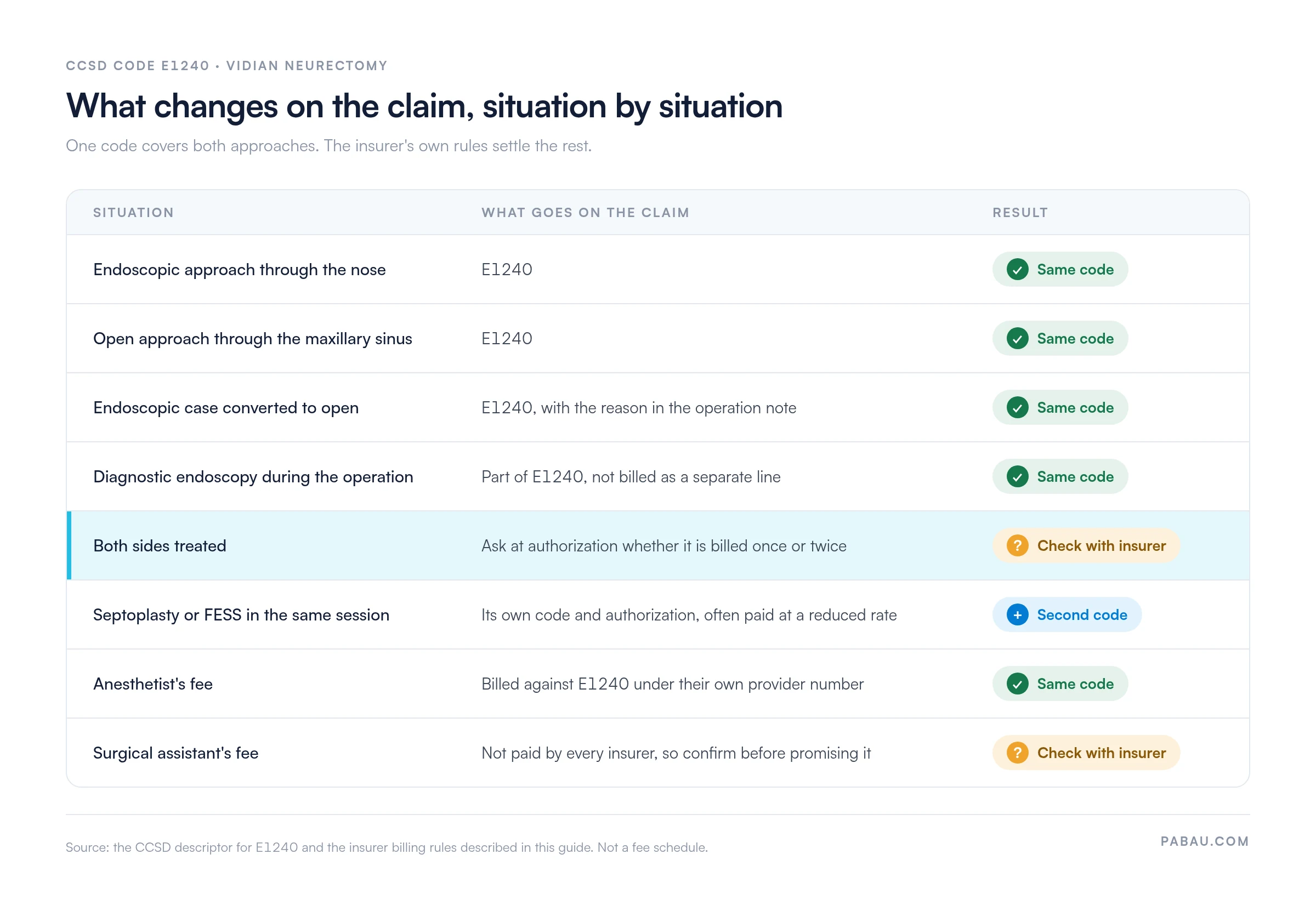
Some CCSD descriptors say “and bilateral”, which means one fee covers both sides. E1240 does not say that. Ask the insurer, at authorization, whether a bilateral neurectomy is billed once or twice.
A surgeon may combine E1240 with a septoplasty or FESS. List each code separately, and expect many insurers to pay the second procedure at a reduced rate. Each extra code also needs its own authorization.
The anesthetist bills against E1240 as well, under their own provider number. A surgical assistant’s fee is not paid by every insurer, so check before promising it.
Rejections on this code tend to follow a handful of patterns. Each one has a simple fix.
Run through this list for every vidian neurectomy invoice. Each check closes off one of the common rejection reasons above.
Many ENT practices still keep consultation letters in one system and invoices in another. Staff then retype codes and authorization numbers, which is where mismatches creep in.
Pabau, the practice management software we build, raises the invoice from inside the patient record. Its claims management software then sends the claim to the insurer through Healthcode, the UK clearing service. The consultation notes and consent form sit on that same record. When an insurer queries the claim, the evidence is one click away.
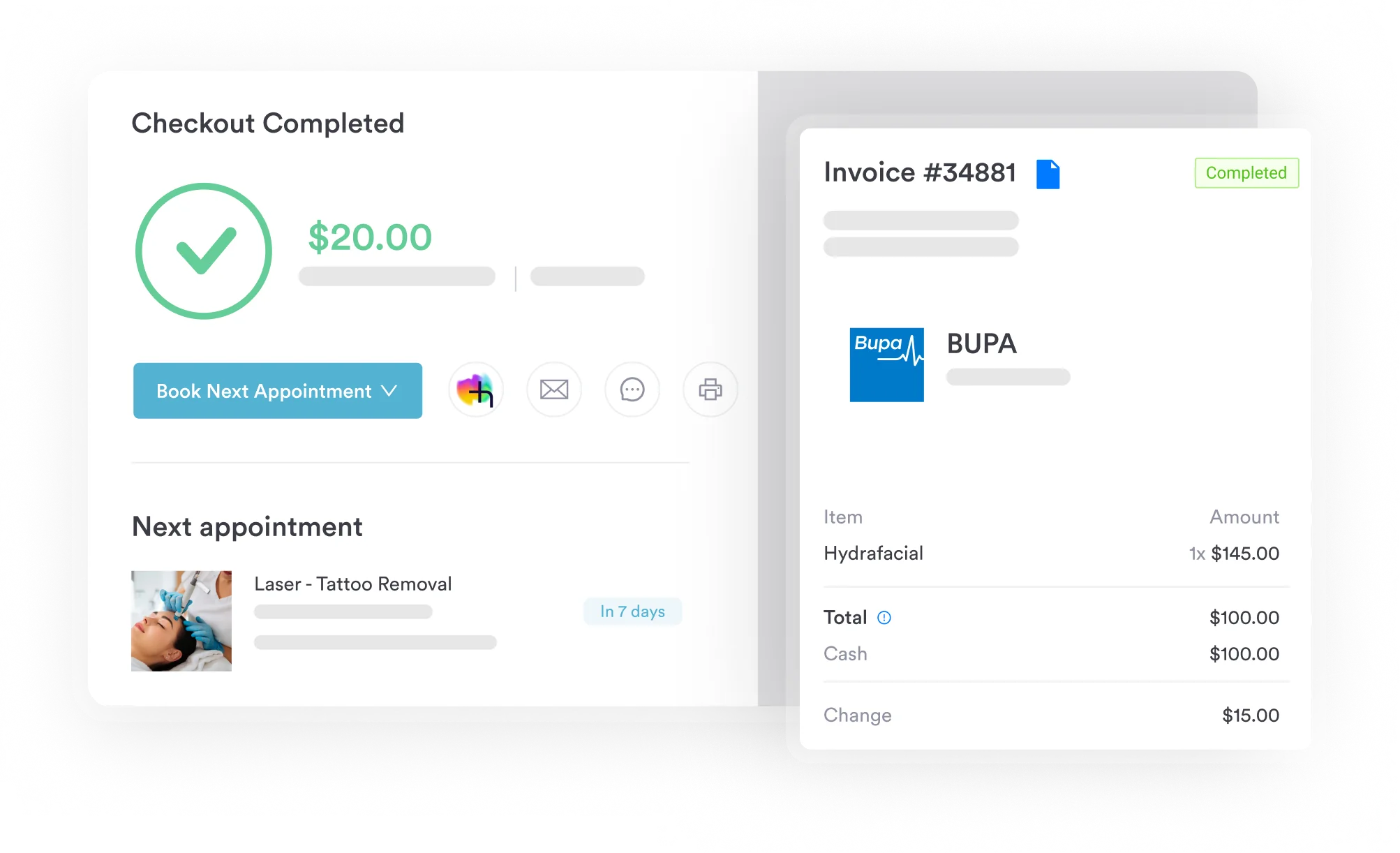

Pabau raises insurer invoices from the patient record and submits them through Healthcode. Your notes and consent forms stay attached to every claim.

E1240 is a clearly defined operation, and its descriptor leaves little room for doubt about the code. The risk sits around it, in the authorization, the bilateral question and the notes on failed treatment.
Settle those three before the theater date, and the claim has far fewer reasons to stall. Book a demo to see how Pabau links ENT invoices, notes and Healthcode submissions in one record.

Looking up another CCSD code? CCSD codes explains how the schedule is organized and how UK insurers use it.
Billing Bupa patients? Bupa procedure codes and fee schedule breaks down how Bupa sets fees against CCSD codes.
Coding image-guided sinus surgery? CCSD code E1260 covers image-guided FESS claims, a frequent neighbor on an ENT list.
Want fewer rejected claims overall? Medical billing compliance sets out the checks that keep claims audit-ready.
Coding another nasal procedure? CCSD code E0380 walks through nasal septum cauterization claims for UK insurers.
No. Posterior nasal neurectomy divides smaller nerve branches inside the nose and spares the tear gland supply. Ask the insurer which code it accepts before listing either operation.
The consultant surgeon chooses it and gives it to the patient. The patient then quotes that code when requesting authorization, so the two must match.
Yes. Self-pay patients need no insurer authorization, and the hospital usually quotes a fixed package price. Recording E1240 still keeps your activity data consistent.
No. E1240 includes both the endoscopic and open routes, so a conversion keeps the same code. Document the reason in the operation note.
It can be. The surgeon and the hospital decide, based on the patient and the approach. The admission type is part of the authorization, so tell the insurer if an overnight stay becomes necessary.