

CCSD code G5100: Bypass of duodenum billing guide
CCSD code G5100 bills a bypass that leaves the duodenum in place CCSD code G5100...

Last Updated: Oct 16, 2026
C1700 is the CCSD code for total reconstruction of eyelid - unilateral. It covers rebuilding the full thickness of one eyelid, both the skin-muscle layer and the tarsus-conjunctiva layer. The code sits in Chapter 4, Eye and orbital contents, under Eyebrow and lid.
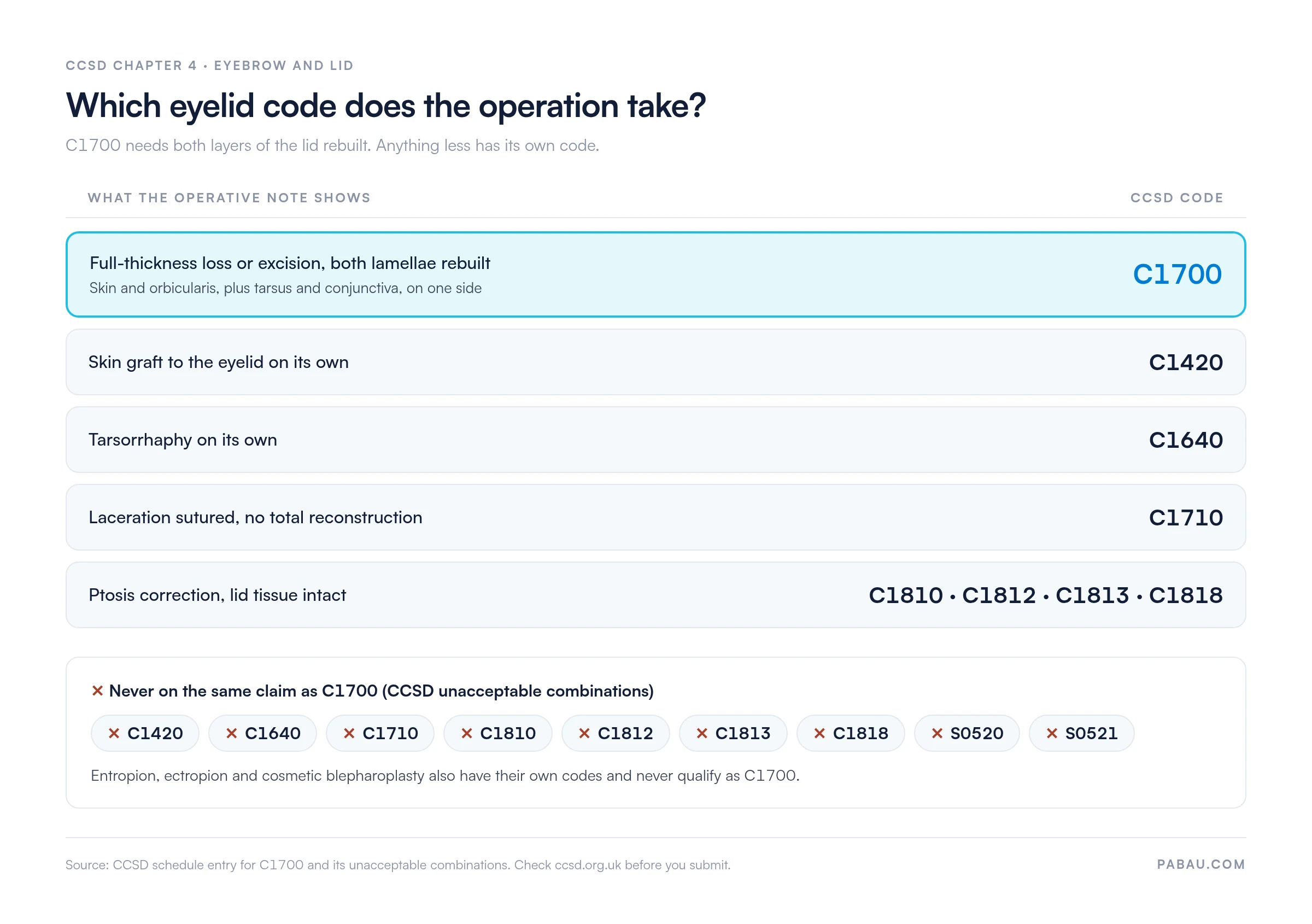
The scope is what the claim turns on. A skin graft to the eyelid on its own is C1420, and a tarsorrhaphy is C1640. Ptosis correction has its own codes, including C1810. The CCSD schedule lists these as unacceptable combinations with C1700, so they stay off the same claim.
Let Pabau's smart automation suggest the right codes, reduce claim denials, and keep your practice compliant—effortlessly.
Automate repetitive tasks and focus on what matters most—your patients.
Reduce coding errors and ensure compliance with the latest regulations.
Clean claims, fewer denials, and faster reimbursements.
Powerful insights and reporting to help your practice thrive.
HIPAA compliant SOC 2 certified GDPR-compliant Trusted by 4,000+ clinics worldwide

CCSD code C1700 covers total reconstruction of eyelid on one side, where surgeons rebuild both the skin-muscle layer and the tarsus-conjunctiva layer.
The CCSD schedule lists C1420, C1640, C1710, the ptosis codes C1810, C1812, C1813 and C1818, and S0520 and S0521 as unacceptable combinations with C1700.
CCSD defines the code but sets no fees and uses no modifiers. Bupa, AXA Health, Aviva and Vitality each set their own fee and claim rules.
Pair C1700 with a specific WHO ICD-10 diagnosis, such as C44.1 for an eyelid skin cancer, and obtain the insurer’s authorisation number before surgery.
Pabau, the practice management platform we build, stores the operative note and histology report on the patient record and submits the claim through Healthcode.
CCSD Code C1700 is the UK private-insurer code for total reconstruction of eyelid – unilateral. It covers rebuilding the full thickness of one eyelid when the eyelid has lost its tissue or the surgeon must remove it.
Full thickness means both layers. The anterior lamella is the skin and orbicularis muscle. The posterior lamella is the tarsus and conjunctiva. If either layer is preserved and simply repaired, the procedure does not meet the threshold for C1700.
The Clinical Coding and Schedule Development Group publishes the code in the CCSD schedule. It sits in Chapter 4, Eye and orbital contents, under Eyebrow and lid. UK private medical insurers including Bupa, AXA Health, Aviva and Vitality use the schedule.
CCSD defines what each code means. It does not set fees and has no modifiers. Each insurer decides what it pays for C1700 and which documents it wants, so check the patient’s insurer before every claim. You can browse neighbouring codes in our guide to CCSD codes.
Surgeons perform total eyelid reconstruction when the eyelid has lost its full structure or when excision takes it away. The usual drivers are periocular malignancy needing full-thickness excision, severe traumatic avulsion, and complex cicatricial conditions or congenital coloboma.
Reconstruction treats the two layers of the eyelid separately before joining them:
The operative note must record which tissues were absent or excised and the technique used for each lamella. It should also give donor site details and the defect dimensions in millimetres. A note that only says “eyelid reconstruction performed” gives the insurer no basis to accept C1700.
Insurers accept C1700 when the indication is medically necessary and reflects a total structural deficit, not a partial one. The indications that typically support the code are:
Ptosis caused by levator dysfunction does not qualify, and neither does entropion or ectropion correction. These conditions have their own CCSD codes. Claiming C1700 for them is a coding error, whatever the surgical complexity.
UK private insurers expect diagnoses coded in the WHO ICD-10 classification, not the US ICD-10-CM edition. The diagnosis must explain why total reconstruction was needed. A vague code such as H02.9 (disorder of eyelid, unspecified) is weak support for a major reconstruction claim.
This table is illustrative, not exhaustive. WHO ICD-10 codes C44.1 and S01.1 have no fifth character, unlike their US counterparts. Check the code against the ICD-10 edition the insurer uses before you submit.
The CCSD schedule lists several codes as unacceptable combinations with C1700. That means they should not be claimed alongside it, because the reconstruction already covers that work. Confirm current rules on the CCSD website or in the Bupa fee schedule before you submit.
Entropion, ectropion and cosmetic blepharoplasty also have their own codes, and none of them qualifies as C1700. If any native layer is preserved and repositioned, look for a lower-level eyelid code instead.
Bill a skin graft done on its own as C1420, and a standalone tarsorrhaphy as C1640. The panel below pairs each eyelid operation to its code.
Weak documentation is the most avoidable reason a C1700 claim stalls. Because it is a major reconstructive code, insurers review the supporting records closely. Digital pre-operative forms help you capture those records before the claim goes out, rather than after a query.
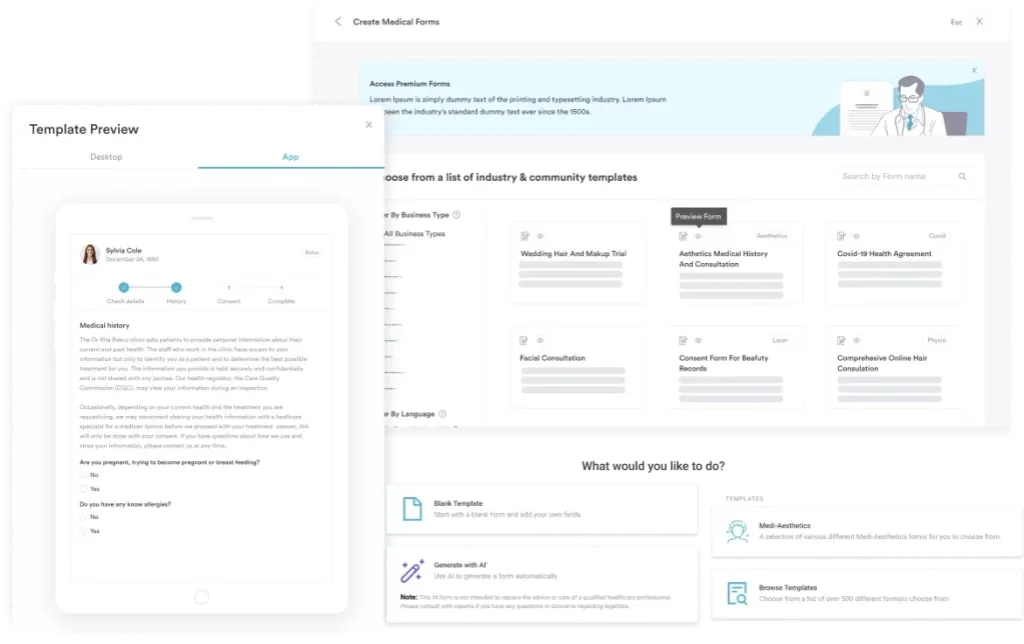
A C1700 documentation pack typically includes:
Software for plastic and reconstructive surgery practices helps most when it keeps the operative note, histology report and authorisation number on one patient record. Rebuilding that file from several systems after the claim is queried takes far longer.
Write the operative note for C1700 as if the insurer’s clinical reviewer will read it cold. Name both lamellae, the technique used for each, the donor site, and the defect size. A note that records those four facts rarely needs a follow-up letter.
UK private medical insurers generally require authorisation before planned treatment such as C1700. The patient usually contacts their insurer, and the insurer issues an authorisation number that goes on the invoice. Requirements depend on the insurer and the policy, so check them for every case.
Each insurer publishes its own code and fee guidance. The Bupa code search and the Aviva fee schedule are two examples. Before the operation date is confirmed, check these points:
Cosmetic concerns are the most common reason an insurer asks for more evidence. Pre-operative photographs and a histology or trauma report help separate a reconstruction from elective eyelid surgery.
CCSD codes carry no modifiers, so laterality and complexity live in the code descriptor itself. C1700 describes reconstruction on one side. If you reconstruct both sides, check the CCSD schedule and the insurer’s rules on how to claim the second side before you submit.
Each insurer sets the fee for C1700, not CCSD. Insurers apply their own rules when several procedures are claimed for one operation, so check the insurer’s fee schedule rather than assuming a standard reduction.
The anaesthetist invoices separately from the surgeon, normally against the same CCSD procedure code. Their fee follows their own arrangement with the insurer.
Total eyelid reconstruction often follows tumour removal or trauma, so other procedures can happen in the same theatre session. The CCSD unacceptable combinations decide what can go on the claim with C1700:
The same pattern runs through other CCSD chapters. CCSD code E1910 lists the combinations that are unacceptable with a total pharyngectomy.
Some reconstructions are staged, such as a Hughes flap that the surgeon divides at a second operation. Check the CCSD schedule for how the second stage is coded rather than claiming C1700 twice.
CCSD sets no global period and uses no modifiers, so each stage is coded to the work done at that sitting. Our guide to CCSD code D0310 shows how a staged ear reconstruction gets its per-stage coding agreed at pre-authorisation.
UK private insurers most often refuse C1700 claims over a missing authorisation, an excluded code combination, or a diagnosis that doesn’t explain total reconstruction. Each reason has its own prevention step, shown below.
Start with the insurer’s remittance or rejection notice, which tells you why the claim failed. Administrative refusals, such as a missing authorisation number or a wrong code, are usually corrected and resubmitted. Clinical refusals need a written case to the insurer’s clinical team.
For a clinical challenge, explain the indication, the technique, and why the work meets total reconstruction. Attach the operative note, histology report and photographs. Follow the insurer’s own review process and deadlines. If the dispute is unresolved, the patient can complain to the Financial Ombudsman Service after the insurer’s complaints process ends.
Many oculoplastic practices still keep operative notes, histology letters and authorisation emails in separate places. Each claim then means re-keying patient and insurer details into Healthcode, and each re-keyed field risks a rejection.
Pabau’s claims software for private practices keeps the patient’s insurer and policy details on the patient record. The operative note, histology report and photographs sit on the same record. Your coder selects C1700, and Pabau carries that code onto the invoice.
Pabau submits the claim through Healthcode and shows each claim’s status, so your team can see which C1700 claims need attention.
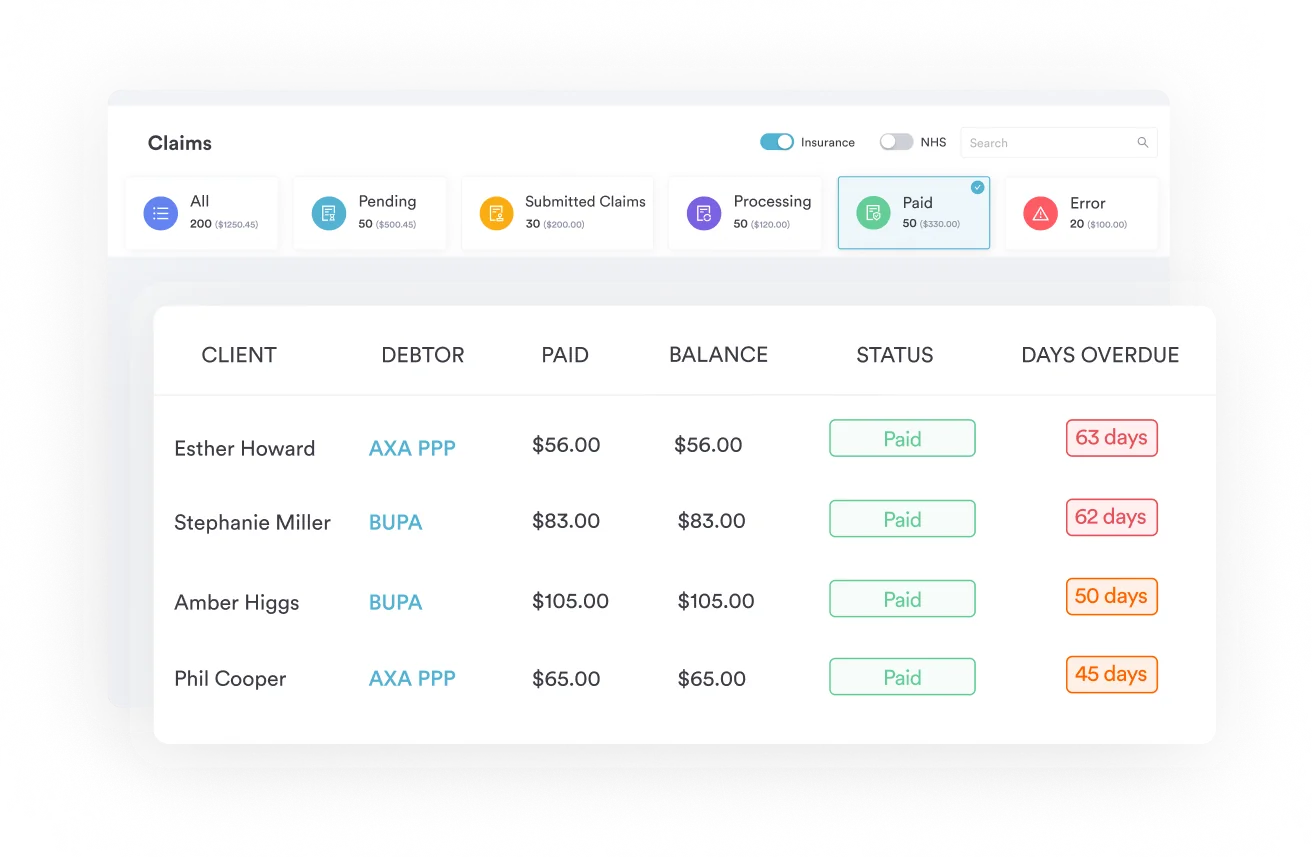

Pabau keeps operative notes and histology reports on the patient record. It carries the CCSD code your team selects onto the invoice and submits the claim through Healthcode.

C1700 is the right code only when you rebuild both layers of the eyelid, and the claim stands or falls on proving it. An operative note that names each lamella, the technique and the defect size answers most insurer queries before they are raised.
The bigger risk sits in what goes on the claim beside it. Keep grafts, tarsorrhaphy, laceration repair, ptosis codes and Mohs excision off the C1700 claim, and secure the authorisation number first.
Book a demo to see how Pabau keeps CCSD invoicing and Healthcode submission in one place for your oculoplastic practice.

Need a structured approach to CCSD procedure billing? Bupa procedure code fee schedule explains how Bupa structures its fees across CCSD chapters.
Looking up a different Bupa code? Bupa CCSD codes sets out how the codes are organised and where to find each one.
Removing a lesion at the corner of the eye? CCSD code C1110 covers excision of a lesion of the canthus and the documents insurers expect.
Treating an eyelid lesion without excision? CCSD code C1230 covers curettage or cryotherapy of an eyelid lesion.
CCSD Code C1700 covers total reconstruction of eyelid on one side. Surgeons rebuild both the skin-muscle layer and the tarsus-conjunctiva layer after tissue loss from malignancy, trauma, scarring, or congenital absence.
Usually, yes. Bupa, AXA Health, Aviva and Vitality generally expect authorisation before planned surgery. The patient typically contacts the insurer, and the authorisation number goes on the invoice.
The CCSD schedule lists C1420, C1640, C1710, the ptosis codes C1810, C1812, C1813 and C1818, and S0520 and S0521 as unacceptable combinations. Leave them off a C1700 claim.
No. C1420, graft of skin to eyelid, is an unacceptable combination with C1700. A graft used to resurface the anterior lamella forms part of the total reconstruction.
Ptosis repair restores lid position when the eyelid tissue is intact. C1700 applies only when the tissue layers are lost or excised and rebuilt with grafts or flaps. The ptosis codes cannot be claimed with C1700.
No. CCSD defines the code and its combination rules but has no modifiers and sets no fees. Each insurer sets its own fee for C1700 and its own rules for bilateral or multiple procedures.



