

CCSD code G5100: Bypass of duodenum billing guide
CCSD code G5100 bills a bypass that leaves the duodenum in place CCSD code G5100...

Last Updated: Oct 16, 2026
B0610 is the CCSD code for excision of pineal gland.
Let Pabau's smart automation suggest the right codes, reduce claim denials, and keep your practice compliant—effortlessly.
Automate repetitive tasks and focus on what matters most—your patients.
Reduce coding errors and ensure compliance with the latest regulations.
Clean claims, fewer denials, and faster reimbursements.
Powerful insights and reporting to help your practice thrive.
HIPAA compliant SOC 2 certified GDPR-compliant Trusted by 4,000+ clinics worldwide

CCSD code B0610 covers full excision of the pineal gland – not biopsy or partial resection alone.
Primary indications include pineocytoma, pineoblastoma, and pineal germinoma; each requires a paired ICD-10 diagnosis code on the claim.
UK private insurers routinely require pre-authorisation before a B0610 procedure; missing the pre-auth reference number is the most common reason claims are denied.
Pabau’s claims management software helps neurosurgery practices track CCSD codes, pre-auth statuses, and insurer invoicing requirements in one place.
CCSD code B0610 is defined in the CCSD surgical schedule as “Excision of pineal gland.” It sits within the neurosurgery (B-series) chapter of the CCSD schedule, alongside other intracranial procedure codes covering tumour resection, biopsy, and decompression. The B-prefix consistently denotes neurosurgery across the CCSD schedule hierarchy, making B0610 immediately recognisable to UK private insurer billing teams as a complex cranial procedure.
The code applies when the surgeon removes the pineal gland itself or the mass arising from it as the primary operative objective. A procedure that ends at biopsy alone, or that targets a different intracranial structure with incidental pineal exposure, does not qualify for B0610. Coders and billing managers should confirm the operative note explicitly states excision before assigning this code.
The pineal gland is a small endocrine structure located at the posterior wall of the third ventricle, deep within the brain. Because of its position at the centre of the skull base, surgical access requires a craniotomy and a carefully planned approach corridor. The two most common routes are the infratentorial/supracerebellar approach and the occipital transtentorial approach; the choice depends on tumour size, location relative to adjacent venous structures, and the surgeon’s experience.
Pineal region surgery carries a higher operative risk profile than many other neurosurgical procedures because of proximity to the deep venous drainage system (including the vein of Galen and the straight sinus), the brain stem, and the cerebellum. These anatomical realities mean that billing for B0610 is invariably linked to robust pre-operative documentation, MDT review, and insurer pre-authorisation processes.
The principal indications for using CCSD code B0610 are histologically confirmed or radiologically suspected tumours of the pineal region that require surgical excision. The most commonly encountered diagnoses are pineocytoma, pineoblastoma, and pineal germinoma, though other masses including epidermoid cysts, metastatic deposits, and pineal parenchymal tumours of intermediate differentiation can also meet the threshold for open excision.
Payers will cross-reference the diagnosis code on the claim against the operative findings documented in the surgeon’s note. Mismatches between the stated indication and the ICD-10 code are a reliable trigger for insurer audit and potential denial. For guidance on UK healthcare data handling requirements that apply to billing records associated with these diagnoses, including retention obligations under GDPR, practices should maintain a documented records policy.
A pinealectomy typically follows a craniotomy under general anaesthesia, with the patient positioned either sitting or prone depending on the surgical approach. The operative note must capture the approach corridor (infratentorial/supracerebellar or occipital transtentorial), the extent of resection (gross total, near-total, or partial), haemostasis technique, dural closure method, and any intraoperative complications. These specifics are what insurers validate against the B0610 claim.
Billing staff should not submit CCSD code B0610 until the operative note is finalised and counter-signed. A note stating only “excision of lesion” without naming the anatomical site does not adequately support the code. Ideally the note reads “excision of pineal gland” or “pinealectomy via [approach]” – language that maps directly to the code descriptor.
Request a copy of the finalised operative note before submitting any B0610 claim. The operative approach (infratentorial/supracerebellar or occipital transtentorial), extent of resection, and named anatomical target must all appear in the note. A note drafted before sign-off is not sufficient for submission and will delay payment.
CCSD code B0610 covers the complete surgical excision of the pineal gland as a standalone operative episode. Understand what is bundled and what is separately billable before preparing the invoice.
For a broader overview of Bupa CCSD codes and billing requirements, including how Bupa structures its neurosurgery fee schedule, consult Pabau’s dedicated CCSD billing guide. Practices handling regular private neurosurgery invoicing will also benefit from Pabau’s claims management software, which supports CCSD code look-up and pre-auth tracking within the billing workflow.
Several CCSD neurosurgery codes cover procedures in the same anatomical region or involve similar operative steps to B0610. Selecting the wrong code is one of the fastest routes to a claim denial or an insurer audit. The table below captures the most commonly confused codes based on UK private billing patterns for intracranial surgery.
Note that the CCSD schedule does not publish individual code descriptors at a level of detail that allows precise crosswalk tables without access to the current edition. Verify adjacent codes against the live CCSD schedule or the CCSD technical guide before billing. Practices managing regular neurosurgery invoicing should consider using Pabau’s compliance management tools to maintain a code validation log for auditable billing decisions.
Excision of the pineal gland is a multi-clinician procedure. The surgeon bills B0610; the anaesthetist raises a separate invoice using the applicable CCSD anaesthesia codes, which are typically calculated on a time-plus-base-unit model and subject to individual insurer fee schedules. These two invoices are independent and should never be combined onto the surgeon’s claim.
Assistant surgeon fees are billable when the insurer recognises assistant surgeon support for B0610. Bupa, AXA Health, and Aviva each have their own rules on this point. Some payers only pay an assistant surgeon fee when the operative note explicitly records the assistant’s contribution. Others do not recognise assistant surgeon billing for intracranial procedures at their standard fee. Confirm the payer’s position at the pre-authorisation stage, not at the point of claim submission.
Pre-authorisation is required by all major UK private insurers before a B0610 procedure. The exact documentation varies by payer, but the following elements are consistently expected across Bupa, AXA Health, Aviva, and Vitality.
The pre-authorisation reference number issued by the insurer must appear on every invoice submitted for the episode of care. This applies to the surgeon’s B0610 claim, the anaesthetist’s separate invoice, and any assistant surgeon claim. Missing the reference number is the most consistent cause of initial non-payment across UK private neurosurgery billing. Practices managing complex neurosurgery lists benefit from Pabau’s dedicated private practice management workflow, which tracks pre-auth statuses against scheduled procedures before the operative date.
Denials for CCSD code B0610 follow recognisable patterns. Understanding them before submission reduces rework and accelerates payment. The six triggers below account for the majority of rejected pineal gland excision claims in UK private practice.
Practices that experience repeated denials across neurosurgery billing should review their private billing workflow from pre-auth through claim submission. A systematic pre-submission checklist (see the next section) catches most of these errors before the invoice leaves the practice. For broader guidance on clinical governance frameworks applicable to private neurosurgery practices in England, the CQC provides registration and oversight requirements that interact with billing compliance obligations.
This checklist represents a content gap in most CCSD reference pages for neurosurgery codes. Use it as a pre-submission gate before any B0610 invoice is sent to the insurer.
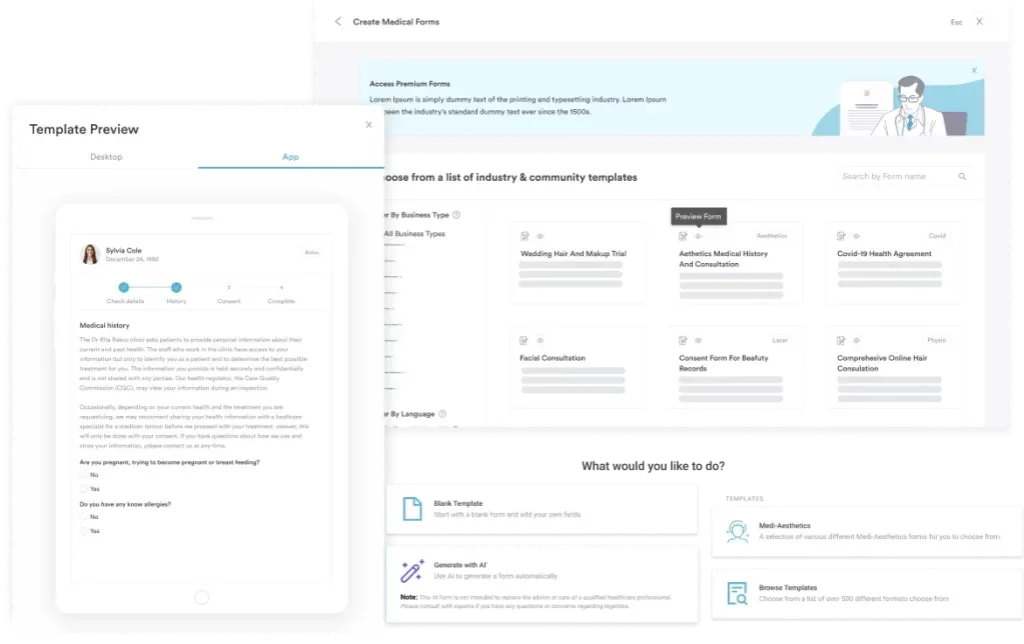
Pabau’s digital forms and documentation tools allow neurosurgery practices to capture structured operative and billing data in one system, reducing the risk that a claim reaches the submission stage without the mandatory supporting documentation. The platform’s time-saving billing features are particularly useful for practices handling complex CCSD codes where the documentation burden is high.
Set a calendar alert in your practice management system the day the B0610 procedure is booked – not the day it is performed. Capture the pre-auth reference number, procedure date, and submission deadline as structured fields so the billing team has everything they need before the 90-day window closes.
Private neurosurgery practices billing CCSD code B0610 face a multi-step administrative chain: pre-authorisation requests, operative documentation capture, multi-clinician invoicing, and time-sensitive claim submission. Each hand-off is a potential failure point. Practice management software with CCSD-aware billing support reduces that risk by keeping all of these steps in a single, auditable workflow.
Pabau is built for UK private practice and supports CCSD code management, pre-authorisation tracking, and invoicing for multi-clinician procedures. Rather than managing pre-auth references in spreadsheets and operative notes in separate documents, billing managers can link the pre-auth status, the clinical record, and the draft invoice within the same patient record. This is particularly valuable for complex cases like B0610 where the interval between the pre-auth and the claim submission can span several weeks.
Practices moving from NHS to private neurosurgery work often underestimate the administrative overhead of CCSD billing. The private-to-NHS referral pathway and the reverse also interact with billing obligations – knowing which episode of care falls under private insurance versus NHS helps prevent billing the wrong payer for a procedure. Pabau’s compliance and reporting tools help practices maintain a clear audit trail across both funding streams. For practices exploring what a comprehensive private practice management system can provide, Pabau’s practice management software overview sets out the full feature set applicable to specialist and surgical practices.

Pabau helps UK private practices manage CCSD code look-up, pre-authorisation tracking, and multi-clinician invoicing in one place. Fewer denials, less rework, faster payment.

CCSD code B0610 covers a procedure that is rare, technically demanding, and administratively exacting in equal measure. Getting the claim right means confirming excision (not biopsy) in the operative note, pairing the correct ICD-10 diagnosis code, securing the pre-authorisation reference before the procedure, and submitting within the insurer’s time window. These are systematic steps, not clinical judgements, and a robust billing workflow makes all of them manageable.
Pabau’s pre-authorisation tracking and CCSD-aware invoicing tools give private neurosurgery practices the structure to move from patient booking through claim payment without losing critical information at any hand-off.
To see how this works in practice, explore Pabau’s private practice management features or speak to the team about your specific billing workflow.

Managing CCSD codes across multiple insurers? Bupa CCSD codes and billing guide covers how Bupa structures its fee schedule and what neurosurgery billing teams need to verify before submitting claims.
Need to track pre-authorisation statuses across a busy surgical list? Automated workflows in Pabau can flag pre-auth deadlines and incomplete billing records before they become denied claims.
Building a GDPR-compliant billing records policy for your private practice? UK GDPR compliance checklist outlines the retention and security obligations that apply to billing and clinical records in a UK private healthcare setting.
CCSD code B0610 covers the complete surgical excision of the pineal gland, a procedure performed under general anaesthesia via craniotomy when a tumour, cyst, or other mass in the pineal region requires full removal. It does not cover biopsy alone or procedures targeting other intracranial structures.
A pinealectomy is surgical removal of the pineal gland or a mass arising from it. It is performed when imaging and MDT review confirm a pineal region tumour (pineocytoma, pineoblastoma, or germinoma) or a symptomatic pineal cyst that cannot be managed conservatively or by less invasive means.
Yes. CCSD code B0610 applies whenever the procedure performed is excision of the pineal gland, regardless of tumour pathology. The distinction between benign (pineocytoma, D33.0) and malignant (pineoblastoma, C71.5) is captured in the paired ICD-10 diagnosis code, not the CCSD procedure code itself.
Insurers typically require a specialist referral letter, MRI or CT imaging report confirming the pineal lesion, MDT discussion documentation for oncological cases, the pre-authorisation reference number, a finalised and counter-signed operative note naming the pineal gland as the surgical target, and a paired ICD-10 diagnosis code consistent with post-operative findings.
The most common denial triggers are missing pre-authorisation reference numbers, operative notes that use generic anatomical language, ICD-10 diagnosis codes that do not match histological findings, duplicate billing of components already bundled within B0610, and submission outside the insurer’s 90-day claim window.
B0610 is specific to the pineal gland as the named anatomical target. Adjacent B-series codes cover biopsy of intracranial lesions, excision of tumours elsewhere in the cerebral hemispheres or cerebellum, and excision of non-pineal cysts. The operative note’s anatomical descriptor is the primary basis for distinguishing B0610 from adjacent codes, so precise documentation is critical.



