

HCPCS code E0198: Water pressure pad billing guide
HCPCS code E0198 is a water pad for a standard mattress HCPCS code E0198 is the ...

Last Updated: Oct 13, 2026
A6530 is the CCSD code for carpal tunnel release (endoscopic). It covers a unilateral release in which the surgeon divides the transverse carpal ligament under endoscopic view. UK private medical insurers such as Bupa and AXA Health use the code to identify the procedure on a claim.
Open release is billed under A6510, and a same-session bilateral endoscopic release under A6570. Pair A6530 with WHO ICD-10 G56.0, carpal tunnel syndrome, and record the operated side in the operative note.
Let Pabau's smart automation suggest the right codes, reduce claim denials, and keep your practice compliant—effortlessly.
Automate repetitive tasks and focus on what matters most—your patients.
Reduce coding errors and ensure compliance with the latest regulations.
Clean claims, fewer denials, and faster reimbursements.
Powerful insights and reporting to help your practice thrive.
HIPAA compliant SOC 2 certified GDPR-compliant Trusted by 4,000+ clinics worldwide

CCSD code A6530 covers unilateral endoscopic carpal tunnel release, while open release is A6510. There is no CCSD code A6529.
A same-session bilateral endoscopic release is billed with A6570, not two A6530 lines, and a bilateral open release with A6580.
Pair A6530 with WHO ICD-10 G56.0 carpal tunnel syndrome, and record the operated side in the operative note.
Most UK private medical insurers expect pre-authorization before surgery, so carry the authorization number through to the claim.
CCSD code A6530 is the procedure code for endoscopic carpal tunnel release in the CCSD schedule. The schedule is maintained by the Clinical Coding & Schedule Development Group (CCSD). UK private medical insurers such as Bupa, AXA Health, Vitality and Aviva use its codes to identify privately funded procedures.
The official descriptor is “Carpal tunnel release (endoscopic).” The code applies when the surgeon divides the transverse carpal ligament under endoscopic view, not when an open incision is used.
A6530 sits in chapter 3.0.0 Spine, Spinal Cord & Peripheral Nerves, under 3.6.0 Peripheral Nerves, and is also listed under 16.4.0 Nerves. CCSD created the code on January 12, 2013, and it remains active. Our CCSD guides for billers cover other procedures in the same schedule.
Orthopedic hand surgeons, plastic surgeons and neurosurgeons recognized by the patient’s insurer can bill it. For the wider code structure and insurer rules, our Bupa CCSD codes guide explains how the schedule is applied.
Endoscopic carpal tunnel release decompresses the median nerve by cutting the transverse carpal ligament through a small portal rather than a traditional open palm incision. The procedure typically runs 15 to 30 minutes under local or general anesthesia as day surgery, with most patients discharged the same day.
The operative sequence follows a consistent pattern:
The operative report must describe each step and confirm the endoscopic approach was used throughout. A note that says only “carpal tunnel release performed” lets the insurer query the claim, recode it to open release (A6510) or decline it.
Insurers generally fund carpal tunnel surgery when conservative management has failed and objective evidence supports the diagnosis. Before approving A6530, they commonly ask for the following:
Criteria differ between insurers and between policies, so check the insurer’s clinical policy before you request pre-authorization. Sending the NCS or EMG report with the request avoids a common round of follow-up questions.
UK private claims use the WHO ICD-10 classification, where the diagnosis code for carpal tunnel syndrome is G56.0. WHO ICD-10 has no laterality subcodes for G56.0. The operated side is recorded in the operative note, and a two-sided procedure is shown by the bilateral procedure code.
Make sure the diagnosis in the referral letter, the pre-authorization request and the claim all read G56.0. A mismatch between them is a common reason for a claim to pend.
US payers use a different system altogether. There, endoscopic release is billed as CPT 29848 with an ICD-10-CM diagnosis code.
A6510 covers open carpal tunnel release, and A6530 covers the endoscopic approach. Billing one when the operative note describes the other is a coding error, and the insurer can query or recoup the payment.
The split dates from 2013. CCSD’s record for A6510 shows it was once described as “Carpal or cubital tunnel release, including endoscopic.” The endoscopic technique then gained its own code, A6530, so older fee templates may still route endoscopic cases to A6510.
CCSD publishes codes and descriptors, while each insurer sets its own fee for each one. Confirm the approach with the surgeon before submission whenever the operative report is ambiguous.
When both hands are treated in one session, bill the dedicated bilateral code rather than two A6530 lines. CCSD lists separate codes for each technique, and the grid below maps the approach and the number of hands to the right one.
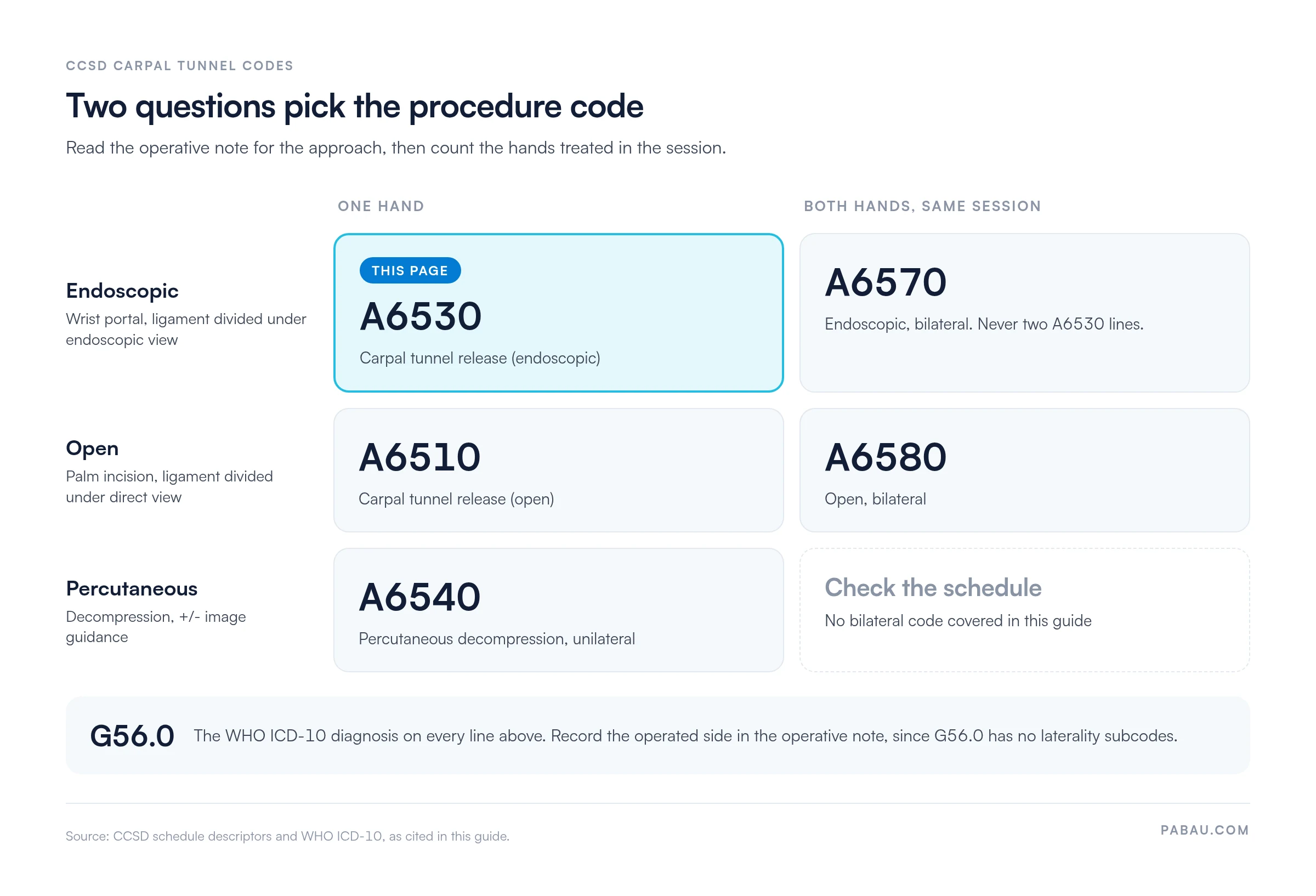
The bilateral code describes the whole episode, so splitting it into two unilateral lines misstates what was done. The same rule applies to open surgery, where A6580 covers both hands in one session. Ask the insurer how it reimburses A6570 before booking, since each insurer sets its own fee.
Before booking a same-session bilateral endoscopic release, confirm that the insurer has authorized A6570 rather than A6530. An authorization issued for the unilateral code may not cover a bilateral claim.
Most UK private medical insurers ask the patient to obtain pre-authorization before surgery. Without a valid authorization number, the claim is likely to be rejected, whatever its clinical merits. The usual process runs as follows:
A well-documented claim file reduces the risk of a query or clawback on audit. Every A6530 submission should be supported by:
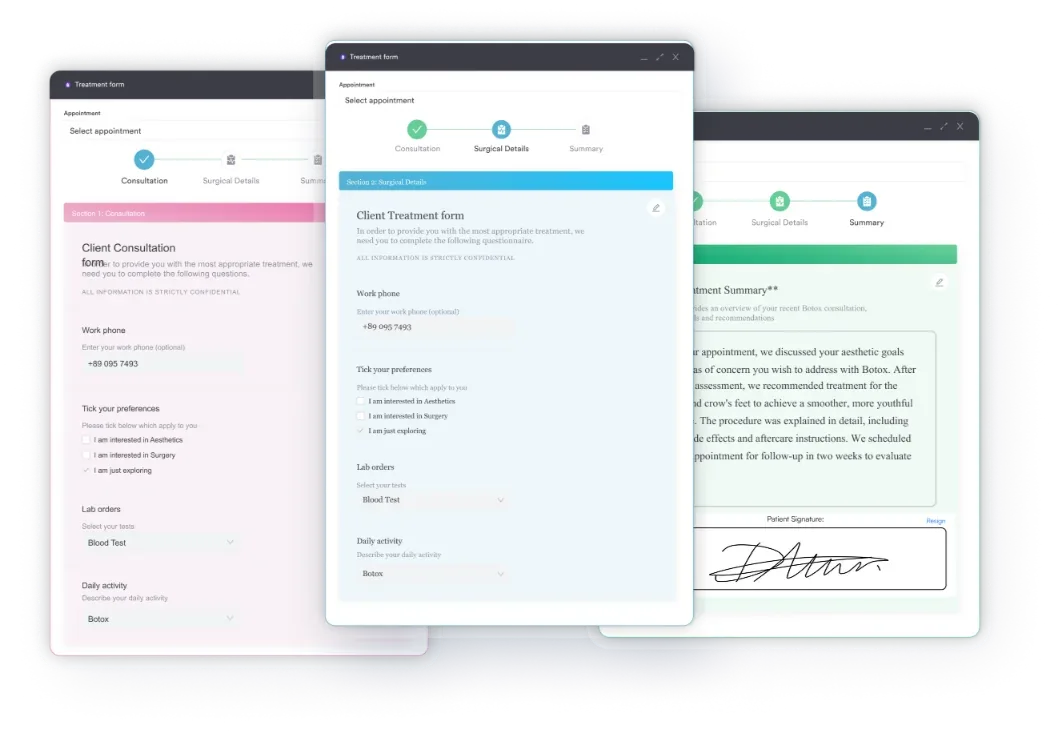
The CCSD technical guide explains how the schedule’s codes and conventions are applied. Pabau, the patient records and billing software we build, captures consent through digital intake and consent forms. Each signed form stays in the patient’s record, ready when an insurer queries a claim.
A6530 claims are denied for a predictable set of reasons. Identifying the denial trigger early and having a recovery action ready reduces time to payment.
CCSD publishes codes and descriptors, not fees. Each insurer sets its own reimbursement for A6530, and the amount can differ by policy and by the consultant’s agreement with that insurer.
Check the insurer’s current schedule before quoting, for example through the Vitality fee finder. Where your fee exceeds the insurer’s rate, give the patient a written quote that names the code, the insurer’s rate, your fee and any shortfall.
Our overview of medical billing fundamentals covers the workflow from claim to payment.
Most rejected A6530 claims trace back to two errors. The operative note never names the endoscope, or the code doesn’t match the approach or the number of hands treated. Both are workflow problems, so they can be fixed before a claim leaves the practice.
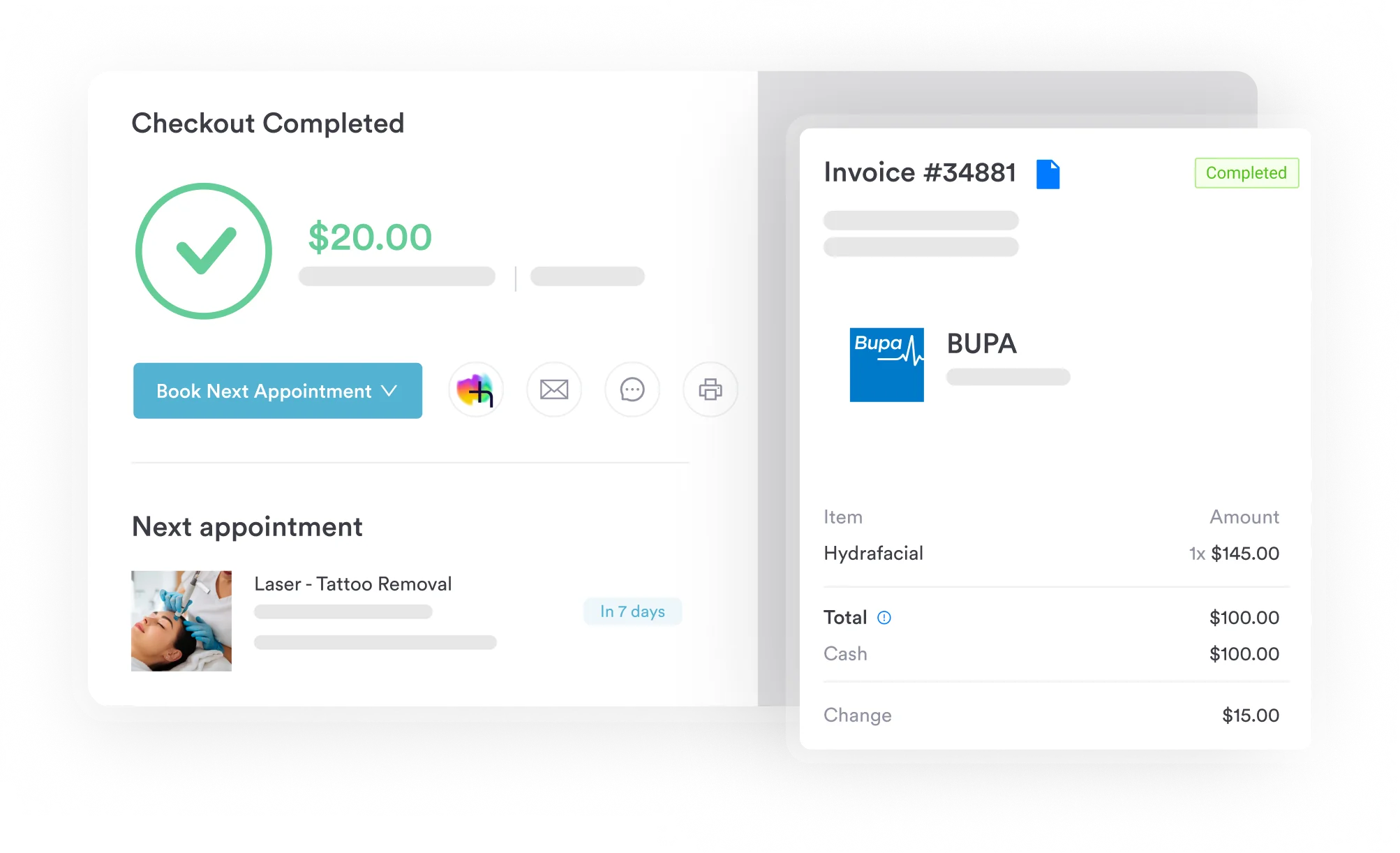
Pabau’s claims management software stores each patient’s insurer and policy on the patient record, so invoices route to the right insurer. Claims go to Healthcode directly from Pabau, without re-keying patient or treatment details.
Before a claim is sent, Pabau checks that details such as membership numbers and authorization codes are filled in. The Send button stays disabled until a missing field is fixed. That stops an A6530 claim leaving without its pre-authorization number.
Each claim then moves through clear stages, from pending to submitted, processing and paid. Pabau’s patient records keep operative notes, consent forms and nerve conduction reports in the same patient file. Billers can then answer an insurer query without chasing paperwork.
Run a monthly audit of all A6530 claims submitted in the prior period. Filter for denials and group them by reason. A pattern of documentation denials across several surgeons usually points to an operative report template that does not state the endoscopic approach. One template update fixes the pattern for every future case.

Pabau helps UK private practices send insurer claims to Healthcode, keep authorization numbers on the patient record, and store claim documentation in one place.

Accurate A6530 billing comes down to three choices. Use the endoscopic code rather than A6510, switch to A6570 when both hands are treated, and make sure the operative report names the endoscopic approach. Get those right at pre-authorization, and the claim has little left for an insurer to query.
Pabau keeps the insurer, the authorization number and the supporting documents on the patient record, so the claim goes to Healthcode complete. To see how that works for a hand surgery practice, book a demo with the team.

Need guidance on how CCSD codes are structured across private insurers? Pabau’s Bupa CCSD billing guide covers code architecture, fee schedule rules, and insurer-specific requirements for the same code set.
Want to understand how medical billing workflows reduce claim errors? What is medical billing? explains the end-to-end process from patient encounter through payment posting.
Billing an open release on both hands? CCSD code A6580 covers bilateral open carpal tunnel release, with its documentation and pre-authorization requirements.
Treating a patient covered by a US payer? CPT code 29848 explains how endoscopic carpal tunnel release is billed under the US code set.
CCSD code A6530 covers unilateral endoscopic carpal tunnel release, where the surgeon divides the transverse carpal ligament under endoscopic view. Open release is billed under A6510, and a same-session bilateral endoscopic release under A6570.
A6530 is endoscopic carpal tunnel release, and A6510 is the open technique. Billing one when the operative report describes the other is a coding error, so the insurer can query, recode or recoup the claim. There is no CCSD code A6529.
Most UK private medical insurers expect pre-authorization before surgery. They commonly ask for a nerve conduction study, consultation letters and a record of failed conservative treatment. Without an authorization number, the claim is likely to be rejected.
Use WHO ICD-10 G56.0, carpal tunnel syndrome. The laterality subcodes G56.01 to G56.03 belong to the US ICD-10-CM and are not part of WHO ICD-10. Record the operated side in the operative note.
Bill A6570, the CCSD code for bilateral endoscopic carpal tunnel release, rather than two A6530 lines. The open bilateral equivalent is A6580. Make sure the pre-authorization covers the bilateral code.
Common reasons are missing pre-authorization and the wrong code, such as A6510 instead of A6530, or two A6530 lines instead of A6570. An operative report that does not state the endoscopic approach also triggers denials. Missing nerve conduction results or treatment records can lead to a medical necessity denial.



